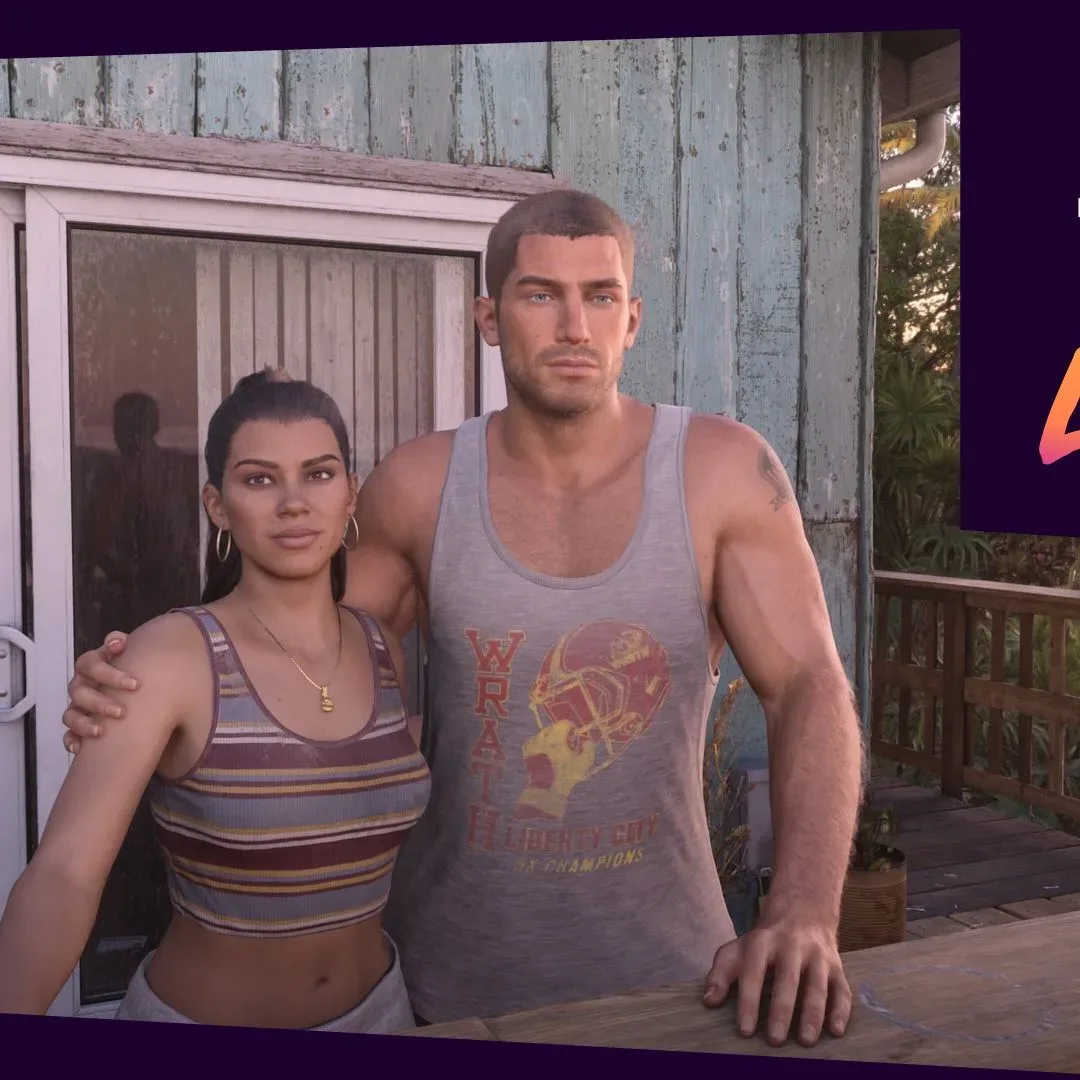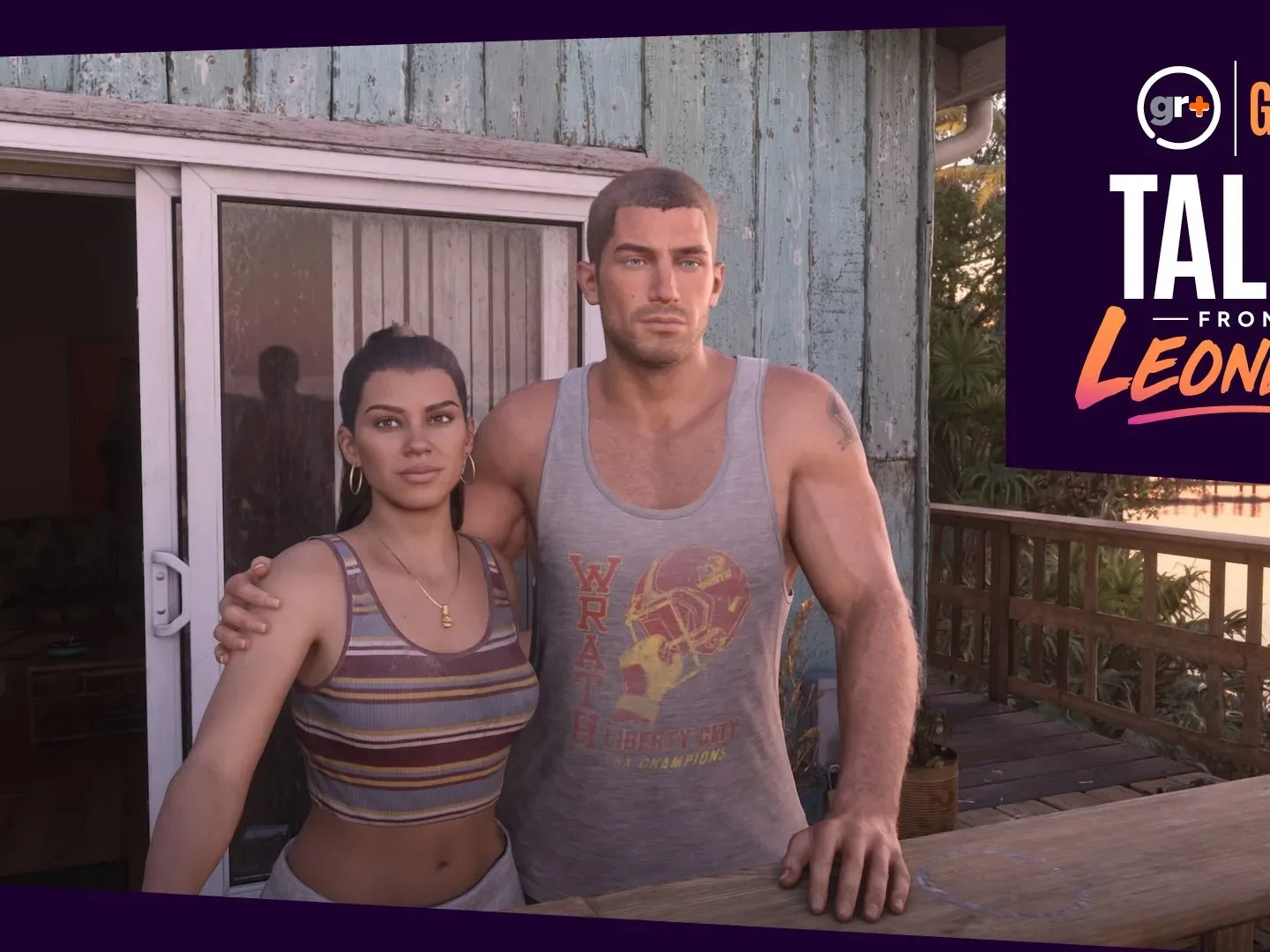
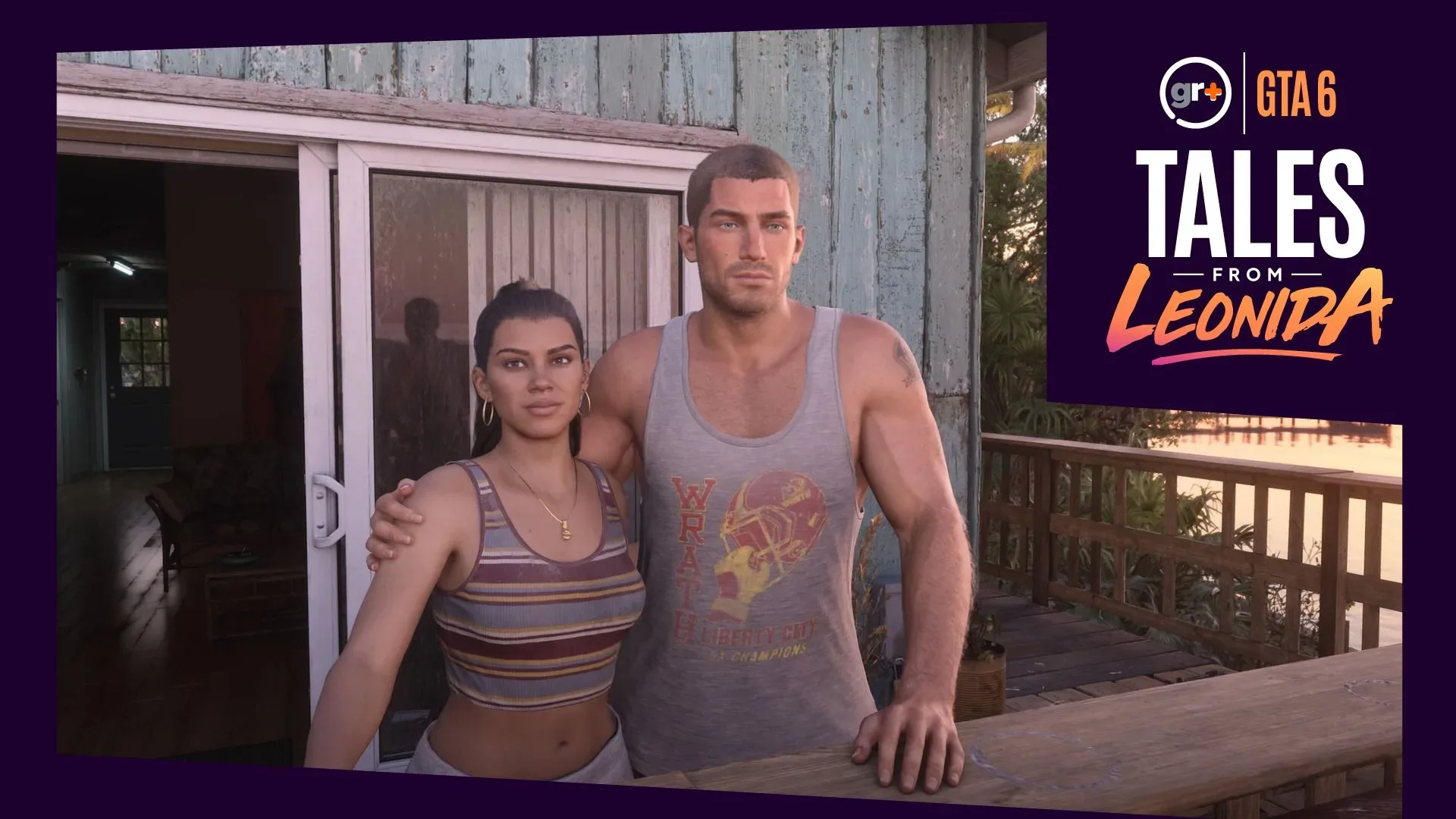
There are many ways for a sprawling crime game to communicate character. A cutscene can do it. A mission can do it. An entire beachside home furnished with almost nothing beyond a sofa, a coffee table, and one questionable armchair can certainly do it.
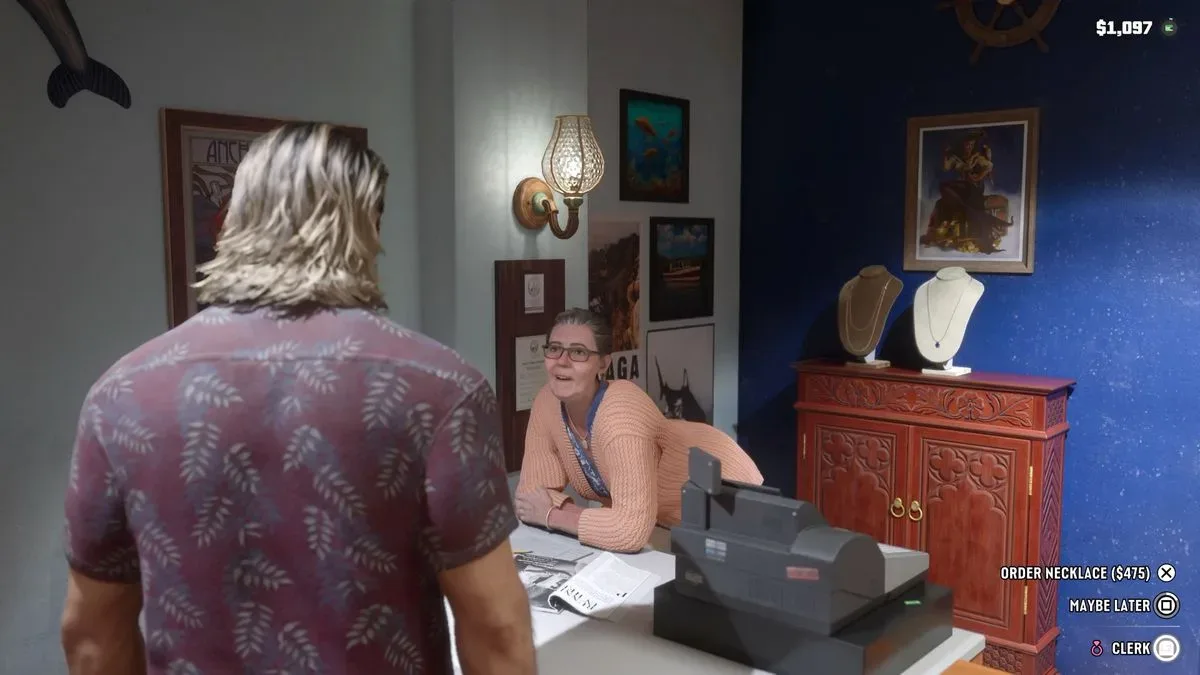
But GTA VI may have one of its funniest bits of character writing in a much smaller moment: Jason buying Lucia a $475 necklace that appears to be a gold-plated alloy chain with a brass pendant. It is an aggressively bad deal. The item is described as having only a thin coating of eight-karat gold over decidedly less glamorous metals. And, crucially, there appears to be no alternative selection at the store.
That is where the joke lands. Jason is not choosing between tasteful, sentimental, affordable, or outrageous gifts. He is presented with a dubious shiny object, a salesperson’s grand presentation, and a price that seems wildly out of sync with the materials. He pays anyway. The transaction is less a lesson in luxury jewelry than a compact comedy of good intentions and terrible consumer instincts.
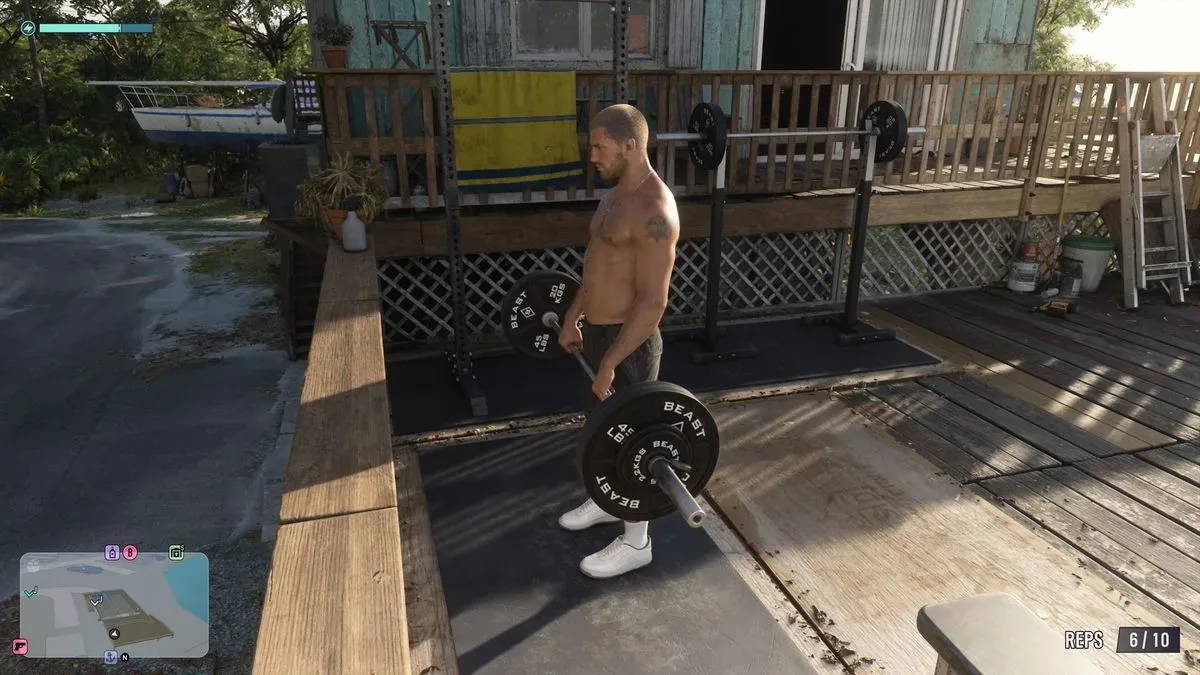
It also neatly extends what the game establishes about Jason’s life. His home and supplies suggest a character focused on getting through the day rather than cultivating domestic comfort: basic furniture, protein shakes and bars, old coffee, and a little snack food. He is physically disciplined, with a fitness app reflecting low body fat at the beginning of the game, yet he does not seem naturally equipped to distinguish meaningful romantic effort from a wildly marked-up brass pendant.
That mismatch is more memorable than a generic “buy a gift” prompt could ever be.
A relationship mechanic with room for comedy
The available details indicate that actions capable of earning Lucia’s acknowledgement are marked by a small pink heart. Home improvements are part of that system, as are fitness-related activities. Jason can use kettlebells, bench presses, squats, pull-ups, and cardio to improve himself, while other choices involve preparing for Lucia’s release: collecting spare clothes from Andy, buying groceries including wine, bread, and cereal, and ordering roses.
These are modest actions, but that is the point. They frame the relationship through maintenance and consideration rather than treating romance as a single cinematic declaration. Stocking food, bringing clothes, putting effort into the home, and making a gesture with flowers all communicate that Jason is trying to make space for another person in a life previously arranged around himself.
The necklace is intentionally out of step with that pattern. It is the big, supposedly special purchase, but it is not necessarily the thoughtful one. The visual language of romance is there—gold color, a pendant, a jewelry counter, a serious sales pitch—but the substance sounds comically underwhelming. The game turns the gap between appearance and value into the gag.
Related coverage includes GTA 6 Turns a $475 Necklace Into a Surprisingly Sharp Character Moment.
Gold-plated is an important term here. It does not mean an item is solid gold. It means a base metal is covered by a layer of gold. The source description emphasizes that this layer is exceptionally thin and identifies a brass pendant, which is why the $475 cost is presented as the outrageous part of the scene. Eight-karat gold also contains less gold than higher-karat varieties, reinforcing the intentionally unconvincing “luxury” pitch in this specific fictional purchase.
There is no indication that players can comparison-shop, negotiate, or select a different necklace. If that limitation is indeed part of the moment rather than an unexplored option, it makes the scene far funnier: Jason is not merely duped by bad judgment. He is trapped in a scripted approximation of shopping in which every available route leads directly to the same expensive piece of tin.
Jason’s sincerity is what keeps the joke from becoming mean
It would be easy for a game to portray this as straightforward incompetence. Instead, the surrounding choices make the necklace work because Jason’s effort seems sincere. He is preparing for Lucia in several practical ways. He is improving the home, picking up the clothing she requested, buying food, and arranging flowers. Even a visit from Cal, initially centered on video games, involves rearranging the living room with Lucia in mind.
That collection of small acts matters more than the inflated jewelry purchase. Jason may not understand what makes the necklace poor value, but he understands that Lucia’s return matters and that he should do something about it. The humor comes from watching him apply the same direct, uncomplicated logic to a sentimental purchase that he might apply to training: there is a task, an expensive-looking object is presented as the answer, so he completes the task.
There is a useful contrast in the game’s apparent systems. Fitness is measurable. A player can see body-fat information in the app, choose exercises, and pursue strength or cardio gains. Domestic and romantic consideration is less easily quantified, even if a pink-heart indicator signals when an interaction may matter. No app can tell Jason that a brass pendant with a thin gold layer is a poor choice, or that a less flashy item chosen with more knowledge could mean more.
That distinction gives a familiar open-world activity loop a little personality. Games often translate human experiences into checklists: buy item, visit location, improve stat, fill meter. GTA VI’s necklace scene appears to acknowledge the artificiality of that process and use it as character comedy. The player is able to tick the “gift” box, but the result is still awkward, overpriced, and uncertain.
The joke is not that Jason cares too much. It is that he cares, has no clue what he is looking at, and is handed the most suspiciously expensive option imaginable.
Why a forced bad choice can be better than a perfect one
Choice is usually treated as inherently valuable in open-world games, but not every interaction needs a branching catalog. A forced, conspicuously questionable purchase can say more than a screen full of necklaces ranked by price and relationship points.
If players had five clear options with transparent bonuses, the scene would become optimization: buy the best item, earn the best response, move on. Limiting the purchase to one laughably unsuitable necklace changes the emphasis. The player is asked to sit with Jason’s earnestness and the absurd price. It becomes a story beat instead of a shopping menu.
That does not mean uncertainty disappears. The reported concern is whether Lucia will actually like the necklace, and the supplied information does not establish her response. That unresolved reaction is important. A gift can carry emotional value separate from its material quality; equally, sincerity cannot automatically erase a thoughtless or poorly informed choice. GTA VI seems poised to let the tension exist without turning the purchase into a simple equation.
The material description also leaves room for another joke: metal sensitivity. The source raises the possibility of a nickel allergy, though it does not establish that Lucia has one. In other words, that is a comic hypothetical rather than a confirmed plot development. Still, it fits the central theme perfectly. Jason has attempted a romantic gesture, but the game may be teasing the possibility that his shortcut through “fancy gift” logic could produce consequences he never considered.
Small domestic details make the larger story feel lived in
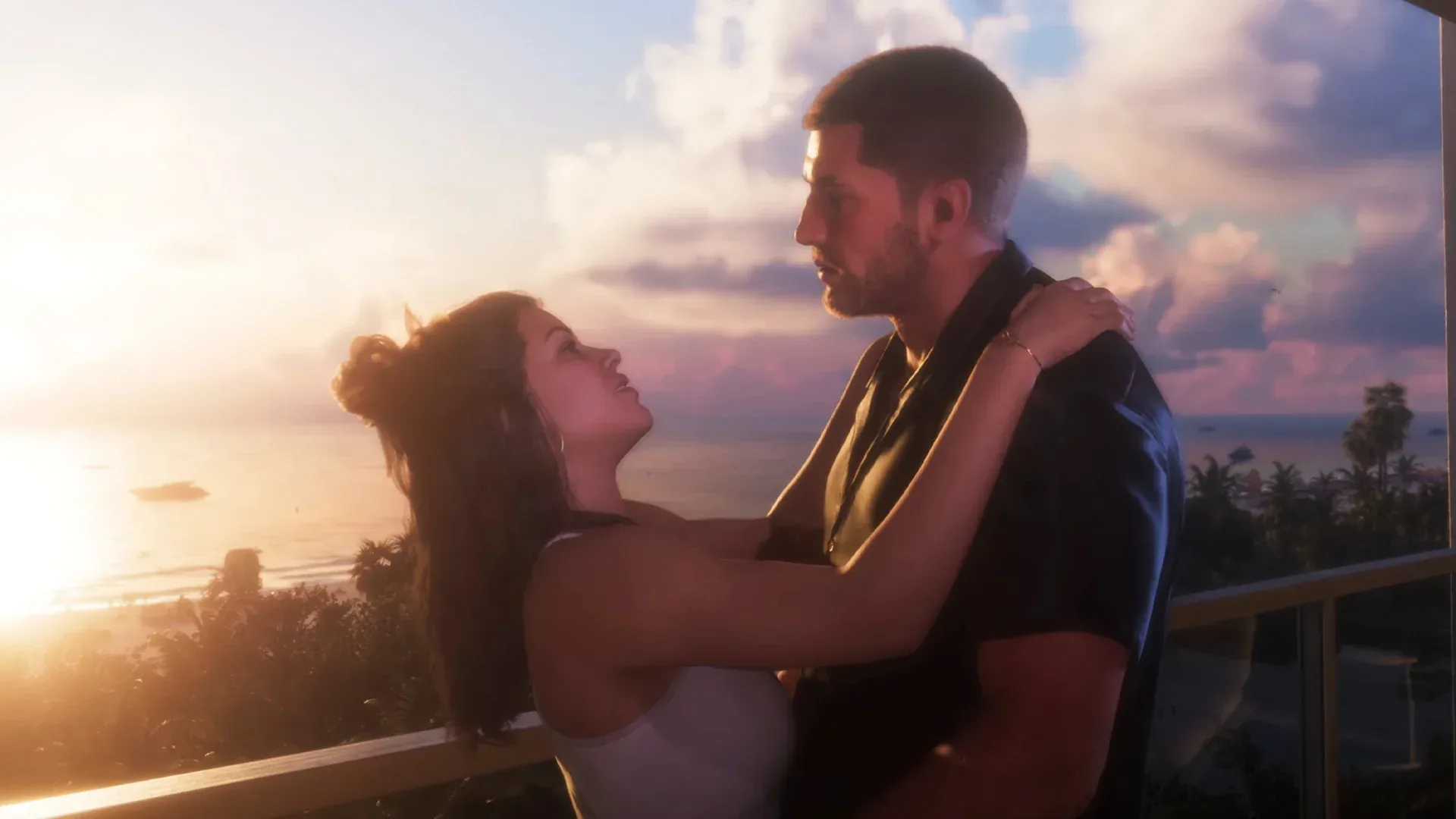
Jason’s beachside stilt house is not just environmental decoration. The sparse room and thin pantry help establish the baseline from which the relationship mechanics operate. Before Lucia’s return, he appears to live in a functional, solitary way. The home accommodates him. It does not appear designed to welcome someone else.
Improving that space, then, carries a different meaning from acquiring another car, weapon, or cash reward. The player is not simply expanding a collection; they are changing the conditions of Jason’s daily life. The game reportedly marks actions that might draw Lucia’s attention, but the context does much of the storytelling. Rearranging furniture and buying actual groceries are ordinary gestures precisely because they acknowledge another person’s needs.
There is even a comic edge to the idea that Jason’s progress can involve ignoring other obligations. One described late-night swim ends with a message from Brian postponing a job because it has become too late. The moment suggests that GTA VI’s routines can allow personal activities to collide with mission timing, though the evidence here supports only that individual example—not a full explanation of how scheduling works throughout the game.
For players, the practical takeaway is modest: the relationship-oriented actions described here appear to be worth noticing, especially when the pink-heart signal appears. But it is equally worth resisting the assumption that the most expensive-looking option must be the best gesture. The $475 necklace is, at minimum, a warning delivered with a grin.
The broader appeal of Jason’s terrible necklace
GTA has long had room for broad satire, but this particular moment sounds effective because it is unusually intimate. No elaborate heist, absurd vehicle, or citywide chase is required. The comedy rests on a person trying to buy jewelry, failing to recognize a bad deal, and hoping the gesture will be appreciated.
It is recognizable without needing to be realistic in every detail. Plenty of people have felt the pressure to find the “right” gift, relied on price or presentation as a shortcut, or discovered too late that a purchase was not as impressive as it appeared. Jason’s version just happens to involve an obligatory $475 chain that sounds designed to make the player wince.
And that may be the most charming part. The story around the necklace does not portray Jason as a polished romantic hero suddenly transformed by a shopping trip. It presents him as a man whose instincts remain messy and whose understanding is incomplete, but who is trying to adjust his life for Lucia anyway. The flowers, groceries, clothes, rearranged furniture, workouts, and objectively suspect pendant become a portrait of effort in progress.
For more on the game’s evolving state beyond this character moment, see our coverage of the GTA VI patch addressing autosave, story-call, weather, and wanted-level issues.
Jason may be ripped. He may be focused. He may even be trying very hard. But when it comes to jewelry, the $475 gold-plated alloy chain suggests he still has a great deal to learn.