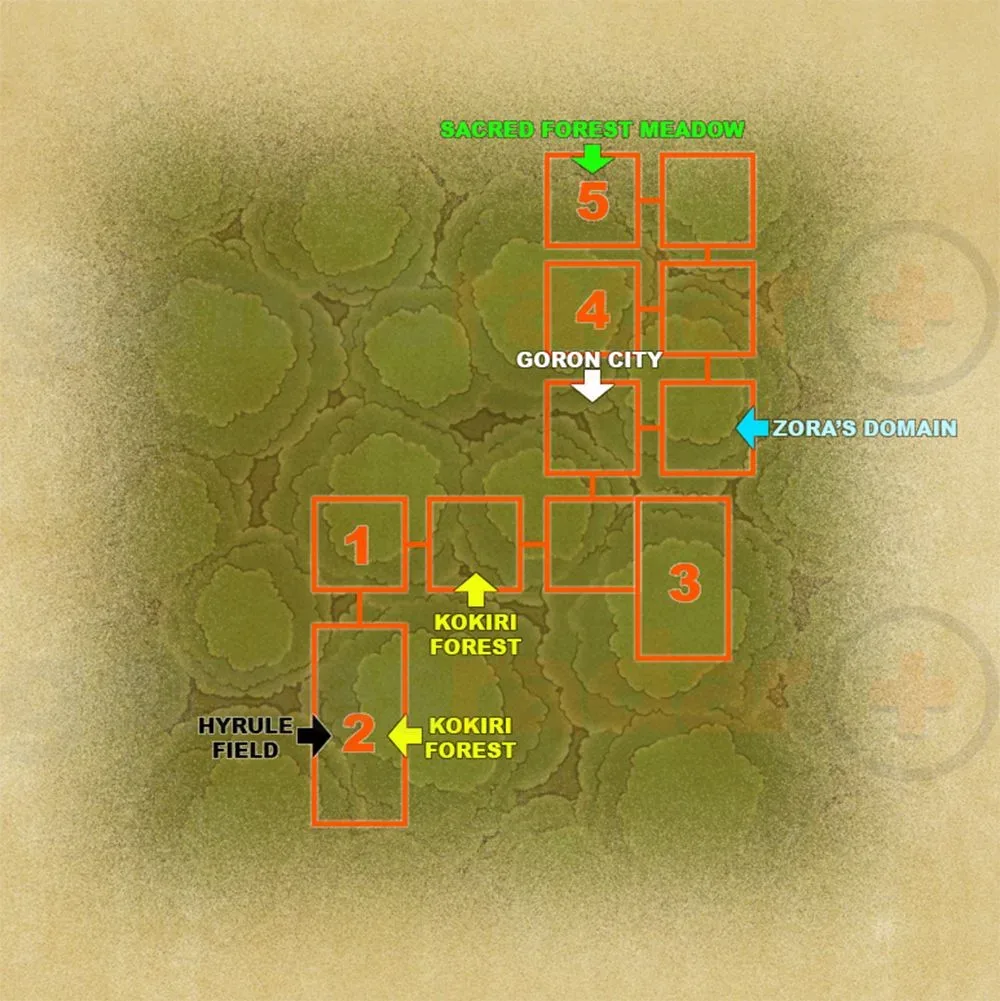
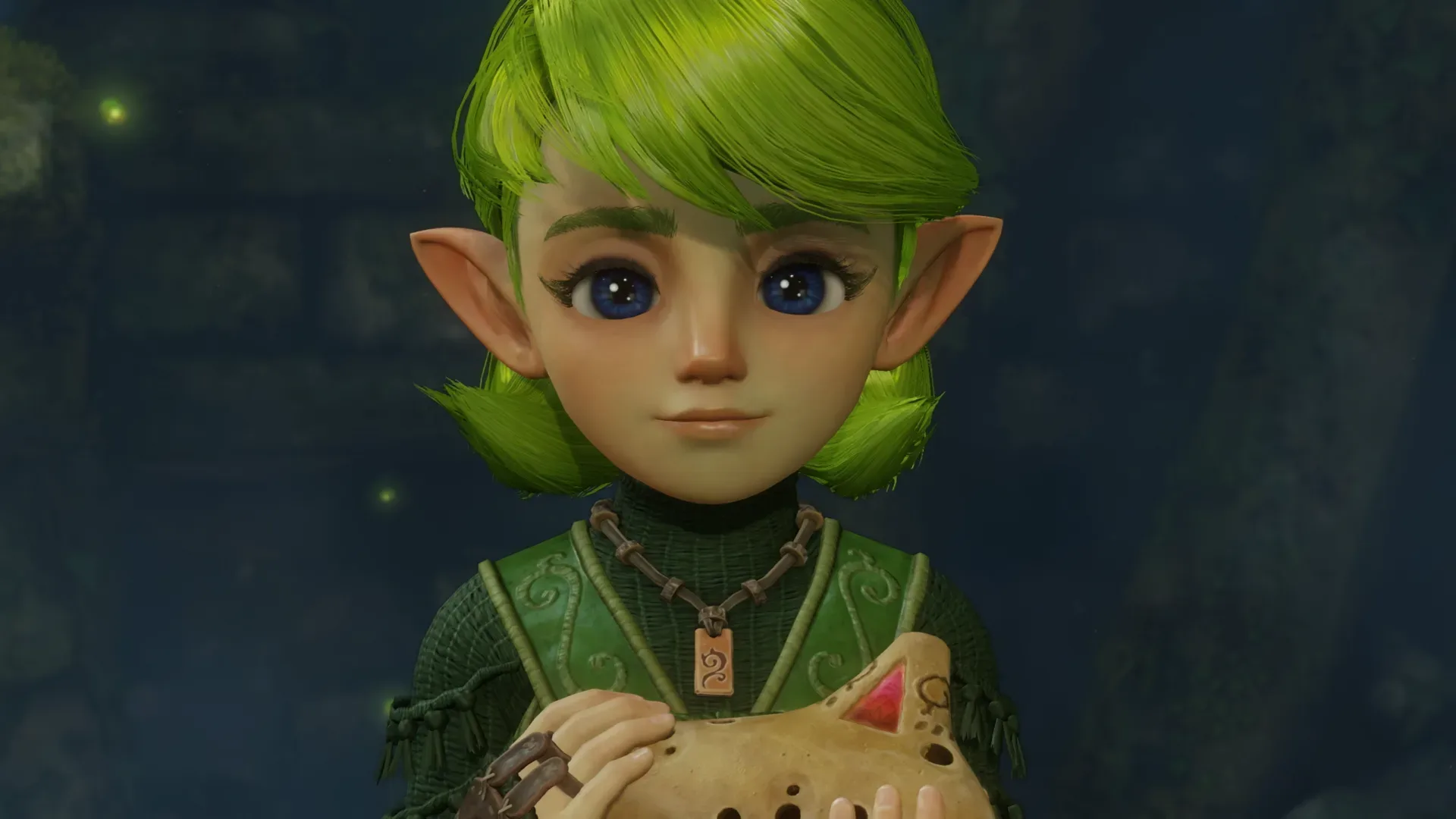
The Lost Woods are built to make a simple rule feel mysterious: at each crossroads, take the tunnel where the music is clearest. Ignore that audio clue and the forest sends Link back to Kokiri Forest, turning a wrong turn into a full reset rather than a minor detour. Follow it successfully, however, and this maze becomes one of Ocarina of Time Remake’s most useful connecting spaces, tying together Kokiri Forest, Hyrule Field, Goron City, Zora’s Domain and the Sacred Forest Meadow.
This is not a location to clear in one visit. Some exits and rewards are tied to abilities, masks, explosives, songs or items obtained later. The practical approach is to learn the central navigation rule first, use the woods to reach the next story destination, then revisit with new tools for capacity upgrades, Pieces of Heart and mask-related rewards.
How the Lost Woods navigation trick works
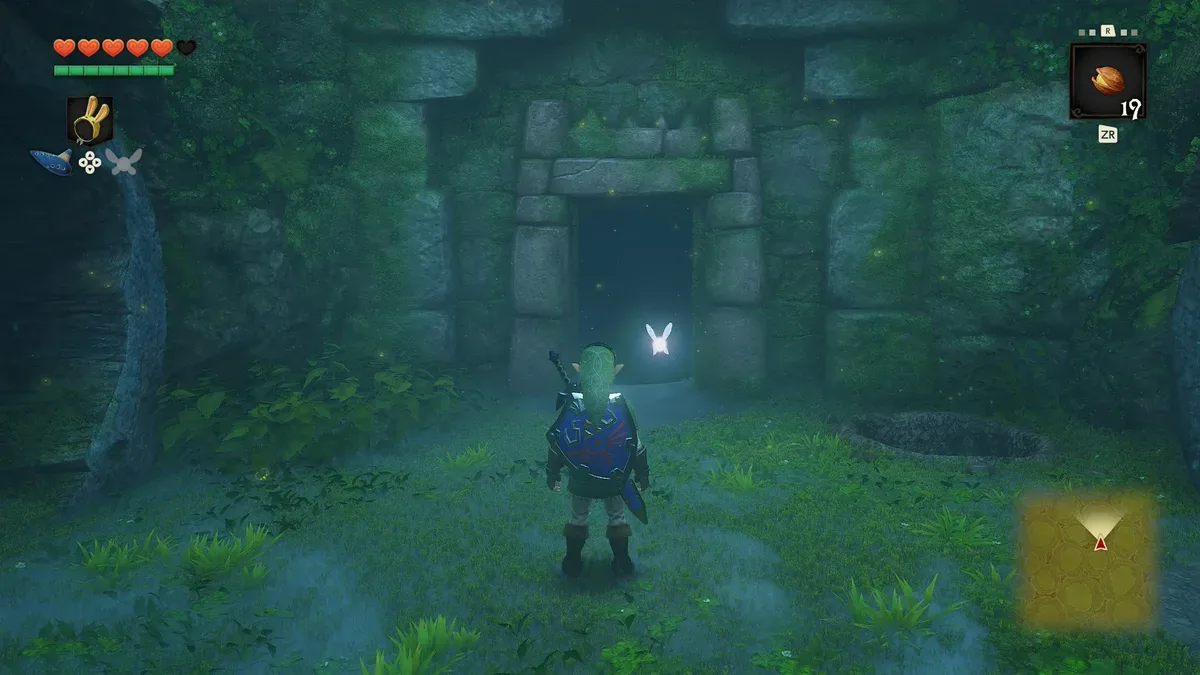
The Lost Woods consist of crossroads linked by dark tunnels. Several of those tunnels are traps: entering one returns Link to Kokiri Forest. The intended route is communicated through sound rather than a conventional on-screen waypoint.
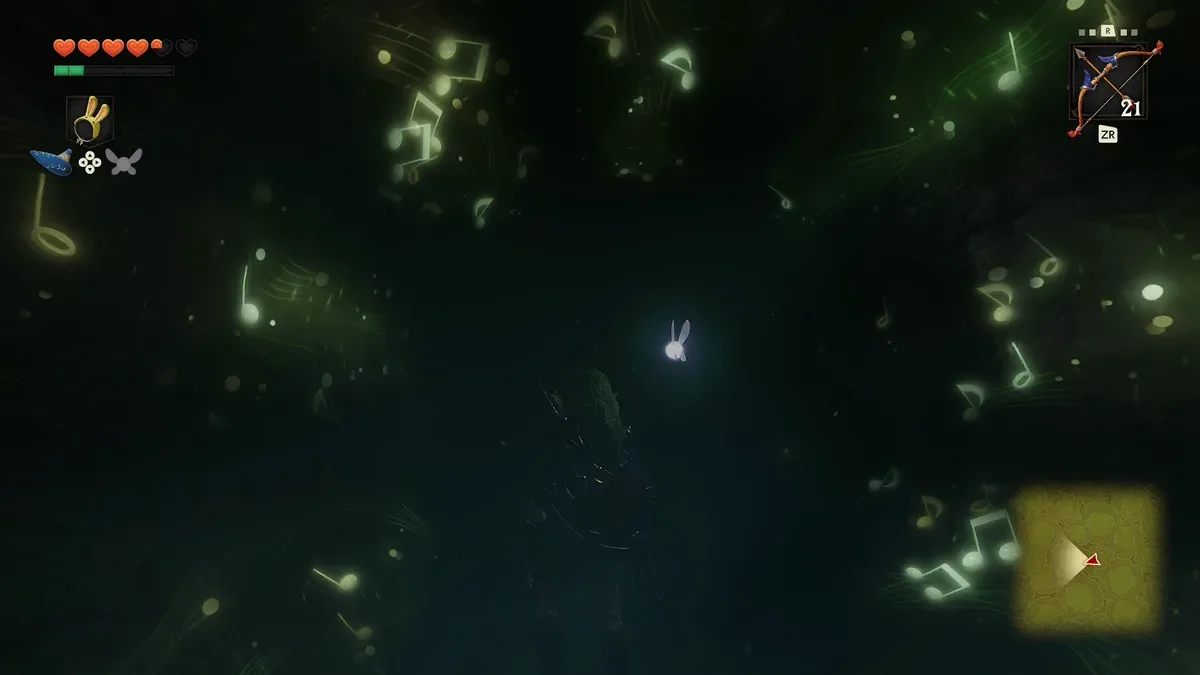
At a crossroads, listen carefully to the background music. Move toward the tunnel from which the tune sounds strongest. As Link approaches the correct opening, green musical notes appear around it. Those notes are the visual confirmation that the music has led you to the right place.
The key rule: choose the tunnel with the clearest music and look for the green musical-note effect as you near it. A wrong tunnel is not a dead end to puzzle through; it is a reset to Kokiri Forest.
The crucial route through the woods leads toward Sacred Forest Meadow and the Sacred Grove. That is the route to prioritize when the story directs Link to meet Saria. Once you understand that the forest is listening-based, its apparent randomness gives way to a readable environmental puzzle.
Why the audio cue matters
In practical terms, the music is a directional signal. It tells you which branch advances through the woods without requiring you to memorize a chain of compass directions. The green notes serve as a second confirmation, particularly useful if the audio is difficult to distinguish. Treat the notes as the final check before committing to a tunnel.
If you are exploring for side rewards rather than pushing toward Sacred Forest Meadow, the same rule remains valuable: it helps establish a reliable path back through the forest after a detour. Since incorrect choices send Link back to the village, checking the music before entering is faster than repeatedly restarting.
Related coverage includes Zelda: Ocarina of Time Remake Lost Woods Guide: Routes, Rewards and Every Exit.
Lost Woods exits and when they open
The woods function as a regional network, but not every connection is immediately available. Several are opened from the far side, while another depends on gaining the ability to dive deeply. That design makes the area worth revisiting as progression unlocks more of its shortcuts.
- Kokiri Forest: There are two access points here. They become usable after Link has the Sword and Shield and has received the Deku Tree’s permission to leave.
- Hyrule Field: This connection opens at the same stage as the initial Kokiri Forest access.
- Goron City: The route is opened from the opposite side by blowing up a tunnel marked by a stone archway.
- Sacred Forest Meadow / Sacred Grove: This is encountered after opening the Goron City path, when the quest sends Link through the woods to meet Saria.
- Zora’s Domain: This link uses a deep-diving point in Zora’s Domain. The required diving capability is gained during the search for Princess Ruto. Within the Lost Woods, the connection is a pool that Link must dive into and pass through.
These exits make the woods more than a single story corridor. Once opened, they can reduce travel between distant regions. The caveat is that the maze remains a maze: knowing an exit exists does not remove the need to follow the musical route correctly.
Players looking for broader remake context can also read our coverage of Ocarina of Time Remake’s early momentum.
Lost Woods rewards and points of interest
The Lost Woods contain a compact set of optional activities that reward observation, songs, mask use and combat interactions with Deku Scrubs. A capacity upgrade increases the amount of a particular consumable item Link can carry. These upgrades can be especially useful if you regularly rely on Deku Sticks, Deku Nuts or slingshot ammunition.
Skull Kid: Skull Mask and Saria’s Song
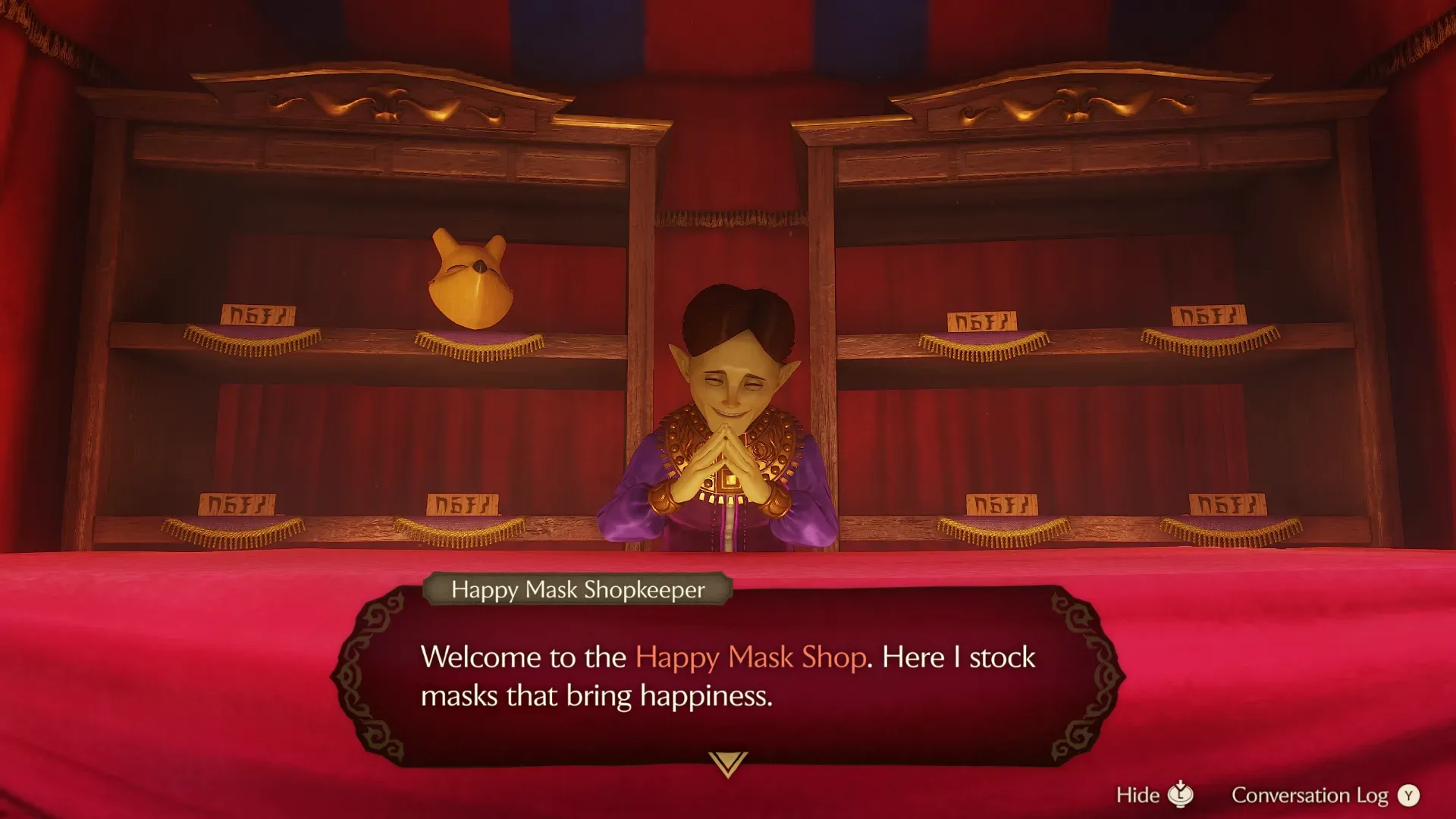
One Skull Kid interaction is connected to the Happy Mask Shop quest: bring the Skull Mask to him. Separately, playing Saria’s Song for Skull Kid earns a Piece of Heart.
A Piece of Heart is a portion of a Heart Container, so it is a health-related reward rather than a new weapon or route. The important distinction here is that the Skull Mask handoff and the Saria’s Song performance are separate reasons to revisit the same character.
Deku Stick capacity upgrade and Magic Bean planting spot
Another point of interest contains a Deku Scrub. Return its projectile back at it, and it will offer an upgraded Deku Stick bag for 40 Rupees. The same location is also a Magic Bean planting spot.
Planting a Magic Bean here while Link is a child has a later payoff: as an adult, it provides a way to reach the higher walkway. That makes this one of the clearest examples of why the Lost Woods should not be treated as a one-time early-game area. The immediate reward is added stick capacity; the long-term benefit is elevated access after the time change.
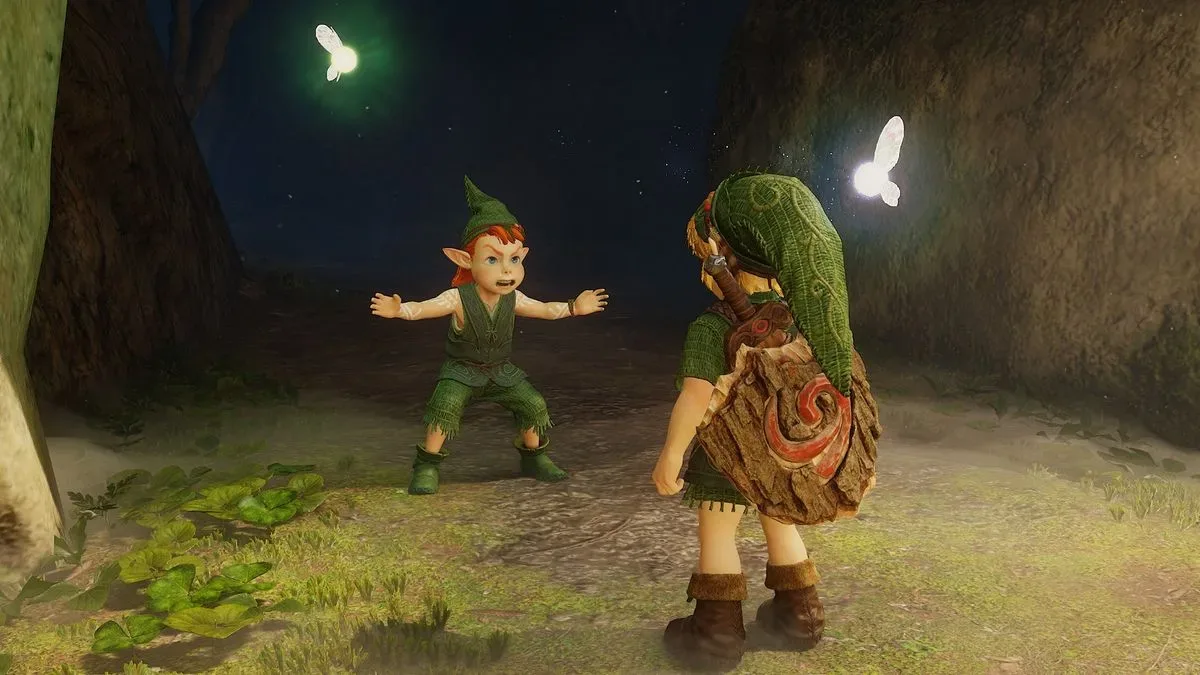
Skull Kids, a target and slingshot ammunition
A separate area combines two optional tasks. Shooting the target awards an expanded slingshot-ammunition bag. There are also Skull Kids here who reward Link with a Piece of Heart if he plays their music back to them.
These objectives ask for different actions, so do not leave after completing only one. Check the target if you want more slingshot ammo, then use the musical interaction with the Skull Kids if you are collecting health upgrades.
Forest Stage: Mask of Truth rewards
The Forest Stage hides another specialized activity. Drop into the hole while wearing the Mask of Truth, frighten the young Deku Scrubs, and then speak to the Forest Stage Leader for a Deku Nut capacity upgrade.
Other masks can also produce Rupee rewards at this location. Rupees are the game’s currency, whereas the Mask of Truth route delivers the more permanent inventory benefit. If your goal is practical item capacity, make sure the Mask of Truth is equipped before going down.
A second Deku Nut capacity upgrade
There is another way to increase Deku Nut capacity. Blow up a boulder with a bomb to uncover a hole. Inside the grotto are two Deku Scrubs; reflect their projectiles back at them, and they will sell an upgraded Deku Nut bag for 40 Rupees.
The bomb requirement is the relevant progression gate. If the boulder is still intact because you do not yet have bombs, mark the location mentally and return later. Once inside, be prepared to use the projectile-reflection interaction before the purchase becomes available.
A sensible order for exploring the woods
- Use the musical cue to reach Sacred Forest Meadow when the story directs you there. Do not waste time trying random tunnels; the clear music and green notes identify the intended direction.
- Notice the regional connections as they become available. Goron City is opened from its side by destroying the stone-archway tunnel, while Zora’s Domain requires deeper diving.
- Return with Saria’s Song and the relevant masks. This opens the Skull Kid Piece of Heart opportunity and the Forest Stage’s Mask of Truth reward.
- Bring bombs for the hidden grotto. The boulder blocks access to the second Deku Nut upgrade.
- Plant the Magic Bean as a child if you want the later high-walkway access. Its value is delayed until Link returns as an adult.
- Carry enough Rupees for the Scrub upgrades. The Deku Stick bag and the grotto’s Deku Nut bag each cost 40 Rupees.
Common mistakes to avoid
- Trying to brute-force the maze: the forest deliberately resets Link after bad choices. Listening is more reliable than memorizing failed turns.
- Assuming every route is open on the first visit: Goron City, Zora’s Domain, bomb-blocked grotto access and the adult Magic Bean payoff all depend on later progression or items.
- Confusing the two Deku Nut upgrades: one comes from the Forest Stage with the Mask of Truth, while the other is in a bomb-revealed grotto with two Deku Scrubs.
- Forgetting that Skull Kid has multiple interactions: the Skull Mask is relevant to the Happy Mask Shop quest, while Saria’s Song earns a Piece of Heart.
- Skipping the green notes: they provide a visual confirmation of the correct tunnel when following the music.
What makes the Lost Woods worth revisiting
The Lost Woods reward a change in mindset. On the first pass, they are a route-finding challenge with a story-critical destination. Later, they become an efficient web of connections and a place to improve carrying capacity, pursue Pieces of Heart and resolve mask-based interactions.
That is why it is useful to separate the essential instruction from the optional work. First, listen for the loudest music, follow the green musical notes and reach Sacred Forest Meadow. After that, revisit when you have Saria’s Song, the Mask of Truth, bombs, deeper diving ability, or a Magic Bean to plant. With those checkpoints in mind, the Lost Woods stop being a place that merely sends you back to Kokiri Forest and become a reliable part of Hyrule’s travel network.