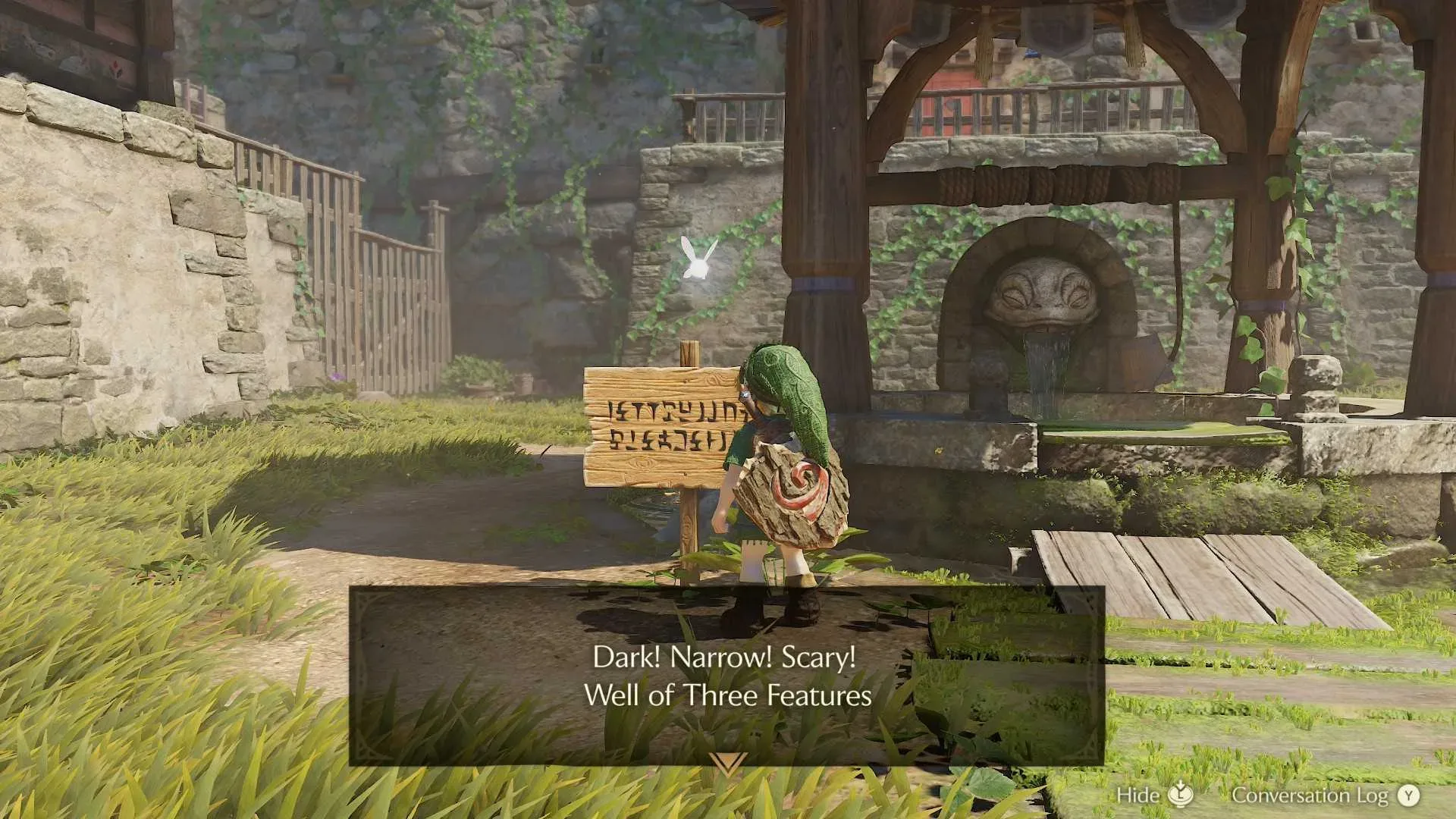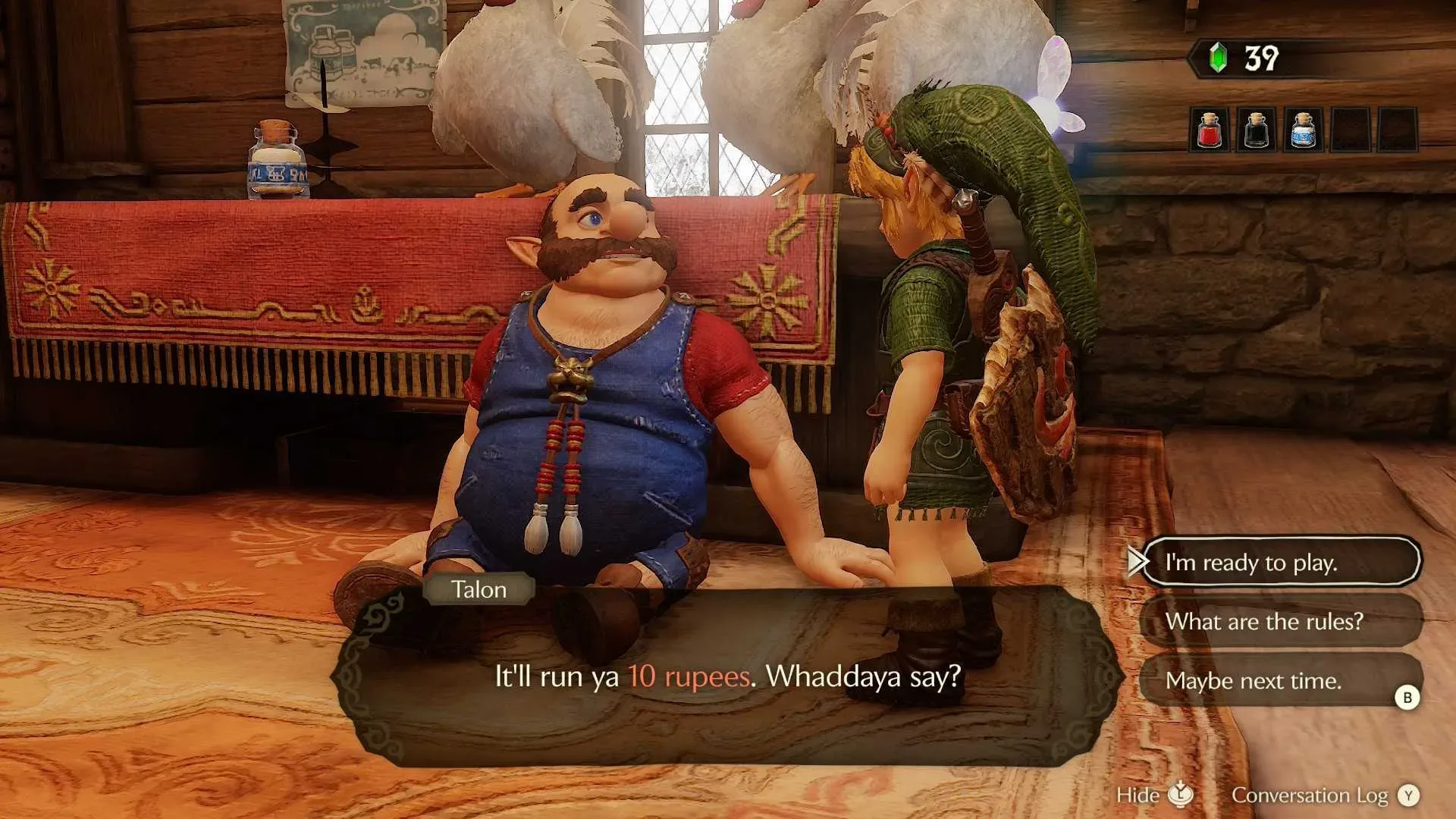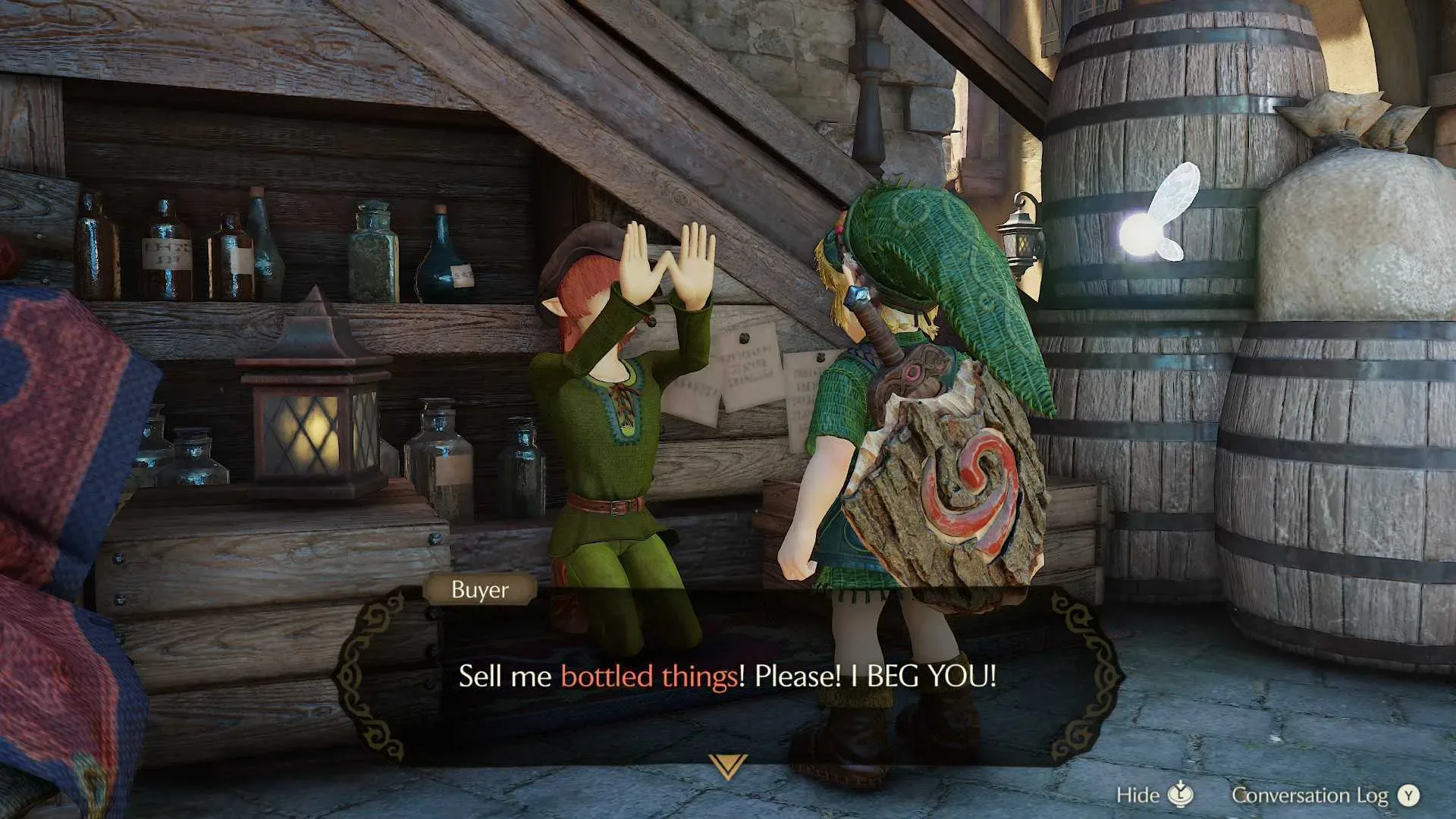
The Legend of Zelda: Ocarina of Time can feel wonderfully direct and unexpectedly opaque at the same time. Hyrule tells Link where the urgent destination is, but it also tucks useful tools, puzzle answers, side activities and major long-term rewards just beyond the obvious route. That tension is a large part of the game’s appeal. It can also make a first playthrough needlessly rough if you approach it as a straight sprint from one story marker to the next.
The best beginner approach is not to hunt every secret immediately or worry about a perfect run. It is to build a few repeatable habits: learn the basic controls properly, survey rooms before acting, revisit places as the adventure changes, and treat the game’s odd little clues as intentional. The following tips focus on those habits while avoiding a route-by-route walkthrough.
1. Take Kokiri Forest’s lessons seriously
The opening area offers an optional tutorial that is easy to overlook when the first objective sounds urgent. When Link can move around Kokiri Forest, head left from his house to find the Know-It-Alls. The characters inside provide practical pointers, while the person outside demonstrates basic fighting actions, including rolling and dodging. He also directs Link toward a sword and, after that, can teach the jump attack.
That detour is worthwhile because these are not disposable opening-area tricks. They establish the small core of movement and combat actions the adventure expects you to understand later. A player who has spent a few minutes rolling, dodging and targeting deliberately will have a much easier time responding when enemies and dungeon rooms become more demanding.
There is a broader lesson here, too: in Ocarina of Time, seemingly casual dialogue often functions as instruction. If an early NPC is teaching a mechanic rather than merely adding flavor, it is usually worth practicing it immediately instead of assuming a later area will force the lesson more clearly.
2. Make the targeted jump attack a default damage option
The jump attack is one of the most valuable early combat tools because it deals twice the damage of a standard sword swing. New players may initially learn it as a multi-button action, which can make it seem clumsier than it really is in a fight.
While targeting an enemy, tilt the control stick forward and press A to perform it. Targeting means locking your focus onto an opponent so Link faces it while moving; that makes spacing and direction much more manageable than free-swinging around an enemy. With the shortcut, the jump attack becomes a practical option rather than a special move to save for rare moments.
Use it often, but do not turn it into a blind reflex. The useful rhythm is to target, create or recognize an opening, then commit to the stronger hit. That is especially helpful for players who find ordinary sword exchanges slow or who want to finish a fight with fewer attacks.
Related coverage includes The Legend of Zelda: Ocarina of Time Beginner's Guide: 10 Smart Habits for Hyrule.
3. Follow the story, but reserve time to wander
Hyrule’s residents are very keen to keep Link moving toward the next major story location. Their instructions are useful when you need direction, but they are not a command to ignore everything else. The game contains secrets, items and diversions away from the main route, including extra things to discover even in Kokiri Forest.
A healthy first-playthrough pattern is simple: when given a clear next destination, spend a little time checking the area you are already in before leaving it. Search paths that do not look essential. Return to places after gaining a new item or after the game’s circumstances change. The world supports backtracking, and a location that seemed completely understood can later offer new dialogue, interactions or routes.
This is exploration with a purpose, not an instruction to exhaust every corner before progressing. If the next objective is clear and you are enjoying the momentum, go there. If you are stuck, short on useful resources, or simply curious, revisit familiar ground. Older adventure design often rewards memory: recalling an unusual obstruction, a suspicious wall, or an unreachable object can matter as much as reacting quickly.
For more old-school adventure recommendations built around that same pleasure of discovery, see this ranking of NES adventure games.
4. Treat Castle Town minigames as part of the adventure
Once Castle Town becomes available, minigames start appearing, with many found in shops off the square. They are optional in the narrow sense that the central story does not require you to clear every one. But writing them off as distractions can mean passing up rewards with practical value.
Some minigames award expanded storage for particular items; others can provide empty bottles. Bigger storage reduces the chance that useful ammunition or supplies become a limiting factor, while bottles have an even wider role throughout the adventure. So when a new side game appears, try it at least once. You may enjoy it, you may earn something useful, and you will at least know what it offers when you later decide you need a break from a dungeon.
There is no need to force a frustrating minigame completion immediately. The practical habit is awareness: know that these side activities exist and that their prizes can have consequences beyond the minigame room.
5. Prioritize empty bottles whenever one is available
If a side activity or character offers an empty bottle, it deserves attention. Bottles are among the game’s most flexible resources, and there are only five empty bottles to obtain.
They can hold quest items and things used to open secret paths. They also hold restorative potions, which refill health, and fairies. A fairy kept in a bottle can revive Link automatically after death, making it a particularly valuable safety net when heading into a difficult stretch. One bottle is useful; several let you choose between carrying healing, quest necessities and protection against a mistake.
Practical implication: do not think of an empty bottle as merely another collectible slot. Think of it as a reusable container that increases your options. When deciding whether an optional reward is worth pursuing, a bottle is an easy yes. The benefit is not limited to the moment you receive it; it can support quests, exploration and survival repeatedly afterward.
6. Experiment with the full item set, not only the sword
Swordplay is central to Link’s identity, but it is not the answer to every enemy. When a fight feels inefficient or dangerous at close range, test the items you have. The hookshot, boomerang and Deku Nuts can all change an encounter’s shape. Depending on the foe, an item may stun it, knock it away, or allow Link to deal with it from a safer distance.
Stunning is temporarily preventing an enemy from acting. It can create an opening for another attack, interrupt a threat, or simply buy enough time to reposition. That makes it useful even when it does not immediately defeat the enemy. A boomerang or Deku Nut may therefore be the correct first response not because it deals the highest damage, but because it gives Link control of the fight.
When you meet something that seems resistant to repeated sword swings, run a quick mental checklist: Can it be hit at range? Can it be interrupted? Can it be knocked away? Does the arena give me room to keep distance? A little experimentation is often more productive than doubling down on close combat.
7. Read NPC dialogue again after major changes
Talking to everyone is both a source of comedy and a real navigation tool. Characters offer hints about the next task and sometimes point toward secrets that would otherwise be easy to miss. More importantly, their dialogue can change as the game progresses. A person who had nothing urgent to say earlier may have context or a useful clue later.
Make a point of checking in when you return to a settlement or revisit a major area. You do not need to interrogate every character after every tiny action, but a sweep after meaningful progress can provide direction without resorting to a full solution guide.
Navi is part of this information loop as well. She may be a persistent presence, but her combat advice is valuable, particularly for unfamiliar monsters. If an enemy is causing trouble, ask what Navi has to say before assuming the game expects a test of raw reflexes. The answer may identify a behavior, vulnerability or tactic you have not noticed.
8. When a dungeon stalls, stop and survey it
Dungeons reward observation. If you are convinced there is nowhere to go, the answer is often not a hidden sequence of button presses; it is a visible detail that has not yet registered. Pause, turn the camera and inspect the room systematically.
- Check walls for strange symbols or unusual features.
- Notice floor sections that look different from their surroundings.
- Look for switches, fire and objects that could be lit.
- Examine what lies below your current position, including platforms that are easy to miss from above.
- Consider how rooms, ledges and mechanisms connect.
- Look underwater rather than treating water as empty space.
This habit is useful because dungeon puzzles are frequently built around relationships: a switch affects a platform, fire interacts with something nearby, or an odd visual element signals that the room has more than one layer. Slowing down for a deliberate scan is not wasted time. It is the puzzle-solving method the environment is asking for.
9. Inspect glowing fairy symbols with Navi
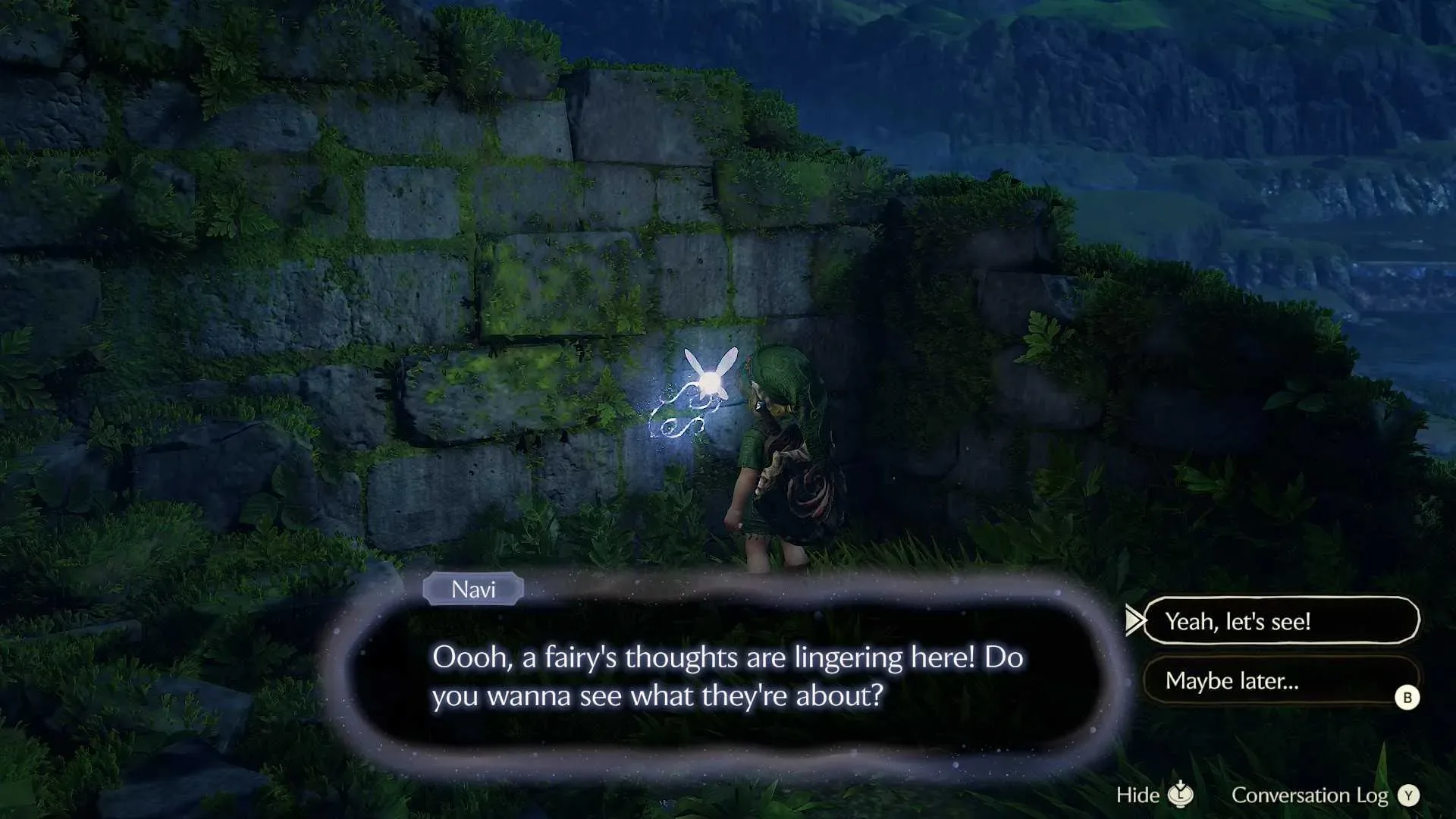
The remake adds fairy symbols: glowing rune-like markings found on walls, pillars and other less obvious surfaces. They can be examined with Navi, and they may offer a hint toward a secret or another small bonus for interacting with the surroundings in the appropriate way.
The key word is inspect. A bright marking is not simply decoration to run past on the way to the next door. When you encounter one, use Navi and consider the immediate environment. Is there an unusual object nearby? A feature that matches the hint? A place that otherwise seemed like background?
These symbols reinforce one of the game’s central habits: useful information can be embedded in the space itself. If you cultivate the instinct to examine conspicuous details, you will be better equipped for both these markings and ordinary environmental puzzles.
10. Start listening for Gold Skulltulas early
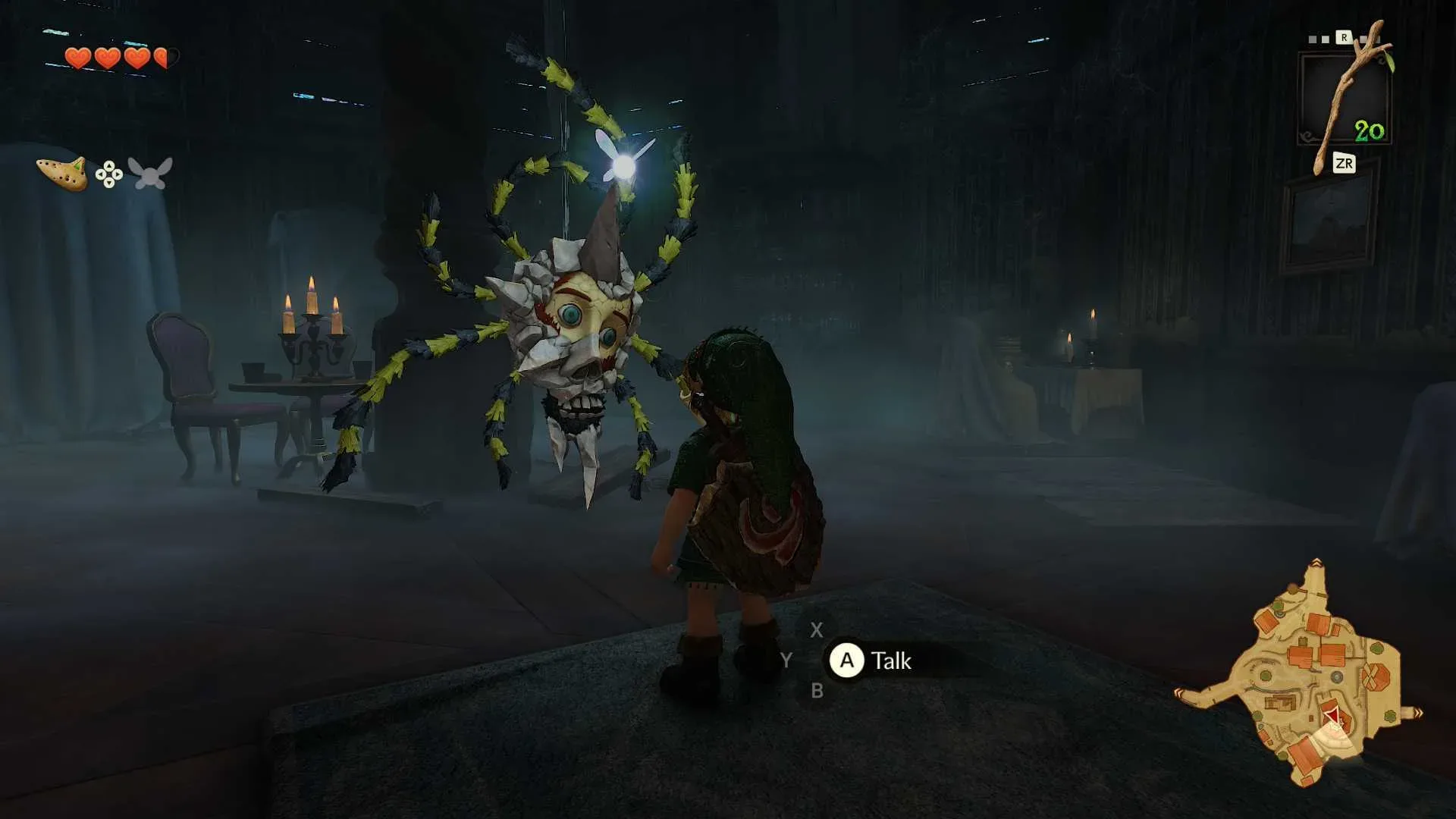
Gold Skulltulas are a long-term exploration objective with 100 total to find. Reaching collection milestones earns rewards, and those rewards can be highly useful. Because the game may not make their importance obvious at the beginning, it is smart to start paying attention as soon as they appear rather than postponing every one until the end.
The clearest clue is audio: listen for their distinctive scratchy sound while exploring. Visual habits matter too. Trees that appear to be shedding leaves are worth rolling into, as this can reveal a Gold Skulltula. In towns, they only appear at night; in dungeons, they can be found at any time.
There is no need to chase all 100 on sight or to derail an enjoyable first run into a checklist. Instead, collect the ones you naturally encounter, remain alert to the sound, and remember the day-and-night rule in towns. That approach builds progress steadily and reduces the chance that a later cleanup becomes an overwhelming search across the whole game.
One final survival rule: respect the Cuccos
Cuccos are Hyrule’s chickens. You can pick them up, carry them and throw them. What you should not do is hit them. Consider this less a cryptic puzzle hint than sound survival policy. The adventure contains enough monsters, traps and mysteries already; there is no reason to create a poultry-related problem for yourself.
For a newcomer, the larger takeaway is that Ocarina of Time is at its best when you engage with its systems instead of treating them as scenery. Learn the early combat language, use the inventory imaginatively, let dialogue and environmental clues guide you, and make room for optional activities. Hyrule will still point you toward the next major destination. You will simply arrive with more tools, more knowledge and fewer avoidable headaches.