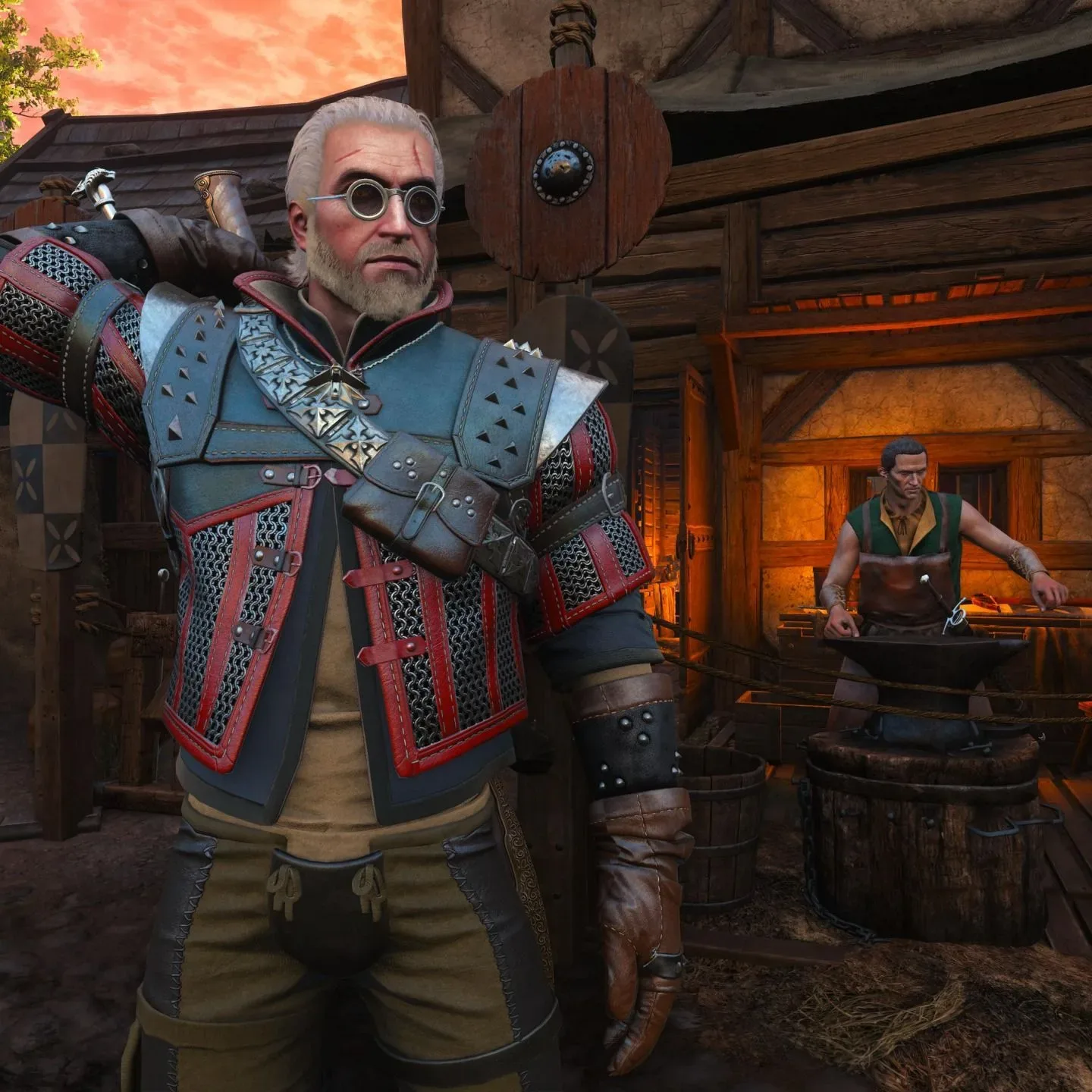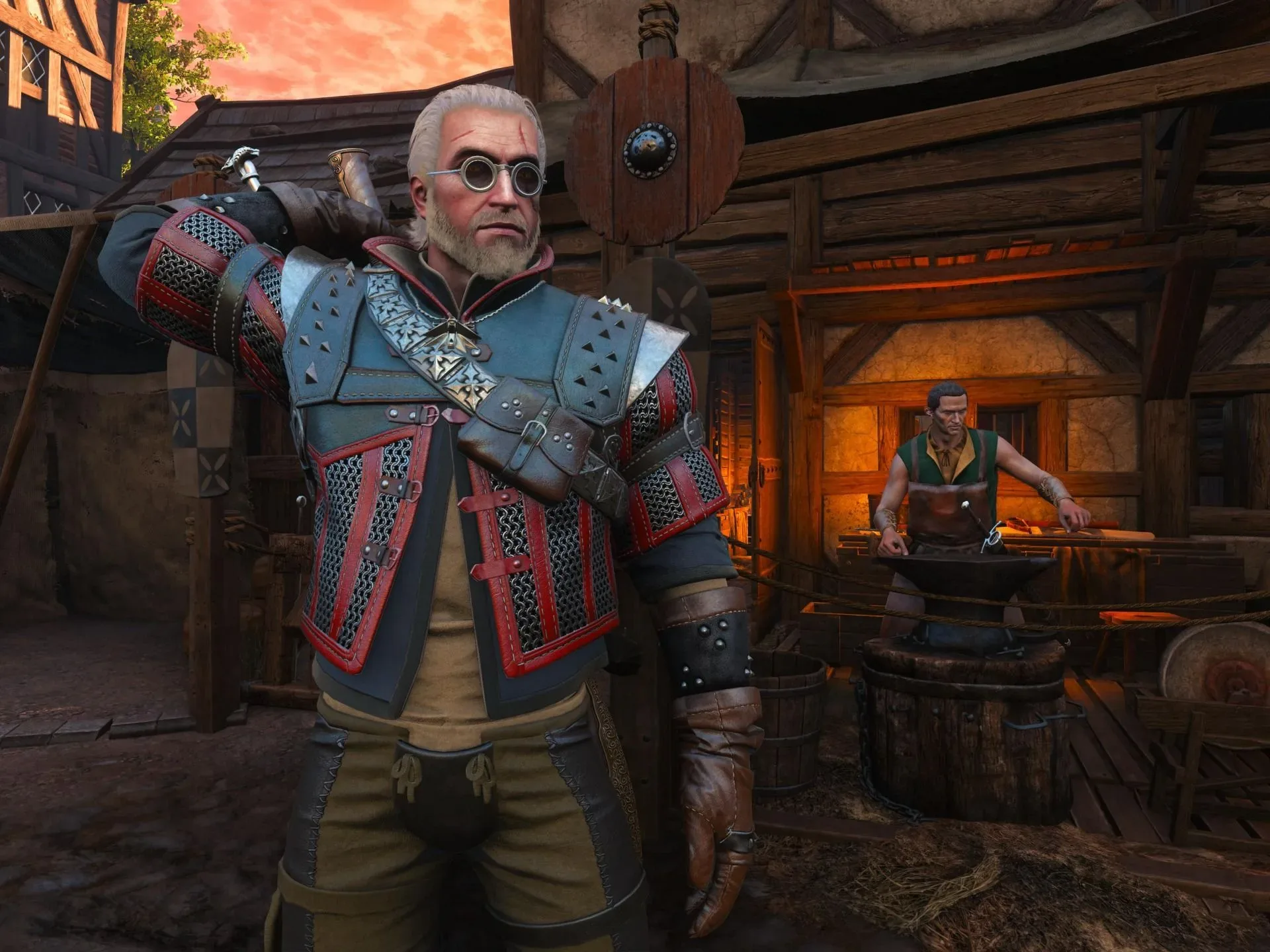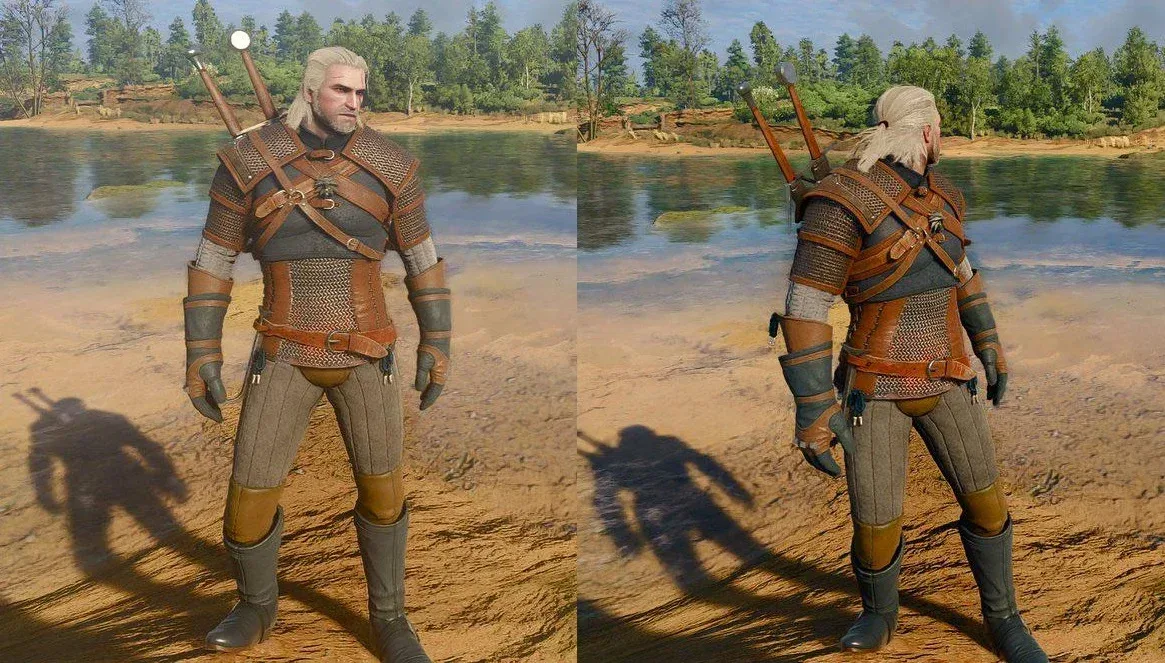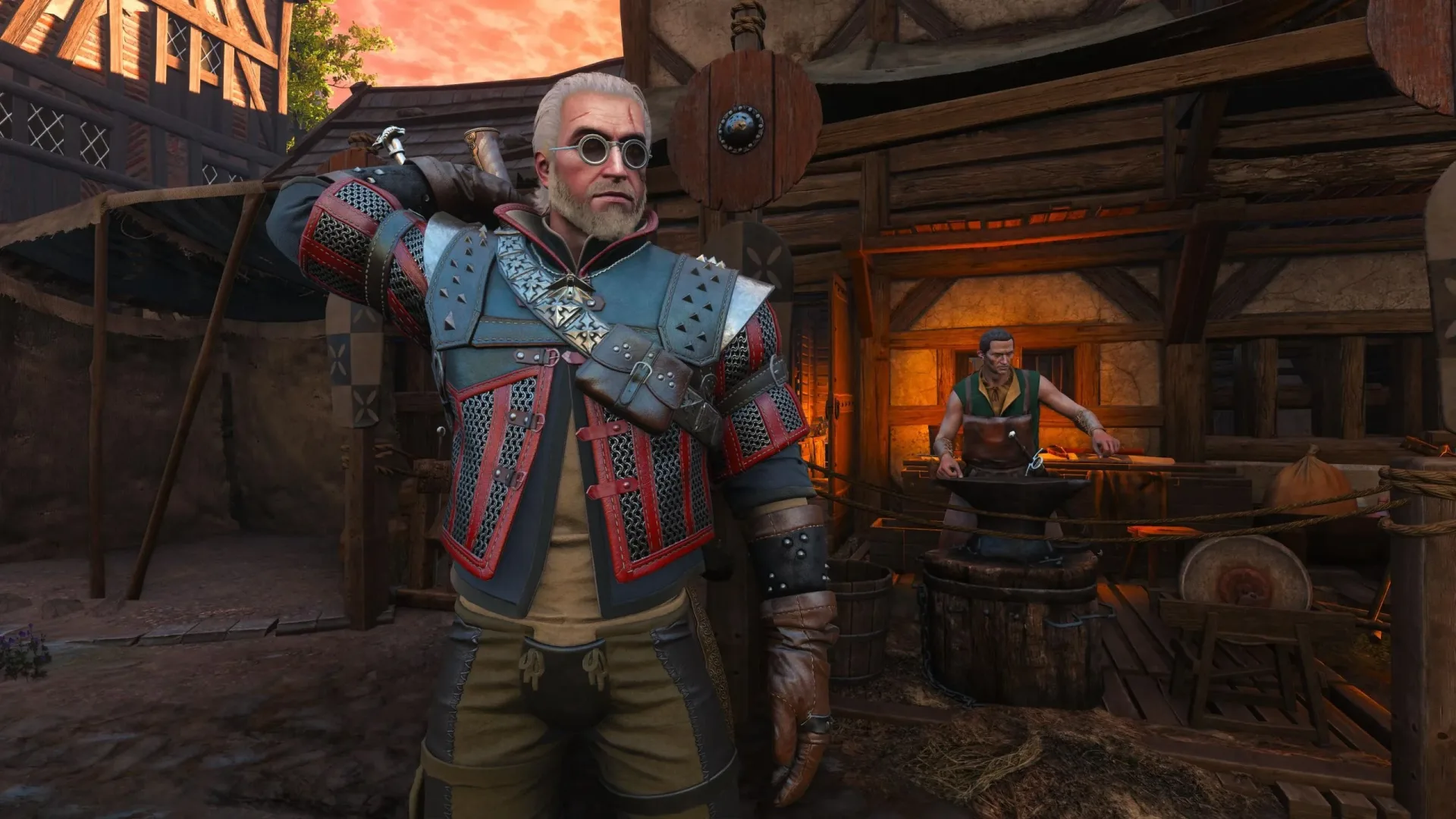
The Witcher 3 Remastered adds a transmog system called Reforge, letting players change an equipped weapon or armor piece’s appearance without changing its statistics. In practical terms, Geralt can retain the combat benefits of a high-level item while borrowing the look of another eligible item he owns.
It is a welcome bit of wardrobe freedom in a game where a powerful piece of gear and a preferred visual style do not always agree. The catch is that Reforge is not an early convenience available at every smithy. Armor and weapons are handled separately, and the two craftspeople who provide the service must first be unlocked through side-quest chains with a recommended level of 24.
What Reforge means in The Witcher 3 Remastered
Transmog is shorthand for “transmogrification”: a cosmetic system that makes one item look like another. It is important to separate appearance from performance here. Reforging does not transfer stats, alter an item’s underlying properties, or turn a weaker item into a stronger one. It changes how the chosen equipped item looks.
That distinction is the whole point. A player can wear a strong piece of Mastercrafted Witcher gear while displaying the visual model of a different piece of armor in their inventory. The same principle applies to weapons through the appropriate specialist.
The system has sensible equipment-type boundaries. A pair of trousers cannot be made to look like footwear, for example. The useful way to think about it is that Reforge operates within compatible categories: a chestpiece can take the appearance of another chestpiece, rather than becoming an unrelated slot.
Where to unlock transmog services
There are only two relevant master craftspeople, with one responsible for armor and the other for weapons. Their services are split by equipment category, so locating the right character is the first step.
- Armor: Visit Yoana, the Master Armorer at Crow’s Perch in Velen.
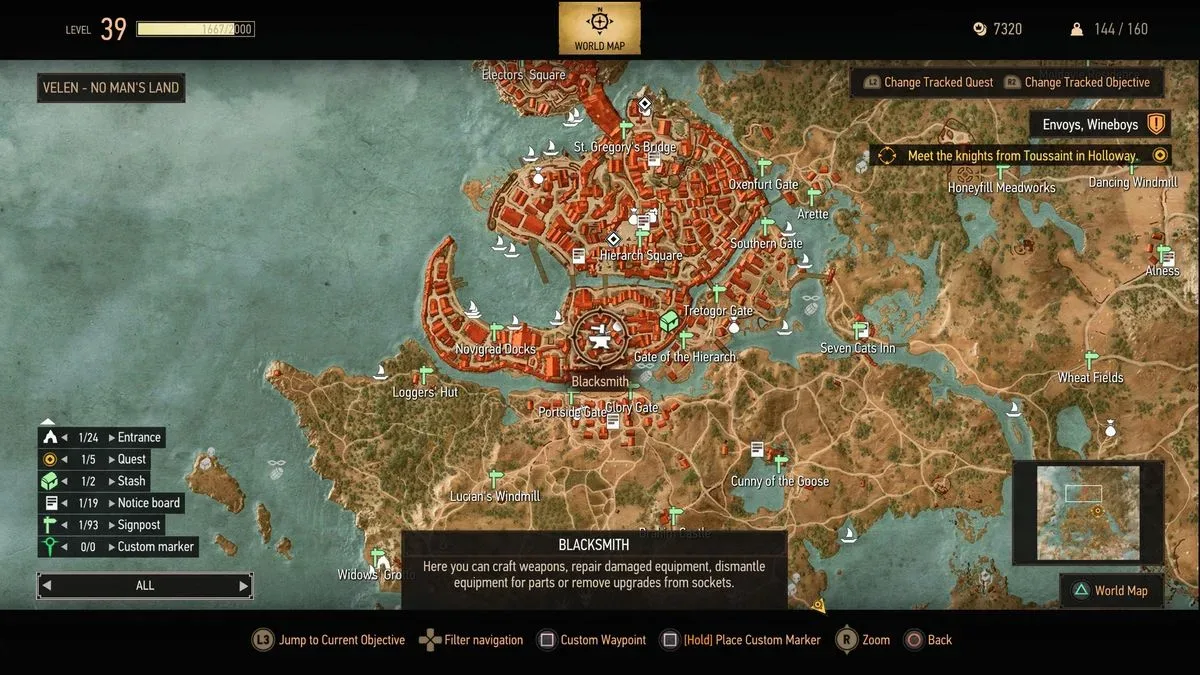
- Weapons: Visit Éibhear Hattori, the Master Swordsmith in the Novigrad Docks area.
Neither artisan is immediately ready to provide Reforge. Each must be unlocked through their own side-quest sequence, and both chains carry a recommended level of 24. That recommendation is worth treating as a planning signal: Reforge may be something players unlock later in a run, rather than a feature to build an early-game wardrobe around.
Unlocking Yoana for armor Reforge
To begin the armorer path, go to Crow’s Perch in Velen and speak with Fergus Graem, the local smith. Tell him Geralt is seeking a Master Armorer. This starts the quest Master Armorers.
Related coverage includes The Witcher 3 Remastered Transmog Guide: How Reforging Gear Works.
Completing Yoana’s associated quest chain unlocks the armor-focused Reforge service. Once that work is done, she is the person to see when the goal is to change how armor appears while keeping its current stats intact.
Unlocking Hattori for weapon Reforge
For swords and other weapons, the relevant specialist is Éibhear Hattori. Players can start his chain by asking any weaponsmith about finding a Master Swordsmith. Alternatively, go directly to the Dumpling Restaurant in Novigrad. It is in an open plaza between the Novigrad Docks and Gate of the Heirarch fast-travel points.
The opening quest is Of Swords and Dumplings. Completing Hattori’s chain makes his weapon-oriented Reforge option available.
This division means an armor makeover and a sword makeover may require different trips, different quest progress, and different preparation. The game is not asking players to locate one universal fashion wizard; it is asking Geralt to respect the local trade guild’s aggressively specific job descriptions.
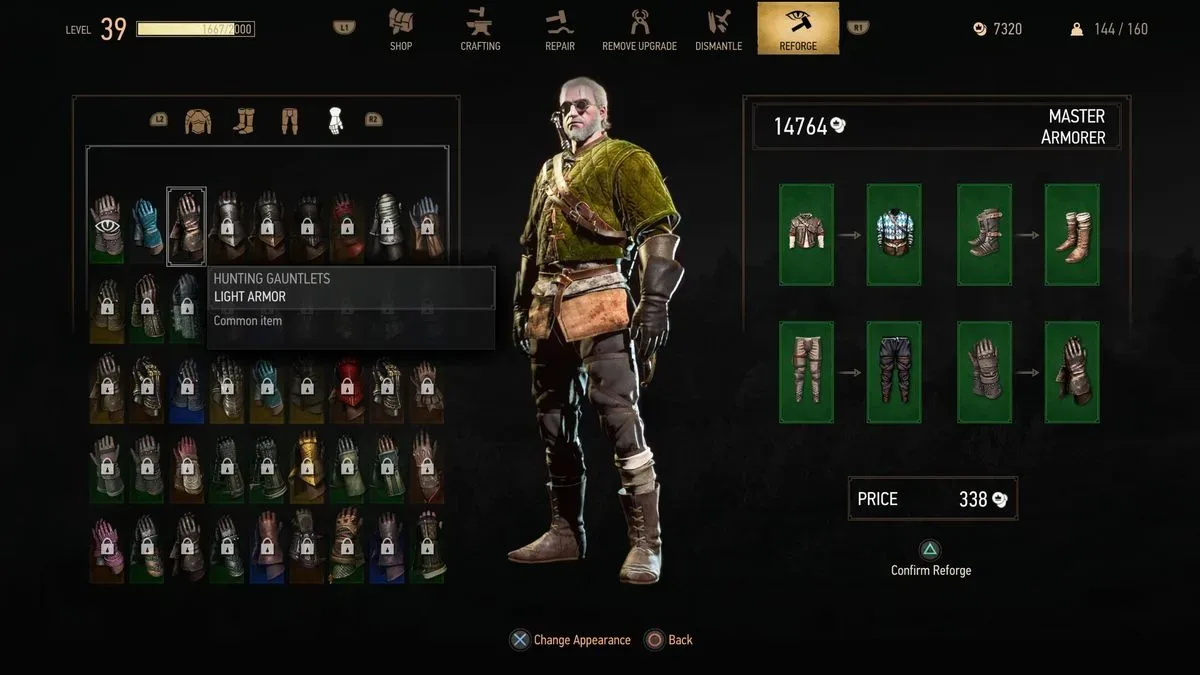
How to Reforge an item, step by step
After the required master artisan is unlocked, the process is straightforward:
- Visit Yoana for armor or Hattori for weapons.
- Speak with the appropriate master craftsperson.
- Select the dialogue option labeled Reforge.
- Choose the equipment item whose appearance you want to change.
- Choose the item in your inventory whose appearance you want to use.
- Confirm the choice and pay the listed cost.
The order matters because the two selections have different jobs. The first item is the gear Geralt will continue to wear for its gameplay benefits. The second is the visual template. If a player wants to preserve the stats on their preferred armor but make it look like another chestpiece, the powerful equipped armor is the item being reforged, while the other chestpiece supplies the appearance.
The inventory rule that can derail a Reforge visit
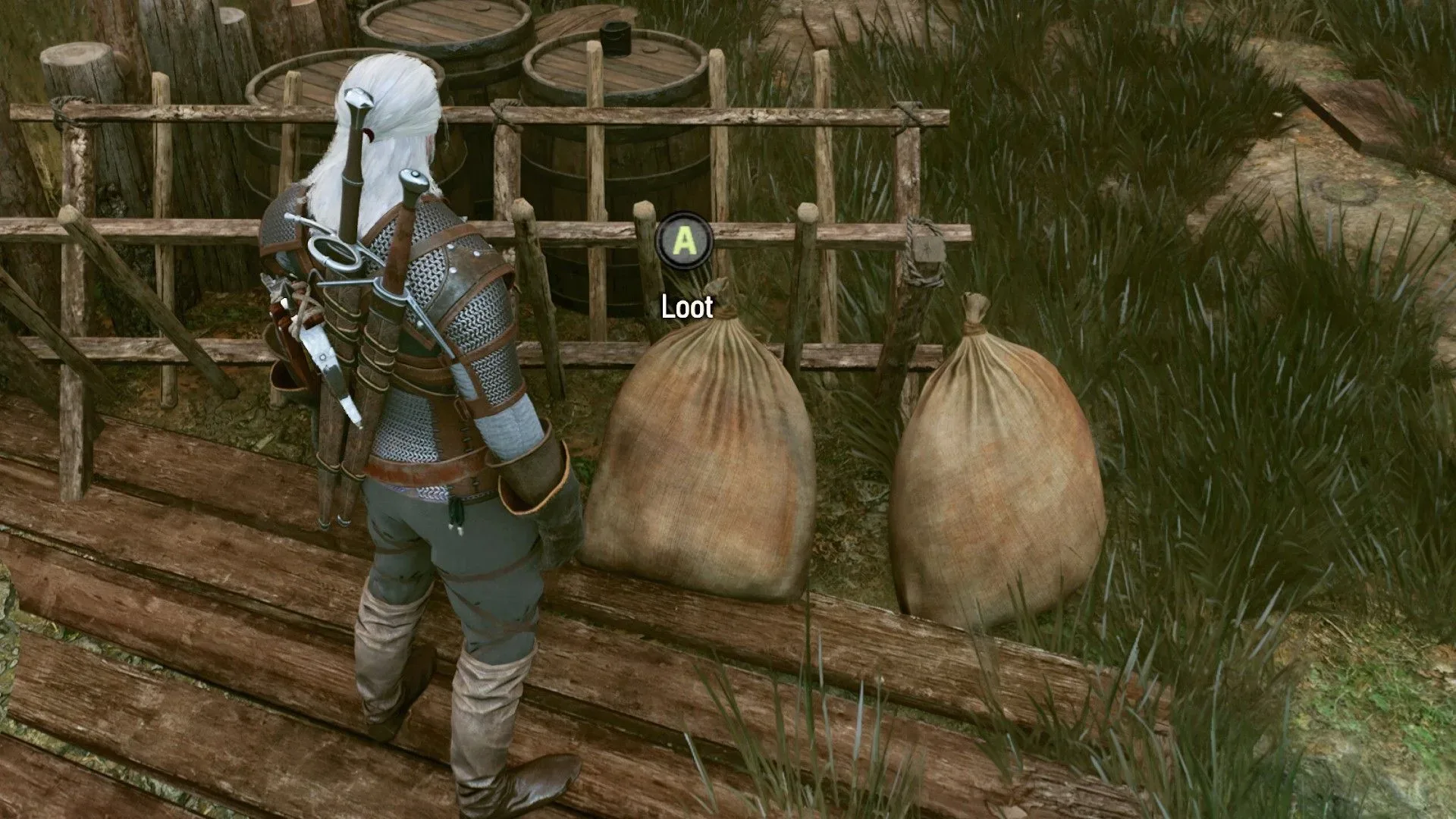
Both items must be in Geralt’s inventory when Reforge is performed: the gear being worn for its stats and the item providing the desired visual appearance. Owning an item somewhere in the broader sense is not enough if it is sitting in the stash rather than currently carried.
That makes inventory preparation the main practical consideration. Before heading to Crow’s Perch or the Novigrad Docks, take a minute to decide on the visual style you want and remove the relevant pieces from the nearest stash. A player who turns up with only the high-stat armor cannot select an appearance they left in storage.
This requirement also gives cosmetic items a small but real value beyond their combat usefulness. An old chestpiece, pair of trousers, or weapon may be worth retaining if it has a design you enjoy. There is no suggestion that Reforge changes its stats, consumes it, or makes it into a new combat item; the key point is simply that the visual donor must be available in inventory at the moment of the transaction.
Why transmog matters for build choices
Reforge is fundamentally a quality-of-life feature. Its value is not higher damage, improved protection, or a shortcut around the normal gear progression. Its value is that it removes a cosmetic compromise.
Without transmog, upgrading can force an unwanted choice between an item’s effectiveness and its appearance. With Reforge available, that decision becomes less restrictive. A player can prioritize the stats they want while preserving an outfit or weapon look they prefer, provided they have compatible equipment in their inventory and access to the correct master artisan.
It is also useful for players returning after a break. Rather than treating every newly acquired upgrade as a visual reset, they can settle on a look and continue improving the statistical gear beneath it. For newcomers, it makes experimentation less punishing aesthetically: trying stronger equipment no longer necessarily means abandoning an established version of Geralt’s style.
None of this changes the underlying need to choose gear for the desired stats. Reforge is cosmetic, not a substitute for comparing equipment. The sensible order is to decide what item Geralt should wear, then use the system to decide what that item should look like.
A quick checklist before visiting a master craftsperson
- Make sure the relevant master is unlocked through Master Armorers or Of Swords and Dumplings.
- Use Yoana for armor and Hattori for weapons.
- Bring the item whose stats you intend to use.
- Bring the compatible item whose appearance you want.
- Check the stash first, since both items must be in inventory.
- Have enough currency for the Reforge cost shown in the menu.
For more game-related reading from around the site, see our look at what is actually known about GTA VI performance rumors.
Reforge does not rewrite Geralt’s build, but it gives players control over a part of the journey that gear systems often take away: looking the way they want while wearing the equipment they need. Unlock the two masters, carry both the statistical item and the cosmetic donor, select Reforge, and the White Wolf can finally be optimized without dressing like he lost a wager with a merchant’s curtain rack.