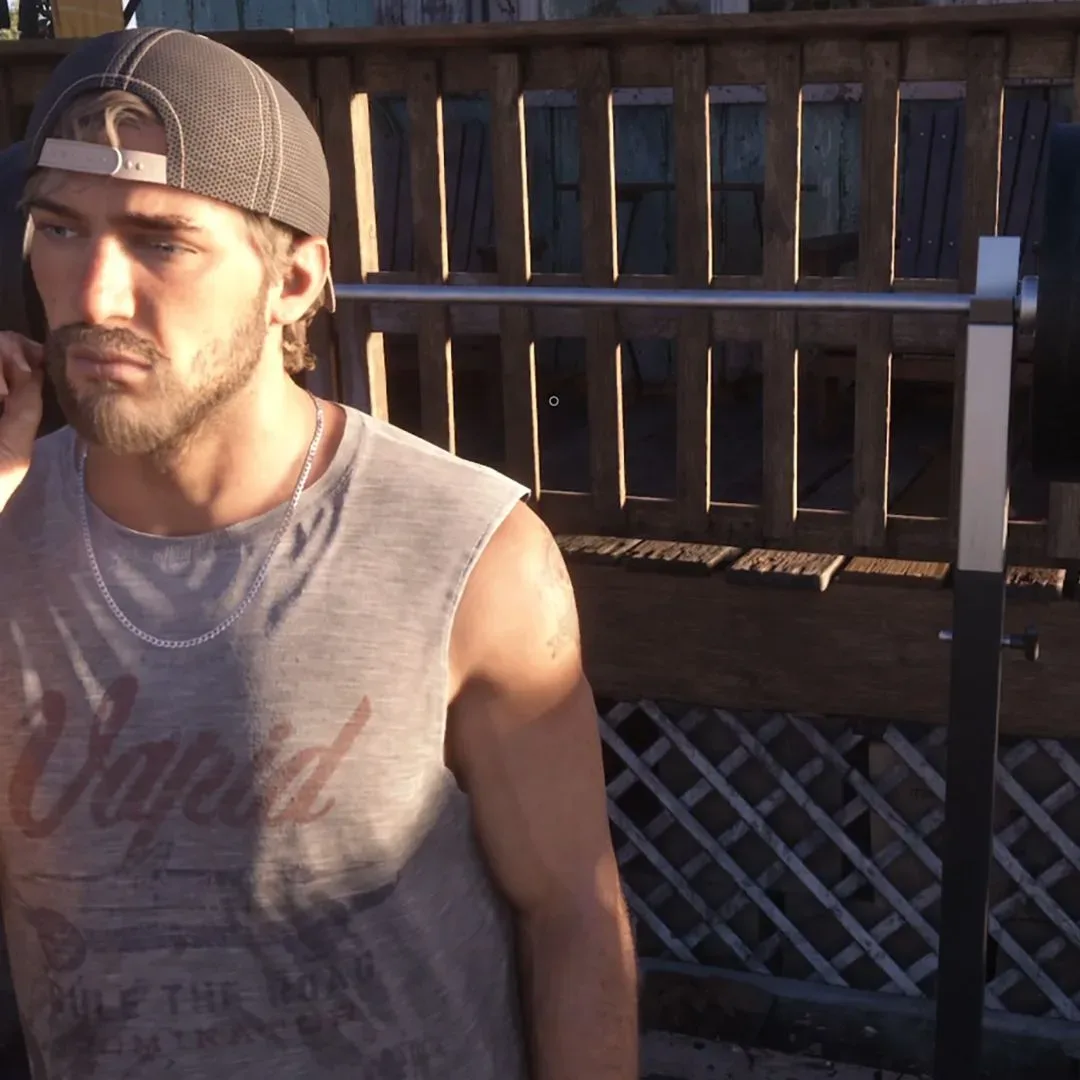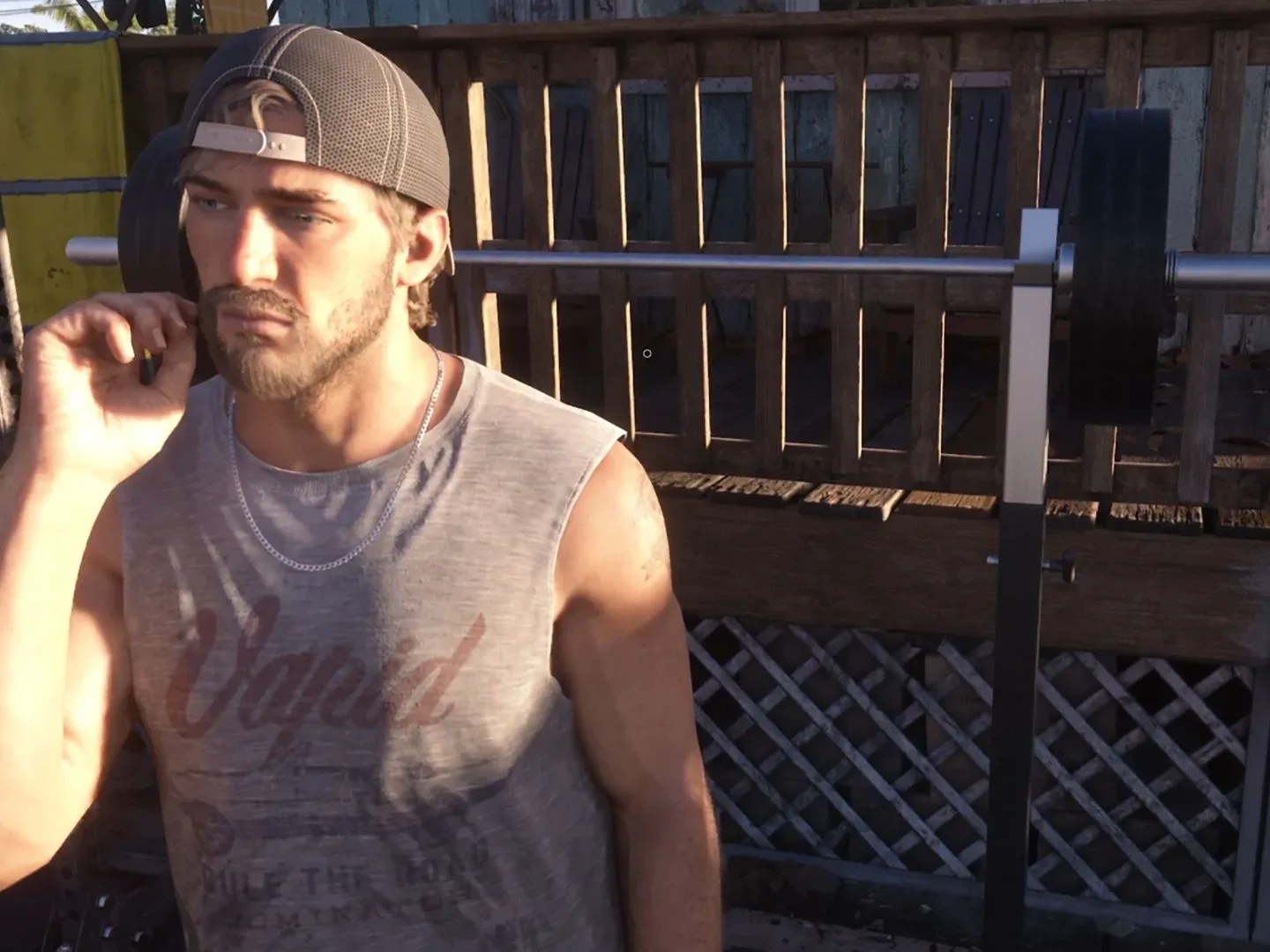
GTA 6 makes fitness a character-management system rather than a button players can mash indefinitely. Strength and Cardio can be improved through workouts and general activity, with knock-on effects for health, stamina, weight, muscle definition and a character’s appearance. The useful early-game wrinkle is that Jason does not need to wait for access to Leonida’s gym memberships: the equipment around his house provides a place to begin.
The important limitation is recovery. Exercise gains have a cap for the current period, so repeatedly lifting, punching, running or swimming after that point will not continue improving the relevant stat. The game communicates that limit with on-screen notifications, while the Fitness app on the in-game phone offers a place to check current status and statistics. Protein can cut the required recovery wait in half after a workout, giving players a direct reason to pay attention to post-exercise consumption instead of treating every activity as a one-off minigame.
That framework makes an efficient routine relatively simple: work a stat until the game says the available gains are exhausted, preserve enough stamina to finish the activity cleanly, use protein if available, then return after recovery. The goal is not to turn a quiet yard into an all-day endurance contest. It is to make each session count.
Where to start training
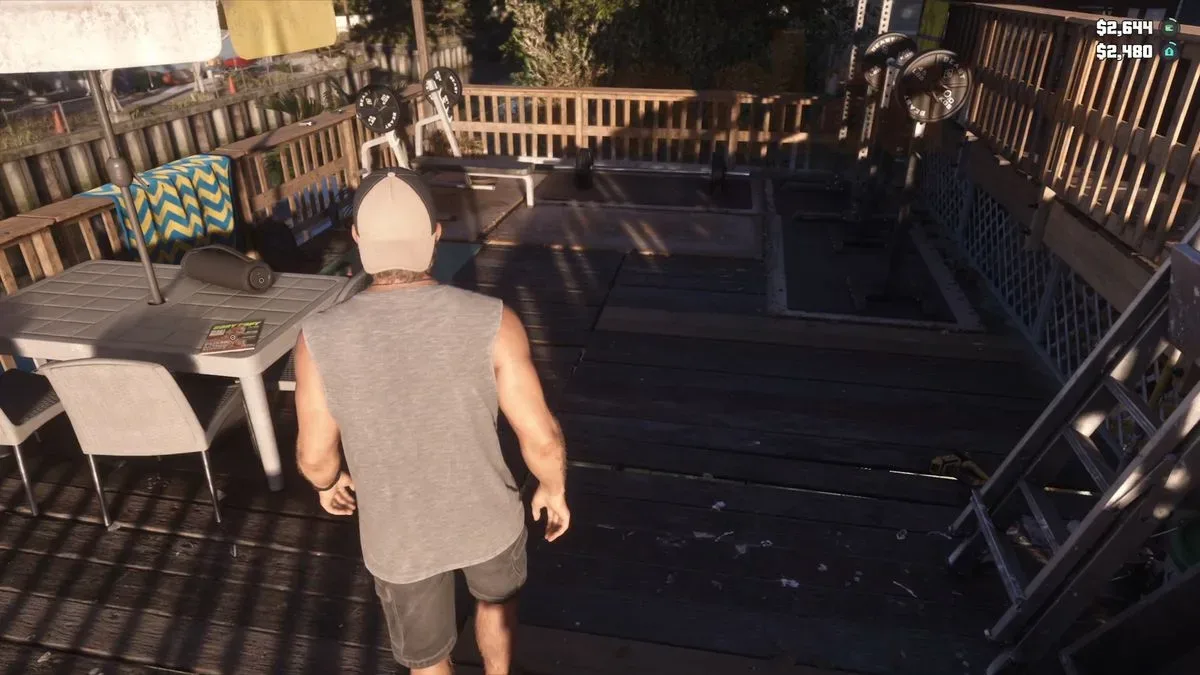
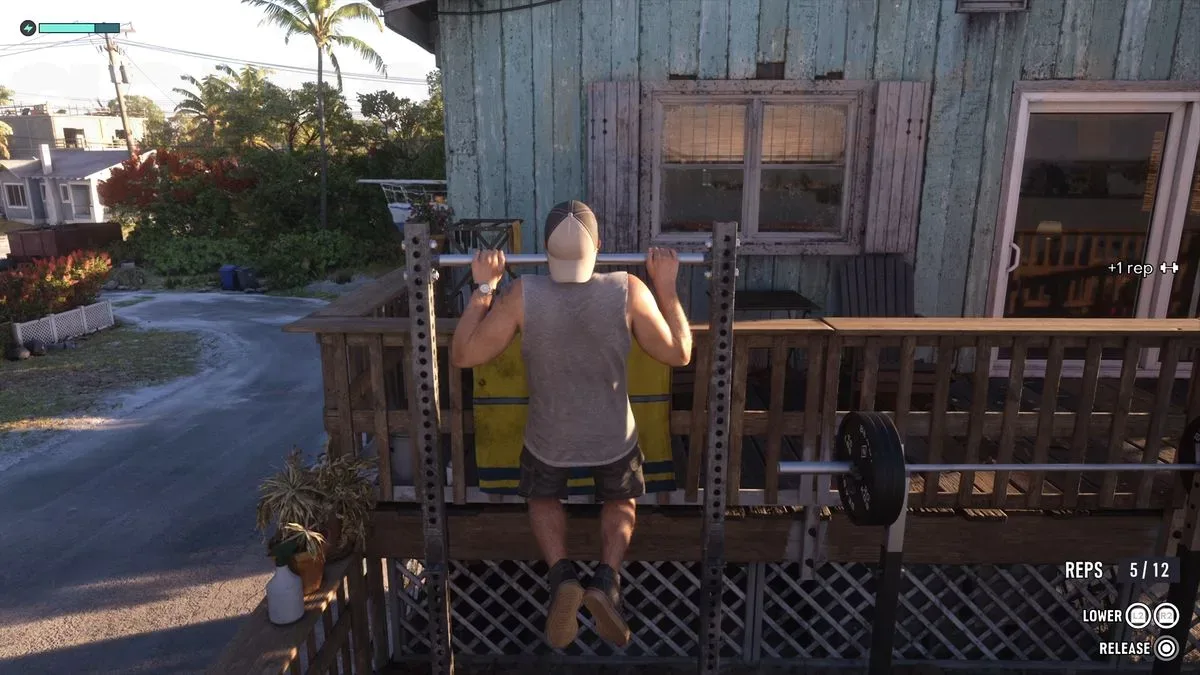
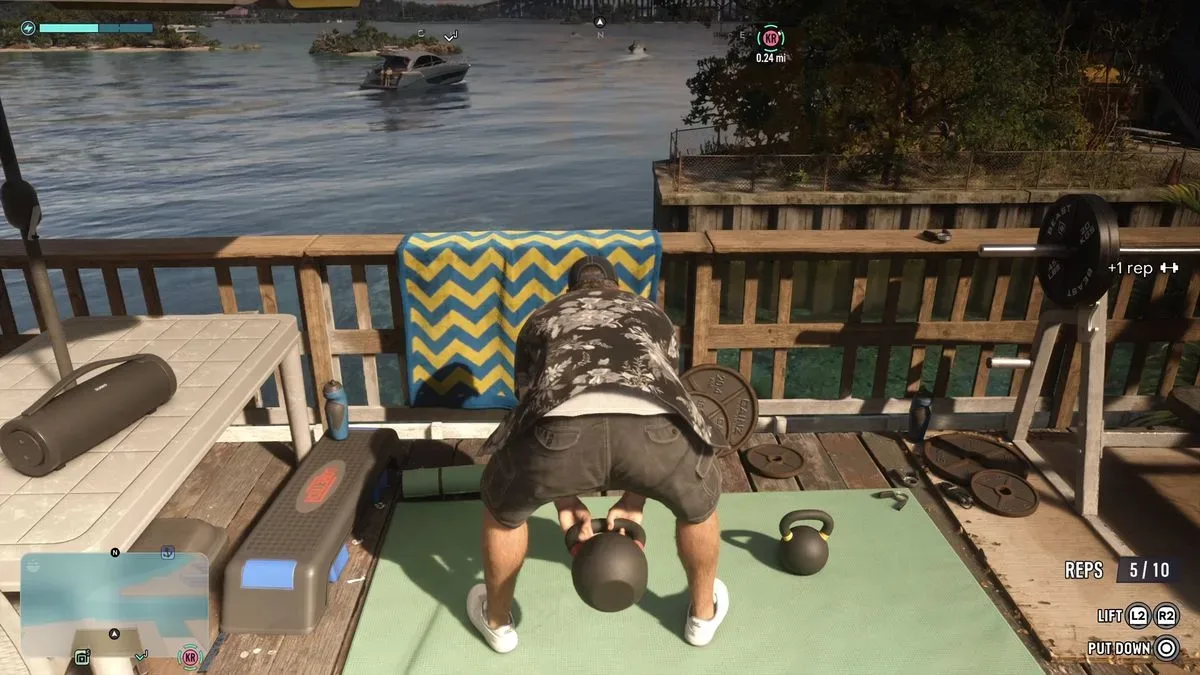
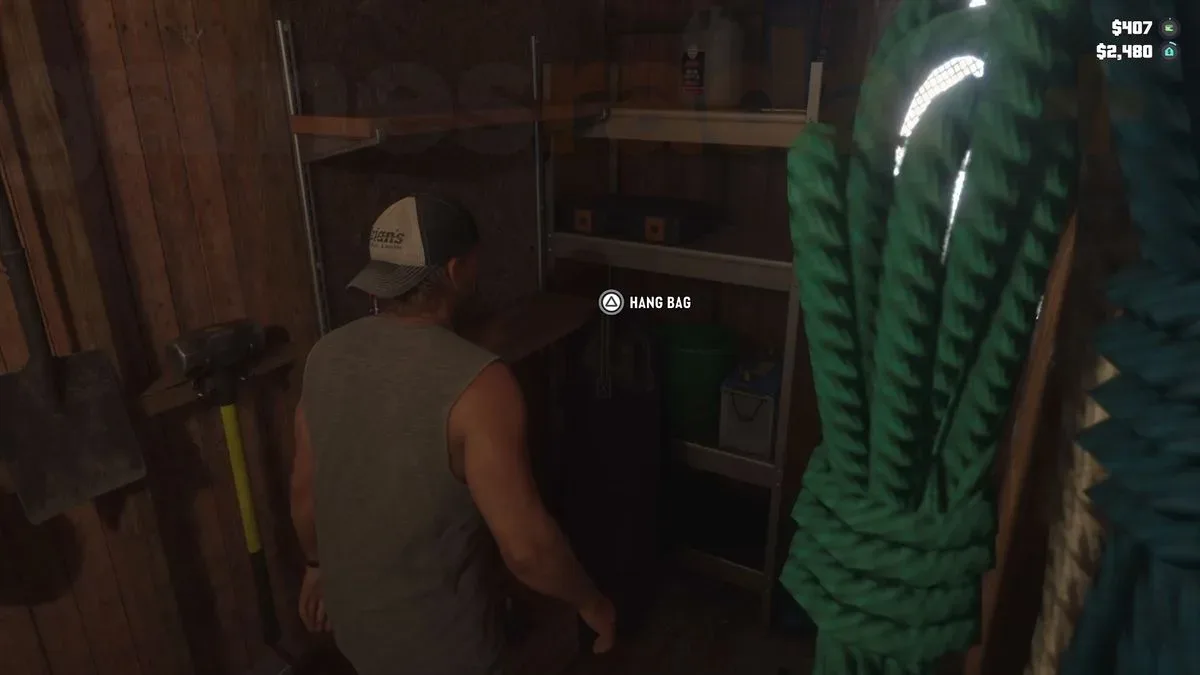
The lower deck behind Jason’s house is the main early Strength training area. Approach a piece of equipment and follow the interaction prompt to start. Bench press, deadlifts, pull-ups and squats all belong to the standard Strength set, while kettlebell swings use a separate rhythm-based input. The house also has an early Cardio option, although it needs a little setup: go to the rear of the workshop beneath the house, use the HANG BAG prompt, and the punching bag can be set up outside.
This location also overlaps with property-repair activity, including the railing repair. That is worth knowing chiefly as a navigation cue: if players are already dealing with the house, they are close to the equipment needed to begin building Jason’s physical stats.
What Strength and Cardio actually cover
Strength is the workout stat tied to lifting-style exercises and muscle building. Raising it improves health, while exercise and weight management also affect physical appearance. Cardio is the endurance-focused stat, improved through the punching bag as well as sustained running and swimming. It improves stamina, meaning it has an especially practical connection to how long a character can keep exerting themselves before tiring.
The distinction matters because a player who only uses the weight equipment is not completing the whole fitness picture. Conversely, running around Leonida may help Cardio, but it does not replace Strength sessions. The Fitness app is therefore more than cosmetic bookkeeping: it tells players which category needs attention and whether another activity will currently produce a useful gain.
Strength workouts: use controlled repetitions
Bench presses, deadlifts, pull-ups and squats share the same basic control language. Hold both triggers to perform the lifting portion of the repetition. Then release the triggers gradually to lower the weight—or Jason’s bodyweight, in the case of pull-ups—in a controlled movement. Fully press both triggers again to begin the next rep.
Related coverage includes GTA 6 Workout Guide: Build Strength and Cardio Quickly.
The key word is gradually. This is not an instruction to race the input. The lowering phase is part of the exercise, and hurried control can make it harder to maintain a consistent rhythm. Players should keep an eye on the stamina gauge in the upper-left corner throughout. If stamina empties completely, the workout ends, so chasing one more rep without monitoring the meter can cut a set short.
The final part of a difficult set can also require a quick button press: watch for the prompt to tap X/A for the last challenging repetitions. These labels refer to the relevant controller face-button position, so the exact symbol depends on the control scheme in use. The practical takeaway is straightforward: do not mentally check out once the regular trigger rhythm is established. A late prompt may be the difference between completing the intended effort and stopping before the set is over.
Standard Strength routine at a glance
- Go to the lower deck behind Jason’s house.
- Approach the bench press, deadlift, pull-up or squat equipment and activate its prompt.
- Hold both triggers for the upward or lifting motion.
- Ease the triggers off to lower under control.
- Repeat while watching the upper-left stamina gauge.
- Respond quickly if the game asks for X/A presses on difficult final reps.
- Stop treating the session as productive once the game says current gains have been maxed out.
A sensible approach is to stop before stamina failure whenever possible. The supplied mechanics establish that an empty meter ends the workout, while gains themselves are time-limited. In other words, exhausting Jason after the cap has already been reached does not offer an identified fitness benefit. Check the app and notifications rather than assuming more repetitions always mean more progress.
Kettlebell swings are about timing, not a slow return
Kettlebell swings stand apart from the other Strength activities. They do not use the controlled-lowering pattern. Instead, release the triggers and allow the kettlebell to drop freely, then initiate the next swing at the right point to retain momentum.
The timing window is when the kettlebell is between Jason’s legs and close to the furthest point of its backward travel. At that moment, squeeze both triggers to drive it back up. Release again after the upward movement and repeat.
Put another way, the usual lifts reward deliberate resistance during the descent, while swings reward a responsive cycle of release and re-engagement. Trying to treat swings like bench presses or squats—holding the triggers through the return—works against the specific rhythm described by the activity. Watch the kettlebell’s arc rather than simply staring at the controller prompts. Once its backward motion is nearly spent, trigger the next upward swing.
Cardio workouts: punch, run or swim
Jason’s property contains a direct Cardio activity once the bag has been hung. Unlike the strength stations, the punching bag does not require players to launch a dedicated interaction sequence. Walk up and use the Melee button to strike it.
There is no visible rep counter or progress bar for the bag. That makes the notification system especially important. Keep hitting until GTA 6 confirms that current Cardio gains have been maxed out, then move on rather than guessing at a target number of punches. The lack of a counter is not an indication that the activity is doing nothing; it is simply a different feedback model from the more structured lifting exercises.
Running and swimming provide alternatives for improving Cardio without using a formal workout station. After enough activity, a notification confirms the increase. These options are useful when players are already traveling on foot or spending time in the water, but they are still governed by the same gain cap. If the Fitness app says the current Cardio opportunity has already been exhausted, a longer run across the map will not produce additional improvement at that time.
Choosing the right Cardio option
- Punching bag: A home-based option after using the HANG BAG prompt. Use Melee attacks and wait for the max-gains notification.
- Running: Builds Cardio through sustained movement and can be folded into ordinary travel, subject to the cap.
- Swimming: Another non-station activity that contributes to Cardio, also with a notification when improvement is registered.
The bag is likely the clearest choice for players who want to focus solely on Cardio at home, while running and swimming let the stat grow as part of other exploration. Neither route removes the need to monitor status. The Fitness app prevents wasted effort when the game’s recovery rules have temporarily shut off further gains.
Recovery is the real shortcut
GTA 6’s system explicitly prevents unlimited training in a single stretch. Once a ceiling is reached, rest and recovery are required before additional gains can be earned. Protein halves that waiting time after exercise. That makes it the most clearly defined way to accelerate an ongoing fitness plan, not because it instantly adds a stat boost, but because it reduces downtime between productive sessions.
Players looking to improve quickly should separate two ideas: finishing an activity and gaining stats. A session may still be mechanically playable after the available improvement has been reached, but it is no longer advancing Strength or Cardio. The notification and Fitness app are the tools for separating worthwhile training from extra exertion.
A compact, efficient loop looks like this:
- Check the Fitness app to identify whether Strength, Cardio, or both can still improve.
- Use the lower deck equipment for Strength, handling kettlebells with their own timing pattern.
- Use the hung punching bag, running or swimming for Cardio.
- Watch stamina during lifting, and heed prompts for difficult reps.
- Stop once notifications confirm gains are capped.
- Consume protein after exercise when available to reduce recovery time.
- Return after recovering, then verify status again before committing to another session.
Fitness is one part of Jason’s wider routine
Stats, stamina and appearance are the immediate reasons to train, but the routine sits alongside other personal management systems. Players also keeping an eye on the relationship between Lucia and Jason can consult our GTA 6 Skunk Ape guide for another questline with choices to manage.
For workouts specifically, the biggest lesson is restraint. Use the house equipment early, perform ordinary lifts with controlled trigger inputs, time kettlebell swings at the bottom of their arc, and use the bag or movement activities to cover Cardio. Then let recovery do its job. GTA 6’s fitness system rewards a regular, informed schedule rather than one heroic afternoon spent turning the lower deck into a sweat-soaked controller endurance test.