Black Friday is usually framed as a competition between giant retailers, discount signage and the frantic search for a deal before somebody else clicks “add to cart.” Record Store Day Black Friday is built around a different proposition: make independent record shops part of the holiday-shopping ritual, then give visitors a reason to keep browsing after they have found the record that brought them in.
The event arrives Nov. 27, following what organizers describe as the most successful Record Store Day yet in April, the main event’s 19th edition. While both events direct attention toward independent shops and offer special vinyl, their goals are not identical. The spring edition is rooted in an in-person, limited-release occasion. Black Friday is designed to put local record stores into the season’s biggest shopping conversation, with a more compact release list and titles that may remain on shelves through the holidays.
That distinction matters for shoppers as much as it does for store owners. A release that is available only in a store on a specific day creates urgency. A Black Friday title that can continue selling afterward, including online at many participating shops from Saturday, Nov. 28, can act as a holiday gift option rather than a one-morning-only chase. It gives stores the chance to serve both the person who queued up for a particular pressing and the person who discovers a gift while flipping through the racks.
A Black Friday event with an independent-store mission
Record Store Day co-founder Michael Kurtz says the Black Friday concept originated with his wife, despite his initial skepticism about attaching an independent-store campaign to a retail day associated with big-box commerce. The final idea was a smaller-scale holiday counterpart—not merely an extra Record Store Day—and its core task is uncomplicated: get people into the shops.
“Most record stores do about two months’ worth of business” that day, Kurtz says.
That is a striking claim because it explains why the format is not solely about collector scarcity. In physical retail, foot traffic means customers physically entering a store. A sought-after exclusive might be the initial draw, but the broader value is the opportunity for a visitor to buy other records, accessories or gifts while there. For small businesses with distinct tastes, inventory and local communities, that traffic cannot be reduced to a single online product listing.
There is a practical contrast to keep in mind. “Limited edition” describes a run with a defined quantity, which may appeal strongly to collectors. It does not necessarily mean a Black Friday record will disappear after the event itself. The holiday program is intended to include titles that shops will want to stock over time, rather than making every release a fleeting trophy. That may make the format more useful for gift buyers who cannot—or simply do not want to—treat a music purchase like a competitive sport.
The wider holiday market remains crowded with audio gear and other entertainment gifts—recent Black Friday audio deals underline how much attention the category commands—but Record Store Day Black Friday’s pitch is more specific. Buy music in a record store, and the purchase supports a local retailer while offering an experience that a standard product search does not replicate.
Related coverage includes How Record Store Day Made Black Friday a Vinyl Holiday.
How the Black Friday list gets selected
Kurtz describes a roughly 20-owner “Secret Squirrel” group that helps assess the large number of releases proposed by artists and labels. These shop owners, drawn from around the United States, are asked a deceptively simple question: would record stores want this item?
That filter reflects the difference between a title that looks good as an announcement and one that makes sense in a store’s bins. A shop is not a neutral warehouse. Each has regular customers, genre strengths and a particular point of view. One owner may prize hard rock; another may be known for jazz, dance music, soul or adventurous imports. Building a nationwide program means taking those contradictory preferences seriously without reducing the slate to one audience.
Kurtz has characterized independent proprietors as creative and strongly individualistic, which is both part of their appeal and a challenge for an umbrella event. The push and pull is clear in his recollection of being criticized by a London shop owner over the inclusion of a Taylor Swift release. The owner’s own interests leaned toward Black Sabbath and Deep Purple. Neither preference invalidates the other, and the program’s continuing task is to make room for different kinds of music fans.
The event’s genre breadth was reinforced early on when Metallica bassist Robert Trujillo encouraged the organization to release a Jaco Pastorius vinyl title. It reached No. 1 on Billboard’s jazz chart, an outcome that helped expand the thinking behind the program. Jazz, bluegrass, soul, R&B and funk were not peripheral possibilities; they could be central parts of a record-store event.
Pop vinyl changed who shows up
Rock remains an important piece of the Record Store Day ecosystem, but pop has reshaped the audience. Kurtz says most participants are under 35 and that women slightly outnumber men. That observation challenges the old shorthand that vinyl is primarily an older listener’s nostalgia format or a niche reserved for one style of rock collector.
Billie Eilish’s Record Store Day 7-inch releases helped open the door to that younger pop audience, Kurtz says. Taylor Swift’s Long Pond Studio Sessions, an exclusive for record stores in 2023, dramatically widened it. The album became the first Record Store Day exclusive to reach the Billboard 200’s top 10. In plain terms, it showed that a current, high-demand release sold through an independent-store program could have chart impact alongside music consumed through modern streaming platforms.
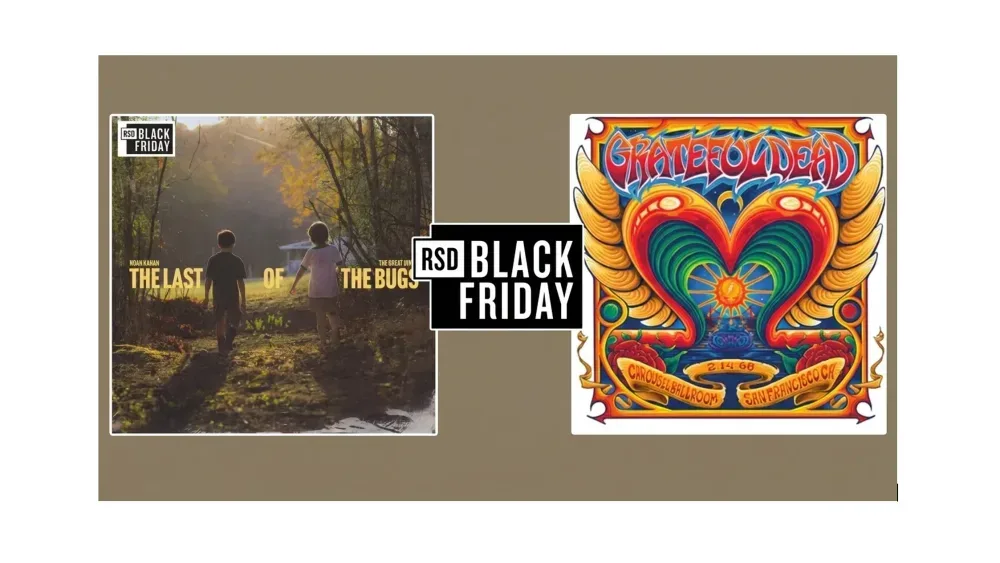
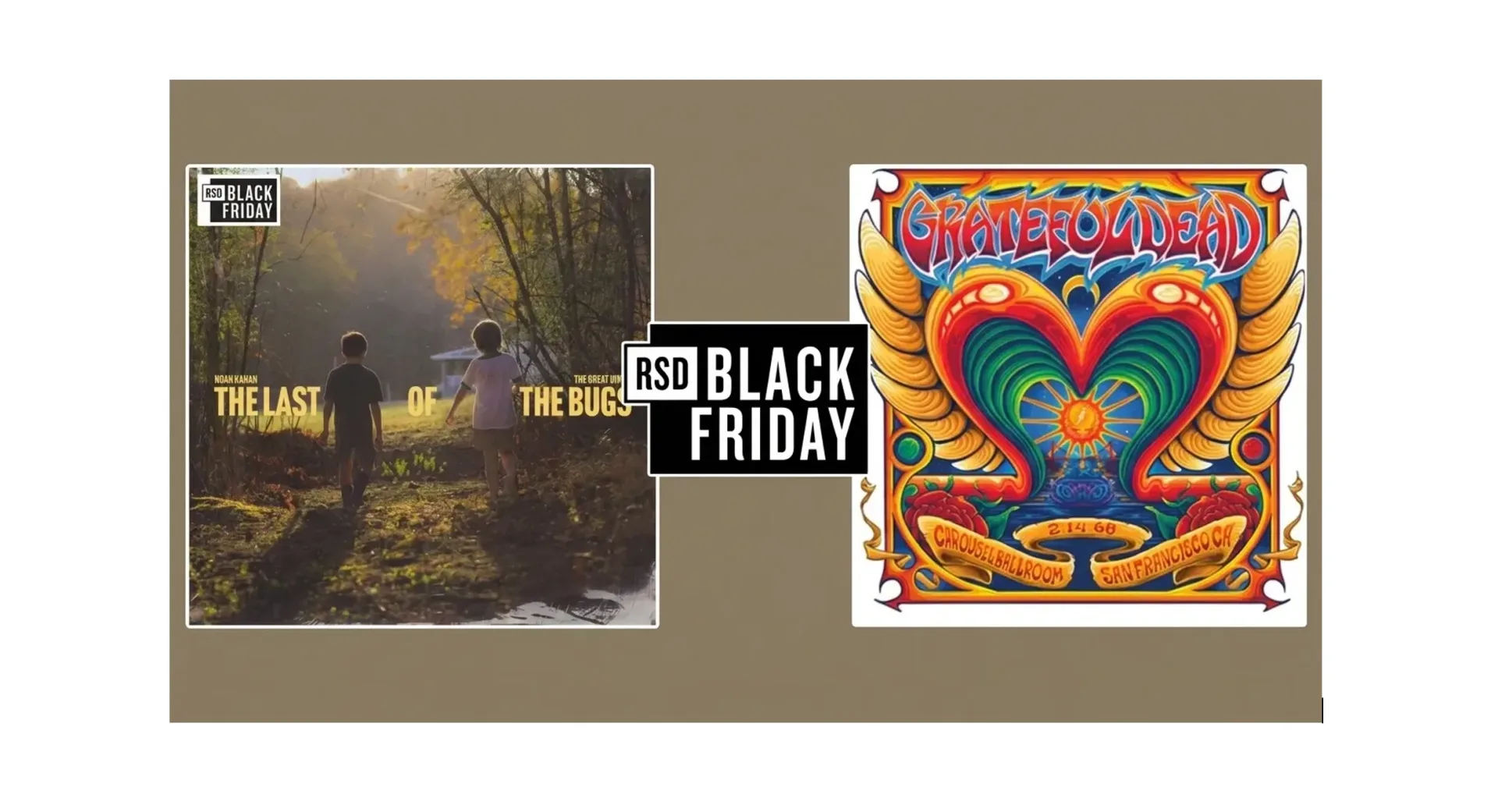
For 2026’s Black Friday release slate, Kurtz expects Noah Kahan to be a major draw. Kahan’s special 7-inch “Draw You Out” is tied to The Hunger Games: Sunrise on the Reaping – The Album. He also has The Last of the Bugs, which gathers four tracks added to the expanded version of The Great Divide. The pairing offers two different collector appeals: one is connected to a major film soundtrack, while the other organizes additional material associated with a Kahan album.
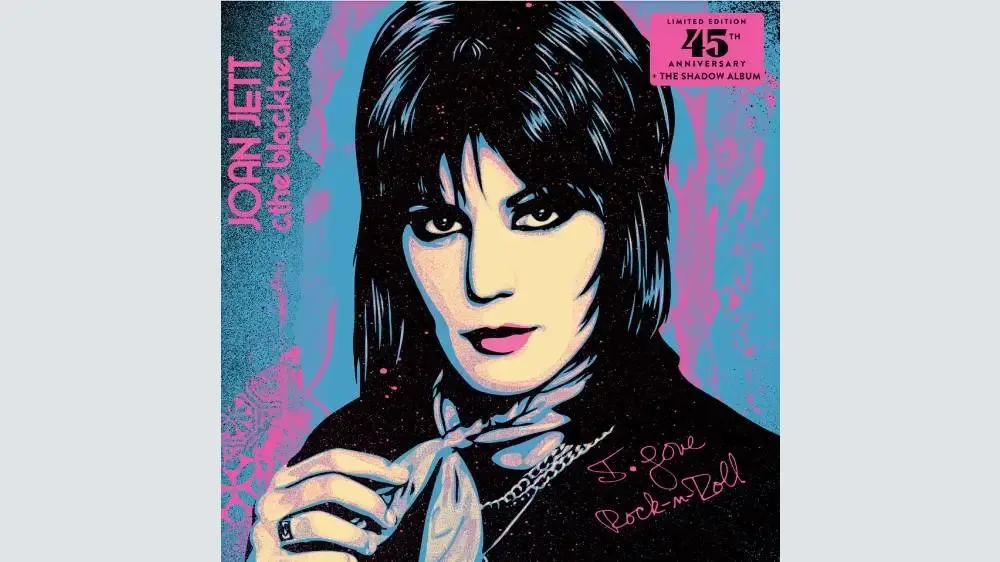
The expected range extends well beyond that younger pop-facing entry point. Kurtz highlighted a Bruce Springsteen live box set; the American version of the Beatles’ Rubber Soul on gold vinyl; a Billy Joel live album; the Doors’ studio sessions; a two-LP Ween set; releases from Miles Davis, the Jerry Garcia Band and the Grateful Dead; a previously unreleased original version of Joan Jett’s I Love Rock & Roll; and three albums by Japanese guitarist Masayoshi Takanaka.
Those selections illustrate the event’s unusual balancing act. They serve different ages, listening habits and collecting instincts, from fans pursuing a soundtrack-linked 7-inch to listeners interested in archival studio material or a live box set. A 7-inch is the smaller vinyl format commonly associated with a single or a short selection of songs. A 2-LP set spans two full-size records, often providing more room for a longer release. The formats themselves can be part of the attraction, but the musical content and the store context are doing just as much work.
Vinyl as music, object and gift
One of the more telling details in the current vinyl boom is that not every buyer intends to play what they buy. Kurtz says he has come to understand the appeal of keeping a record sealed for display. He points to the gold-vinyl Rubber Soul edition, limited to 15,000 copies, as something he may choose to preserve rather than open.
For collectors, “pristine” generally means retaining an item in its best possible state, often including unopened packaging. But this is not the only valid way to enjoy vinyl. Some people want to listen immediately; others want the cover art and physical object; many will do both with different releases. Record Store Day Black Friday accommodates that mixed relationship with records. It recognizes that vinyl can be a playback medium, a visual piece, a gift and a limited physical edition all at once.
There is also a notable caveat beneath the enthusiasm. Kurtz says increasing shipping costs associated with higher gas and diesel prices have made vinyl more expensive. He recalls a time when used-bin copies of major albums by Led Zeppelin, the Beatles or Pink Floyd could be found for just a few dollars; he says that period has passed. Growing interest in records may sustain events and stores, but it does not make the hobby automatically affordable.
That tension makes the Black Friday approach especially relevant. The event is clearly designed to create excitement around special releases, yet it also encourages visitors to explore the larger store rather than fixating entirely on the most immediately collectible item. Shoppers considering a holiday purchase can check whether a title is genuinely intended as a gift, whether it is likely to remain available after Friday, and whether the recipient wants a sealed keepsake or a record ready for the turntable.
The 20th anniversary is still only a plan
Looking beyond this Black Friday, Kurtz and co-founder Carrie Colliton are considering ways to mark Record Store Day’s 20th anniversary next year. Possibilities include live performances and an art installation drawing on past Record Store Day releases. The organization has retained one copy of each limited release in a warehouse in Raleigh, North Carolina. Still, those anniversary concepts remain ideas rather than confirmed plans.
For now, the clearer story is the staying power Kurtz sees in vinyl demand. Record Store Day began at a time when new vinyl releases were far less common, and it now operates in a landscape where pop stars, archival projects, genre specialists and younger buyers all have a place. Black Friday’s role is less about copying the retail holiday than redirecting some of its energy: toward independent stores, music discovery and a format whose appeal is now much bigger than nostalgia.