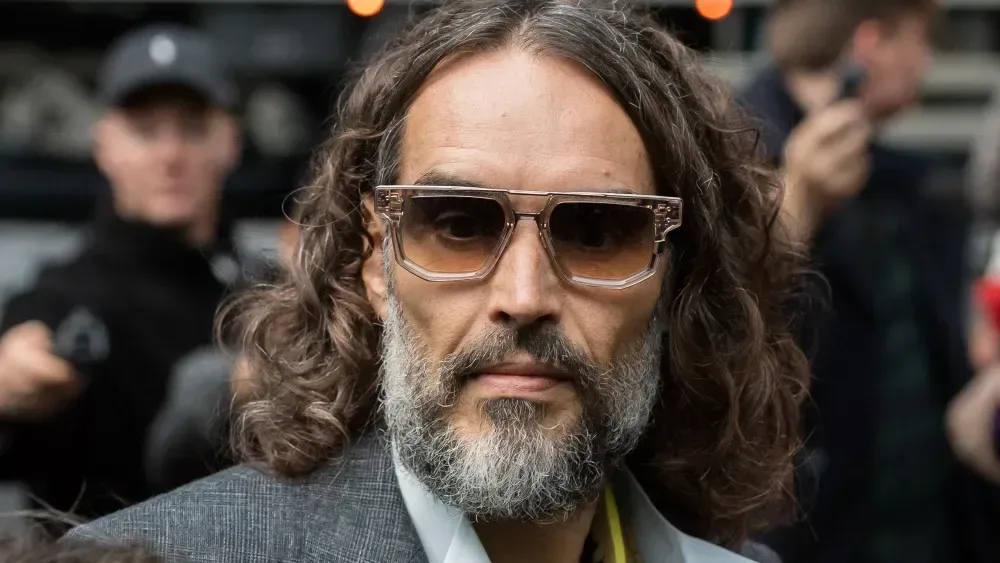
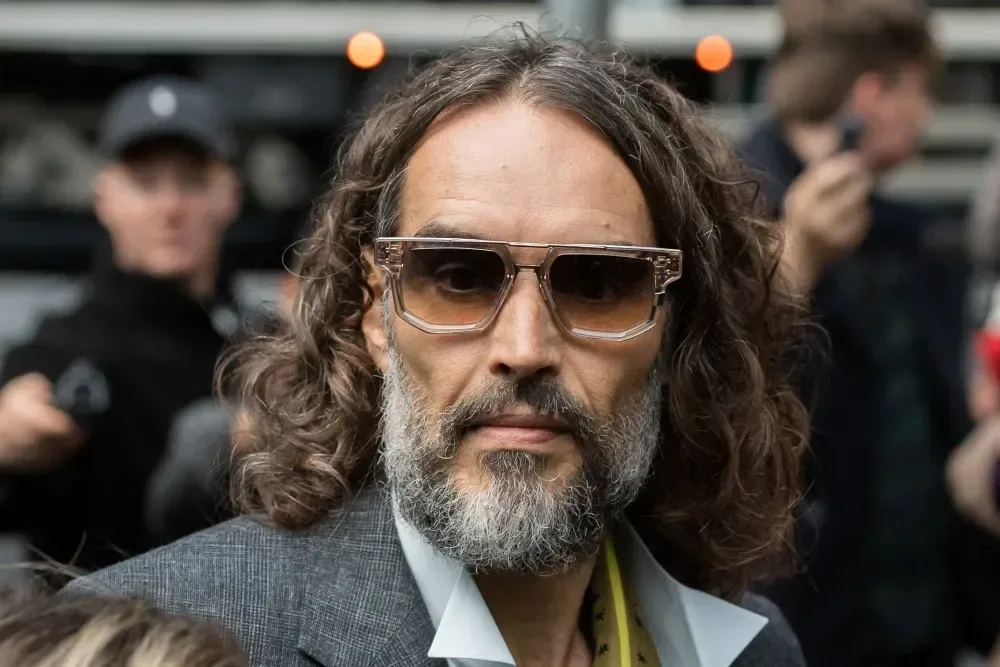
The Viktor Wynd Museum of Curiosities, Fine Art & UnNatural History in Hackney has removed from public display a hair artifact attributed to Russell Brand. The museum’s founder, Viktor Wynd, said he acted following Brand’s conviction and prison sentence for rape and sexual assault.
Wynd said the item was removed immediately and that Brand had no place in his “museum of horrors.” The decision concerns a particularly unusual piece of celebrity-associated memorabilia, but it also underscores a serious issue for collectors and institutions: objects acquire meanings well beyond their physical form, and those meanings can change sharply as public facts change.
What has been removed
The object had been displayed for more than a decade among the museum’s extensive mix of curiosities. A 2016 account said it had been sent to Wynd by a woman who claimed to have shaved Brand at a Camden Town salon. The accompanying handwritten letter reportedly suggested Wynd would appreciate the unusual keepsake.
Crucially, the hair’s authenticity has not been independently verified. That distinction matters. The object may have had a story of origin, often called provenance in collecting and museum contexts, but provenance is not automatically proof that an item is genuine.
In practical terms, a donor’s account and a letter can document how an object reached a collection. They do not establish biological identity, particularly where no independent testing or verification is described. The artifact was therefore a claimed celebrity association rather than a confirmed example of Brand’s hair.
The legal context described
Brand, 51, was sentenced to 10 years and six months in prison at London’s Southwark Crown Court on Monday, Nov. 9. A jury found him guilty of one count of rape and three counts of sexual assault involving four women. The offenses were described as occurring between 2004 and 2009, during his rise in British television and Hollywood.
He was acquitted of two additional rape charges and one count of attempted indecent assault. The museum’s action followed the conviction and sentencing, rather than being presented as a new finding about the disputed artifact itself.
A cabinet of curiosities, not a conventional celebrity archive
Opened in 2014 on Mare Street in Hackney, the museum is organized in the tradition of the Wunderkammer, a German term generally translated as “cabinet of curiosities.” Rather than presenting one tightly defined collecting field, a cabinet of curiosities brings together disparate objects intended to provoke wonder, unease, inquiry or all three at once.
The museum’s collection includes shrunken heads, two-headed animals, dodo bones, occult objects and a lock of Elvis Presley’s hair. It also contains an absinthe parlour and cocktail bar operated by the Last Tuesday Society.
That setting explains why an object with a strange or macabre celebrity connection might once have been displayed. But the format does not remove a curator’s responsibility to decide whether an item remains appropriate for public presentation. A collection can be eclectic without treating every association as harmless, permanent or equally worthy of attention.
Why removal is significant even without an ownership change
Removing an object from display is not necessarily the same as destroying it, selling it, or erasing its existence from a collection. It is a decision about interpretation and public access. A museum can retain an item while declining to give it gallery space, explanatory framing or the attention that display creates.
That distinction is useful for collectors, especially those dealing in celebrity memorabilia. Public display can confer a kind of cultural value separate from financial value. A case label, a display cabinet and an institutional setting can make an object feel endorsed, important or even playful. When the person attached to an item becomes associated with serious criminal conduct, that framing may no longer be acceptable to the collector or to visitors.
Here, Wynd’s response was direct: the issue was not merely whether the artifact was odd enough for a curiosities collection. It was whether a piece tied to Brand should continue to occupy attention in the museum after the conviction.
Authenticity and ethics are different questions
The episode also separates two questions that are frequently blended together in the memorabilia world:
- Is the item authentic? In this case, the claimed identity of the hair has not been independently verified.
- Should the item be displayed or collected? This is an ethical and curatorial question, and it can arise whether an item is verified, doubtful or entirely ordinary.
Collectors often focus first on authentication, condition and chain of custody. Those are essential considerations where an object is being valued, traded or publicly represented as genuine. Yet authenticity alone cannot settle whether an object should be exhibited. A verified artifact can still raise questions about consent, public sensitivity, the subject’s conduct, and whether attention itself is a form of reward.
Conversely, an unverified object can cause real reputational and ethical problems if a venue displays it as an attraction. The uncertainty surrounding the Brand hair makes careful wording especially important: it should be described as an artifact attributed to him, not as verified biological material.
What collectors can take from the case
For people who collect celebrity material, this is a reminder that provenance should be recorded precisely and claims should be kept proportionate to the evidence. A letter or a donor statement can be worth retaining as part of an object’s documentation, but it should not be transformed into certainty without support.
It is also a reminder to distinguish private possession from public presentation. A collector may own an object with a complicated history, while an exhibition space has a separate obligation to consider its audience, the message created by its labels and placement, and whether the item’s display is defensible after new events.
Celebrity keepsakes are often valued because they promise proximity: a physical link to a performer, athlete, musician or public figure. That perceived proximity is precisely why their significance can shift so abruptly. Once the public story changes, the object is no longer just a novelty or conversation piece. Its display can become a choice about whose legacy is being elevated and how.
The Wynd Museum’s decision does not resolve the artifact’s claimed provenance, nor does it turn an unverified item into verified evidence of anything. It does show how rapidly a collection’s curatorial boundaries can change when an object’s association becomes incompatible with the venue’s judgment about what belongs before visitors.
For more coverage of the wider entertainment world, see Anne Hathaway’s planned American Riviera Award tribute.