
A retro game set can contain every expected piece and still be assembled incorrectly. A disc may be paired with the wrong case, a manual may come from another regional edition, or an attractive front insert may belong to a different console release with nearly identical artwork. Calling that set complete without checking its identity creates a catalog entry that may be difficult to correct later.
The safest approach is to authenticate the pieces as a chain rather than judging the visible cover. Platform, region, publisher, product code, rating mark, barcode and language should tell one consistent story. The four games in this guide provide useful contrasts: a PlayStation 2 title with a separate GameCube edition, a rare GameCube game with different regional publishers, a Dreamcast release with multiple PAL packaging variations and a sports game spread across three platforms.
This process is not about declaring every unusual component fake. Legitimate regional editions can have different manuals, labels and packaging. The goal is to identify what you have, separate certainty from assumption and avoid paying for a matching set when the evidence only supports a partial or mixed one.
Define what complete means before inspecting the lot
Collectors often use complete, boxed and matching as if they mean the same thing. They do not. A boxed copy might contain the original case and disc but no manual. A complete copy might contain a disc, case insert and manual, yet still be a mixed-region assembly. Matching is the stronger identity claim: the surviving components belong to the same platform, region and release family.
Separate identity from condition at the beginning of your notes. Record whether a component is present, whether it appears original, whether its platform and region agree with the other pieces and whether its condition is acceptable. A scratched but correctly matched disc is a different collecting problem from a clean disc inside the wrong case.
Do not use a component count as authentication. The important question is not whether there are three pieces, but whether those three pieces identify the same product. If the answer is uncertain, label the copy partial, mixed or unverified until better evidence is available. That temporary downgrade is more useful than an overconfident catalog entry.
- Write down the intended platform and region before opening the case.
- Record the disc, case insert, spine, manual and registration material separately.
- Use matching only after the identity checks agree.
Build an identity chain from the outside in
Start with the platform. The title logo is weak evidence because publishers reused front artwork across PlayStation 2, GameCube, Xbox and Dreamcast editions. A GameCube disc cannot be authenticated by a cover that merely shows the correct game name. Look for the platform logo on the disc label, spine and manual, then compare the physical format. A GameCube optical disc, a PlayStation 2 DVD and a Dreamcast GD-ROM are different products even when their titles and front artwork overlap.
Next check the region and publisher. Rating symbols, legal text, language, distributor information and publisher names often reveal more than the front image. A North American ESRB mark belongs to a different packaging family from a European age rating or Japanese rating format. None of those marks proves that a component is genuine on its own, but a contradiction between them deserves investigation.
Finally compare product codes and barcodes. A product code is a strong cross-check because it is tied to a particular platform and market. A barcode can support the conclusion, but it cannot prove that an insert was not swapped into another case. Treat these identifiers as links in a chain, not as a single magic test.
- Confirm the console logo on every major component.
- Compare region indicators, rating marks, language and publisher information.
- Photograph codes before removing or rearranging anything.
- Treat a barcode as supporting evidence, not final proof.
Sort every component before judging condition
Before polishing a disc or replacing a cracked case, spread the lot out and sort it by title, platform and region. Keep each loose item visible. This prevents a common mistake: improving the appearance of a mismatched set before discovering that the manual belongs to another release. Photograph the original arrangement when buying a group so you retain a record of what arrived together.
Use a simple table with columns for item, platform, region, publisher, code, language, rating and confidence. A question mark is more useful than a guess. For example, a front cover may clearly identify Scooby-Doo! Unmasked but leave the platform uncertain if the spine is missing. A manual may show the correct game and console but use a European language set. Mark each fact independently rather than allowing one convincing image to settle the whole entry.
Inspect the disc label and inner ring only after recording the visible packaging. Look for a platform-specific layout, manufacturing text and a product identifier where available. Avoid abrasive cleaning, label lifting or opening sealed parts merely to resolve an uncertain match. Authentication should be reversible; if the evidence remains unclear, preserve the item and request better documentation.
- Keep loose discs, manuals and inserts separated until identity is established.
- Use unknown instead of filling gaps with assumptions.
- Take photographs of fronts, backs, spines, discs and code areas.
- Do not modify an item just to make the evidence easier to read.
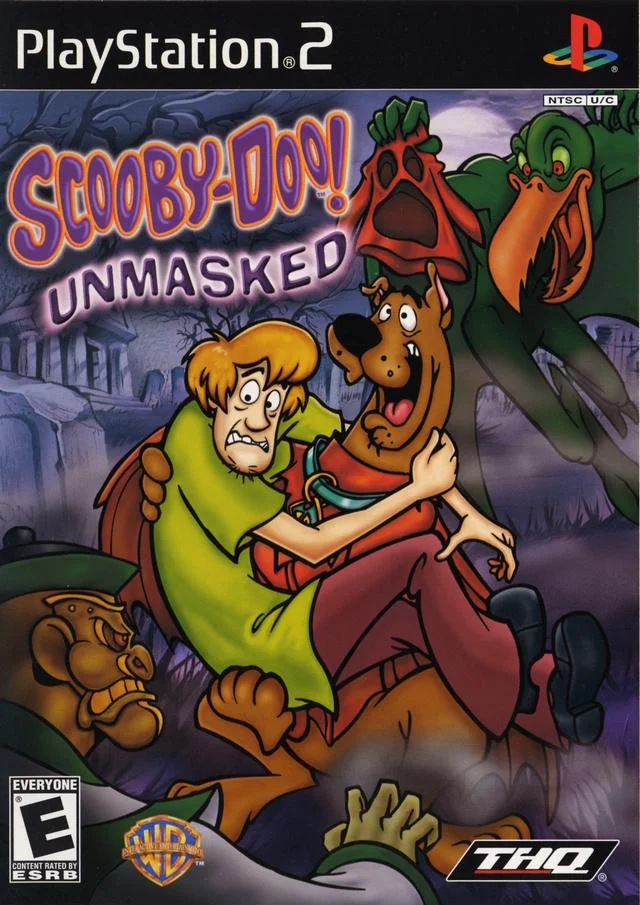
Scooby-Doo! Unmasked shows why the title is not enough
Scooby-Doo! Unmasked is a straightforward example of a platform swap. The North American PlayStation 2 release uses the Sony product code SLUS-21091 and UPC 752919460665. The game also appeared on GameCube under the different Nintendo product code DOL-G5DE-USA. A title-correct GameCube disc or manual therefore does not belong in a PlayStation 2 set, even if the characters, logo and general cover design look closely related.
The PlayStation 2 edition was published by THQ and carries an ESRB Everyone rating. Those details should agree with the disc and packaging being examined. If a supposed PS2 set contains a GameCube logo, a DOL code or Nintendo-specific disc artwork, classify it as a platform mismatch rather than trying to explain it away as a minor variant.
This example also shows why listing photographs can be misleading. A seller who shows only the front cover has demonstrated the least decisive part of the package. Ask for the spine, back insert, disc label and manual cover. If those images cannot establish the platform, describe the item as unverified rather than complete.
- For the PS2 edition, look for SLUS-21091 and the North American THQ packaging family.
- Reject a GameCube DOL code as a match for a PS2 set.
- Do not let shared character artwork override platform evidence.
- Request disc and spine photographs before paying a premium for completeness.
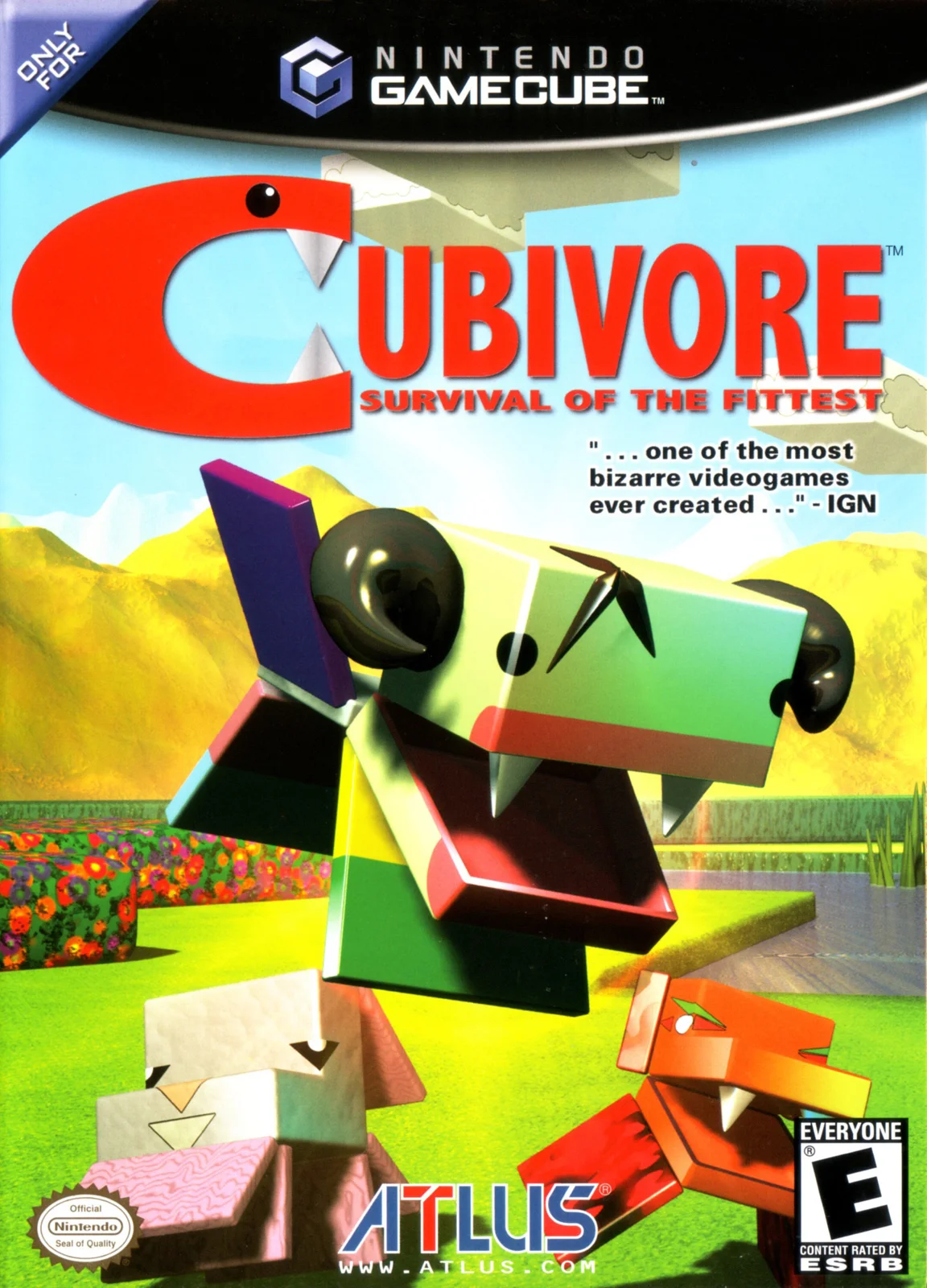
Cubivore requires a publisher and region check
Cubivore: Survival of the Fittest is a stronger regional test because the Japanese and North American releases have different publisher identities. Nintendo published the Japanese version, while Atlus U.S.A. handled the North American release. Nintendo branding alone therefore does not identify the North American product.
The North American GameCube edition is identified by the part number DL-DOL-GCVE-USA and UPC 730865610013. Catalog records identify it as a one-player GameCube title on one optical disc with an ESRB Everyone rating carrying suggestive themes and violence. Those details give you several comparison points when examining an alleged North American set.
The Japanese release is associated with the original Japanese title and Nintendo publishing family, while the North American edition was localized and issued under Atlus. A Japanese manual beside a North American disc is not automatically evidence of a counterfeit; it is evidence that the package is not a verified North American matching set. Conversely, a North American-looking cover with an unexplained Japanese component should remain unresolved until the specific edition is identified.
For an uncommon game, request close photographs rather than relying on a seller description or generic database image. The disc label, rear insert, spine, manual cover and product-code area should be viewed together. If one component identifies a different regional product, record that difference instead of silently treating it as a replacement part.
- Check whether the publisher story fits the claimed region.
- Compare the North American DL-DOL-GCVE-USA code where applicable.
- Request close images of every printed identity panel.
- Keep Japanese, North American and other regional components separate in the catalog.
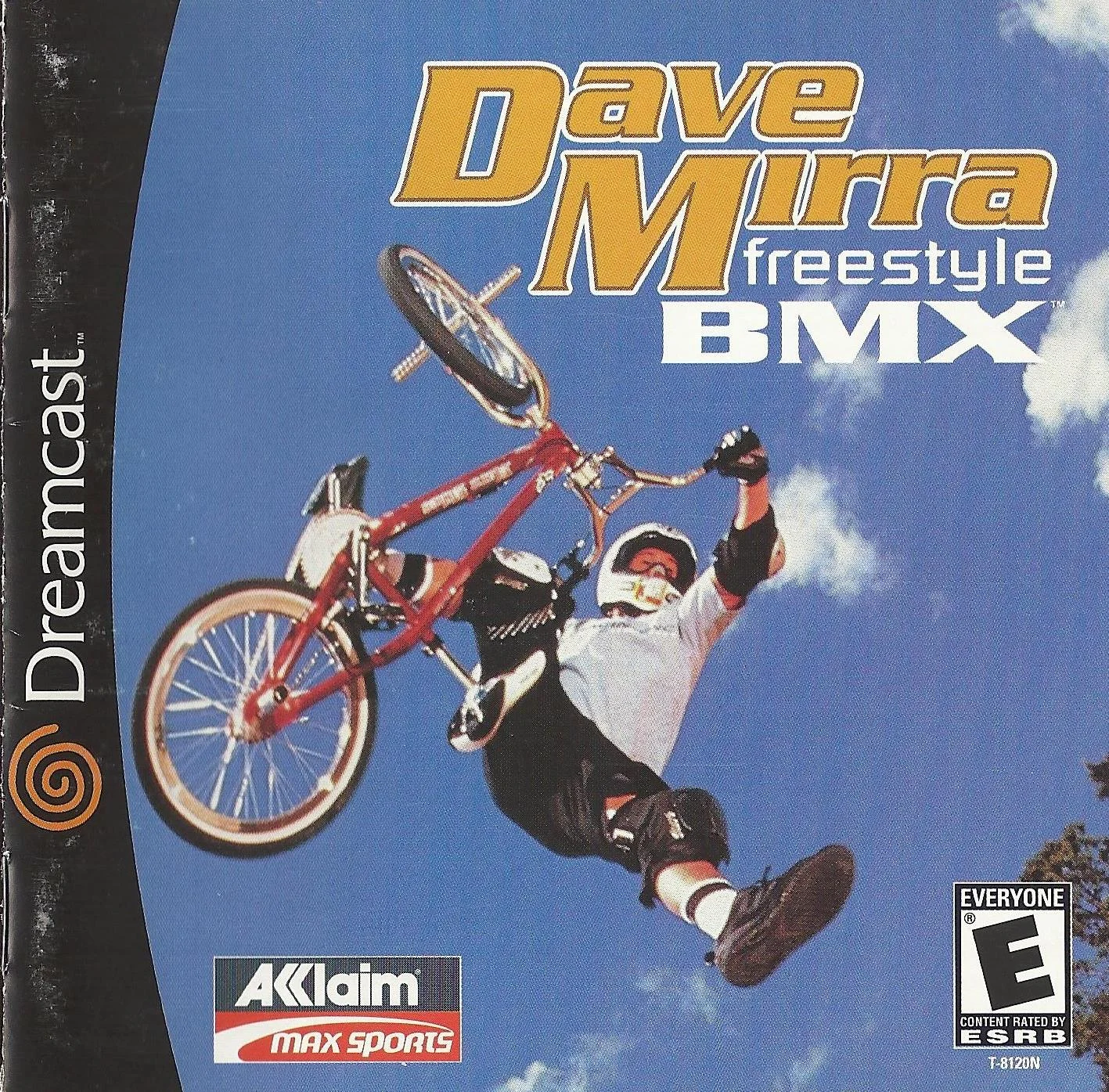
Dave Mirra Freestyle BMX makes the spine valuable evidence
Dreamcast packaging can require more than a front-cover comparison. The North American Dave Mirra Freestyle BMX release was marketed through Acclaim and uses the catalog code T-8120N. A specialist Dreamcast catalog also identifies the North American version by its black spine. A spine photograph can therefore answer questions that a front image cannot.
PAL copies add another layer. The documented PAL versions can use different language groups, spine codes and instruction-booklet configurations. Some PAL versions share the same disc while differing in their booklets and packaging. A foreign-language manual is not automatically a reproduction or an incorrect insert. It may be legitimate for a PAL edition, but it must be paired with the corresponding regional disc and packaging rather than silently substituted into a North American set.
The North American manual identifies the software as a Sega Dreamcast GD-ROM and states that it is licensed for use with the Dreamcast system. That platform statement is useful when a loose disc is being confused with a similarly titled PlayStation 2 or other release. Check the spine, manual language, disc label and regional legal information as one group.
Do not use the black spine as the only authentication test. Spine color can support an identification, but it cannot rule out a swapped insert or replacement case. The code, regional text, manual and disc should reinforce the same conclusion.
- Look for T-8120N when checking the North American Dreamcast release.
- Use spine color and code as supporting evidence, not as the only test.
- Treat PAL language differences as possible regional variation, not automatic fakery.
- Confirm that the manual and disc identify Dreamcast hardware.
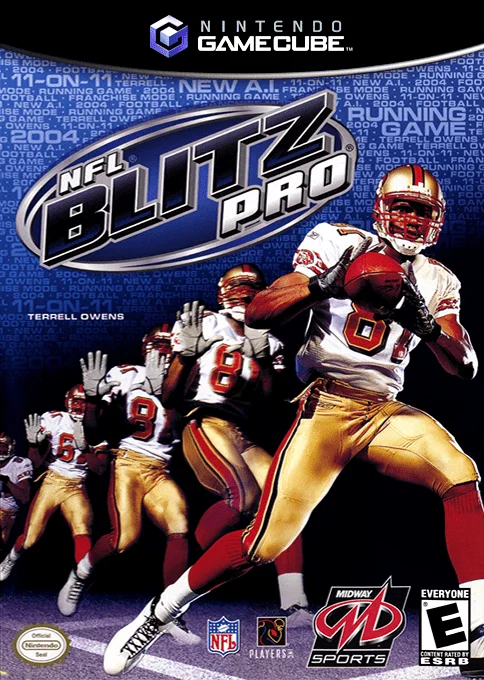
NFL Blitz Pro separates three platform families
NFL Blitz Pro is easy to misfile because the same title appeared on GameCube, PlayStation 2 and Xbox. The North American GameCube release uses the Nintendo product code DOL-GFVE-USA and UPC 031719198894. The PlayStation 2 edition uses SLUS-20631, while the Xbox edition uses MWO-2001A. A listing that says only NFL Blitz Pro has not established which physical product is being sold.
The GameCube catalog entry describes a one-disc release. That can help identify an incomplete lot, but disc count is not enough to establish a matching set. A GameCube disc inside a PlayStation 2 case remains mismatched even if both versions use similar front artwork. Confirm the console logo and product code on the disc, manual and insert before assigning the GameCube identity.
Sports titles are particularly vulnerable to platform confusion because their covers emphasize the league, athlete or series branding. Put the console identifier ahead of the sport logo in your inspection order. If the seller photograph is too small to read the code, ask for a close-up rather than guessing from the color or shape of the disc.
This is also a reminder that a complete-looking case can hide an incomplete identity chain. A case, insert and manual may all be present, but if the disc points to another platform, the result is complete in component count only. Catalog it as mixed or mismatched until the correct parts are found.
- For GameCube, compare DOL-GFVE-USA and UPC 031719198894.
- Do not substitute SLUS-20631 or MWO-2001A into a GameCube set.
- Use one-disc information only as a component check.
- Prioritize console logos and codes over league artwork.
Ask sellers for evidence that answers specific questions
A useful photo request is precise. Instead of asking for more pictures, ask for the front and back of the case, both sides of the spine, the disc label, the manual cover and the page or panel containing the product code. Request one image with the entire package and several close-ups where small text can be read. This reduces the chance that a carefully selected cover image hides a mismatch.
Ask the seller to photograph the actual item rather than using a catalog image. Stock artwork can establish what an official edition looked like, but it cannot prove that the pictured disc, case and manual belong together. A disc photograph should show the whole label and enough of the center area to read identifying text without glare.
For a disc, request a straight-on image that includes the platform mark, title, region information and center ring where readable. For a case, request the back insert and spine, since those often carry the product code and regional information. For a manual, ask for its cover and the language or legal-information page rather than accepting a photograph of a closed booklet.
When a seller cannot provide the evidence, do not automatically conclude that the copy is counterfeit. The correct result may simply be not authenticated. You can then decide whether the price makes sense for an unverified or partial copy. This is safer than paying for completeness based on a blurry image and discovering the mismatch after the return window closes.
- Request actual-item photographs, not only stock cover art.
- Ask for code areas, spine, disc label and manual cover specifically.
- Treat missing evidence as uncertainty rather than proof of fraud.
- Save listing photographs with your purchase notes.
Use clear labels for mixed and regional assemblies
A practical catalog vocabulary prevents later arguments with your own records. Use matching set when the disc, case insert and manual agree on platform and region, and there is no unresolved identity conflict. Use complete but mixed only when the expected components are present but at least one belongs to another platform or regional release. Use region-correct when all major pieces appear to come from the same region but an edition-level detail remains unconfirmed.
Use partial when a component is missing, and unverified when photographs or physical inspection are insufficient to establish identity. A Japanese manual with a North American disc should not be silently filed as a North American complete copy. Record the manual’s likely region separately and explain the mismatch in notes.
You can also distinguish a replacement case from a replacement insert. The case itself may be a generic shell with little edition-specific value, while the printed insert, spine and manual carry most of the identity evidence. Note which parts are original-looking, which parts are confirmed and which parts are merely compatible replacements.
These labels preserve options. If you later find the correct manual, the history of the original assembly remains clear. If the set turns out to be a legitimate regional variant, you can upgrade the confidence level without rewriting an overconfident description. Catalog accuracy is more valuable than making every shelf entry look finished.
- Matching set: identity agrees across the main components.
- Complete but mixed: component count is high, but platform or region conflicts remain.
- Partial: a required component is missing.
- Unverified: available evidence cannot settle the edition.
Make the final buy, keep or walk-away decision
After the comparison, place the item into one of three practical outcomes. Keep or buy confidently when platform, region, publisher and codes agree, and the condition meets your collecting goal. Negotiate when the identity is likely but the case, manual or insert is missing, mismatched or undocumented. Walk away when the seller refuses reasonable evidence, multiple identifiers contradict one another or the asking price assumes a verified complete copy that the photographs do not support.
Do not let rarity erase the authentication process. Cubivore may justify a more careful investigation because regional publisher differences matter, but scarcity does not make a mismatched manual correct. Likewise, a common title such as NFL Blitz Pro still deserves accurate platform labeling because the same name covers distinct GameCube, PlayStation 2 and Xbox products.
A useful negotiation begins with a specific finding. Instead of saying that the game looks incomplete, explain that the disc identifies GameCube while the case insert identifies PlayStation 2, or that the manual belongs to a PAL language variant while the rest of the set appears North American. This gives the seller a clear choice: provide evidence, adjust the description or revise the price.
The best final record states what is known, what was compared and what remains uncertain. That gives the next owner a useful trail and keeps your collection honest. A set does not become less interesting because it is mixed; it becomes easier to manage when its mixed status is named accurately.
- Buy or retain as matching only when the identity chain is consistent.
- Negotiate based on missing or mismatched components, not imagined completeness.
- Walk away from unsupported premium claims.
- Record unresolved questions instead of deleting them from the catalog.
Authenticating a mixed-region retro set is an exercise in comparison, not visual confidence. Start with the platform, then connect region, publisher, product code, rating, language and barcode across the disc, case and manual. Scooby-Doo! Unmasked exposes platform swaps, Cubivore exposes publisher differences, Dave Mirra Freestyle BMX rewards spine and booklet checks and NFL Blitz Pro demonstrates why one title can represent several unrelated physical editions.
When the evidence does not agree, downgrade the label rather than forcing a conclusion. Partial, mixed and unverified are useful collecting categories, and they protect both your catalog and your purchasing decisions. Complete should describe a matching identity chain, not merely a full-looking pile of parts.