
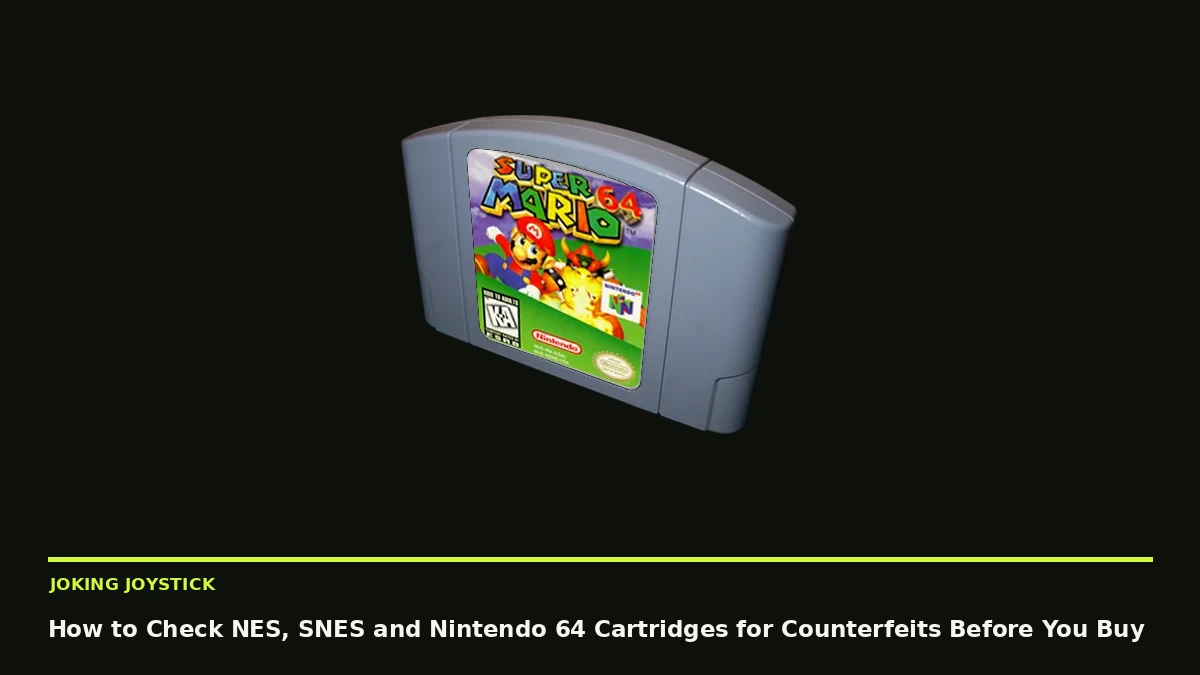
Buying a loose Super Mario Bros., Chrono Trigger or The Legend of Zelda: Ocarina of Time cartridge involves two separate questions: will it function, and is it an original cartridge rather than a reproduction, counterfeit or modified copy? A successful boot can answer the first question without answering the second.
The safest approach is to gather several independent pieces of evidence before paying. Treat listing photos and descriptions as claims to verify, not proof. Exterior appearance, weight and console fit can reveal inconsistencies, but the internal board and transaction protections usually matter more. Even a board that began life as a genuine Nintendo part may have been modified, so some purchases require specialist verification rather than a confident verdict from a photograph.
Define the Exact Cartridge You Want
Your required standard of proof should match your purpose. A clearly disclosed reproduction may be acceptable for someone who wants an inexpensive playing copy. A collector seeking an authentic loose cartridge needs evidence about originality, region, edition and modifications. A complete North American release has different requirements from a cartridge that merely contains the same game.
Before comparing listings, write down the exact target: title, platform, region, language, release variant, loose or complete condition, and whether original internal parts matter. Super Mario Bros. and Super Mario Bros. 3 have NES regional and release variations. Chrono Trigger and Final Fantasy III should be checked against the specific SNES edition being claimed. Super Mario 64 and Ocarina of Time need the correct Nintendo 64 region, shell color and release version. A genuine cartridge from another market is not automatically the edition advertised.
Also decide whether you are buying authenticity, function or both. These are different goals. A disclosed aftermarket cartridge can be a legitimate choice for play, but it should not be priced or described as an original Nintendo release.
- Identify the platform and claimed region.
- Decide whether disclosed aftermarket hardware is acceptable.
- Separate a playing copy from an original collectible.
- Set a maximum total cost before contacting the seller.
Build an Evidence Ladder Before Looking at Price
Start with the least invasive evidence: the listing title, regional claim, seller description and photographs. Then move to front and rear shell views, label details, connector edge, internal board photographs and, where appropriate, software behavior. Each step answers a different question. A front label can help identify the claimed game, but it cannot establish what board is inside.
Nintendo treats counterfeit products and unauthorized copies as intellectual-property concerns, but a Nintendo support page is not an authentication service for an individual cartridge. Use manufacturer information to understand the broader distinction between authorized products and unauthorized copies, then use title-specific physical evidence for the buying decision.
A useful evidence ladder has three outcomes: supported, contradicted and unresolved. A matching regional label may support the seller’s claim. A board with obvious modern reproduction hardware may contradict it. A missing board photo is unresolved, not positive evidence. Do not convert an unanswered question into a favorable assumption simply because the listing has strong feedback.
Think in patterns rather than isolated clues. One unusual screw may mean that the shell was opened. A missing rear photo, a wrong regional label, a modern board and an evasive seller together create a much stronger reason to stop.
- Require evidence from more than one cartridge surface.
- Record which observations are facts and which remain claims.
- Do not call a cartridge authentic from one photograph.
- Treat conflicting evidence as a reason to pause.
Read Marketplace Photos as Evidence, Not Proof
A useful listing should show the actual item from several angles. Look for the front, back, top edge, connector opening, label and shell seams. For an expensive or uncertain cartridge, request clear photographs of both sides of the board. A cropped opening or photograph taken through a narrow slot can conceal replacement chips, a donor board or unusual construction.
Stock art, identical backgrounds across supposedly different items, glare over the label, extreme compression and photographs showing inconsistent shell wear are warning signs. A blurry image does not prove fraud, but it leaves the question unanswered. Do not substitute a seller’s picture of a known genuine copy for the item being offered.
Ask for a new photograph with a simple identifying detail requested through the marketplace, such as the cartridge beside a handwritten date or the listing number. This helps establish that the seller has the item without requiring off-platform communication or unsafe handling. It still does not prove the cartridge is genuine.
Save the listing, photographs, description and messages before checkout. Marketplace pages can change after purchase, and the original wording may be important if the item arrives with a different shell, label or board.
- Confirm that the photos show the actual cartridge.
- Ask for front, back, edge and board views when justified.
- Reject stock images when authenticity is central to the purchase.
- Save the listing and messages before checkout.
Inspect the Shell, Label, Seams and Screws
Inspect label alignment, print sharpness, colors, gloss, edge wear and the relationship between the label and the molded shell. Incorrect artwork, spelling, unusual borders or a region mismatch deserve investigation. Shell shape, color, molding lines and embossed markings should be compared with references for the same platform, region and release rather than with a generic image of another cartridge.
A label that is too glossy, soft, dark or brightly colored may be a reproduction, but lighting and camera settings can also distort appearance. Compare fine print, warning text and product codes where the relevant edition normally includes them. A label that looks unusually new on a heavily worn shell may indicate replacement rather than a completely counterfeit cartridge.
Seams and screws reveal handling history more reliably than authenticity. Phillips or flat-head screws on a cartridge expected to use a different fastener suggest that someone opened it, but opening alone is not proof of a counterfeit. A replacement label may explain a bright, perfectly aligned face on an otherwise worn shell. A genuine shell can hold a reproduction board, and a reproduction shell can contain a genuine donor board.
A Nintendo seal, intact-looking label or original packaging is supporting evidence only. Packaging can be swapped, resealed or paired with the wrong cartridge. Scratches, fading and yellowing establish condition, not provenance.
- Match artwork and language to the claimed region.
- Inspect molding, seams and screw heads for opening or replacement clues.
- Treat labels and seals as exterior evidence, not internal proof.
- Do not pay a premium for packaging that is not clearly matched to the cartridge.
Treat Weight and Console Fit as Secondary Clues
Weight can help identify an outlier when comparing otherwise similar cartridges, but it is not an authentication certificate. Shell replacements, missing shielding, different boards, batteries and regional construction can change the physical feel. A counterfeit can also be built to approximate the size and weight of an original.
Console fit has the same limitation. A cartridge that fits tightly, loosely or imperfectly may have an aftermarket shell, damaged plastic, a misaligned board or ordinary wear. A cartridge that fits correctly may still contain reproduction electronics. Do not insert a questionable cartridge repeatedly into a valuable or poorly maintained console merely to gather another weak clue.
Use weight and fit to decide whether more evidence is needed. If a listing claims an original cartridge but the item is noticeably different from comparable examples, request board photographs or walk away. Do not use a scale reading or a successful insertion as the deciding test.
- Use weight only as a comparison clue.
- Treat poor fit as a condition or construction warning, not automatic proof.
- Avoid repeated insertion into a valuable or fragile console.
- Escalate physical inconsistencies to board inspection.
Make the Board the Main Verification Checkpoint
The circuit board is usually the strongest practical checkpoint available to a buyer, but it still has limits. Ask for clear images of both sides, including board markings, chips, soldering and the connector edge. Compare those details with references for the same title, region and revision. Period-appropriate construction, Nintendo markings, suitable part-number families and consistent chip placement can support an authenticity assessment.
Warning signs can include black chip-on-board epoxy where the expected construction differs, stacked or oddly cut boards, modern flash hardware, unexplained internal stickers, crude solder work and components that do not match the claimed release. These clues are more meaningful in combination than alone, because legitimate revisions and maintenance work can vary.
A genuine donor board can be modified with replacement chips. Therefore, a Nintendo-marked board does not automatically prove that the ROM, save circuit or cartridge remains original. A replaced save battery on an otherwise genuine board may be normal maintenance, while a replacement game chip or extensive rewiring changes the originality question.
Opening a newly received item before documenting its condition may also complicate a return dispute. Request internal evidence before purchase when possible. If the seller will not provide it and the price assumes authenticity, treat the item as unverified rather than authentic.
- Request both board sides, not a partial view.
- Compare the exact title and region, not a generic platform board.
- Look for unauthorized replacement chips and unusual soldering.
- Stop when the internal construction is hidden and the price assumes authenticity.
Apply the Checks to the Six Target Games
For Super Mario Bros. and Super Mario Bros. 3, verify the NES region, label variant, shell style and board evidence against the claimed release. Do not assume every NES version shares one layout or one set of markings. A cartridge that plays the game but has a mismatched regional label may be a different legitimate edition or a reproduction; the photographs must resolve that distinction.
For Chrono Trigger and Final Fantasy III, a North American SNES claim should agree across artwork, language, shell, board and internal components. These games are common targets for reproduction because of their collector demand, so a seller’s use of the word “original” needs stronger support than a boot screen. Replacement batteries can be normal maintenance on an otherwise genuine board, but unexplained modifications still affect collector value and should be disclosed.
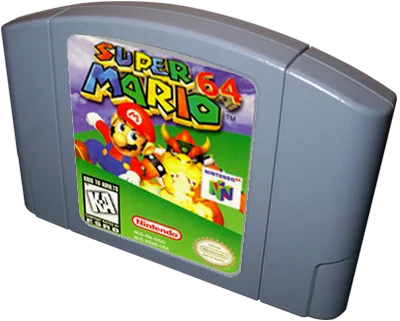
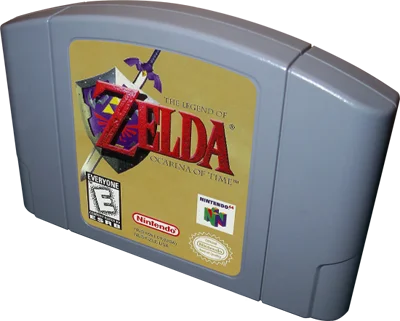
For Super Mario 64 and The Legend of Zelda: Ocarina of Time, check the Nintendo 64 region, shell color, label variant and release version. Do not use a board photograph from one N64 edition as a universal template for every other edition. Cartridge color and external wear are useful comparison points, not final authentication tests.
The platform families should not be judged with one universal checklist. NES, SNES and Nintendo 64 cartridges use different shell conventions, boards and release histories. Compare like with like: same title, same region and, when possible, the same revision.
- NES: match title, region, label and board family.
- SNES: verify the North American claim across artwork and electronics.
- Nintendo 64: check region, color variant and version.
- Separate function, originality and edition identity.
Ask Seller Questions That Produce Evidence
Good questions reduce uncertainty rather than inviting a vague reassurance. Ask whether the pictured item is the one shipped, which region and version it is, whether the shell has been opened, whether the battery was replaced, whether the board can be photographed and how the game was tested. Ask directly whether any parts are aftermarket, reproduced or taken from another cartridge.
Ask how the seller defines “authentic.” Some sellers use that word to mean that the game boots, while others mean that the shell, label, board and chips are original. Request a clear answer before paying. If the seller cannot distinguish function from originality, do not assume the more favorable meaning.
Confirm returns through the marketplace’s own system, including the deadline and whether the seller accepts a return when the item is misrepresented. Keep payment and communication on-platform. Never accept a request to move payment elsewhere, avoid marketplace protections or describe an item inaccurately.
An honest reproduction seller may be a better choice than a seller who presents uncertain hardware as original. Disclosure changes the buying decision, even though it does not turn aftermarket parts into original ones.
- Ask for exact region and edition information.
- Ask whether the shell or board has been opened.
- Ask whether any parts are replacements or aftermarket.
- Confirm the in-platform return process before paying.
Compare Total Cost Instead of the Headline Price
The purchase price is only one part of the decision. Add shipping, tax, import charges, protective packaging, inspection or authentication fees, and likely replacement work such as a battery or label. Include return postage and the time required to document a dispute. A cheap cartridge with no board evidence can cost more than a better-documented example once uncertainty and possible returns are included.
Nintendo identifies counterfeit products and unauthorized copies as a concern, but price alone cannot prove that a cartridge is fake. An unusually low price is a reason to demand stronger evidence, not a substitute for it. Some legitimate sellers misprice items, and some counterfeit listings imitate normal prices.
Use completed-sale information only as a comparison aid, separating title, region, condition and disclosed modifications. Do not turn a changing marketplace average into a guaranteed fair price. A loose North American Chrono Trigger with a replacement label should not be compared directly with an unmodified cartridge whose board and label are documented.
Buyer protection has practical value. eBay’s current policy says transactions may be covered when an item does not match the listing, and it includes a specific process for strong counterfeit indicators. Eligibility depends on the transaction, payment method, exclusions and deadlines, so read the policy attached to the purchase rather than assuming every return situation is identical.
- Calculate item, shipping, tax and import cost.
- Add inspection, replacement and possible return expenses.
- Compare only like-for-like region and condition.
- Treat buyer protection as part of the purchase decision.
Set Stop Conditions Before You Get Emotionally Invested
Decide in advance what makes the listing a no. Stop when the seller refuses essential photographs, the title and region conflict, the board is hidden despite an authenticity claim, the photos show multiple incompatible cartridges, or several exterior warnings cluster. Also stop when the seller demands off-platform payment, discourages questions or offers no usable return path for a high-risk purchase.
Do not let scarcity language override missing evidence. A countdown, claim that another buyer is waiting or story about a rare find does not authenticate a cartridge. The correct response to unresolved evidence is to leave the listing, not to invent a favorable explanation.
For a valuable cartridge, seek a specialist verifier, established retailer with a clear return policy or knowledgeable local service that can inspect the board. A verification community or specialist may be able to identify common reproduction patterns, but no remote opinion should be treated as an absolute guarantee when the board is modified or the evidence is incomplete.
If the seller offers only a front-label photograph for a high-value game, assume the listing has not met your evidence threshold. It may still be worth buying as an explicitly unverified item at a risk-adjusted total cost, but not as a confidently authenticated collectible.
- No board evidence for a high-value authenticity claim: stop.
- Region mismatch with no clear explanation: stop.
- Off-platform payment request: stop.
- Unresolved uncertainty beyond your loss tolerance: seek specialist help.
Document the Arrival and Preserve Your Options
Before opening the package, photograph the shipping label, outer box and packing. Photograph the cartridge from every side and compare it with the saved listing. Look for a swapped shell, a different label, damage, missing parts or a board that does not match promised photographs. Keep the packaging until the inspection is complete.
Test only what is necessary to establish the advertised function, using appropriate equipment and normal handling. A boot screen or playable session shows that the cartridge works; it does not prove original manufacture. Avoid cleaning, opening, relabeling or modifying the item before documenting a suspected mismatch. Those actions can make condition and responsibility harder to establish.
If you need to inspect a cartridge after purchase, document the listing and its condition first. A Nintendo 64 cartridge can be opened with a 3.8 mm security bit according to the referenced repair guide, but opening a purchased item may affect a seller’s return assessment or create a dispute about condition. Do not open an item merely to satisfy curiosity when the purchase can still be returned on the basis of missing evidence.
If the item is counterfeit or materially different, keep communication inside the marketplace and follow its stated return or claim process promptly. Provide photographs, the saved listing, seller messages and a concise description of the mismatch. Do not ship anything back until the platform’s instructions require it, and use the required tracked method if a return is authorized.
- Photograph the parcel and cartridge before testing.
- Compare the received item with the original listing.
- Do not modify or open a disputed item prematurely.
- Use the marketplace’s claim process within its deadline.
The most reliable purchase is not necessarily the cheapest or the cleanest-looking cartridge. It is the one whose title, region, exterior, internal evidence, seller behavior and transaction protection tell a consistent story. For common NES games, a disclosed reproduction may be a sensible playing copy. For sought-after SNES or Nintendo 64 collectibles, missing board evidence should materially lower your confidence.
When the evidence remains mixed, treat the cartridge as unverified rather than authentic. Preserve buyer protection, avoid unsafe or invasive inspection, and use a specialist when the financial or collecting consequences exceed what you can comfortably absorb.