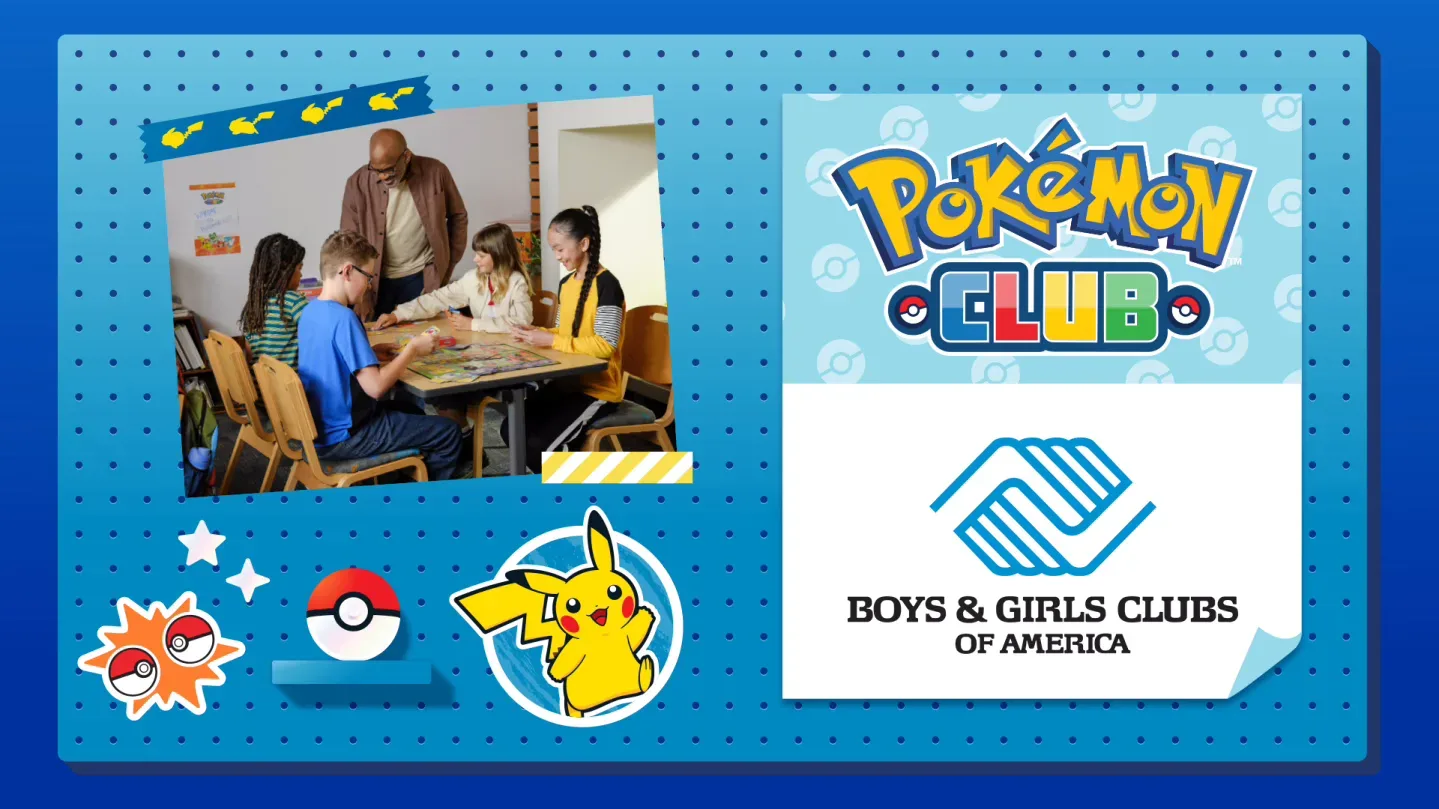
Pokémon Club is expanding to Boys & Girls Clubs of America through a new partnership that will allow local Club leaders to host the program for young people. The initiative centers on the Pokémon Trading Card Game, pairing play sessions with Pokémon-themed activities in a setting designed to be inclusive and social.
The expansion adds Boys & Girls Clubs of America to the program’s existing availability in the United States and Canada through the American Library Association and the International Society for Technology in Education. For Clubs that choose to participate, the key idea is straightforward: Pokémon cards become a structured shared activity, rather than simply something children bring in, trade, or collect independently.
What Pokémon Club is designed to do
Pokémon Club is presented as an engaging educational and community program built around the Pokémon Trading Card Game. Its stated goals go beyond learning card names or assembling a favorite collection. Participants are encouraged to build foundational life skills, develop strategic thinking, practice social-emotional skills, and make friendships with other Pokémon fans.
That combination matters because the Pokémon TCG naturally creates repeated chances for players to communicate. A game requires two people to share an understanding of turns, cards, decisions, and outcomes. In a Club environment, the wider group can also provide a welcoming space for participants who may know Pokémon already as a game, a card hobby, or a general interest.
The program also includes Pokémon-themed activities alongside the card game itself. No specific activity list, schedule, or Club-by-Club format has been detailed. That leaves room for individual leaders to learn about the program’s materials and determine how it fits their local setting, rather than treating the announcement as a promise of an identical experience at every location.
Why the card game is a useful centerpiece
The Pokémon Trading Card Game, often shortened to Pokémon TCG, is a tabletop card game in which players make choices using decks of Pokémon and other game cards. In practical terms, strategic thinking means considering options, responding to another player’s moves, and deciding how to use available cards during a game. Those skills are directly relevant to the goals identified for Pokémon Club, without requiring the program to frame every session as a formal lesson.
A Club format can also make the social side of play more visible. Players need to take turns, explain unfamiliar effects, ask questions, and handle wins and losses. Those ordinary interactions can support social-emotional skills: the skills involved in recognizing emotions, communicating with others, and navigating shared situations respectfully. The announcement does not claim that card games solve every social challenge, but it does place Pokémon Club in a deliberately welcoming environment where these interactions can happen around a common interest.
For young people who are drawn to the collecting side of Pokémon cards, organized play and themed activities offer another way to participate. The emphasis here is not on card values, rarity, or buying the latest products. It is on play, connection, and a shared hobby. That distinction is particularly useful in a group setting, where an accessible activity can give newcomers and established fans something concrete to do together.
Related coverage includes Pokémon Club Expands to Boys & Girls Clubs of America, Opening New TCG Learning Spaces.
What the BGCA partnership changes
Before this expansion, Pokémon Club was available in the US and Canada through the American Library Association and the International Society for Technology in Education. The partnership with Boys & Girls Clubs of America broadens the kinds of community organizations that can host the program.
It is a distribution expansion rather than a new Pokémon TCG release, a change to card rules, or a retail promotion. The practical headline is that BGCA Club leaders can now explore hosting Pokémon Club locally. A national partnership does not mean every Boys & Girls Club will automatically run sessions, nor does the available information establish dates, enrollment details, or the precise resources each location may offer.
That uncertainty is worth keeping clear for families and collectors looking for a nearby opportunity. Interest in Pokémon is widespread, but local participation will depend on whether a Club elects to host the program and how that Club organizes it. The appropriate next step for a leader is to use the BGCA information route referenced with the initiative to learn how to begin.
What Club leaders and families should take from the announcement
For a BGCA Club leader, the announcement is an invitation to investigate a program that combines a recognizable tabletop game with broader Pokémon activities. Leaders interested in participating should seek the program information provided through Boys & Girls Clubs of America and confirm what is required before planning a session.
- For Club leaders: The expansion opens a path to host Pokémon Club; it does not indicate that implementation is automatic at every site.
- For families: A local Club may be able to provide an organized Pokémon-focused activity, but availability should be checked directly with that location.
- For young players: The program’s emphasis is on playing, learning, and meeting fellow fans in an inclusive setting.
- For collectors: Pokémon Club puts the social game at the center, offering a complementary side of the hobby to collecting cards.
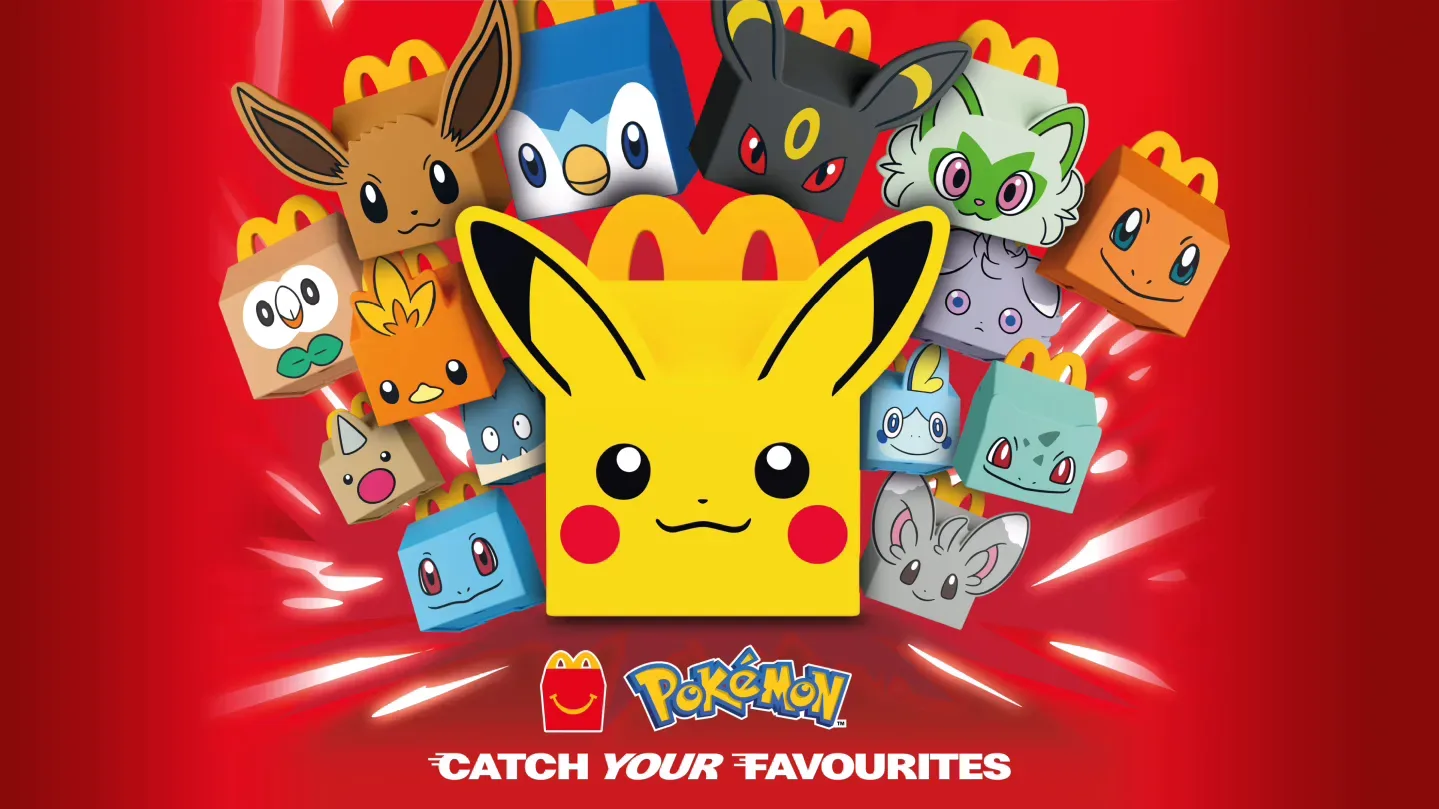
The move also arrives as Pokémon cards continue to appear in different youth-facing contexts. For example, Pokémon TCG cards have also been tied to a US Happy Meal promotion, covered in this look at the return of Pokémon Happy Meals with cards and toys. Pokémon Club is a different kind of initiative: it is focused on repeatable group engagement rather than a limited promotional item.
Analysis: a community route into Pokémon TCG participation
The most significant element of this expansion is the setting. Pokémon Club is not positioned solely as a competitive scene or a collector event. By working with libraries, education-focused organizations, and now Boys & Girls Clubs of America, the program is being placed in spaces where young people can gather around a familiar interest.
That approach may lower the barrier to trying the game for someone who has cards but has never had a regular group to play with. It may also give established players a reason to focus on the collaborative parts of the hobby: teaching, taking turns, and welcoming people who are new to the rules. Those are plausible benefits of a structured Club format, though the announcement does not provide participation data or outcomes that would measure them.
Just as importantly, the program’s description avoids reducing Pokémon to a collectible commodity. Cards can be valued for many reasons, but Pokémon Club foregrounds the game and the people around it. The partnership therefore expands a social pathway into the TCG—one where strategy, themed activities, and friendship are all part of the intended experience.