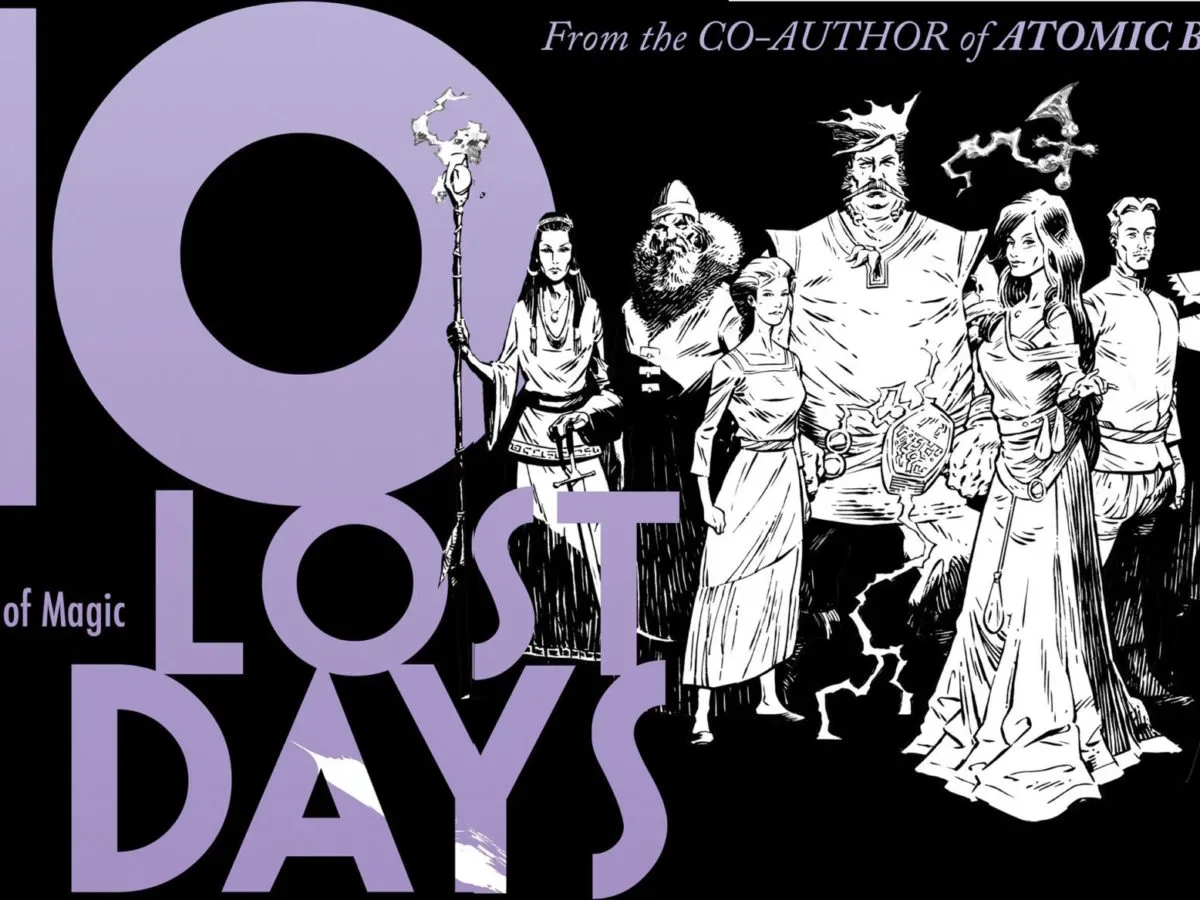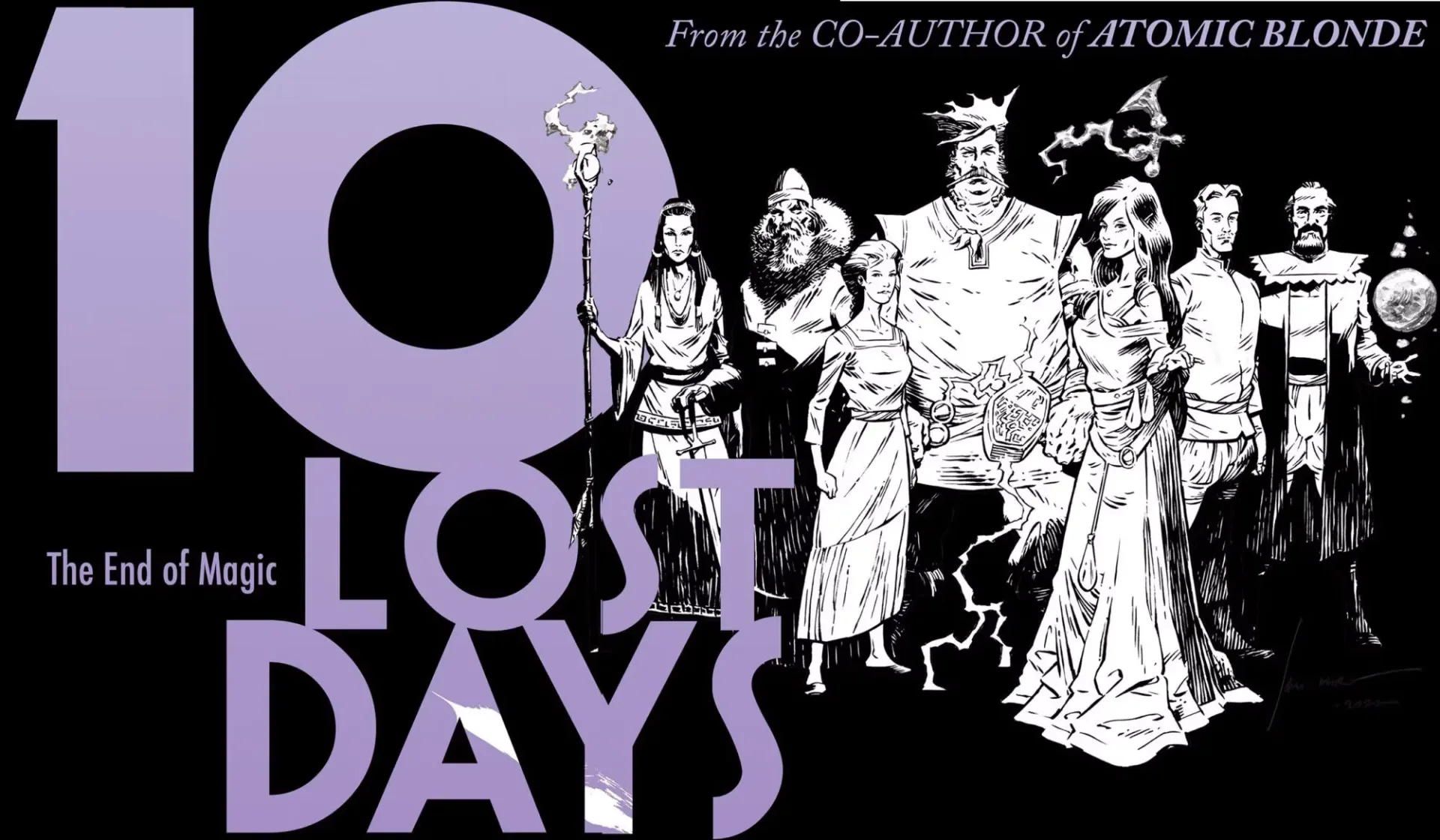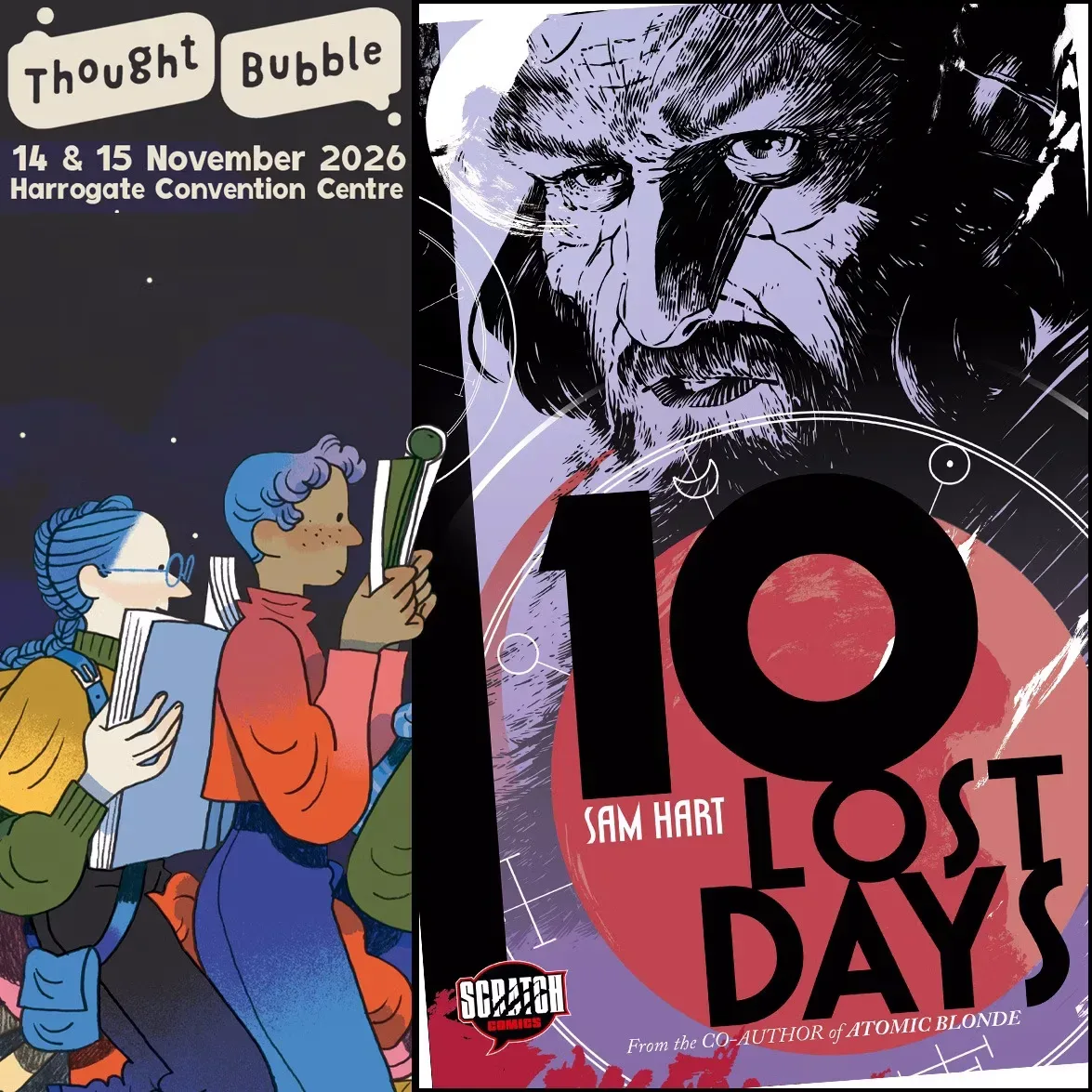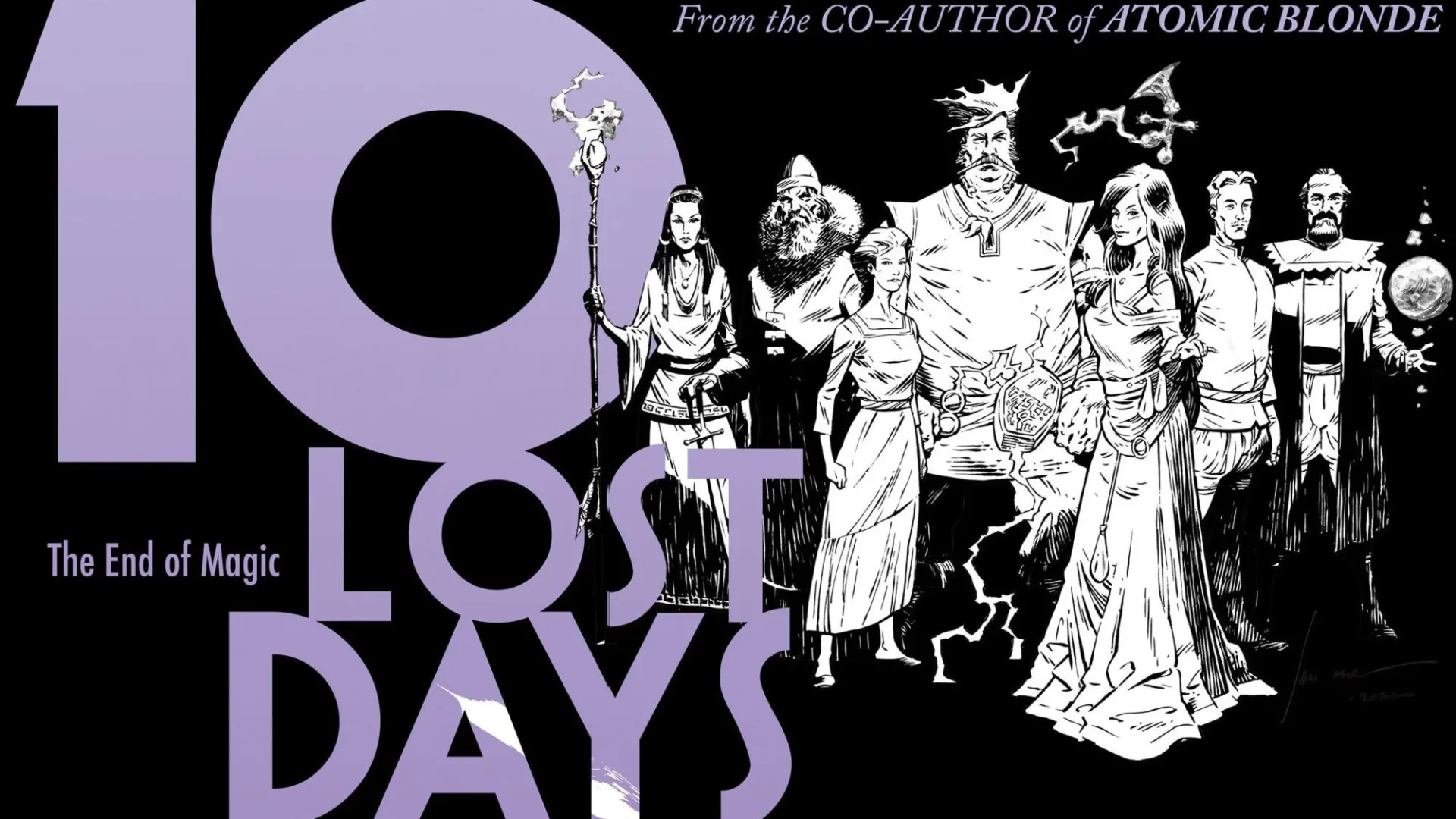
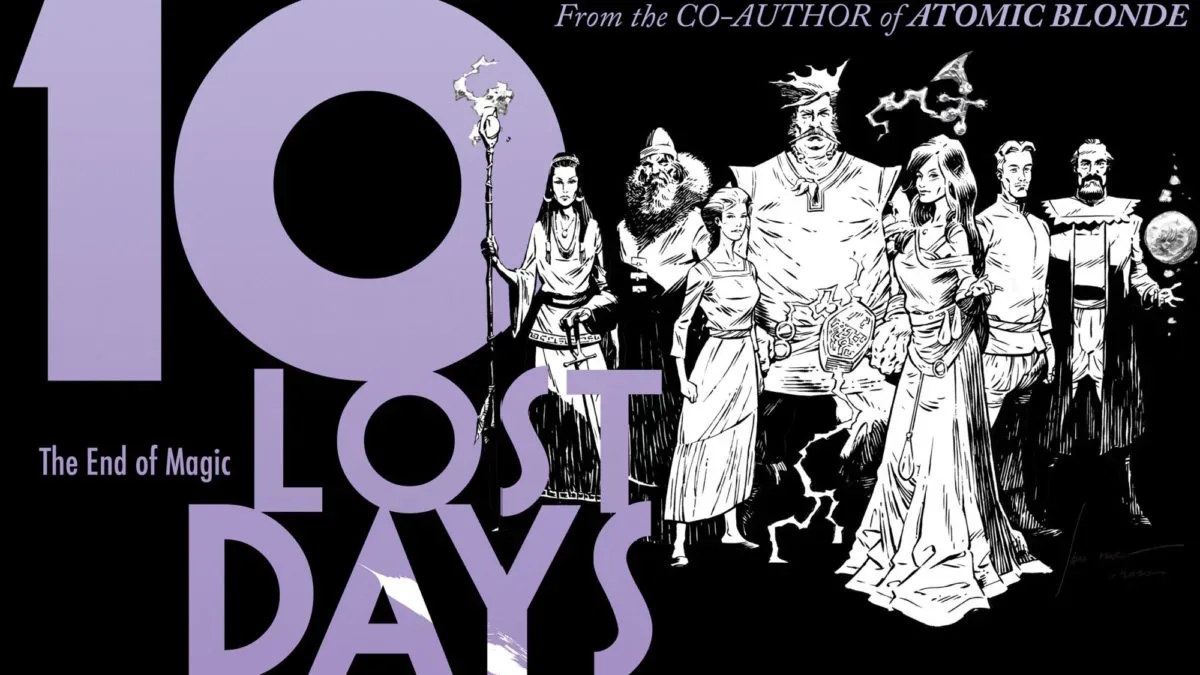
Sam Hart’s 10 Lost Days is set to make its English-language convention debut at Thought Bubble, bringing an unusually literal piece of calendar history into the realm of black-and-white historical fantasy. Hart is scheduled to sign at table C50 in the 2000 AD Hall during the event at Harrogate Convention Centre on November 14 and 15.
The 186-page collection arrives from Scratch Comics after the series originally ran in Brazil between 2018 and 2022. Its central premise begins with the 1582 change from the Julian calendar to the Gregorian calendar, when ten dates were omitted: October 4 was followed by October 15. 10 Lost Days treats that gap not merely as a historical curiosity, but as a window of peril and possibility.
A fantasy built inside a real calendar change
The story follows Sophya Brahe, described as the sister of astronomer Tycho Brahe and herself a young astronomer and astrologer. She has the missing ten days to travel across Europe and prevent an enraged tyrant from endangering both humanity and magic.
That setup is a useful example of what historical fantasy can do well. Rather than simply placing invented characters in an old setting, it takes a documented disruption to daily life and asks what might have happened in the blank space. The missing days are the story’s clock: Sophya’s deadline is rooted directly in the calendar transition, giving the quest a defined and unusual constraint.
The Julian and Gregorian calendars are systems for organizing dates. In the real-world shift cited by the book’s premise, the correction meant that ten calendar dates disappeared from the sequence in 1582. Hart’s fictional answer is to make those dates narratively tangible: days that can be crossed, spent, and fought over before normal time resumes.
That approach also explains the project’s blend of science and myth. Sophya’s connection to astronomy and astrology places her at a crossroads of fields that, in the story’s historical setting, can sit close together. The fantasy stakes—humanity and magic under threat—are clear, but the framework is an astronomical and calendrical one rather than a generic portal or prophecy.
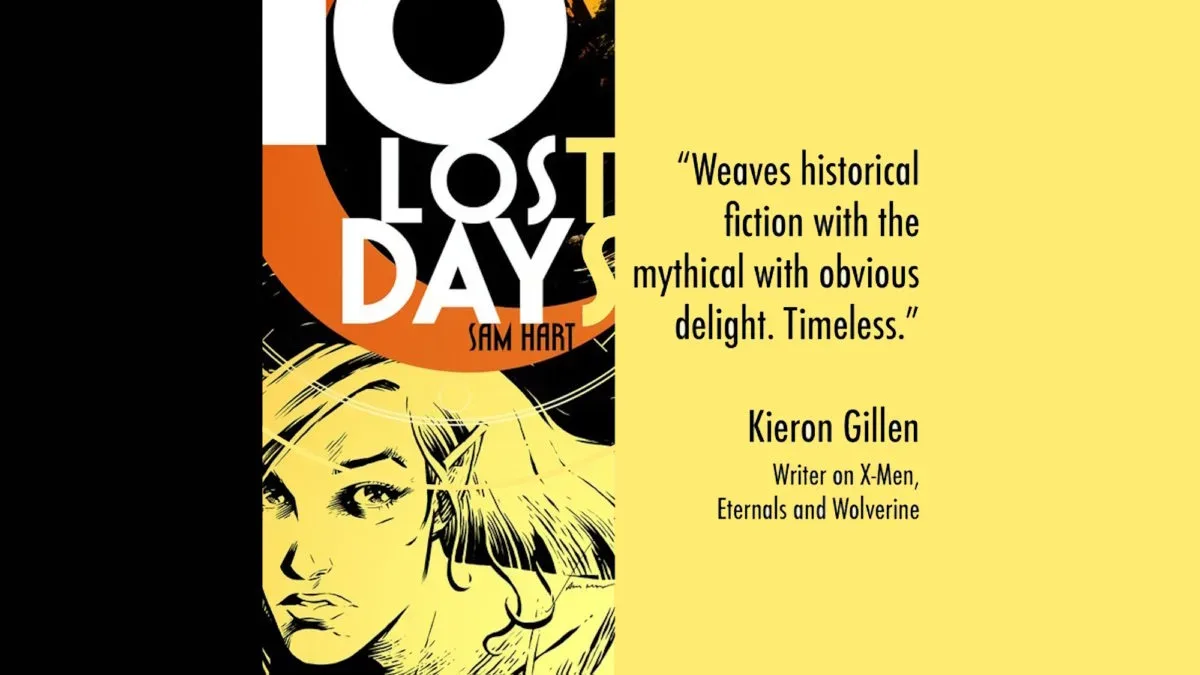
“Weaves historical fiction with the mythical with obvious delight. Timeless.” — Kieron Gillen
What the English edition includes
Scratch Comics’ English edition collects the material in a 186-page black-and-white volume. It also includes extra pages, while Mark Stafford and Ju Loyola have contributed variant covers.
Black-and-white presentation is especially notable for a project described through its historical and fantastical contrast. Without color, page composition, ink work, shadows, texture, and the control of white space carry much of the visual distinction between its scientific and mythical elements. That is an observation about the format, not a claim about any particular scene: readers should expect a collected edition whose visual identity is defined by line art rather than a color palette.
For readers encountering the title for the first time, the collection format means the full miniseries is presented as one continuous work rather than as separate installments. The underlying story was published in Brazil over the 2018–2022 period and later received the 2023 HQ Mix Trophy for Best Miniseries. The English release therefore represents an opportunity for a new audience to approach a completed series in a single volume.
Hart’s connection to Atomic Blonde and 2000 AD
Hart is known as co-creator and artist of The Coldest City, the graphic novel adapted into the film Atomic Blonde. He has also worked on Judge Dredd and other titles for 2000 AD, which makes the placement at Thought Bubble’s 2000 AD Hall a fitting point of contact for attendees who know his work through British comics as well as through the screen adaptation of The Coldest City.
It is worth separating those credits from the new book’s identity. 10 Lost Days is not presented as an Atomic Blonde follow-up or a Judge Dredd project. Its subject is a standalone historical fantasy, and its Brazilian publication history distinguishes it from the earlier work most frequently associated with Hart’s name.
The connection may nevertheless help readers establish what kind of creator-led project is arriving at the show: an original graphic narrative from an artist with credits across independent work and established comics properties. For broader comics reading, Joking Joystick has also covered the latest developments in Fire and Ice: Darkwolf.
Thought Bubble’s creator-focused setting
The signing takes place during Thought Bubble’s twentieth edition. The festival runs for a week across Yorkshire before culminating in the Harrogate convention on November 14 and 15. Its programming spans comics, illustration, animation, and related creative work, with a particular focus on comic-book artists and writers and support for small-press creators.
That context matters for a book such as 10 Lost Days. A convention table is not simply a retail shelf: it creates a direct point of access between a creator and people curious about an unfamiliar graphic novel. The supplied event details identify Hart’s location precisely—2000 AD Hall, table C50—which is the practical information attendees need if they want to seek out the book or meet the artist.
Thought Bubble began in 2007, founded by Yorkshire artist Lisa Wood, also known as Tula Lotay, as part of the Leeds International Film Festival. The first event was held in the basement of Leeds Town Hall on November 10, 2007, drawing a couple of hundred attendees. It later expanded beyond Leeds, moving to Harrogate in 2019 amid a need for more space and issues involving Leeds City Council.
The twentieth edition consequently frames Hart’s launch within an event that has grown from a small local gathering into a major UK comic-art festival. For creators bringing completed, independently distinctive work to readers, that evolution is significant: an event centered on comics makers can give a translated collection like 10 Lost Days a visible venue without requiring its premise to be simplified into a familiar franchise label.
Why the missing days are an effective story engine
The most compelling aspect of the premise is its limitation. Sophya does not have an undefined amount of time to avert disaster. She has ten missing days, and the calendar’s correction supplies a clean beginning and end to that interval. In storytelling terms, a fixed deadline generates momentum because every detour has an implied cost.
There is also a productive tension in the book’s two stated modes. Science, in this context, is represented by the calendar change and Sophya’s astronomical background. Mythical material enters through magic and the tyrant threatening it. Neither is treated as a substitute for the other in the premise; instead, the plot places them in the same short stretch of time. That overlap allows the work to explore a world where measurement, celestial knowledge, and legend can all shape the stakes.
Readers should be careful not to confuse the historical springboard with a claim that the comic recounts literal events. The skipped dates in 1582 are the real basis supplied for the story, while Sophya’s race across Europe to save humanity and magic is the fantasy narrative built around it. The distinction is part of the appeal: historical facts establish the riddle, and fiction fills the deliberately impossible space.
Where and when to find it
- Book: 10 Lost Days
- Creator: Sam Hart
- Edition: Scratch Comics English-language collection
- Format: 186 pages, black and white, with extra pages
- Variant-cover artists: Mark Stafford and Ju Loyola
- Event: Thought Bubble, twentieth edition
- Dates: November 14–15
- Venue: Harrogate Convention Centre
- Signing location: 2000 AD Hall, table C50
For anyone drawn to comics that use a precise historical detail as more than background decoration, 10 Lost Days offers a sharply defined hook. Ten missing dates become ten days of danger, and an English collection now gives the concept a new route to readers at one of the UK’s major creator-centered comics events.