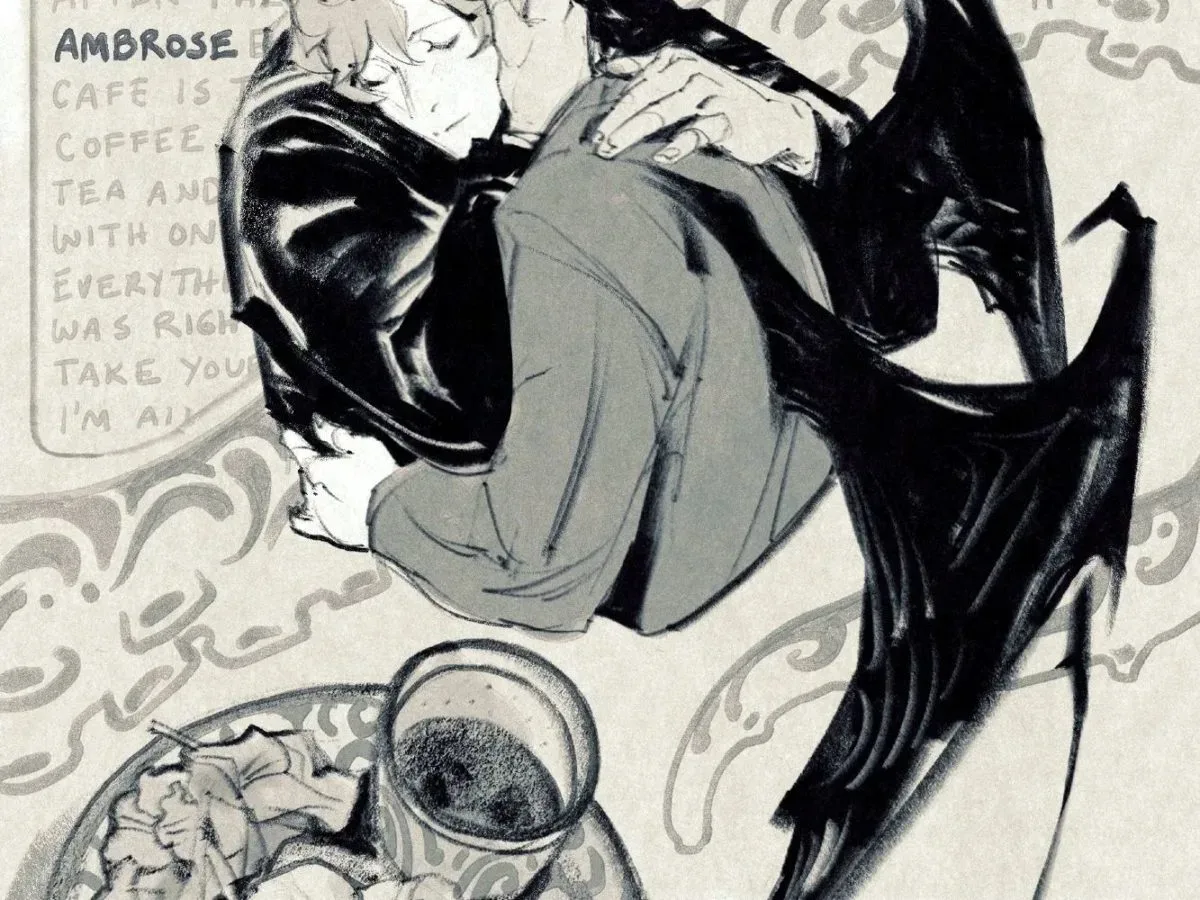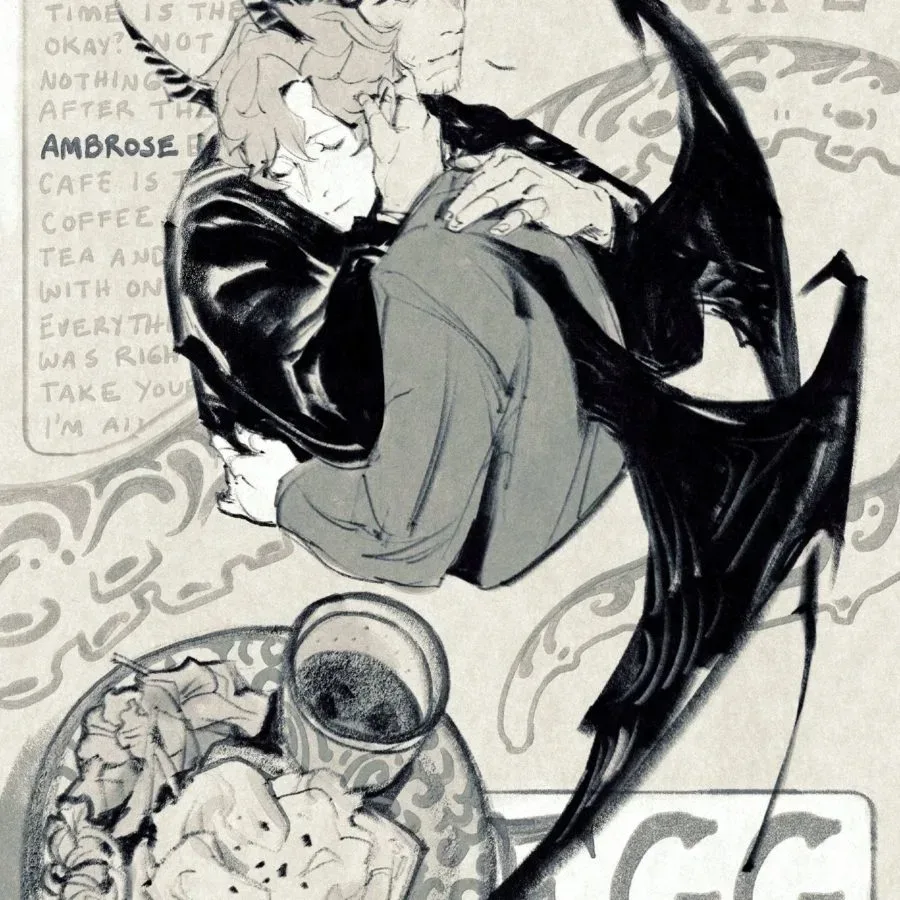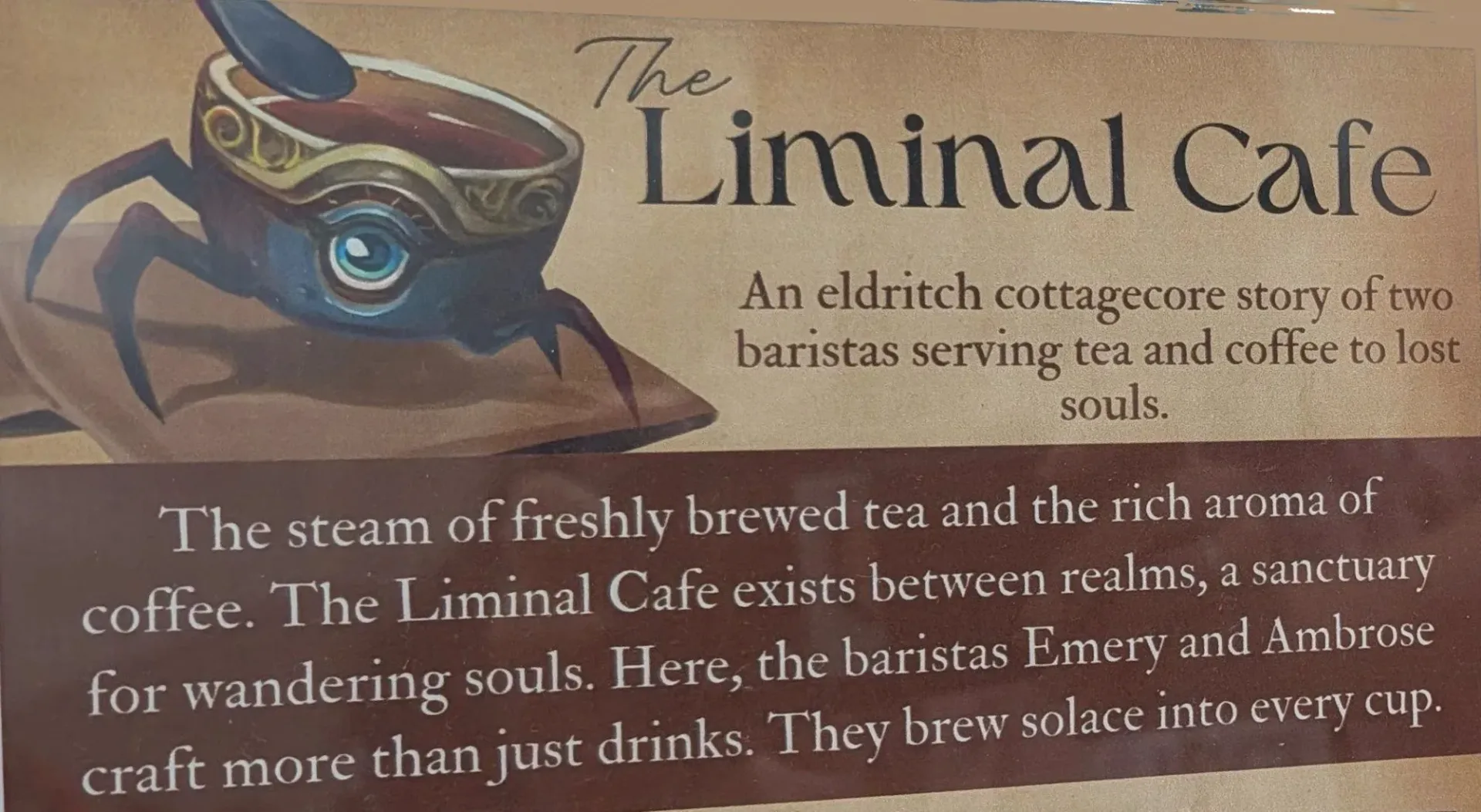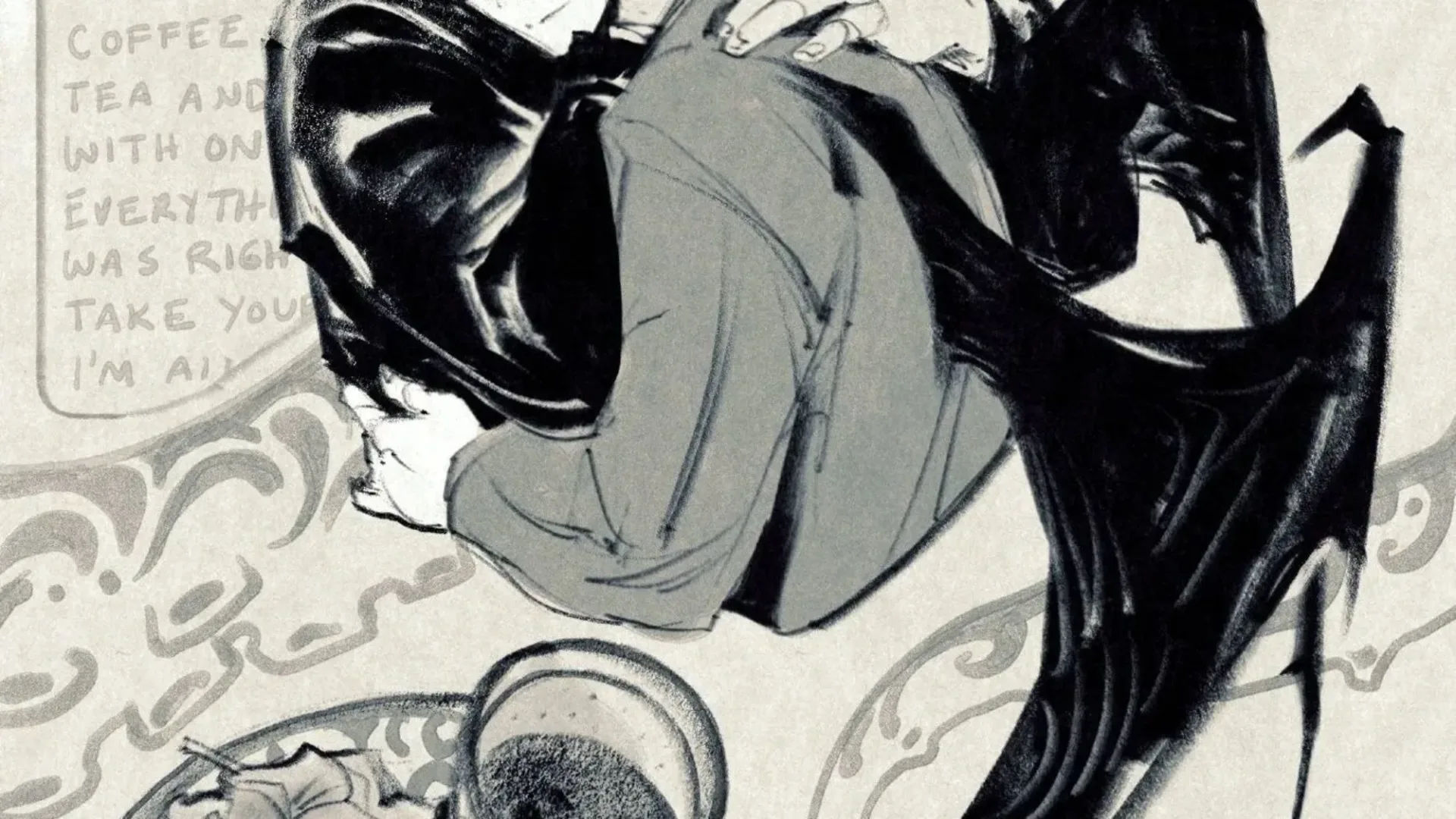
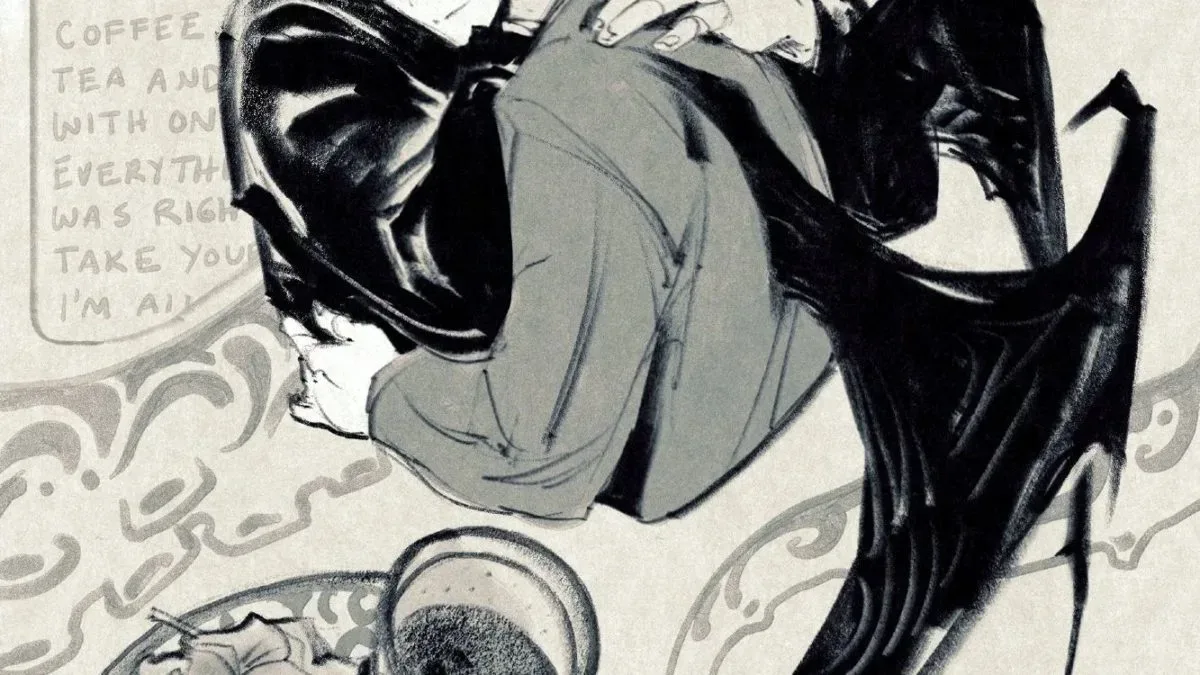
Jessica Fong’s Liminal Cafe is headed to Thought Bubble’s twentieth edition in Harrogate, England, where the creator will sell the small-press comic at Travelling Man Hall, table A5. The project is described as a supernatural queer story centered on two baristas who serve lost souls inside a cafe that continually changes.
The premise gives the book an intentionally in-between quality. A “liminal” space is a threshold: somewhere between one state and another, rather than a fixed destination. In Liminal Cafe, that idea is not merely a supernatural setting. The cafe functions as a place where wandering people can pause, make things, and work through their circumstances without being rushed toward a prescribed answer.
Fong has characterized the comic’s atmosphere with a deliberately unusual blend of ideas: eldritch cottagecore, tea, queer storytelling and tragedy. “Eldritch” commonly signals the strange, eerie or cosmic unknown, while cottagecore evokes domestic comfort, handmade objects and a pastoral sense of warmth. Putting those tones together suggests a story interested in comfort that is not entirely safe, and intimacy that exists alongside the uncanny.
A cafe for souls still finding their way
At the center of the comic are a pair of baristas: a shifter and a tired barista. Fong has called them a comforting but tragic duo, a description that frames the series less as a straightforward monster story and more as character-focused supernatural fiction. The cafe’s ever-changing nature also creates room for a setting that can adapt to the needs of its visitors rather than follow ordinary physical rules.
For more context, explore Hot Dogs, Horseshoes & Hand Grenades 2 Brings Physics-Driven Roguelike Firefights to Quest 3 and 3S.
That matters because the comic’s supernatural premise is paired with a plainly human concern: people who feel adrift. The lost souls who enter the cafe are not positioned simply as problems to solve. Instead, the cafe is described as offering them space to figure things out on their own schedule and at their own pace. It is a quieter dramatic model than a conventional quest narrative, with the emphasis on reflection, connection and personal agency.
Fong is a Californian comics creator whose wider body of work includes a Poison Ivy cover series and cover work for publishers including DC, Marvel, Mad Cave Studios, IDW Publishing, Image Comics and Heroic Signatures. Their credits also extend to work connected with Dungeons & Dragons, Magic: The Gathering, Critical Role’s Midst, Marvel Snap, Fandom Inc., Nova and Mali Publishing. Liminal Cafe represents a markedly more personal small-press project alongside that commercial illustration and cover work.
Memory as something readers can physically handle
The most distinctive part of Liminal Cafe may be its planned tactile relationship with the reader. Fong has discussed pages designed to be torn out, folded, ripped, written or drawn upon, and even passed to someone else. Those are not decorative extras detached from the narrative. They are tied directly to the comic’s interest in memory.
Rather than treating a comic page solely as a surface to be read and preserved, this approach invites a reader to alter it. Scrapbooking, diarying and creating are built into the project’s emotional vocabulary. That changes the page from a passive container for images and dialogue into something closer to an artifact: an object that can hold traces of attention, choices and remembrance.
Fong has connected this aspect of the book to their own experience with trauma and dissociation. Dissociation is a broad term for experiences of disconnection that can involve one’s memories, surroundings, identity or sense of time. The comic does not purport to turn those complex experiences into a simple gimmick. Instead, its hands-on pages grow from Fong’s stated use of mindfulness and tactile records to retain meaningful memories and practice slowing down.
This makes the concept especially suited to the cafe setting. Cafes are often places of brief routine: writing in a notebook, sharing a table, having a drink, waiting, or taking a break from a busier world. In Liminal Cafe, those familiar rituals meet an impossible location and supernatural visitors. The tactile format extends that meeting beyond the fictional cafe, asking the reader to pause long enough to interact with the physical comic.
What “tactile storytelling” means here
Tactile storytelling uses the material qualities of a work as part of its meaning. In this case, the relevant qualities are paper, pages and reader-led actions such as folding or writing. The approach differs from simply including an activity page at the end of a book. Fong’s stated intention is for these actions to participate in the narrative’s themes of memory, loss, care and making records.
There is a practical implication for prospective readers, too: not every copy has to be experienced in the same way. One reader may preserve the comic intact; another may use the pages as intended. A page gifted to someone else potentially becomes part of a relationship outside the book. That variability is meaningful for a story about memories, since memories themselves are personal, incomplete and shaped by what people choose to keep.
It also creates a useful tension for a physical comic. Collectors often value an untouched copy, while this project explicitly recognizes that some readers may want to mark, fold or remove pages. Neither response invalidates the other. The format makes an argument for the value of use as well as preservation, particularly when the work is concerned with care and recollection.
Why Thought Bubble is a natural fit
Liminal Cafe will appear during Thought Bubble’s November 14-15 convention at Harrogate Convention Centre, following festival events across Yorkshire. The festival’s focus on comics creators and its support for small press makes it an appropriate setting for a project that lives outside the conventional monthly-comic model.
Thought Bubble began in 2007, founded by Yorkshire artist Lisa Wood, also known as Tula Lotay. It was initially organized as part of Leeds International Film Festival with the aim of raising comics’ profile in the area. Its first event was held in the basement of Leeds Town Hall and drew a few hundred attendees. The convention later outgrew its Leeds footprint and moved to Harrogate in 2019, with the need for more space among the reasons for the change.
The twentieth show is therefore a particularly fitting moment for a creator with a substantial cover portfolio to present a more intimate, creator-driven comic. Festival tables can provide a direct connection between artists and readers that is difficult to reproduce through a standard retail listing: visitors can encounter a project through its physical presence, its design and the creator explaining its ideas in person. For a comic built around tactile participation, that physical encounter is particularly relevant.
Readers interested in comics that mix the supernatural with handmade forms of storytelling will find a project deliberately oriented toward those intersections. Liminal Cafe does not present its cafe as a place where every uncertainty is immediately cured. Its more specific promise is a space for wandering souls, and a book whose pages can become part of how a reader reflects, remembers or shares something onward.
Fong’s appearance at table A5 gives Thought Bubble attendees a place to seek out the comic during the convention. The project’s combination of queer character storytelling, eerie domestic imagery and interactive pages makes it a notable small-press entry at a festival built around artists and writers.