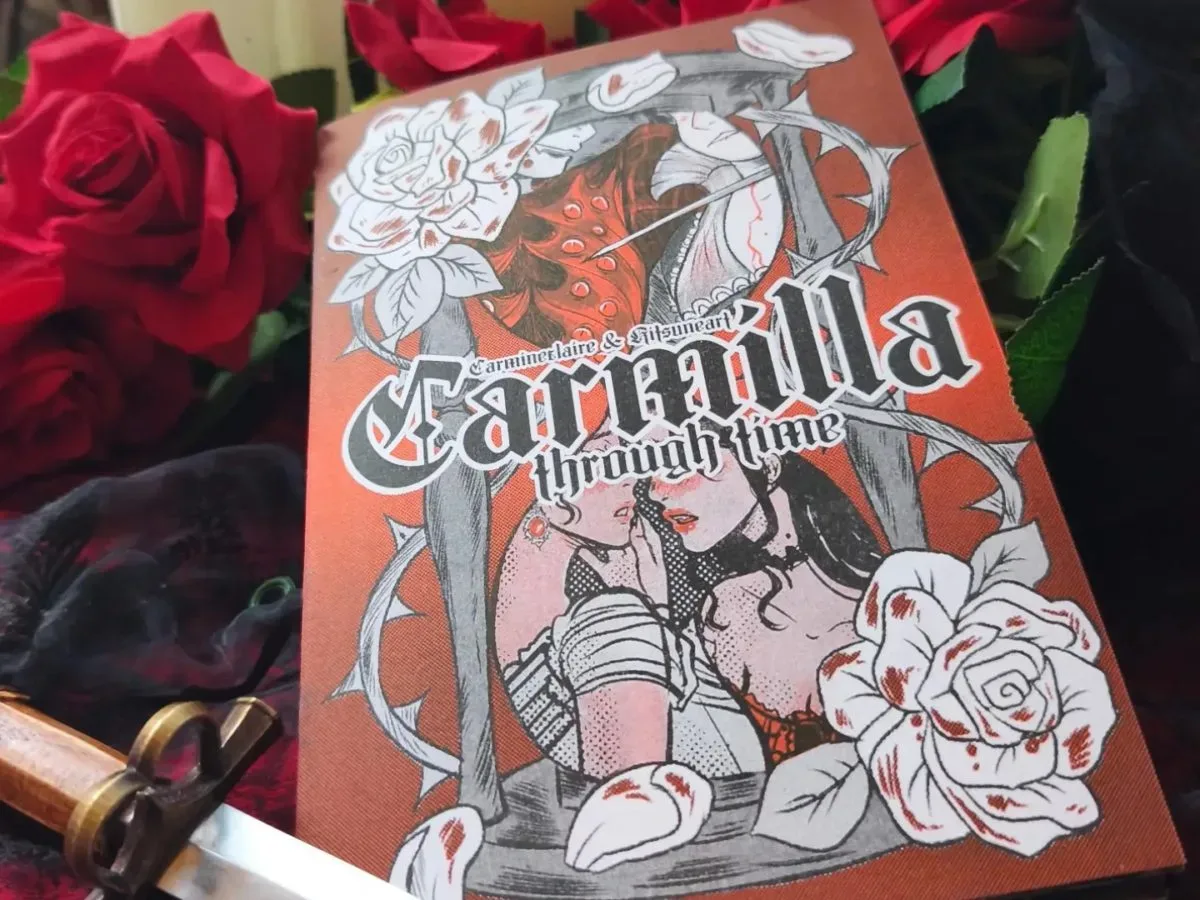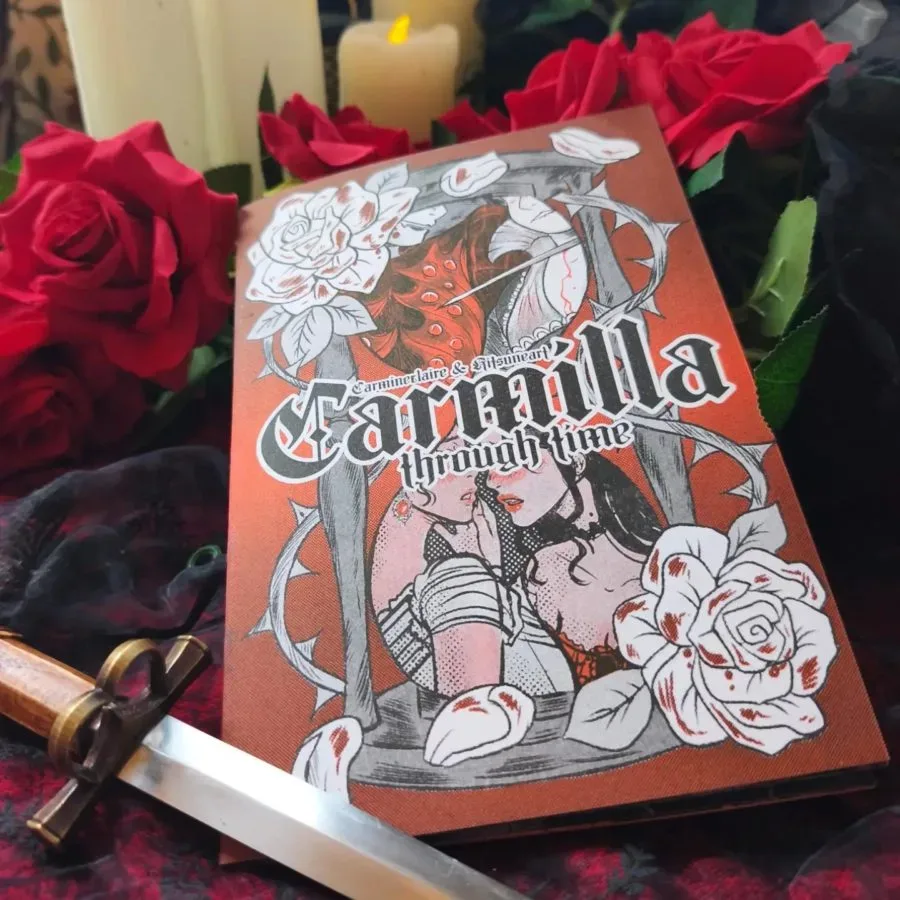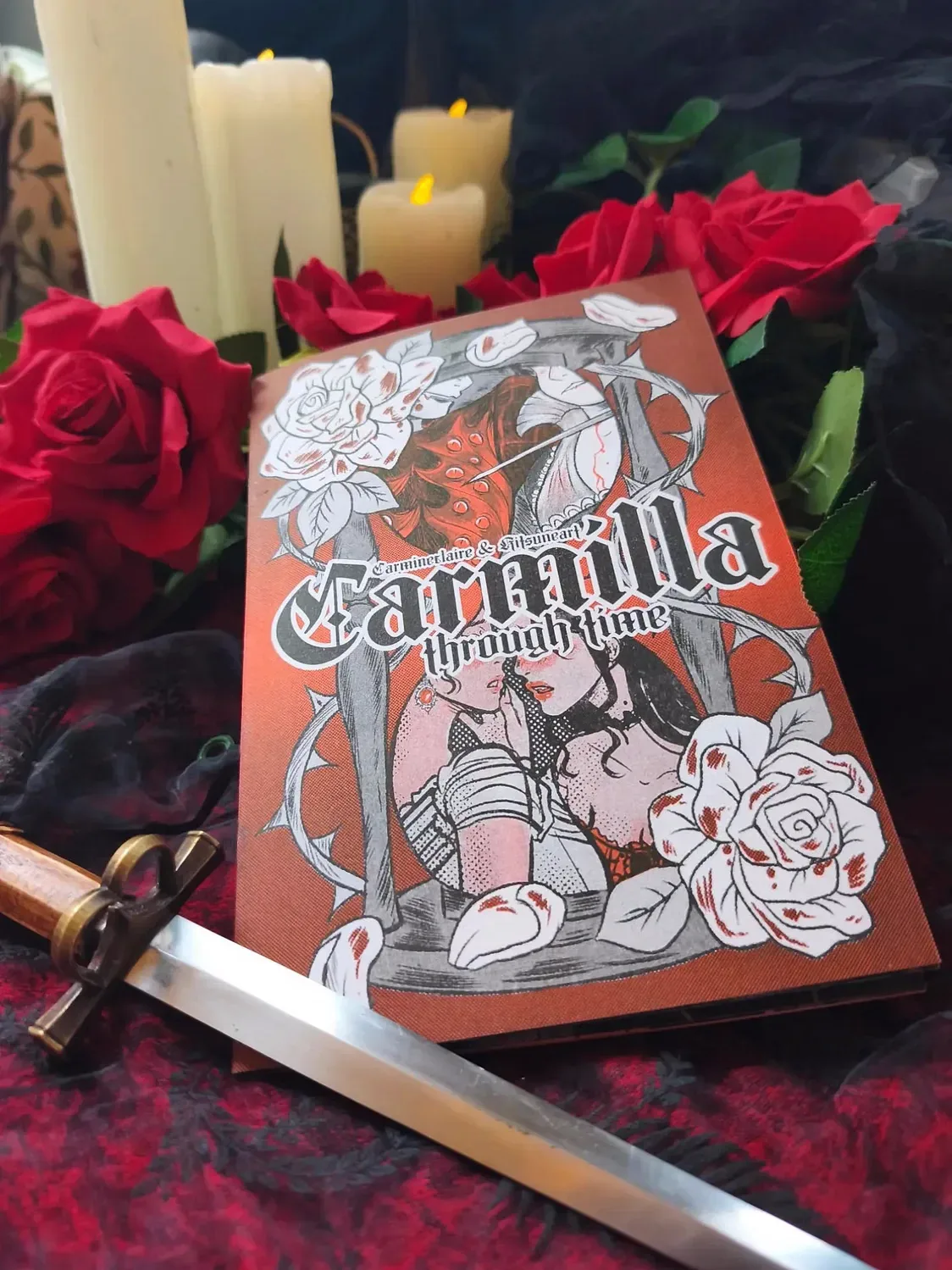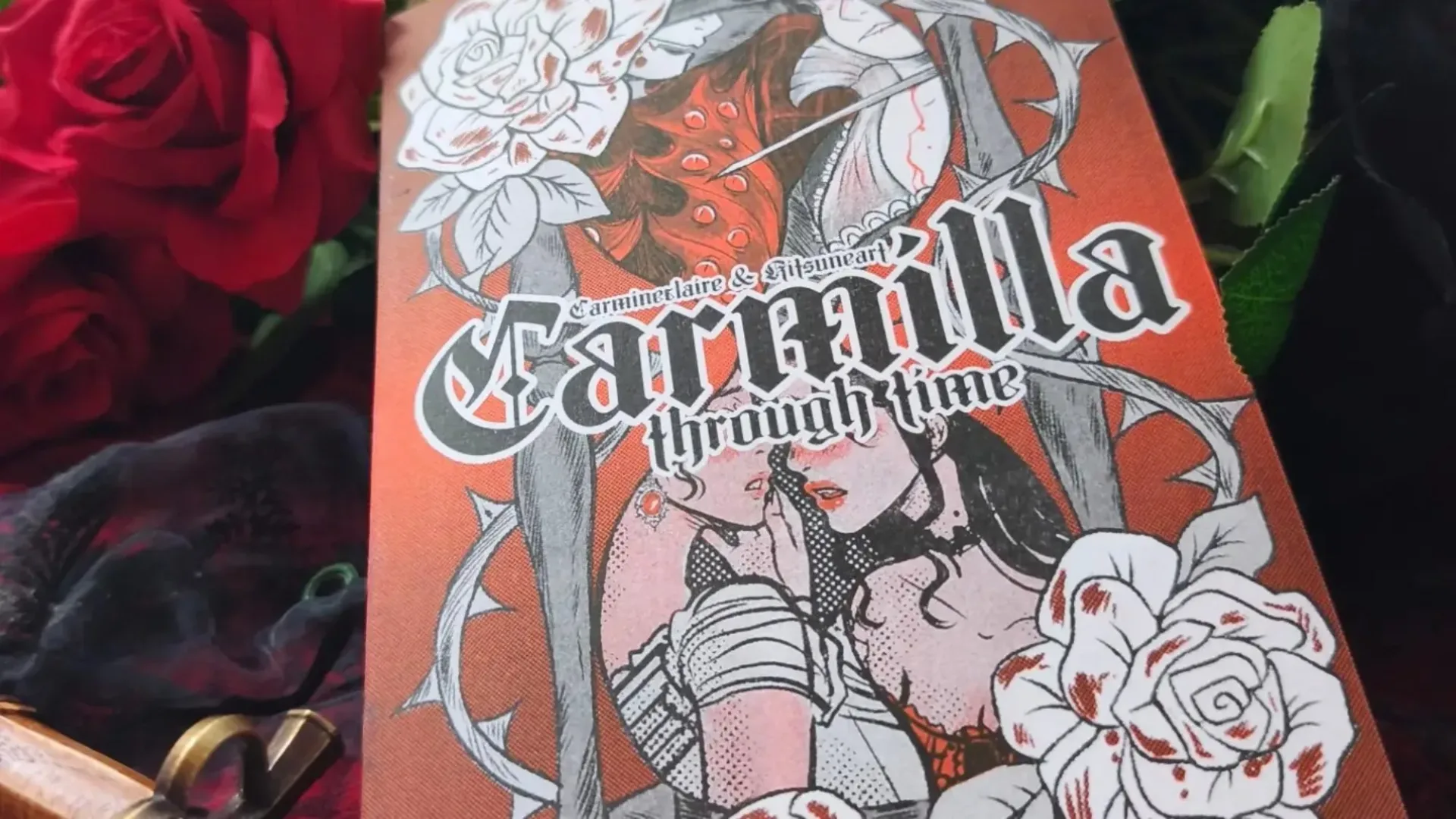
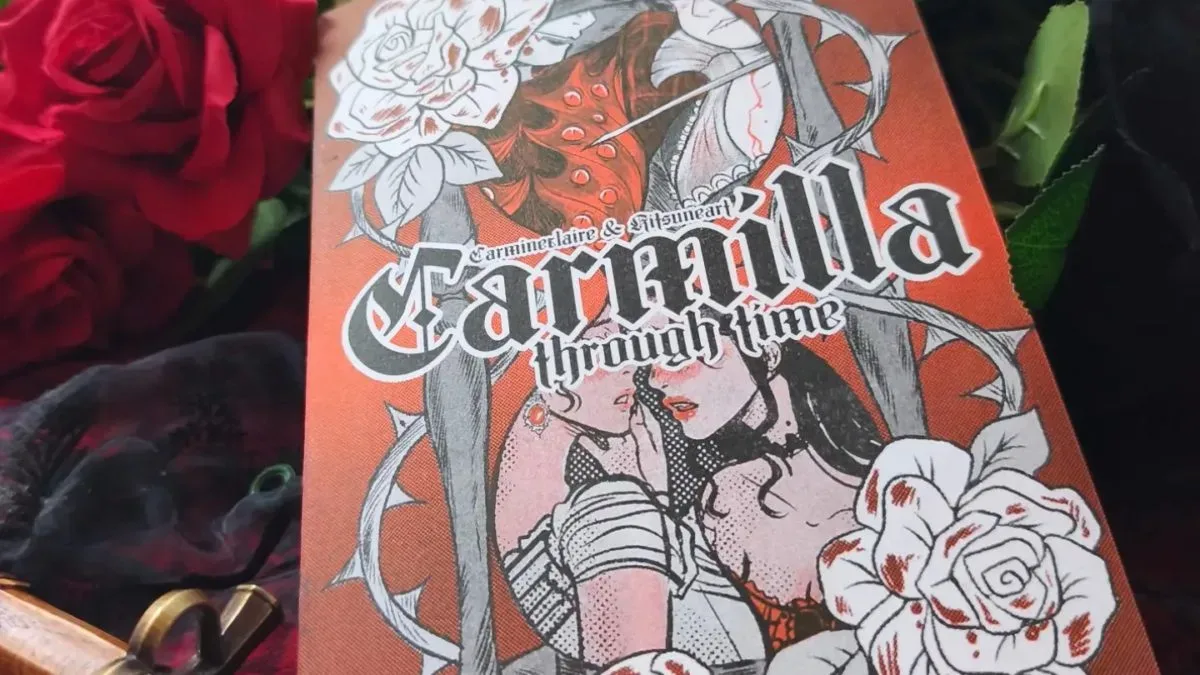
Thought Bubble’s small-press floor will have room for a very old vampire with a very long shadow. Carmilla Through Time, a 16-page gothic risograph zine by Claire Mead and Lucia KitsuneArt, is set to appear at KitsuneArt’s Bubbleboy Hall table A2a during the convention at Harrogate Convention Centre on November 14 and 15.
The self-published work takes Joseph Sheridan Le Fanu’s Carmilla as its starting point, moving its vampire heroine through different eras with illustrations, comics, selected text from the original novel, historical clothing and a deliberate emphasis on sapphic longing. Its visual approach is built around black, white and blood-red tones, a limited palette that neatly suits a story in which romance, danger and bodily unease have always shared the same room.
For attendees interested in comics that treat classic horror as living material rather than a museum piece, the zine’s premise is straightforward and appealing: revisit one of literature’s foundational vampire narratives through a contemporary collaboration shaped by an evident affection for gothic melodrama and lesbian vampire fiction.
A classic vampire story before Dracula
Carmilla was first published in 1871, placing it 25 years before Bram Stoker’s Dracula. That chronology matters because Le Fanu’s novella already contains ideas that became central to vampire fiction: an alluring and threatening outsider, a young protagonist gradually losing strength, disturbing dreams, a mysterious predator and telltale wounds on the neck.
The story is narrated by Laura, a young woman whose father agrees to shelter Carmilla following a carriage accident. The two become intensely close, with physical affection and emotionally charged exchanges occurring alongside Laura’s increasingly alarming symptoms. Nightmares involving an animal-like presence accompany her decline; she becomes pale and weak and finds puncture marks on her neck.
Its horror is therefore inseparable from intimacy. Carmilla is not simply a monster who attacks from a distant castle. She enters Laura’s household, becomes a companion and directs desire toward her. That is a major reason the novella has endured as a touchstone for queer gothic storytelling. Mead and KitsuneArt’s decision to foreground “sapphic yearning” does not bolt a new theme onto a neutral text; it brings a long-recognized current of the original into the centre of the project.
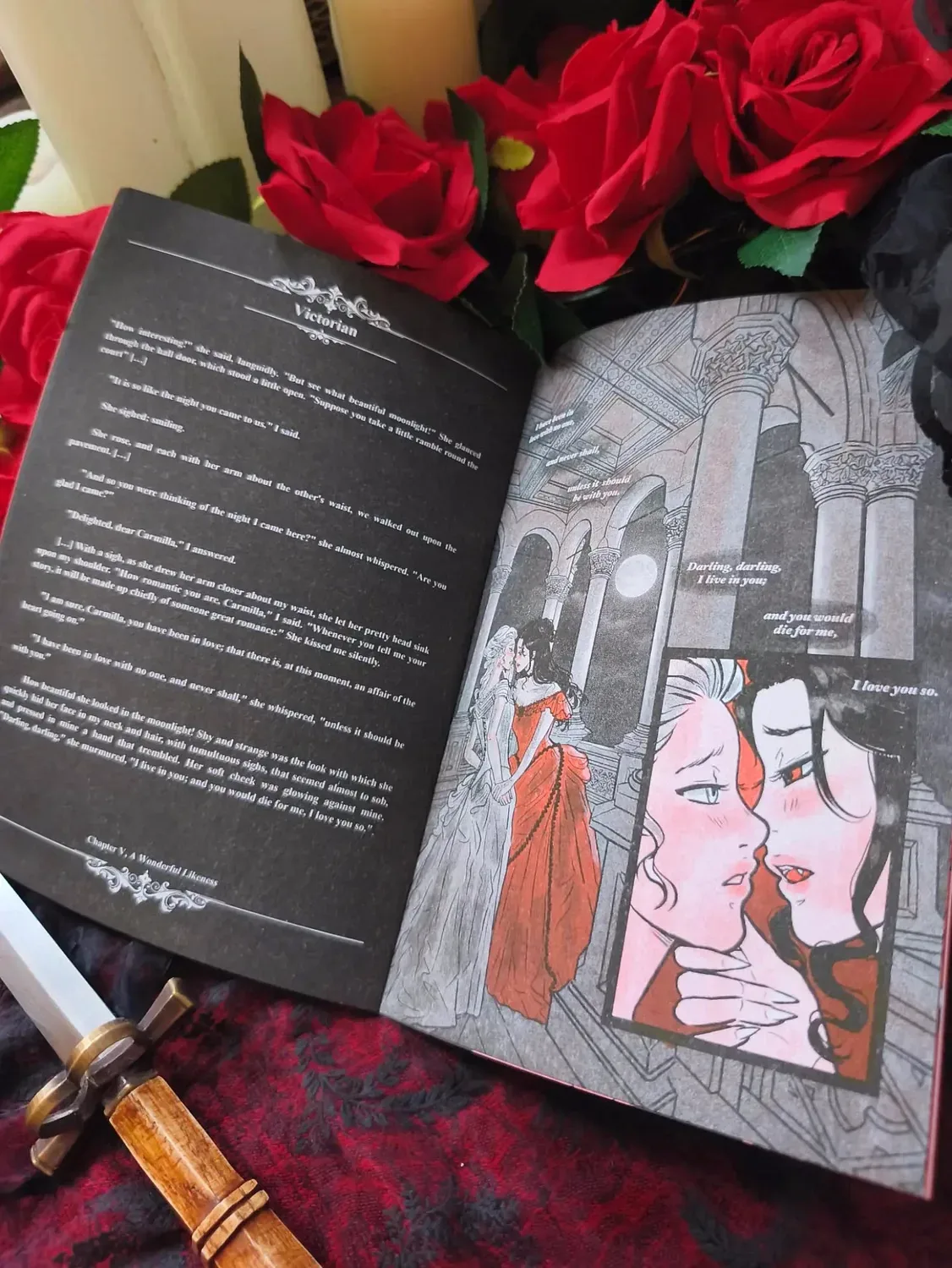
“I have been in love with no one, and never shall,” Carmilla tells Laura, “unless it should be with you.”
The line captures the central tension that adaptations and responses to Carmilla often pursue: an avowal of desire that can read as tender, possessive, frightening or all three at once. A zine format offers a particularly fitting space for that ambiguity, since sequential art can let costume, posture, colour and page rhythm do as much work as the quoted prose.
What Carmilla Through Time is bringing to the table
Carmilla Through Time is described as a “two vampire-lovers’ take” on the legend. Rather than presenting itself as a straight comic adaptation of every event in Le Fanu’s novella, it reimagines Carmilla across periods. The artists combine comics and standalone illustration with favourite excerpts from the nineteenth-century text, and the publication also includes a small behind-the-scenes component.
The emphasis on historical costume suggests that the movement through time is part of the storytelling language, not just decoration. Clothing can instantly signal shifts in period while preserving the vampire’s continuity: fashions change; fangs and longing remain. That makes the project’s title do useful work. It points toward an interpretation of Carmilla as a figure able to pass through changing visual cultures while retaining the traits that make her recognizable.
The publication’s black-and-red risograph presentation is another meaningful part of its identity. “Riso” here identifies the printing style used for the zine, while the restricted colours reinforce the project’s gothic focus. Black and white establish the shadowy, old-world atmosphere associated with the source material; red functions as the obvious but effective intrusion of blood, appetite and danger. The limited scheme also gives the work a distinct physical-object character rather than positioning it as a generic full-colour comic.
That tactile quality is significant for a convention debut or convention appearance. Small-press comics are often best encountered as objects made to be picked up, paged through and discussed directly with their creators. The zine’s 16-page length can make it approachable amid the sensory overload of a large exhibition hall, while its subject is specific enough to attract readers who already know the novella as well as people simply drawn in by gothic romance.
A collaboration shaped by shared enthusiasm
Mead has described the project as the result of a long-discussed idea finally brought into print with Lucia KitsuneArt. It is Mead’s first self-published printed work, making the convention table appearance more than another stop for a familiar title. It marks a physical publishing milestone for one half of the creative team.
That context also helps explain the zine’s clear point of view. It is not attempting to establish the definitive version of Carmilla, nor is it presented as an exhaustive academic reading of Le Fanu. Instead, it uses the creators’ preferred passages and their shared interest in lesbian vampires to make a compact artistic response. The advantage of that approach is focus: readers know they are getting an interpretation, with a visual and emotional thesis, rather than a dutiful retelling.
The project has already appeared at MCM London Comic Con and at YCon in Paris with Mead. Its arrival in Harrogate continues that convention path and puts it before an audience at a festival especially associated with creators and independent publishing. Readers mapping a vampire-heavy route through the show may also want to note another small-press vampire project at Thought Bubble, though its premise is distinct from Carmilla Through Time.
Why Thought Bubble is a natural venue
This year’s Thought Bubble convention is its twentieth show and serves as the culminating weekend of a wider Yorkshire festival celebrating comics, illustration, animation and related art forms. The convention takes place at Harrogate Convention Centre after the festival’s move from Leeds to Harrogate in 2019, prompted by the need for more space and issues involving Leeds City Council.
Thought Bubble began in 2007, founded by Yorkshire artist Lisa Wood, also known as Tula Lotay, as part of the Leeds International Film Festival. Its first event was held in the basement of Leeds Town Hall and attracted a couple of hundred people. From that modest setting, it has grown into the UK’s largest comic art festival, with a particular focus on the writers and artists who make comics and on supporting small press.
That final point is the key connection. A self-published, collaboratively made, visually distinctive zine rooted in a beloved gothic text is precisely the kind of project for which a creator-facing comics festival can be valuable. For visitors, table A2a offers a chance to find a concise, physical piece of comic art whose appeal lies in its specificity: nineteenth-century vampire literature, queer desire, historical looks, red-and-black printing and two artists making an old monster their own.
Where to find it
- Title: Carmilla Through Time
- Creators: Claire Mead and Lucia KitsuneArt
- Format: 16-page black-and-red risograph zine with comics, illustrations, original-novel excerpts and behind-the-scenes material
- Event: Thought Bubble’s twentieth convention
- Dates: November 14–15
- Venue: Harrogate Convention Centre, Harrogate, England
- Location: Bubbleboy Hall, KitsuneArt table A2a