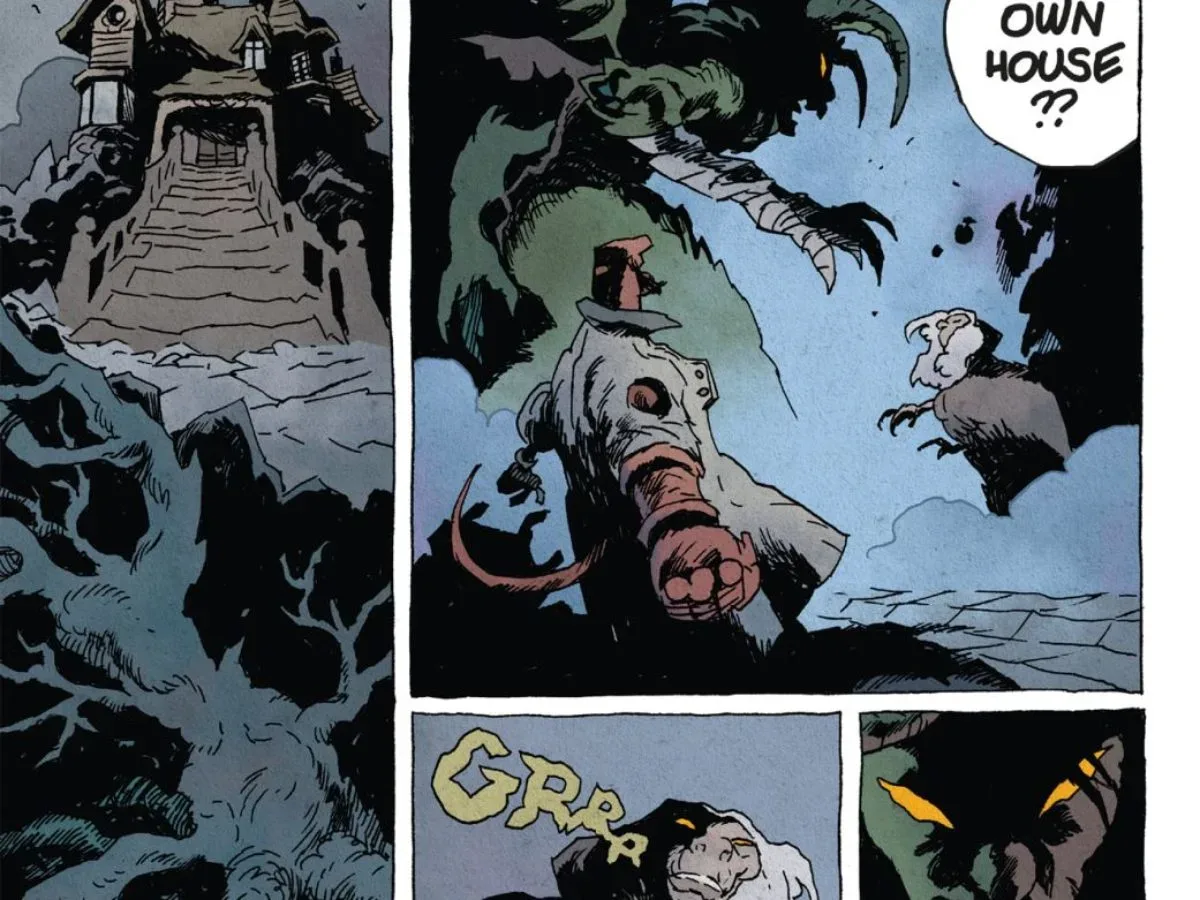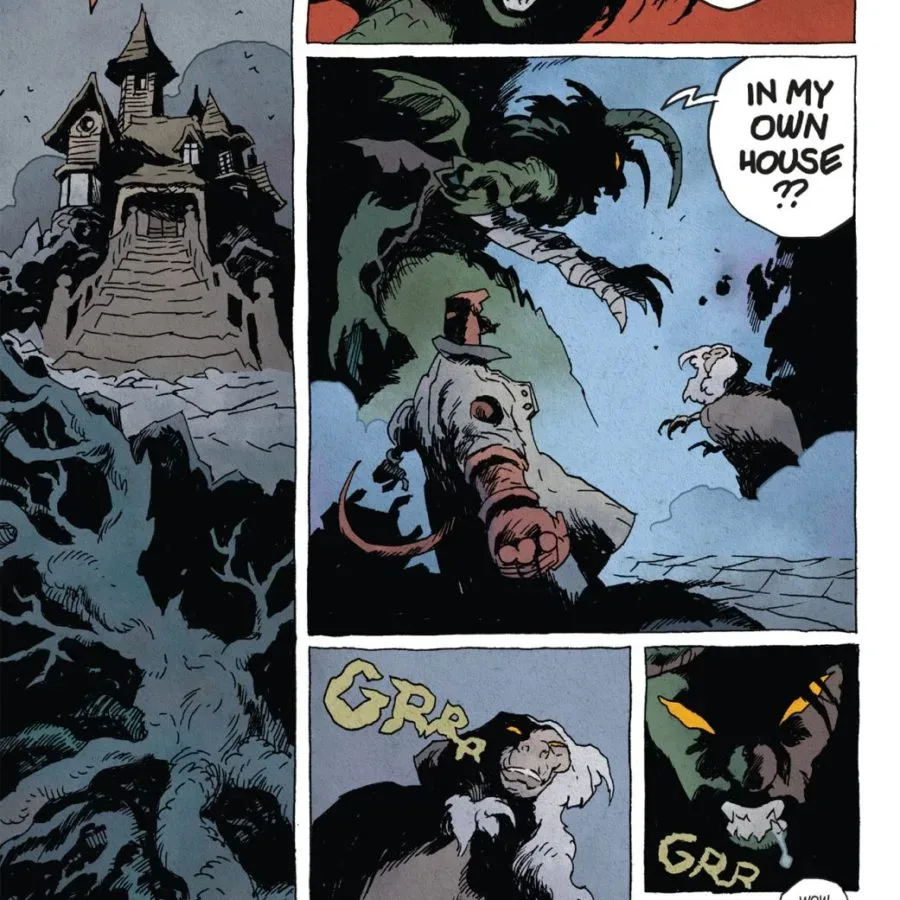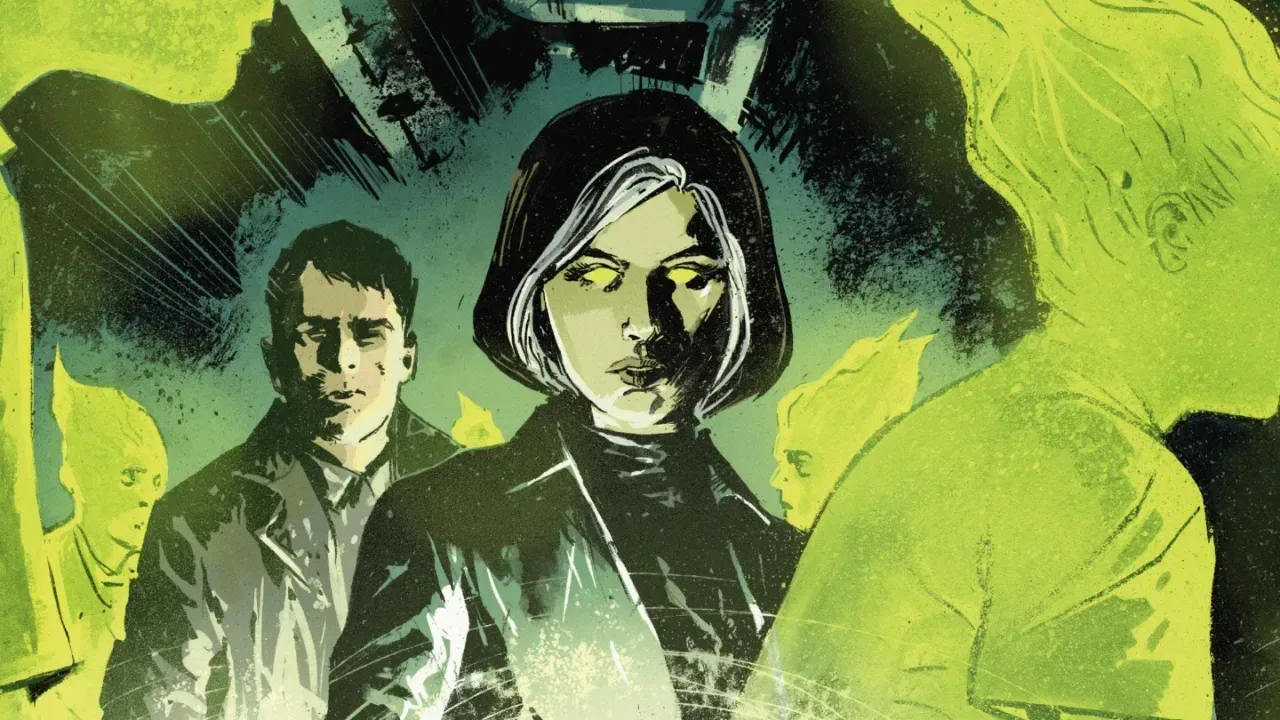
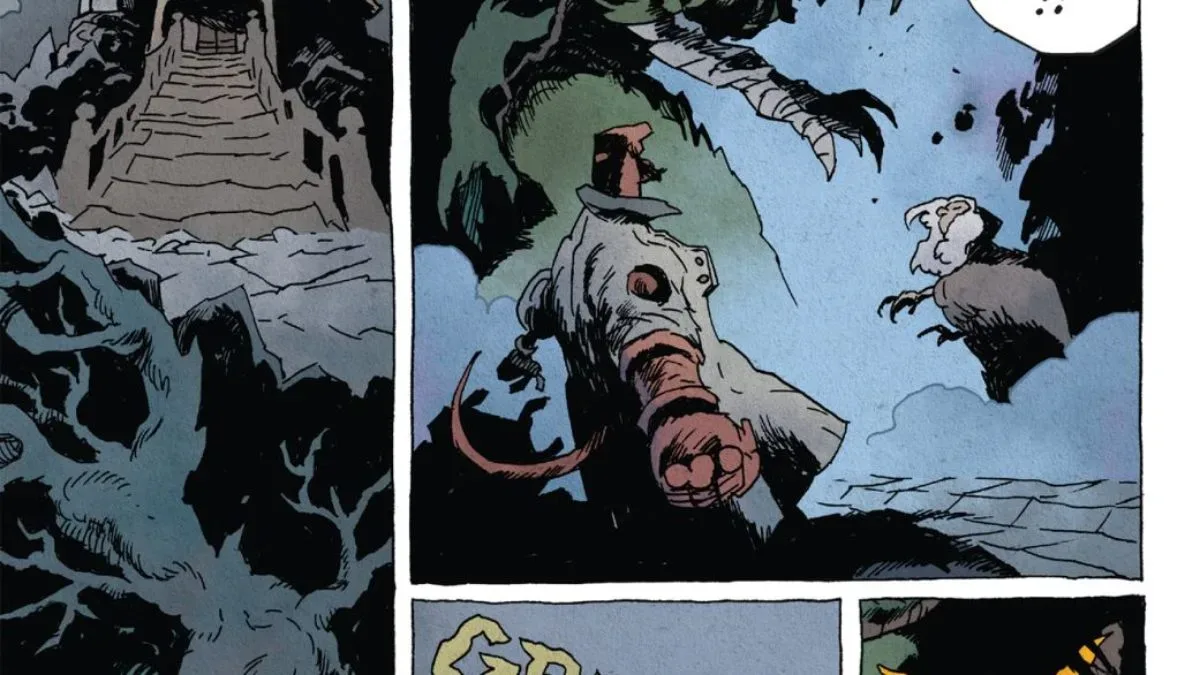
Hellboy in Hell: Nothing But Blood #2 is set to close its two-issue story on November 18, 2026, sending Hellboy into a Pandemonium thrown into disorder by Satan’s murder. The 32-page Dark Horse Comics issue is written by Mike Mignola, with art and a cover by Cyrille Pomès, colors by Dave Stewart, and letters by Clem Robins.
The setup is appropriately unpleasant for Hellboy: while attempting to save an innocent person, he mistakenly falls in with a demon and winds up at the center of a power vacuum in Hell. Satan is dead, his throne is empty, and the consequences of that absence appear to be the immediate concern of the finale.
The issue follows Hellboy in Hell #8, specifically “The Hounds of Pluto” Part Two. That placement is a useful signpost for readers trying to understand where this story belongs: this is not presented as a detached demon-hunting episode, but as a tale situated after a defined chapter of Hellboy’s time in the underworld.
A finale built around disorder, not just a monster fight
A vacant throne is more than a spooky set piece. In narrative terms, it creates a power vacuum: a situation in which an established authority is suddenly gone and competing forces may move to claim, reshape, or exploit what remains. In this case, the missing authority is Satan, which makes the instability in Pandemonium especially fundamental. The setting is not merely hosting a crisis; its hierarchy has been ruptured.
That premise gives the story a different kind of pressure from a straightforward Hellboy confrontation. Hellboy often has to deal with strange creatures, occult threats, and folklore-driven disasters, but this solicitation frames the danger around a destabilized realm and the fallout of a murder. His goal begins on a personal and immediate note—saving an innocent—before expanding into a much larger infernal mess.
“Pandemonium” is the name used here for Hell’s central setting. The word also commonly evokes uproar and confusion, making it an especially fitting backdrop for a story about a dead ruler and a vacant seat of power. The available details do not identify the killer, explain who might try to take the throne, or spell out the fate of the innocent Hellboy is trying to protect. Those are precisely the unresolved elements the second issue is positioned to address.
The creative team
Mignola is credited as writer, while Cyrille Pomès handles interior art as well as the main cover. Pomès is also noted for Moon and 6,000 Miles to Freedom. Stewart is the colorist and Robins the letterer.
Those credits matter because comics are assembled through several distinct visual storytelling jobs. The artist determines the drawn figures, environments, composition, and much of the pacing on the page. The colorist develops the color treatment that separates spaces, directs the eye, establishes atmosphere, and helps define transitions between scenes. The letterer places dialogue, captions, sound effects, and other textual elements so that a reader can follow the intended order of action and conversation.
For a Hell-set story, each role has an obvious practical opportunity. A narrative taking place amid the aftermath of Satan’s death can lean on environment and silhouette to make the political chaos feel tangible; color can distinguish heat, shadow, fire, and the strange geography of the setting; lettering can keep an increasingly crowded supernatural conflict legible. None of that guarantees a particular approach, but it explains why the full team is central to how an issue like this communicates its stakes.
What readers can safely expect
The confirmed premise supports a few clear expectations without requiring speculation about the ending:
- Hellboy will be in Pandemonium rather than dealing with a threat on Earth.
- The immediate plot begins with his effort to save an innocent person.
- A demon becomes entangled with Hellboy’s mission, apparently by mistake.
- Satan’s murder and the absence of a ruler are the main forces driving the larger conflict.
- The issue is the series finale for Nothing But Blood, so it is expected to resolve or substantially advance the story’s core crisis.
What remains unknown is just as important. The supplied details do not reveal the identity or motive of Satan’s murderer, whether Hellboy will confront a claimant to the throne, or whether the story will settle the wider succession question. Readers looking for a spoiler-free purchase decision can take the solicitation at face value: this is a compact, supernatural finale centered on rescue, deception, murder, and a collapsing infernal chain of command.
Format, price and cover options
Hellboy in Hell: Nothing But Blood #2 is rated T, runs 32 pages, and carries a US cover price of $4.99. Its listed item code is 76156801631400211. A Cover B variant by Marc Riou is also listed at $4.99 in the United States and $6.99 in Canada, under item code 76156801631400221.
For collectors deciding between editions, the distinction is straightforward from the information available: Pomès provides the standard cover, while Riou provides the alternate Cover B. No print-run figures, incentives, retailer exclusivity details, or scarcity claims are provided, so it would be premature to treat either cover as rarer or more collectible than the other. The reliable choice is simply the image and artist a reader prefers.
The issue is scheduled to go on sale November 18, 2026. Readers interested in other comic-book developments can also find related coverage in this report on James Gunn and Man of Tomorrow.
Why the premise suits Hellboy
The appeal of the setup is its scale. Hellboy is not simply visiting a fantastical location; he is stranded at the heart of a crisis affecting the structure of Hell itself. Yet the entry point remains character-sized: an attempt to save someone. That combination lets an enormous mythology remain anchored to an understandable objective.
It also creates a useful tension between intention and consequence. Hellboy does not arrive to pursue an infernal throne or investigate a royal assassination. He becomes involved after falling in with a demon while undertaking a rescue. The phrase “mistakenly falling in” suggests that the complication is accidental, which can make the protagonist’s path through the setting feel less like a chosen mission and more like the consequence of trying to do the right thing in an unreliable place.
As the second and final installment, Nothing But Blood has a direct job: turn that accidental involvement into a meaningful ending. Whether the conclusion emphasizes the rescue, the murder, the demon connection, or the fate of Hell’s throne is not yet disclosed. But the ingredients point to a finale where the personal stakes of one innocent person and the institutional stakes of a leaderless Hell are inseparable.