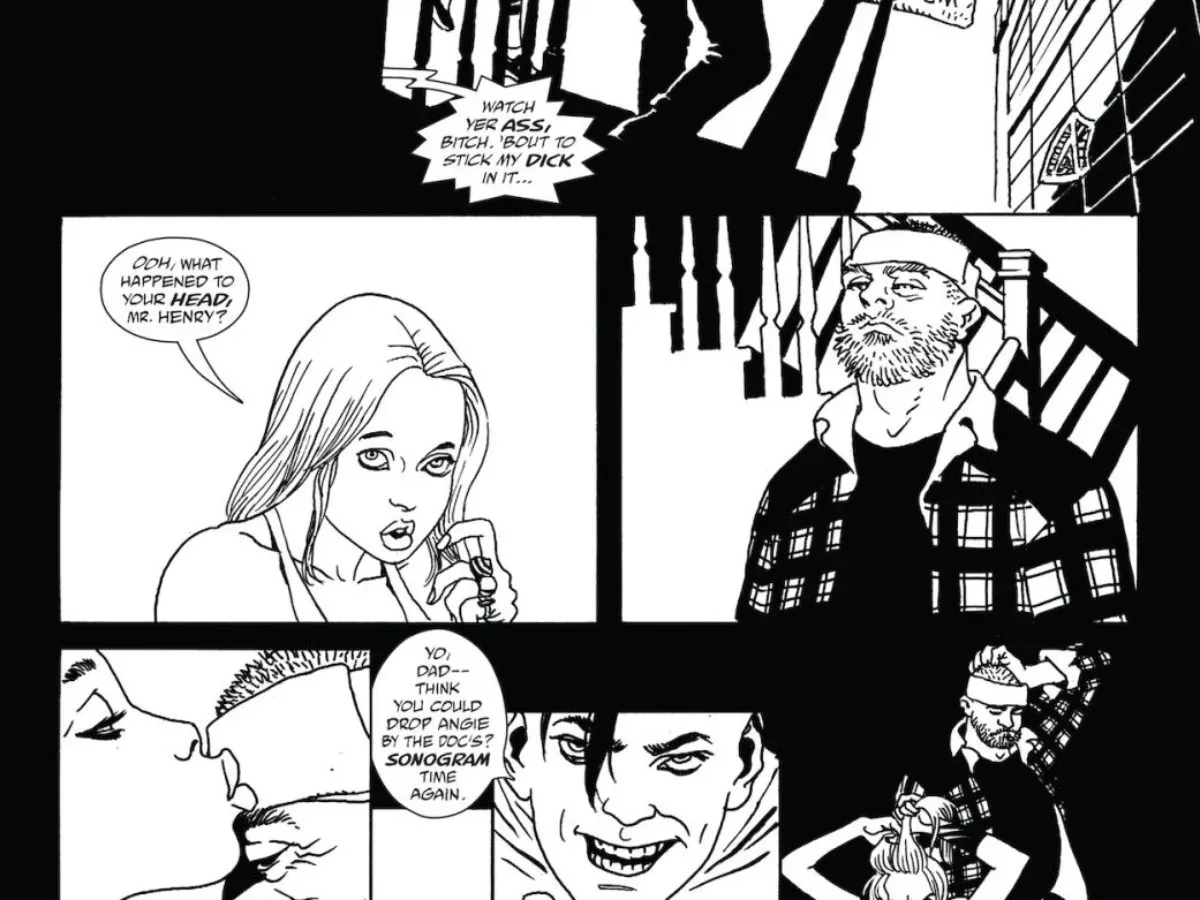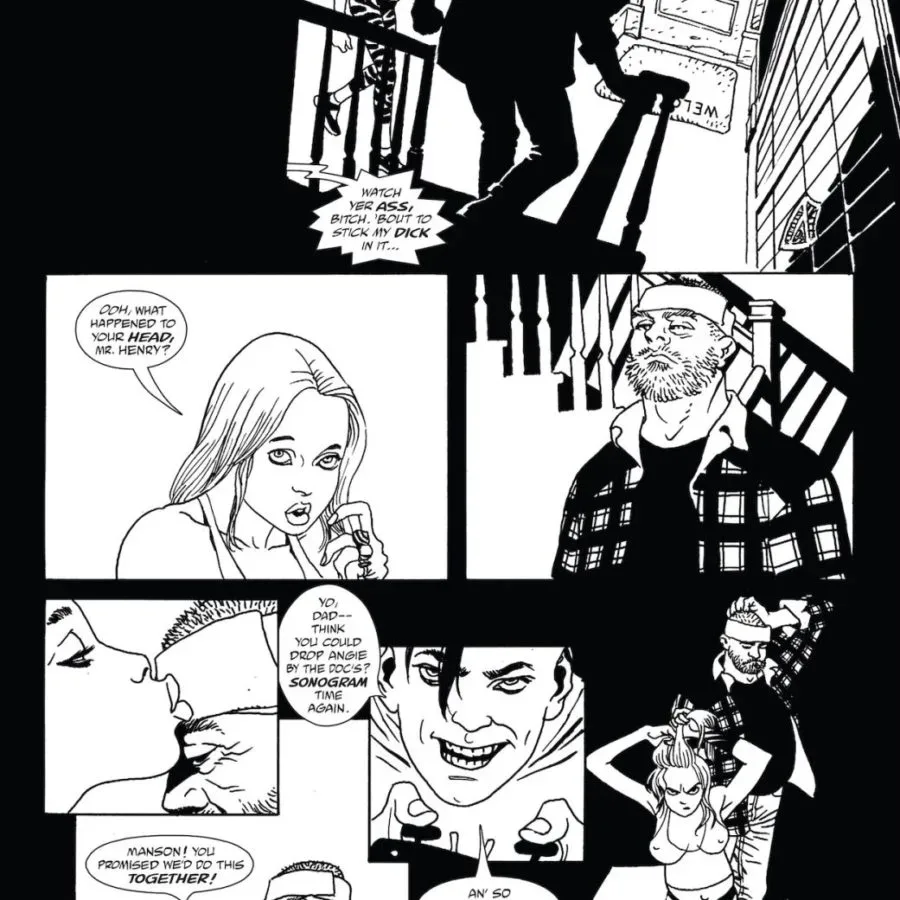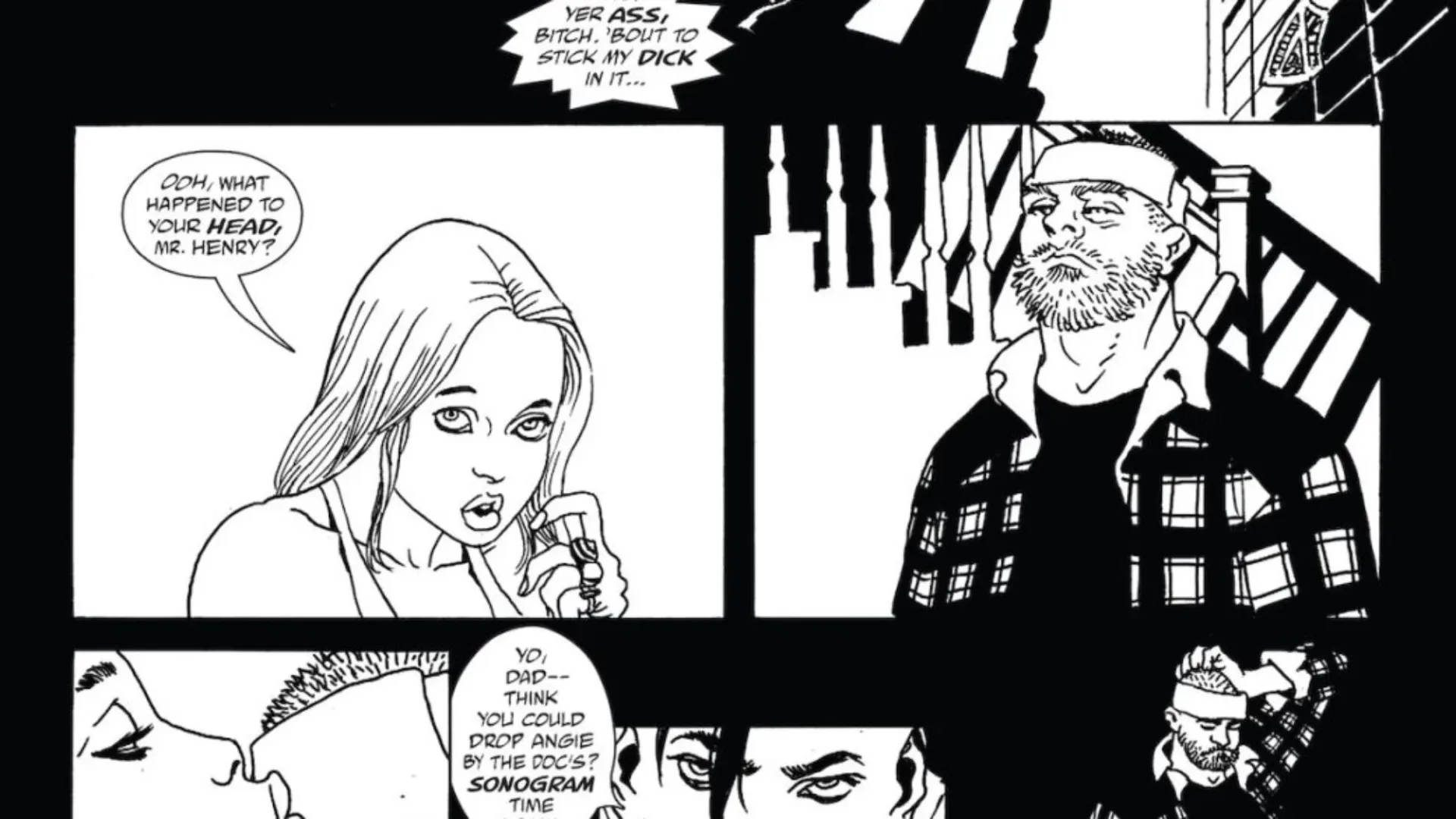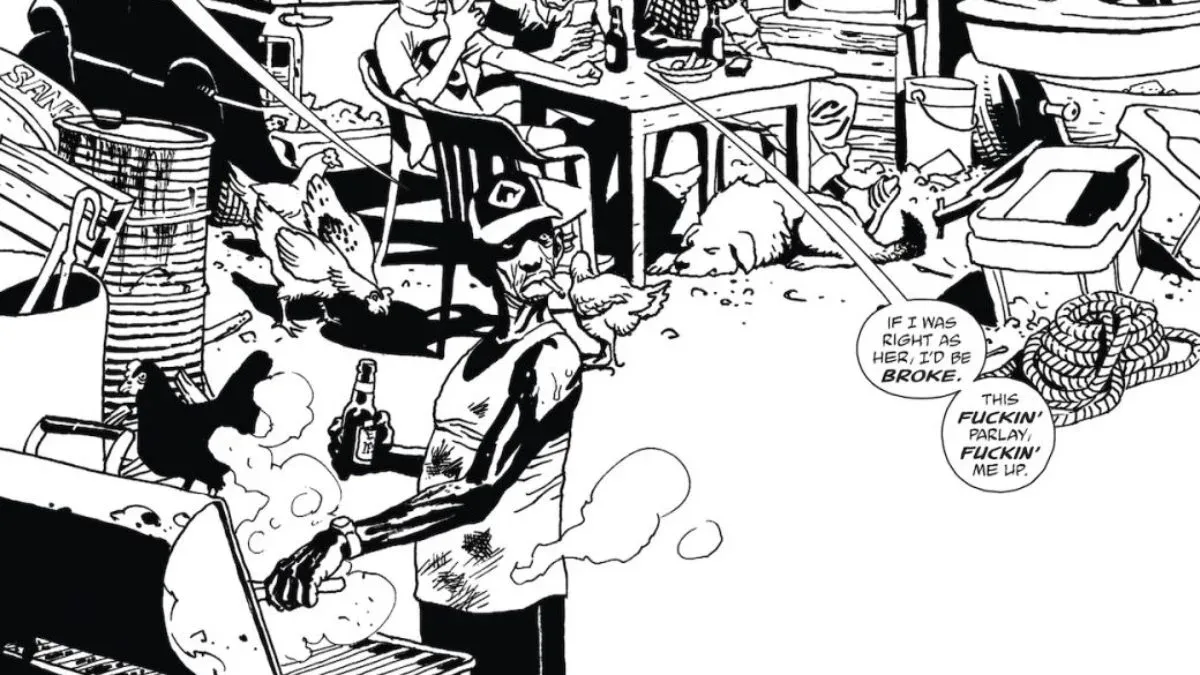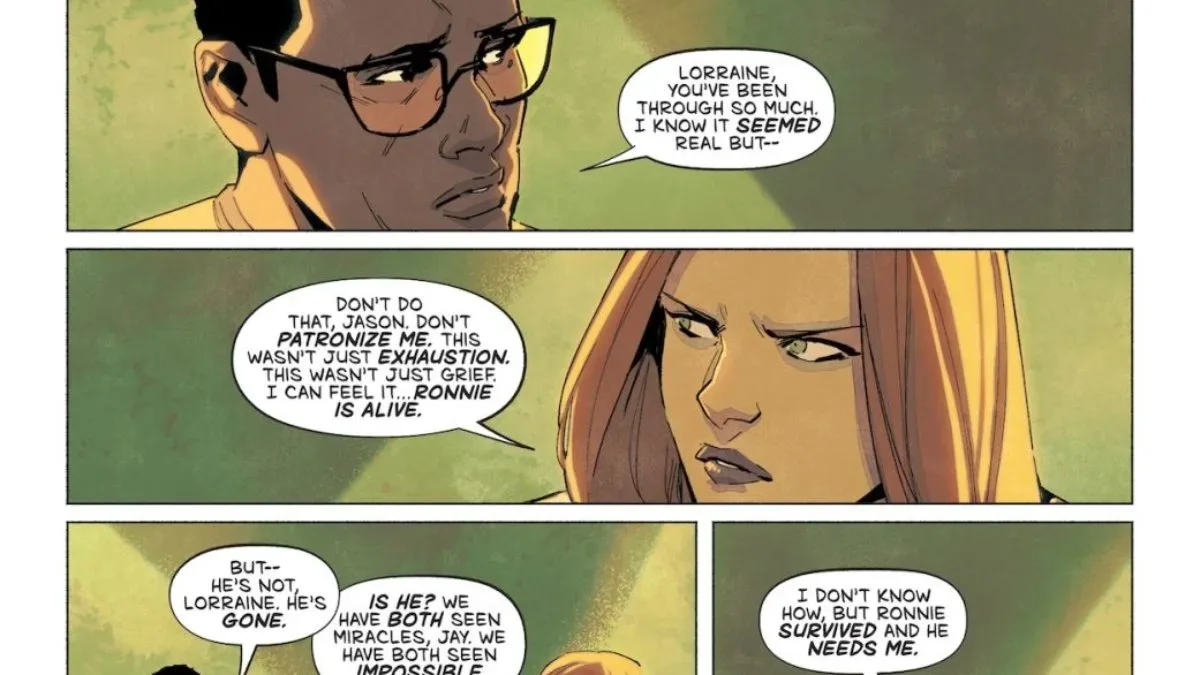
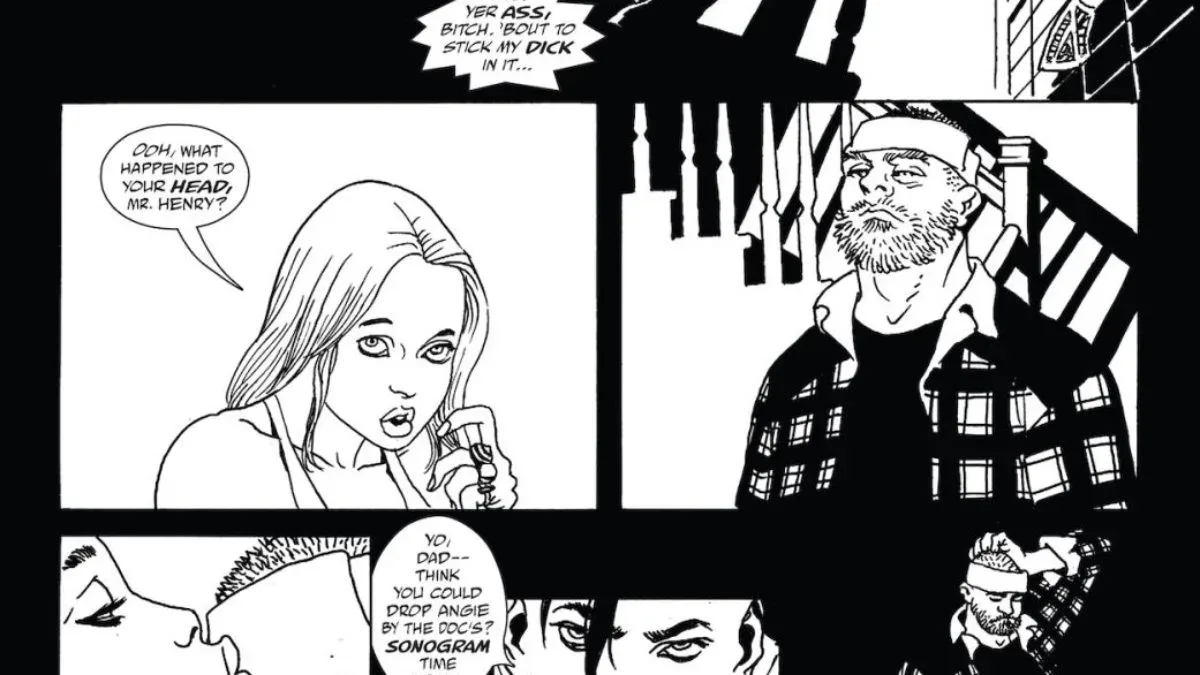
100 Bullets: The US of Anger #5 is scheduled to reach comic shops on November 18, 2026. The issue’s setup is compact but pointed: the old Trust has fallen, the New Trust is now in charge, and the past has not quietly stayed buried. At the more immediate character level, Loop’s encounter with Lono pushes him out of the house and into a hunt described as being for “the most dangerous game.”
Brian Azzarello writes the issue, Eduardo Risso provides the interior art, and Dave Johnson is credited for the cover. A Lee Bermejo cover variant is also listed. That creative lineup places the installment squarely in a crime-comics mode built around power, consequence, and a threat that feels personal before it becomes fully legible.
The New Trust, and the problem with inherited power
The central declaration for issue #5 is that the New Trust reigns. That is a statement of succession, not necessarily of resolution. Replacing an old power structure can change who gives orders, who benefits, and who is exposed—but it does not automatically erase the mechanisms, grudges, and unfinished business left behind.
The solicitation explicitly stresses that the past remains present. In narrative terms, that establishes the issue’s likely pressure point: the New Trust may have authority in the current moment, but authority is not the same as control. Old loyalties can survive a change in leadership. So can old debts, old fears, and people who remember exactly how the previous arrangement operated.
“Trust” carries a useful double meaning in this setup. It can signify a small, powerful inner circle, but the word also evokes confidence and reliance. Those two meanings create tension. A governing group may call itself a Trust, while the people around it have every reason to wonder who can actually be trusted. The premise does not provide answers to those questions yet, but it makes the distinction important.
That is why the phrase “Long live the New Trust” reads as more than a victory cry. It can be heard as a demand for legitimacy: an insistence that the new order deserves to last. The reminder that history lingers immediately complicates the claim. The issue appears positioned to examine what happens when a fresh regime inherits the consequences of the one it displaced.
Loop leaves the house
Loop’s movement from the house to the hunt is the story’s most concrete action beat. He is not simply introduced to danger; he is pulled out of an established space and into a situation that suggests pursuit, exposure, and shifting control. The prompt comes from an encounter with Lono, linking the two characters without spelling out precisely what Lono wants from Loop or what the hunt will demand.
That restraint is valuable in a preview. The available description gives readers a direction without pretending to provide the full map. Loop has been set in motion. Lono is connected to that disruption. The phrase “most dangerous game” establishes that the stakes involve people rather than conventional prey, but the exact roles remain open: hunter, target, bait, witness, or some unstable combination of all four.
The expression “the most dangerous game” is a familiar shorthand for a human hunt. Its force comes from removing the reassuring distance that usually exists between a hunter and hunted animal. When people become the quarry, intention matters. Strategy matters. Fear, misdirection, and recognition matter. The term therefore signals something more psychologically charged than a simple action sequence, even before the book clarifies the circumstances.
Loop being drawn out of his home also matters as a practical story device. A home is a controlled setting, however imperfectly. Leaving it changes the conditions of the conflict. The solicitation frames that exit as the result of Lono’s intervention, suggesting Loop is responding to an incursion rather than beginning from a position of total initiative. In a crime story, who gets to choose the location of a confrontation can be as meaningful as who lands the first blow.
What the issue’s premise tells readers—and what it does not
There is a meaningful difference between a solicitation and a full plot synopsis. A solicitation is designed to establish the hook: it identifies the pivotal change, points toward a central character conflict, and gives readers a reason to pick up the next chapter. It is not evidence for every possible interpretation surrounding those facts.
For The US of Anger #5, the confirmed framework is narrow:
- The old Trust is gone.
- The New Trust now holds power.
- The story treats the past as an active complication rather than closed history.
- Loop encounters Lono.
- That encounter sends Loop out on a hunt involving “the most dangerous game.”
What remains unconfirmed is equally important. The provided material does not explain the New Trust’s membership or agenda. It does not identify the target of Loop’s hunt, state whether Loop chose the assignment, or reveal whether the “game” is literal, metaphorical, or deliberately both. It also does not establish the outcome of Loop’s confrontation with Lono.
Keeping those boundaries clear is not hedging for its own sake. In serialized comics, the unanswered details are often the engine of an individual issue. A preview should make the tension visible without flattening the chapter into a checklist of spoilers. Here, the promise is a collision between institutional change and an intensely immediate, character-driven threat.
Azzarello and Risso reunite for a chapter of pressure and pursuit
The credited pairing of Azzarello and Risso is central to what this issue is presenting. A writer and artist working in tandem shape more than dialogue and plot: they determine how much a scene reveals, what is held back, and how the reader experiences a sudden change from private space to active danger.
Risso’s credit on interior art is especially notable in a story description built around hierarchy and pursuit. Comics art must communicate geography, body language, reaction, and pace from panel to panel. A hunt can be conveyed through distance, obstructed sightlines, stillness before movement, or the visual imbalance of a figure who seems to be watched. The solicitation does not reveal the issue’s specific visual choices, but its basic premise offers ample room for storytelling through tension rather than explanation alone.
Azzarello’s role as writer anchors the political and personal strands in the premise. The New Trust’s ascent is an institutional development; Loop’s hunt is direct and immediate. Joining those scales is a familiar challenge for crime fiction. Big organizations create the climate, but individual characters feel the weather. The issue’s premise suggests that Loop’s situation may offer one route into understanding what the changing order means on the ground.
Johnson’s cover credit, alongside the separately listed Bermejo cover, gives prospective readers two cover options in the issue’s listing. Covers serve a different function from the sequential pages inside. They must establish a mood or an arresting idea at a glance, while interior art is responsible for sustaining the reader’s understanding across the entire chapter. The listed contributors make clear that issue #5 has distinct creative roles across those two tasks.
Why the hunting premise fits a story about succession
The issue’s two stated ideas—new leadership and a hunt—are not random neighbors. Both involve an imbalance of power. A leadership transition asks who now sets the rules. A hunt asks who must live under rules imposed by someone else. Put together, they create a scenario where official authority and raw survival instinct may be heading toward the same point.
That does not mean the comic necessarily equates the New Trust with the hunt, or Lono with the new leadership. The supplied information does not establish those connections. But structurally, the concepts reinforce one another. The New Trust represents a major alteration in the wider hierarchy, while Loop’s departure from home shows how quickly a broader change can become a private emergency.
There is also a contrast between permanence and urgency. “Long live” looks toward endurance. A hunt is immediate, physical, and uncertain. The New Trust can claim a future, but Loop must deal with the present. The tension between those time scales makes the line about the past especially effective: the story is not only concerned with what comes next, but with what refuses to stop shaping the current moment.
What to watch for in issue #5
Readers approaching the issue can focus on several questions raised directly by its setup. First is the operational meaning of the New Trust’s power. A change in title is one thing; a change in methods, allegiances, or vulnerability is another. The issue may begin showing the difference between a declared victory and a stable regime.
Second is the nature of Loop’s hunt. The solicitation intentionally makes the scenario sound dangerous without defining the rules. Is Loop tracking someone? Is he being lured into a trap? Has the encounter with Lono changed his priorities, or merely forced him into action? Those are the kinds of questions that give the premise its momentum.
Third is the role of the past. The phrase may refer to history at the level of the Trust, to personal history between characters, or to both at once. In a series that places a political shift next to a hunt, history can become leverage. What somebody knows, remembers, or cannot escape may prove as consequential as any immediate threat.
For more current comic-book coverage, readers can also follow this update on James Gunn’s Man of Tomorrow comments.
Release and credit details
- Title: 100 Bullets: The US of Anger #5
- On-sale date: November 18, 2026
- Writer: Brian Azzarello
- Interior artist: Eduardo Risso
- Cover artist: Dave Johnson
- Additional listed cover: Lee Bermejo
- Publisher: DC Comics
Issue #5’s preview material keeps its focus on a changing power structure and a man pushed into a dangerous pursuit. The New Trust may be the order of the day, but the story’s premise is clear that no new regime gets to start with a blank slate—and that Loop’s next move could be made under somebody else’s rules.