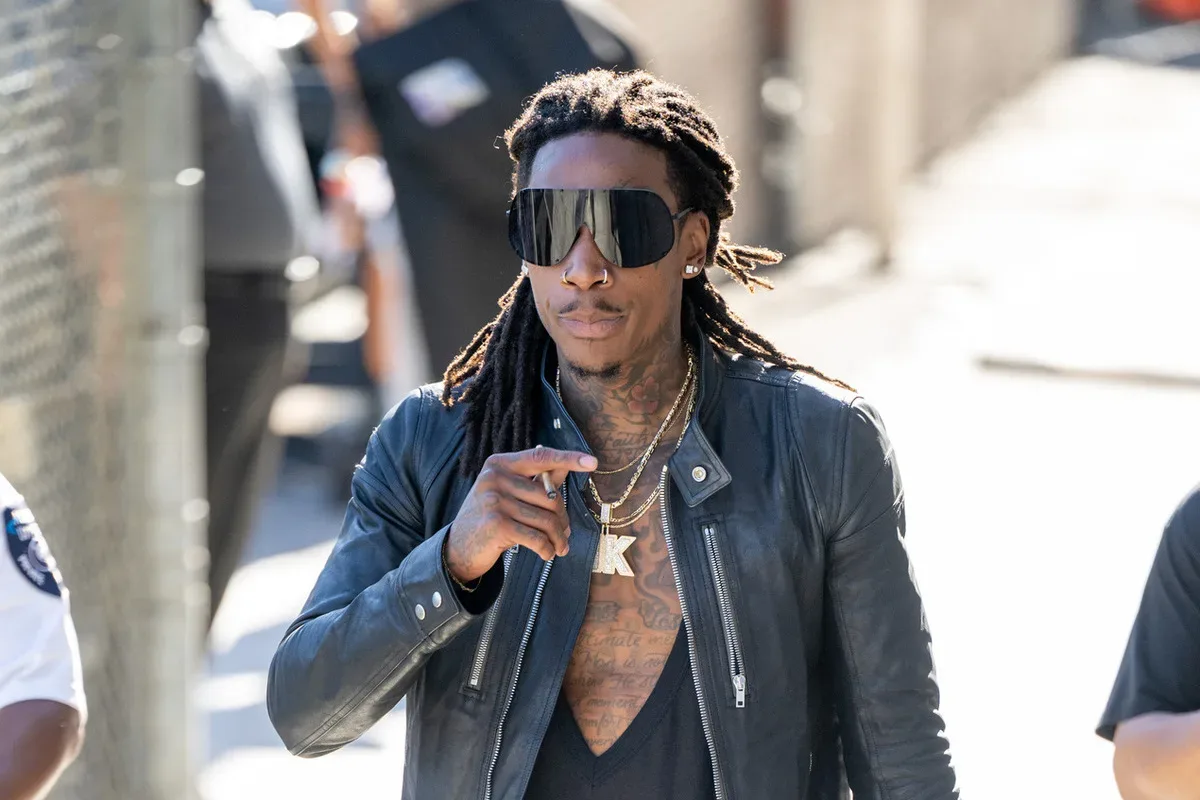
Wiz Khalifa’s Romanian cannabis-possession case is back before the Bucharest Court of Appeal, with the rapper offering to perform community service as judges reconsider a prison judgment that has now been annulled.
During a November 12 hearing held by video, Khalifa acknowledged wrongdoing and expressed regret in questioning reported to have lasted roughly 10 to 15 minutes. He also told the court that he had donated to organizations that oppose drug use and intended to continue supporting them.
The offer of community service is part of his position before the court, not a punishment that has been imposed. The court’s next listed step is November 19, set for deliberation, pronouncement and drafting. Until the judges issue their decision, the eventual outcome remains unresolved.
What the case concerns
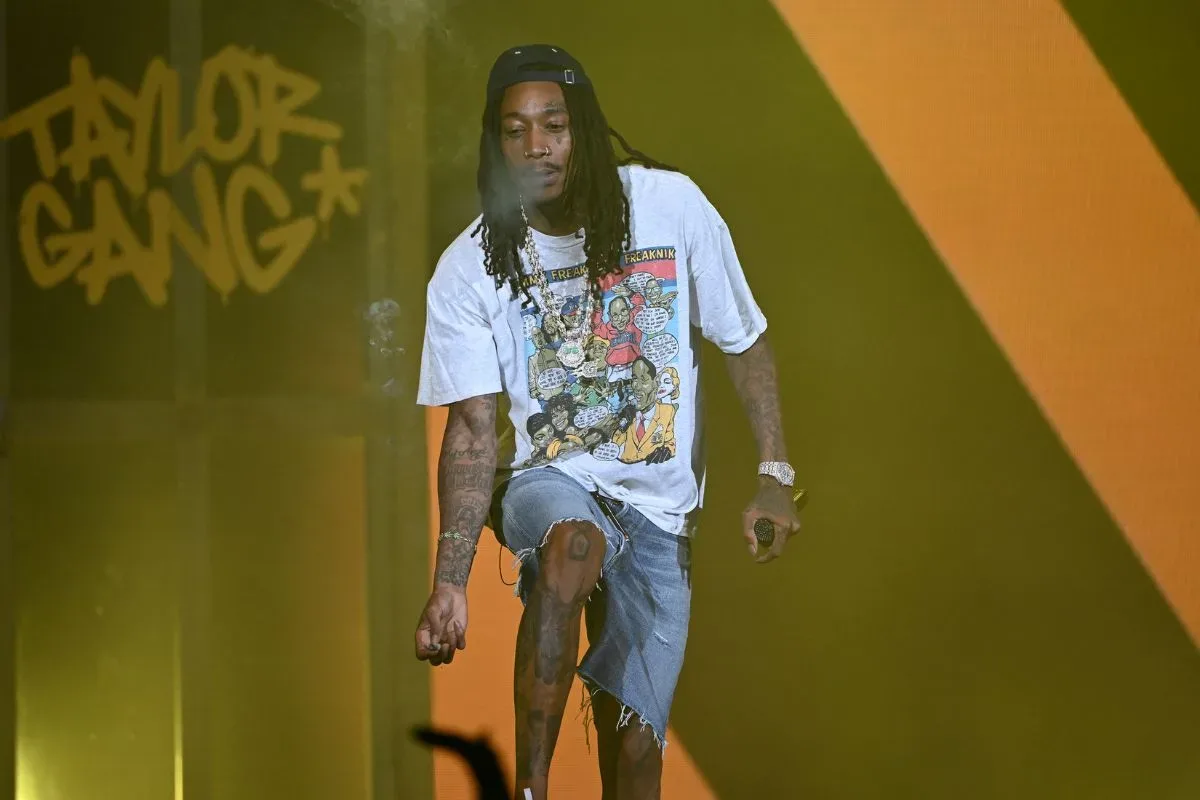
The prosecution concerns alleged possession for personal use, rather than drug trafficking. Prosecutors said Khalifa had 18.53 grams of cannabis and a cannabis cigarette at the Beach, Please! festival in Costinesti on July 13, 2024.
Police took the performer in after his onstage set. He was subsequently released and left Romania. The matter was brought to trial in October 2024.
That distinction between personal possession and trafficking is important for understanding the scope of the allegations described in court proceedings. The case is not presented as an accusation that Khalifa distributed cannabis. Instead, the dispute has centered on the possession allegation, the circumstances in which the cannabis was reportedly used, and what penalty should follow.
Why the penalty became a major point of dispute
Romanian courts have reached very different outcomes in the case so far. The Constanta Tribunal initially imposed a 3,600-lei criminal fine. DIICOT, Romania’s organized-crime agency, challenged that result. In December 2025, the Constanta Court of Appeal issued a nine-month prison sentence.
One major issue in the sentencing reasoning was Khalifa’s public profile. The original sentencing judges treated his celebrity as an aggravating factor. Their view was that smoking cannabis publicly could lead younger people to see illegal drug use as acceptable, rather than framing the conduct as private consumption alone.
Related coverage includes Wiz Khalifa Offers Community Service as Romania Cannabis Case Returns to Court.
An aggravating factor is a circumstance a court regards as making an offense more serious when selecting a penalty. It does not change the underlying allegation. Rather, it can affect how judges assess the conduct’s impact and the punishment they consider appropriate. In this instance, the court’s prior reasoning placed weight on the visibility of the alleged conduct and Khalifa’s status as a prominent artist.
That reasoning creates a wider practical point for performers: activity onstage and at public events can be viewed differently from the same conduct in a private setting, particularly when a court believes a large audience or younger fans could be influenced. It is not a general rule supplied by this case, nor does it predetermine the Bucharest court’s decision. It is, however, central to why the previous sentencing decision drew such scrutiny.
The prison judgment was annulled, but the case did not end
On November 3, Bucharest judges annulled the December 2025 prison ruling. They also canceled the warrant authorizing enforcement of that sentence. That is a consequential development, but it should not be mistaken for an acquittal or a final resolution of the case.
The annulment reopened the prosecution’s appeal. Put simply, the previous prison judgment is no longer the operative outcome, while the litigation itself continues for the Bucharest Court of Appeal to decide. The upcoming deliberation may determine whether the earlier fine is restored, another sanction is selected, or the court reaches a different legal conclusion. The supplied court information does not establish which path the judges will take.
The procedural history helps explain why this has taken several turns. An earlier effort to overturn the sentence failed in February, when the Constanta appeal court rejected Khalifa’s annulment challenge as inadmissible. His legal team later sought to have the annulment proceedings heard outside Constanta. Romania’s highest court granted that request in September and transferred the matter to Bucharest.
Inadmissible generally describes a challenge a court will not consider on its merits because it does not meet the legal or procedural requirements for that route. In this case, the February ruling did not settle every later avenue: the proceedings were ultimately moved to Bucharest, where the December judgment was subsequently annulled.
What community service means here—and what it does not
Khalifa’s proposed community service should be read carefully. He offered it during a live legal dispute, alongside an expression of regret and his statements about donations to anti-drug organizations. It has not been announced as the court’s sentence, and there is no confirmed arrangement requiring him to complete community service.
That difference matters because an offer by a defendant and an order imposed by a court are not the same thing. The November 19 step is the key date listed for a ruling, and any confirmed penalty must come from that decision rather than from the defense position presented at the November 12 hearing.
For fans following the story from outside Romania, the clearest takeaway is that the case is in a reconsideration phase. The nine-month sentence is no longer enforceable after its annulment and the cancellation of the enforcement warrant, but the prosecution’s appeal remains active. The court has heard Khalifa’s explanation and proposal; it has not yet publicly announced a final new punishment.
A high-profile case with a public-performance backdrop
The alleged conduct occurred in the setting of a festival performance, which has kept the question of public influence at the center of the proceedings. Public-facing musicians often operate where performance, audience expectations and local law meet in complicated ways. That does not alter the charge in this matter, but it helps explain why the earlier court did not assess the incident as only a private-possession scenario.
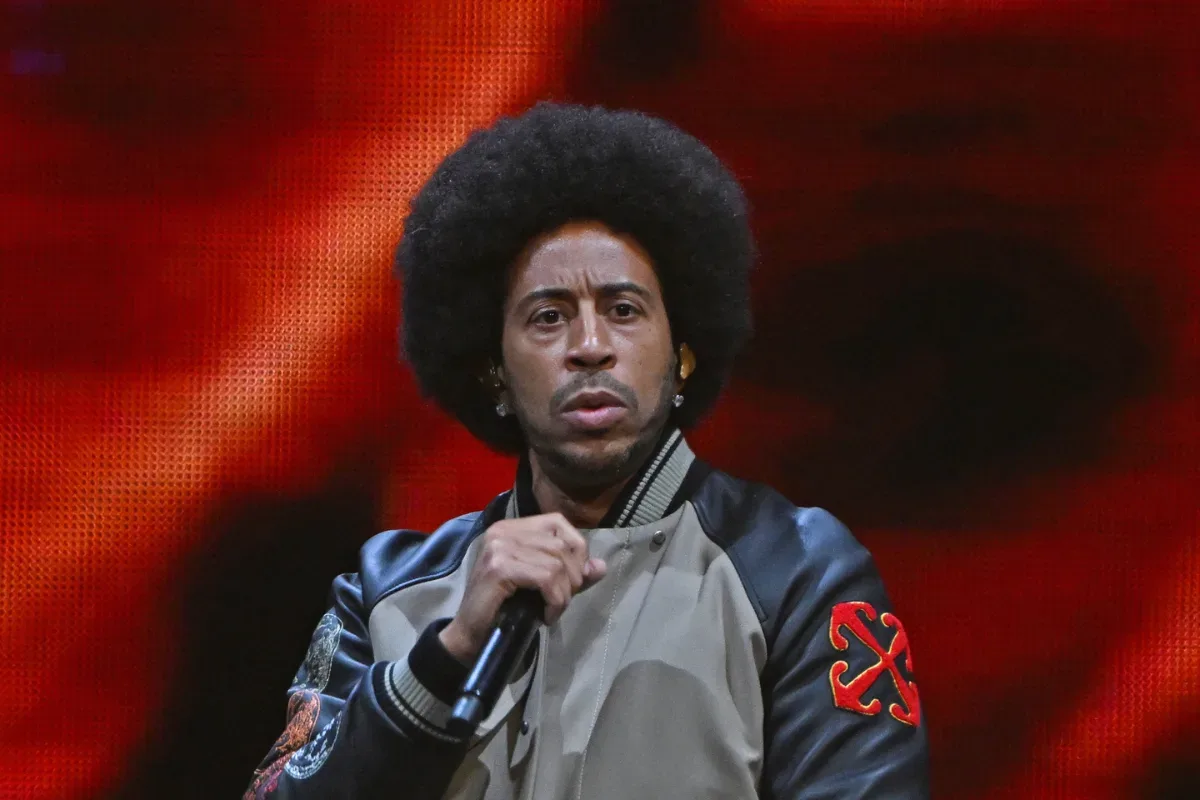
Khalifa’s case also arrives in a pop-culture environment where music headlines routinely overlap with legal, business and civic developments. For another recent music-industry milestone, see the planned Black Music & Entertainment Walk of Fame event involving Ludacris and Organized Noize.
For now, there is a narrow set of settled facts: the Bucharest Court of Appeal has removed the prior prison judgment and its enforcement warrant; Khalifa participated remotely in the November 12 hearing; and the court has listed November 19 for deliberation, pronouncement and drafting. Whether community service becomes part of the legal outcome, and what penalty if any the court ultimately adopts, remains for the judges to decide.