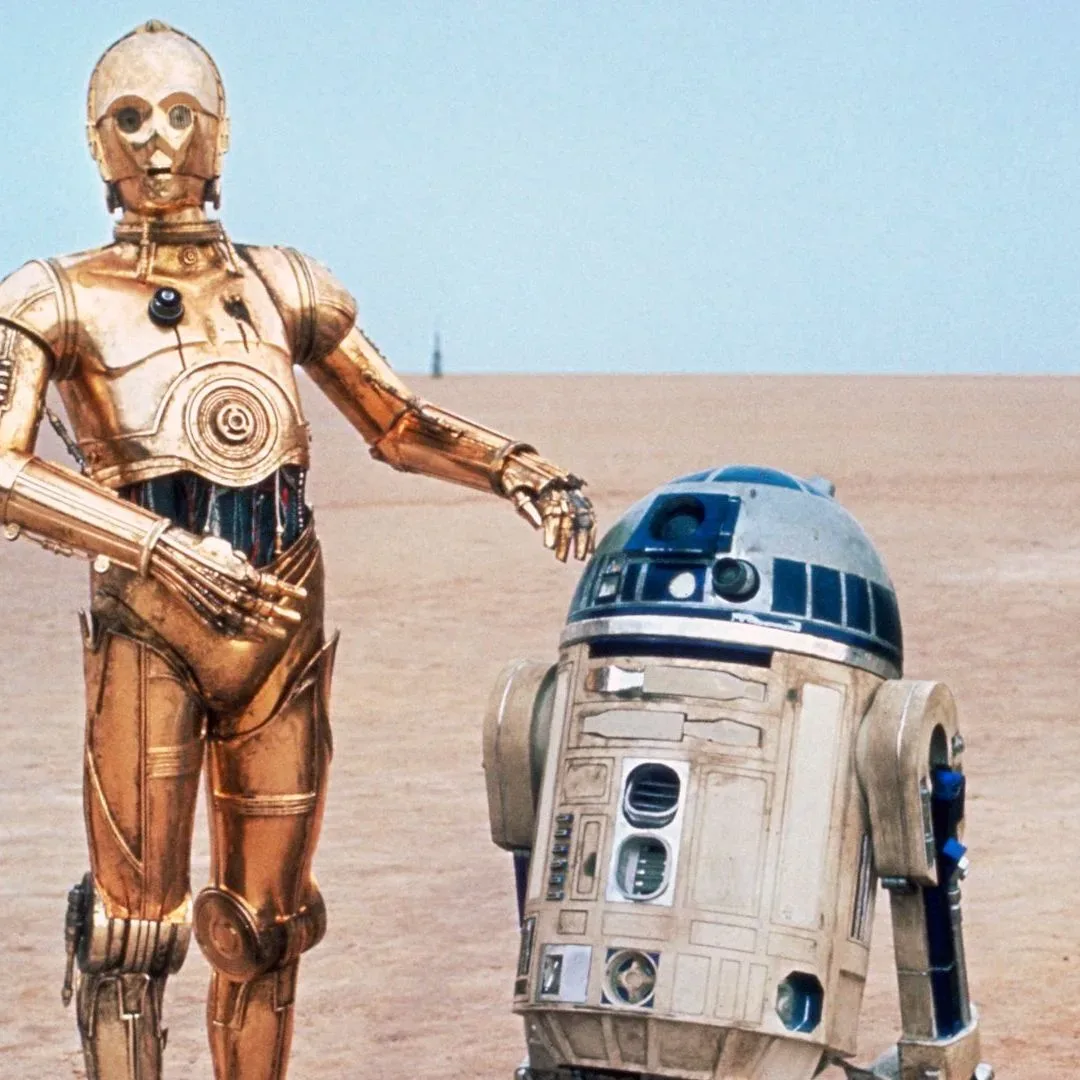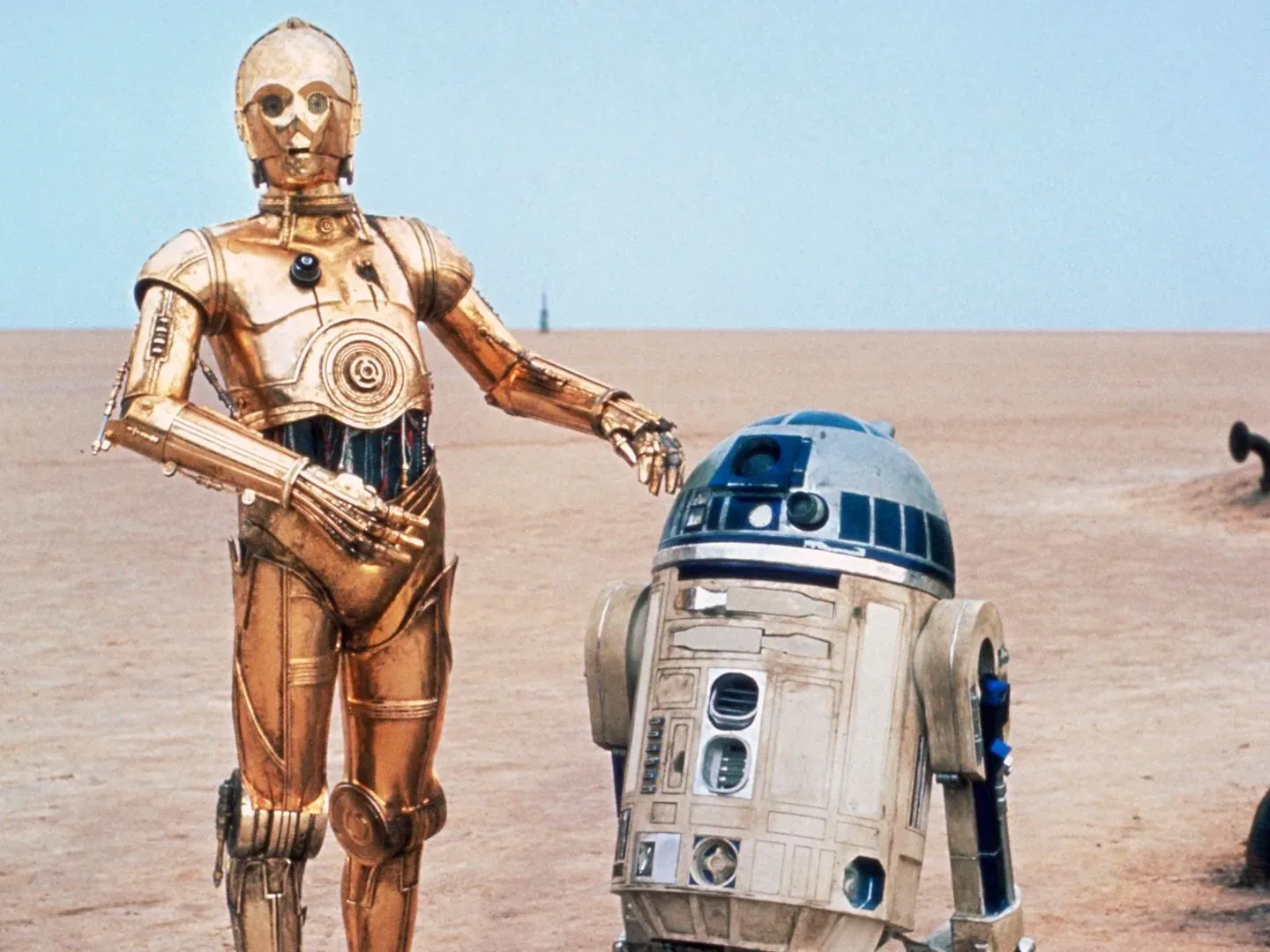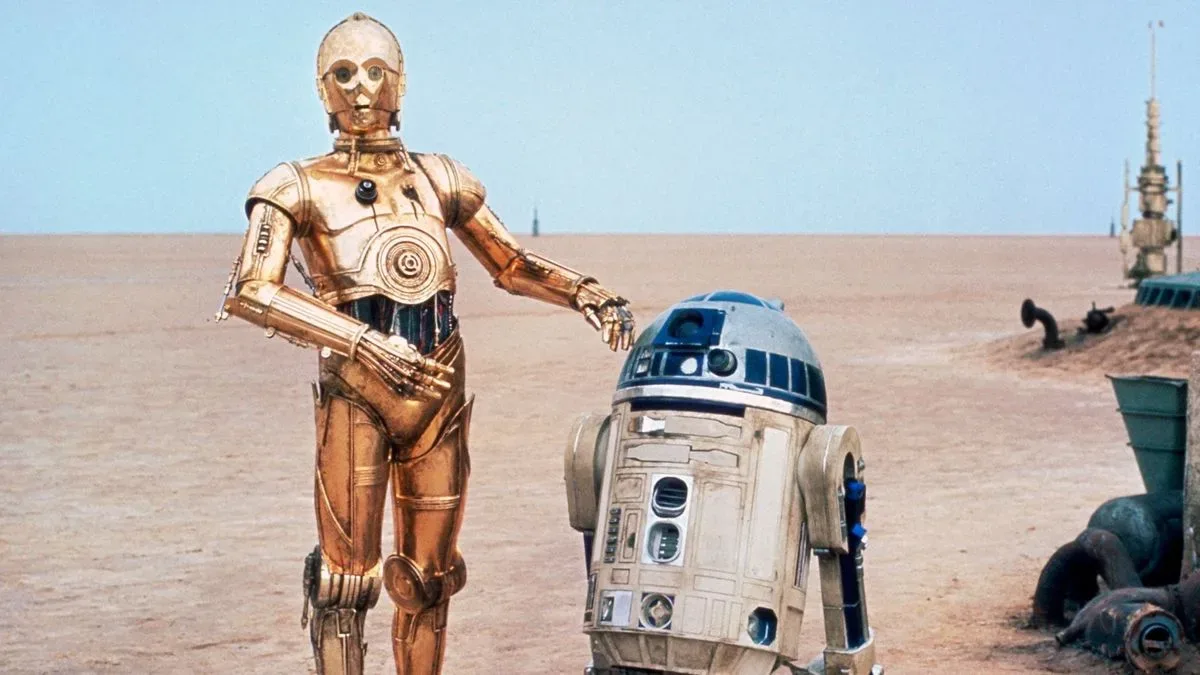
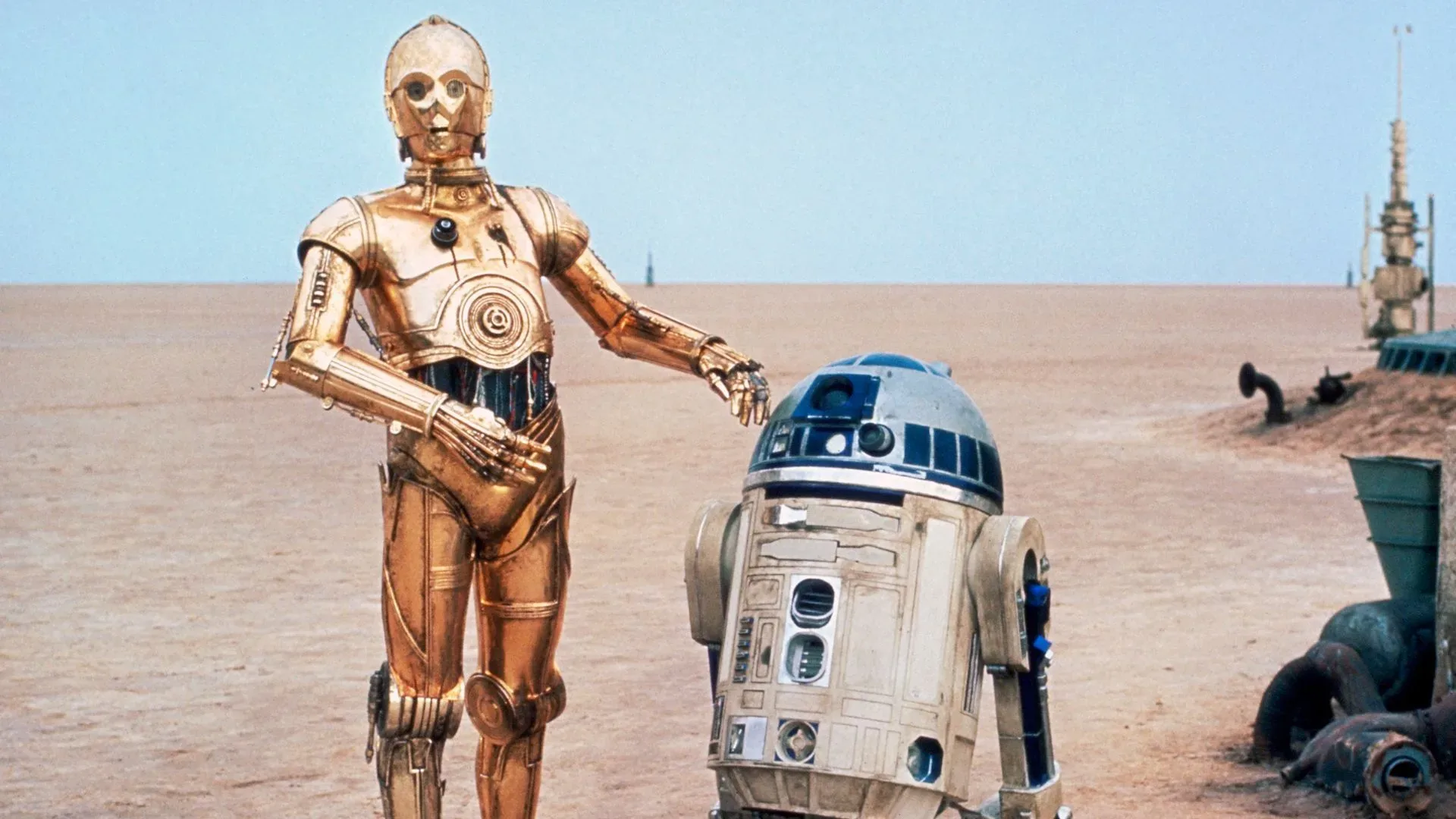
Few Star Wars continuity questions are as compact, visible, and stubbornly funny as Owen Lars meeting C-3PO in A New Hope. Luke Skywalker and Owen acquire R2-D2 and C-3PO, and the moment plays as though neither of the moisture farmers has ever encountered either droid. That lands very differently once viewers have seen Attack of the Clones, where C-3PO is not merely a familiar type of machine around the Lars homestead: he has lived there.
The apparent mismatch has returned to fan discussion because it sits at the intersection of two very different ways of watching a long-running franchise. One approach asks for an in-universe explanation that makes both scenes fit. The other accepts it as a production-level discontinuity created when later stories added history to characters and settings introduced much earlier.
Both readings have merit, although they solve different problems. The first protects the internal logic of the fictional galaxy. The second addresses why the contradiction exists at all.
The scene that creates the question
In A New Hope, Owen and Luke bring the droids home. C-3PO’s arrival does not prompt recognition from Owen, and nothing in the exchange indicates that the golden protocol droid was once a resident of the family home. Taken on its own, the sequence is straightforward: the Lars family is purchasing droids for practical work and meeting them as new arrivals.
Later chronology changes the stakes. The prequel trilogy places the Lars family into the earlier life of C-3PO, making the later apparent non-recognition hard to ignore. Owen knew the droid, and C-3PO spent substantial time at Owen’s home. In narrative terms, this is more than a background overlap. The same man and same droid share a domestic setting, then seem to lack that shared past in the earlier-released film.
That is what makes this particular issue more durable than a minor prop change or an unexplained line. It concerns recognition: one of the most intuitive human responses a viewer expects. If somebody who lived in your house turns up years later, viewers reasonably expect some sign that you remember them.
The strongest in-universe answer: C-3PO was equipment
The most persuasive fan-made reconciliation begins with Owen’s relationship to droids. The Lars household may simply have viewed C-3PO as a useful machine rather than an individual companion. In that reading, the problem is not that Owen literally failed to identify a unique personality. It is that identifying an old household device did not matter enough to affect his behavior.
That interpretation asks audiences to take the setting’s casual treatment of droids seriously. A protocol droid can speak, complain, translate, and display a recognizable temperament, but not every person in the galaxy has to attach the same emotional importance to it. One owner might regard a droid as a friend or member of the household. Another might see it as a replaceable assistant designed for a job.
Owen is especially easy to read through the second lens. His life is framed around work, maintenance, and survival on Tatooine. Droids have obvious utility in that environment. A person who thinks of them chiefly as household labor or farm hardware may not give an old unit the kind of personal attention viewers give a major screen character.
This does not entirely remove the oddity—C-3PO is still conspicuous—but it does create a reasonable behavioral explanation. Owen can recognize that he is looking at a protocol droid without treating the moment as a reunion. The story need not assume that every droid has the social standing of a human acquaintance.
What “protocol droid” means here
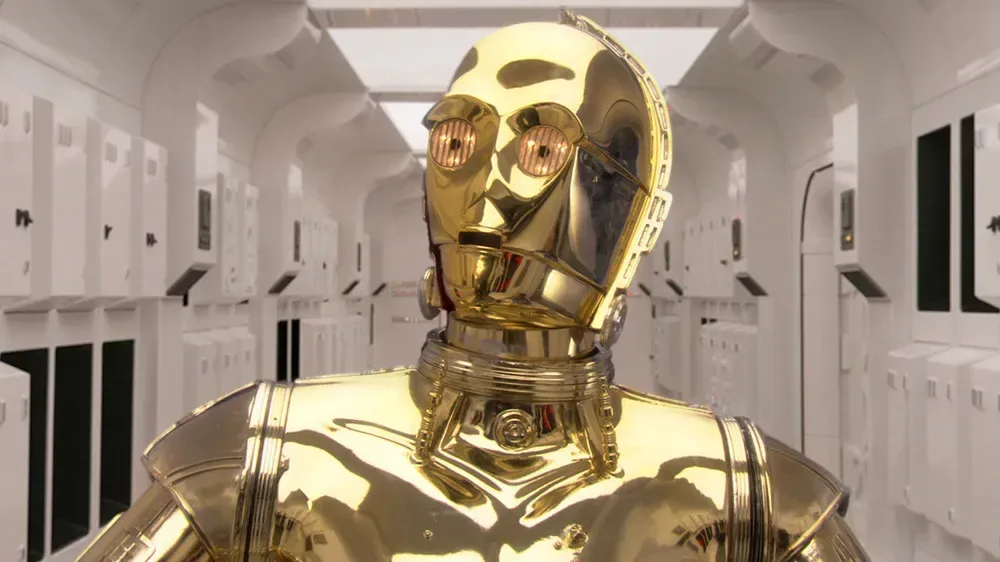
A protocol droid is, in this context, a machine intended for communication and assistance rather than a specialized farm tool. C-3PO’s role includes language and etiquette-oriented tasks. Yet his function does not automatically make him precious to every owner. A household can value that usefulness while still treating the droid itself as ordinary equipment.
That distinction is vital to the appliance theory. It is not arguing that C-3PO has no personality. The films plainly present him as a distinct character to the audience. It argues instead that Owen may not share the audience’s point of view. To Luke, viewers, and C-3PO himself, the droid is C-3PO. To Owen, he may be a protocol unit that can be put to work.
A common model makes the explanation easier, not perfect
Another part of the fan reasoning is that C-3PO is not necessarily visually one-of-a-kind within the galaxy. Anakin assembled him from scraps, but assembling a droid does not mean inventing the entire category of protocol droid. If units of a similar kind are widespread, a former owner may not consider a particular one especially memorable after years have passed.
This is not a complete answer by itself. C-3PO’s voice, manner, and prior place in the Lars home would still seem notable from an audience perspective. But paired with the appliance reading, it becomes more credible: Owen may have had no reason to closely inspect or reminisce about a protocol droid arriving as part of a routine purchase.
It also avoids requiring Owen to be unusually forgetful. The more modest claim is that he recognizes neither the droid’s identity nor its past importance as something worth acknowledging. That is a different proposition from saying he could not possibly remember anything about it.
Obi-Wan’s silence is a separate issue
Discussions of the moment often pull Obi-Wan Kenobi into the same puzzle. If he has reasons to keep his past quiet, then he has reasons not to react openly to familiar figures or connections from earlier events. That can explain restraint from Obi-Wan, but it cannot fully explain Owen’s conduct, because Owen’s issue is not secrecy. It is apparent indifference.
Separating these points makes the scene clearer. Obi-Wan can plausibly have an incentive not to advertise recognition. Owen does not need that incentive if he simply regards the droid as a tool. One character’s silence can be strategic; the other’s can be mundane.
The production explanation remains the clearest one
The real-world explanation is less elegant but more direct: A New Hope came first. Although it is designated Episode IV within the saga, it was the first film released. The later prequels supplied the earlier chapters. The Phantom Menace, released in 1999, is Episode I; Attack of the Clones, released in 2002, is Episode II; and Revenge of the Sith is Episode III.
That release order matters more than the numerical episode order. The scene in A New Hope was created before the story positioned C-3PO in Owen’s home during the prequel era. Once that new connection existed, the older scene acquired a continuity burden it was not originally built to carry.
In franchise discussion, this is the difference between a plot hole and a retcon. A plot hole is commonly used for a contradiction or gap that appears to strain a story’s logic. A retcon—short for retroactive continuity—is later storytelling that alters, adds to, or reframes established fictional history. The Owen/C-3PO question has elements of both: a later-added connection produces a tension with an earlier scene.
Not every retcon is a mistake. Adding earlier history can make a fictional universe richer. But it also creates risk. The more specific a later backstory becomes, the more likely it is to collide with small moments that were once uncomplicated. Long-running series regularly face this trade-off when they turn supporting details into major connections. That creative challenge is not limited to Star Wars; even reported discussions around how a major game series could have fit a different setting show how franchise identity and later creative choices can become difficult to reconcile.
Why no single answer completely satisfies everyone
The appliance theory works because it is thematically compatible with a galaxy in which droids are used as labor. It gives Owen a believable reason to offer no meaningful reaction. It does not, however, prove that the scene was written with that precise rationale in mind.
The production explanation works because the release timeline is plain. It explains why the scenes do not line up neatly. But it is less satisfying for viewers who want every on-screen inconsistency to have a diegetic answer—that is, an answer that exists within the story world rather than outside it in the writing and production process.
There is no need to force those explanations into competition. The production history can explain the origin of the inconsistency, while the appliance reading can be the most workable way to interpret it within the fiction. In fact, that layered answer is probably why the debate persists: fans can acknowledge the obvious writing issue and still enjoy constructing a characterization-based fix.
What the debate says about C-3PO
The argument also reveals a productive tension in how audiences view droids. C-3PO is unmistakably a character from the viewer’s perspective, complete with anxieties, opinions, and relationships. But the world around him is not required to treat him with equal significance. A character can be central to a saga while remaining, in the eyes of some people inside that saga, just another piece of machinery.
That gap is what makes Owen’s non-reaction plausible enough to debate. If C-3PO were universally treated as a singular celebrity or treasured companion, there would be no credible in-universe defense. Because droids can occupy many social roles—from valued partners to utilitarian household tools—the scene leaves room for interpretation.
For viewers returning to the films, the practical takeaway is simple: watch the exchange with both timelines in mind. The in-world reading is that Owen does not attach personal importance to a protocol droid from long ago. The behind-the-scenes reading is that the prequels created a connection the original scene did not anticipate. Neither requires a new fact, and together they explain why one brief purchase on Tatooine can still provoke a galaxy-sized argument.
A New Hope is scheduled to return to theaters in February 2027. Before then, Ahsoka season 2 is set to arrive on Disney Plus on January 20, 2027—another opportunity for viewers to revisit how much Star Wars storytelling can gain, and occasionally complicate, when its past keeps expanding.