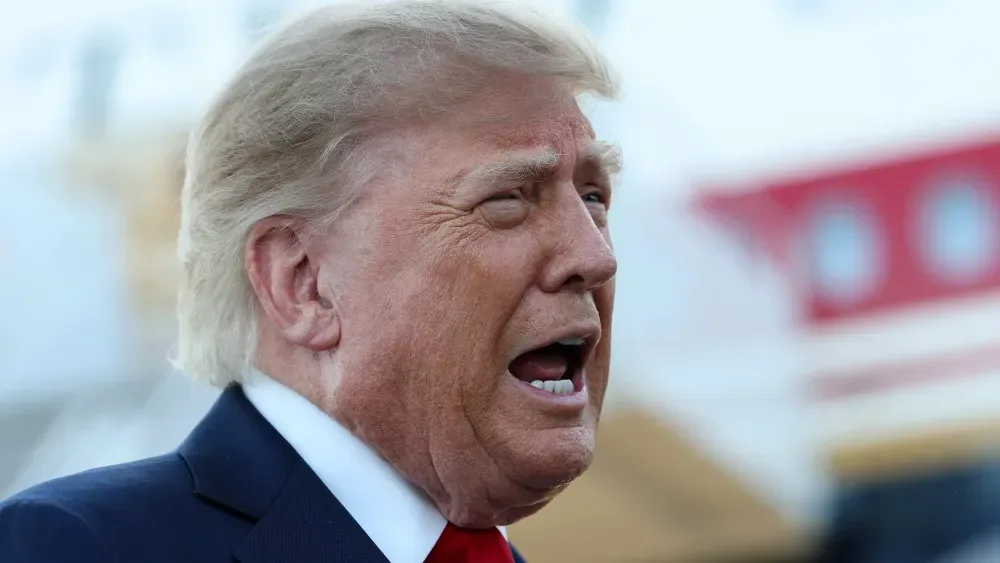
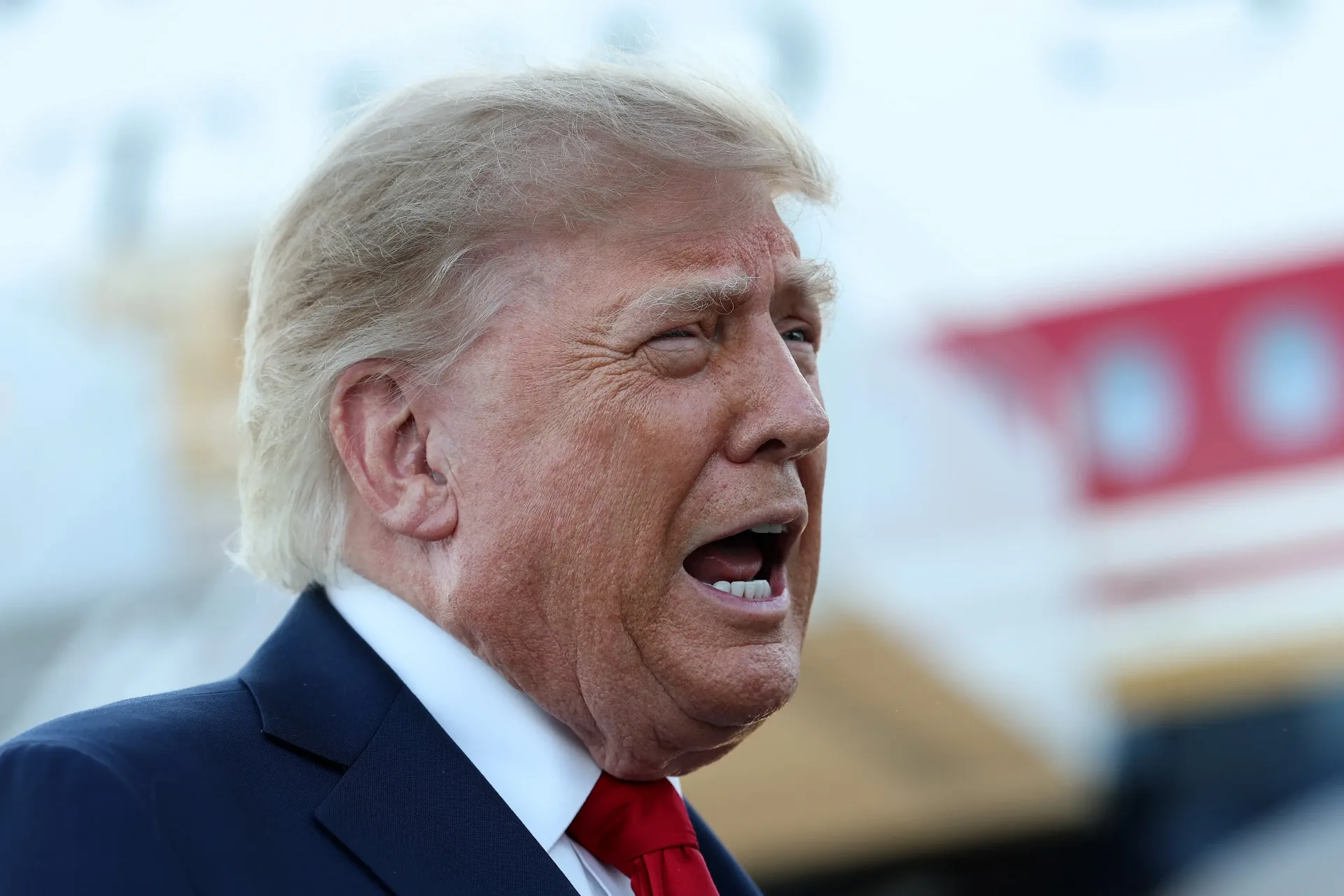
President Donald Trump has attacked 60 Minutes after the CBS News program aired an investigation into Iranian attacks on U.S. military sites during the Iran war. The dispute is not simply over one broadcast’s framing. It centers on sharply different accounts of military effectiveness, the scale of damage at U.S. facilities, and whether warnings ahead of a deadly attack in Kuwait were missed.
Trump’s criticism also arrives as the long-running newsmagazine operates under recently changed leadership. CBS News editor-in-chief Bari Weiss oversaw a major reshuffle of the 60 Minutes staff earlier in 2026, making the segment an immediate test of a newsroom that has already undergone substantial change.
What the ‘60 Minutes’ report alleged
The report, presented by correspondent Norah O’Donnell following an eight-month investigation, examined the conflict’s effects on U.S. forces and military infrastructure. Its central allegation was that the Pentagon had not fully disclosed damage caused by Iranian strikes and that troops were not adequately protected from aerial attacks.
The program said Iran struck at least 31 U.S. military sites across eight countries and damaged hundreds of buildings and structures. Those figures frame the report as an examination of more than whether air defenses stopped individual projectiles. They raise a broader question: even where an incoming weapon does not cause a death, what military damage occurred, what was known about it, and what information was shared publicly?
The segment focused particularly on an Iranian drone attack on an Army command post in Kuwait on March 1. Six American soldiers were killed in that attack, described in the program’s own summary as the deadliest attack on U.S. troops in the war’s early fighting. The report included a surviving soldier, Gold Star families, and U.S. Army Maj. Stephen Ramsbottom, who submitted a whistleblower complaint to the House and Senate Armed Services committees.
Ramsbottom characterized the Kuwait attack as a tactical failure involving the Army, its leadership, and himself. A whistleblower complaint is a formal allegation submitted through oversight channels by someone reporting suspected wrongdoing, failures, or other serious concerns. In this case, Ramsbottom’s complaint places the issues raised by the broadcast before congressional committees responsible for military oversight.
The report’s concerns include allegations of missed warnings before the attack. That is distinct from a claim that every defensive system failed. A military operation can intercept many threats and still face critical questions over preparation, warning procedures, command decisions, personnel protection, or a specific strike that gets through.
Trump’s account emphasizes interception rates
In a post on Truth Social, Trump said the report did not accurately state the results of early Iranian attacks. He said that, from February 28, 2026, the beginning of an operation he called Epic Fury, Iran had launched between 8,000 and 9,000 one-way attack drones.
Trump said only two of those drones got through and caused U.S. fatalities, both on the first day, in Kuwait and Saudi Arabia. He also said Iran fired about 2,000 ballistic missiles, and that only one got through and caused U.S. fatalities, in Jordan. He argued that the record demonstrated that U.S. Central Command’s defensive measures were historically effective.
A one-way attack drone is an unmanned aircraft intended to strike a target rather than return to its operator. In common usage, these systems may also be described as loitering munitions or attack drones, depending on their design and mission. A ballistic missile, meanwhile, is a missile that travels along a high-arching ballistic path for at least part of its flight. Both can demand rapid detection and interception, but they are different classes of threat and are assessed using different systems and operational measures.
Trump’s argument is fundamentally numerical: a very high interception or nonfatality rate should be considered the defining measure of defensive success. His post uses the phrase “got through” alongside the issue of U.S. deaths, which makes the precise standard important. A projectile might be destroyed, miss, be diverted, strike without causing fatalities, or damage property without producing the casualties used in that framing. The report, by contrast, directs attention to alleged damage across bases and to the circumstances surrounding the attack that killed six soldiers in Kuwait.
These are overlapping but not identical claims. A high rate of prevented fatalities would support Trump’s assertion that the defensive effort was highly effective. Allegations of extensive physical damage, missed warnings, and an avoidable deadly breach would remain serious matters for investigation even if most attacks were intercepted or did not cause U.S. deaths. The supplied accounts do not resolve that factual disagreement.
Trump argued that the program omitted the broader effectiveness of Central Command’s defenses, while the broadcast examined alleged failures surrounding the deadly Kuwait strike and wider damage to U.S. sites.
Why the Kuwait attack is at the center of the dispute
The loss of six soldiers gives the debate a human and operational focus that raw launch and interception totals cannot capture by themselves. The report’s stated purpose was to investigate what it called military failures around the deadliest attack against U.S. troops in the conflict. Ramsbottom’s decision to speak publicly and file a complaint indicates that at least one officer involved believed the event warranted formal scrutiny.
Trump did not dispute that the Kuwait incident caused fatalities. Instead, his response positioned it within a vastly larger volume of Iranian drone and missile attacks. That contrast explains the competing narratives. One places the emphasis on the scale of a defensive campaign and the number of attacks that did not kill U.S. personnel. The other asks whether failures in warning and protection contributed to an attack that did.
For viewers, it is useful to keep three questions separate:
- Interception: How many drones or missiles were stopped, failed to reach intended targets, or otherwise did not cause U.S. fatalities?
- Damage: What harm was inflicted on facilities, buildings, structures, equipment, and readiness, including damage that did not produce deaths?
- Accountability: What warnings existed, who received them, what protective measures were taken, and whether command decisions met the standard expected by troops and their families?
None of those questions cancels the others out. They are separate ways of judging a military response. The segment’s investigation and the president’s post therefore speak to different measures of success and failure, even as they address the same conflict.
A fight with a newly reshaped news program
Trump’s post also criticized the people now running 60 Minutes, saying they were worse than their predecessors. That language brings CBS News’ recent executive changes directly into a conflict over editorial judgment.
Weiss, the editor-in-chief of CBS News, previously led The Free Press. David Ellison acquired that company in October 2025 in a deal reported at $150 million and appointed Weiss to oversee CBS News editorial operations, describing the move as an effort to restore viewer trust. Prior to Paramount’s merger with Warner Bros. Discovery, Ellison was Skydance’s CEO.
Earlier in 2026, Weiss removed 60 Minutes executive producers Tanya Simon and Draggan Mihailovich, as well as correspondents Sharyn Alfonsi and Cecilia Vega. CBS News then named Nick Bilton executive producer of the program. Bilton had worked as a technology columnist and contributed to major magazine journalism. Scott Pelley was fired in June after a staff-meeting clash with Weiss and Bilton.
The personnel changes matter because investigative television depends on editorial structures that determine how reporting is developed, reviewed, presented, and defended. A new executive producer does not erase the reporting that came before, but the leadership context will inevitably shape how audiences interpret any politically consequential segment.
Trump has previously praised CBS News and Weiss, making this confrontation especially notable. It shows that alignment over an organization’s broader leadership or stated mission does not prevent a clash over a particular piece of reporting. Public criticism of television by prominent figures is hardly unusual; even entertainment disputes can become public spectacles, as seen when Elon Musk publicly scored an SNL impression and urged the show to “try harder”. This case, however, concerns reporting on troop deaths, military readiness, and congressional oversight rather than satire.
What remains unaddressed
Trump’s post challenges the segment’s characterization of the conflict and says that its account left out key defensive successes. The report alleges undisclosed damage, shortcomings in protection, and missed warnings. Within the supplied information, there is no public CBS News response to Trump’s criticism and no stated Pentagon reply resolving the report’s allegations.
That leaves several consequential points unsettled: the full extent of damage at U.S. sites, the degree to which officials disclosed it, the warning picture before the Kuwait strike, and how military leaders will address Ramsbottom’s complaint. Congressional Armed Services committees are relevant because their oversight role can examine military policy, readiness, and accountability, but no outcome from that process is provided here.
For now, the central divide is clear. Trump presents the Iran conflict’s defensive record as extraordinary because the overwhelming majority of launches, by his count, did not result in U.S. fatalities. 60 Minutes presents a narrower but grave case: a deadly strike, alleged failures around it, and damage across a broad network of American military sites. The unresolved tension between those accounts is exactly why the underlying evidence, rather than any single percentage or television segment, will matter.