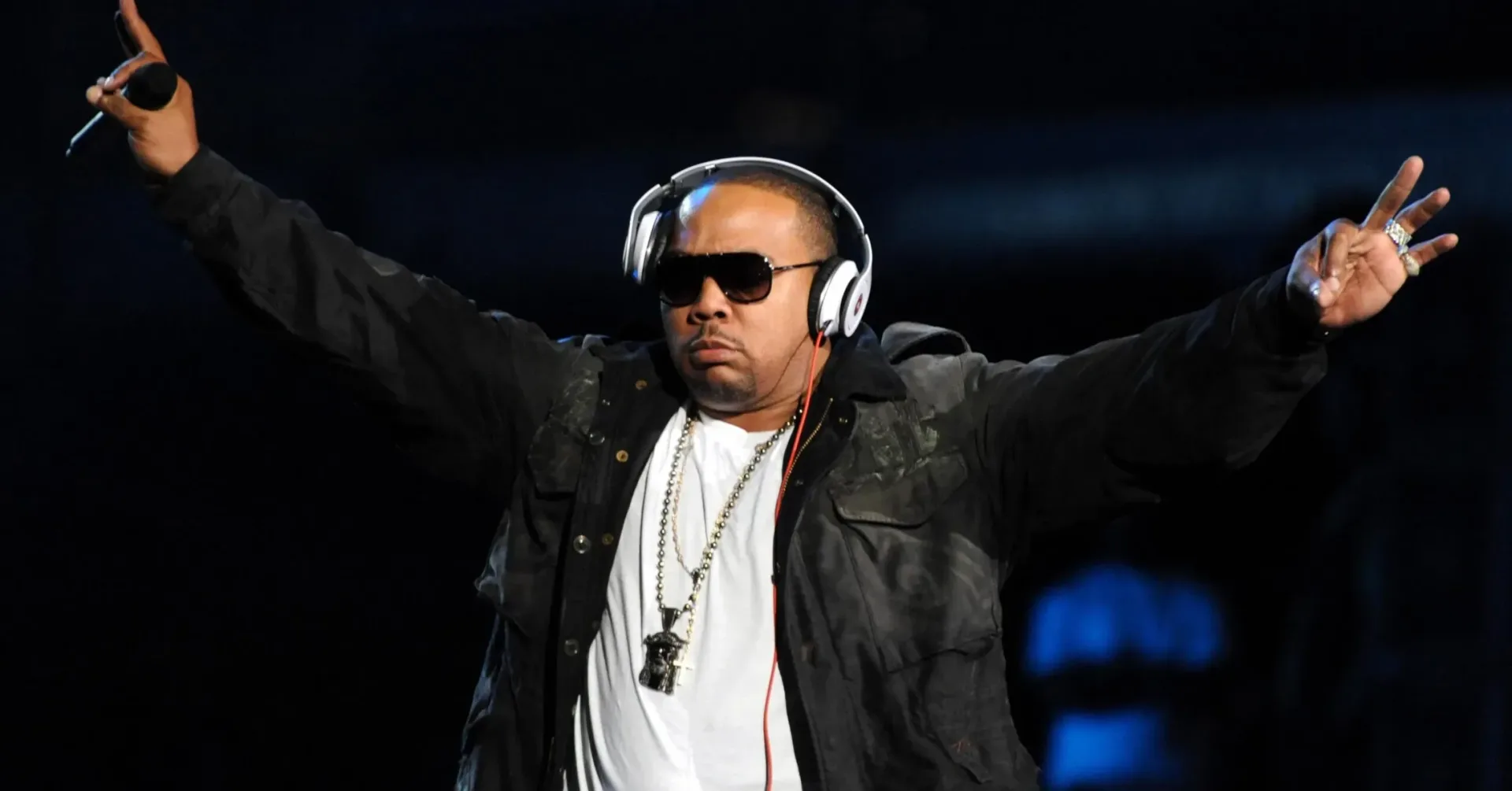
Timbaland has offered a stark reflection on the years when his use of prescription painkillers became an addiction, describing a period in which he now believes he was putting his life at risk every day.
In a recent conversation with B High ATL, the producer recalled that his then-wife saw him stop breathing in his sleep. He said he did not view himself as suicidal at the time, but has since reconsidered what his behavior meant. “I ain’t never think about suicide, but then I said, you know what? I was committing suicide every day,” he said.
The statement is an important distinction in how Timbaland describes that chapter now: not as a deliberate wish to die, but as a dependence whose consequences had become potentially fatal. His account centers on personal experience, including frightening symptoms and the realization, after the fact, that continued use had taken him far beyond pain management or getting high.
From pain treatment to dependency
Timbaland has previously said that prescription painkillers entered his life after he dealt with lingering nerve pain from being shot as a teenager. He began with Vicodin, then escalated to OxyContin. In a 2023 appearance on Club Shay Shay, he said he was taking approximately 160 milligrams of OxyContin a day at the height of his addiction.
Vicodin and OxyContin are brand names associated with prescription opioid pain medicines. In this context, opioid refers to a class of drugs used for pain relief that can also lead to dependence. Dependency is not simply a matter of weak will or a single bad decision; it describes a condition in which stopping or reducing use can be difficult even when a person recognizes serious harm. Timbaland’s own story illustrates the gap that can exist between the original medical reason for taking a medicine and the much more dangerous place continued use can reach.
He said that, at the level he was taking, most people he knew who had used that amount were dead. He also recalled an out-of-body experience in which he saw himself lying in bed. Those are his recollections of an intensely unsafe period, not a clinical account or a measure others should use to assess their own situation. The central point is simpler and more serious: Timbaland says he was in danger and eventually understood that danger differently.
A crisis that reached beyond health
The producer discussed the period while speaking about Chris Cornell and the personal strain he was carrying during his addiction. His marriage was unraveling, he said, and pills became part of how he responded to what was happening around him.
That detail matters because addiction is rarely contained neatly inside one part of a life. Timbaland has said the drugs affected his work as well as his health. He has also said that some of the music he considers his best was made while he was sober. Rather than treating creativity as proof that a destructive routine is sustainable, his comments push against that familiar myth. Being productive, talented, employed, or outwardly successful does not erase a serious dependency or make its risks less real.
For an artist whose work has been so influential within hip-hop and pop, openness about this period also gives a fuller picture of the person behind a public career. The story is not a claim that achievement protects anyone from addiction. If anything, it underlines that a celebrated professional life can coexist with private instability, declining health, and relationships under pressure.
There is a wider cultural value in hearing artists speak plainly about those contradictions. Hip-hop’s history includes candid work about survival, grief, mental health, substance use, family, and community; recent discussion around hip-hop’s place in New York similarly shows how music and public life can intersect. Timbaland’s comments are more personal than civic, but they belong to the same broad reality: artists often bring difficult lived experience into public conversation.
Why the sleep-breathing account stands out
The moment involving his breathing is the clearest warning in Timbaland’s new reflection. He said his former wife observed him stop breathing while asleep. He now frames it as evidence that he was slowly killing himself, and said he credits God with helping him make it through.
It is worth being careful with the language around such an account. Timbaland is not saying that he made a suicide attempt. He is describing how he now interprets the cumulative danger of his addiction. That difference respects both his own words and the fact that addiction, overdose risk, self-harm, and suicidal thoughts are related but not interchangeable experiences.
For readers, the practical takeaway is not to diagnose a loved one from an interview or to wait for a dramatic moment before treating concerns seriously. A person who is worried about opioid or prescription-drug use, or worried about someone close to them, should seek prompt help from a qualified medical or addiction-support professional. Immediate emergency help is appropriate when someone is unresponsive, has trouble breathing, or appears to be in immediate danger. Timbaland’s account makes clear why apparent sleep or an attempt to “sleep it off” should never be casually assumed to be safe when substances may be involved.
The people he says helped him change course
Timbaland has credited his children with giving him a reason to stop. He has also said that Jay-Z and Drake confronted him when his behavior began slipping. Those comments emphasize a dimension of recovery stories that can be overlooked: concern from people around someone can matter, particularly when addiction encourages secrecy, denial, or isolation.
Still, the account does not reduce recovery to one conversation or one person. Timbaland described the process as requiring more than ending a prescription. That phrasing recognizes that the circumstances around substance use can be as consequential as the substance itself: pain, stress, relationships, habits, and the people present in a person’s day-to-day life can all be part of the picture.
Years later, he characterizes the outcome not merely as surviving addiction, but as conquering it. The language is his own, and it conveys the scale of what he believes he overcame. His remarks do not offer a universal recovery template, nor should they. They instead document one person’s retrospective understanding of an addiction that began amid physical pain, escalated substantially, and threatened his life.
What Timbaland’s reflection adds
The most compelling part of Timbaland’s account is its refusal to soften the period into a vague tale of excess. He identifies the drugs, acknowledges the escalation, discusses the toll on his marriage and work, and names a terrifying health scare. That specificity gives weight to his conclusion that he had been endangering himself even though he did not initially think of his actions as suicidal.
It also places sobriety at the center of how he assesses his later work and his life. There is no romantic framing of the suffering as a necessary engine for art. Instead, Timbaland says he made some of his strongest records sober, a direct reminder that recovery and creative ambition need not be opposing paths.
His decision to speak about the experience does not make the subject easy. It does, however, make the stakes legible: prescription medication used for a real injury became a dependency; dependency put his health, family life, and professional output under strain; and intervention, motivation, and a different path became necessary. That is a sobering message, delivered by someone who says he came close to a very different ending.