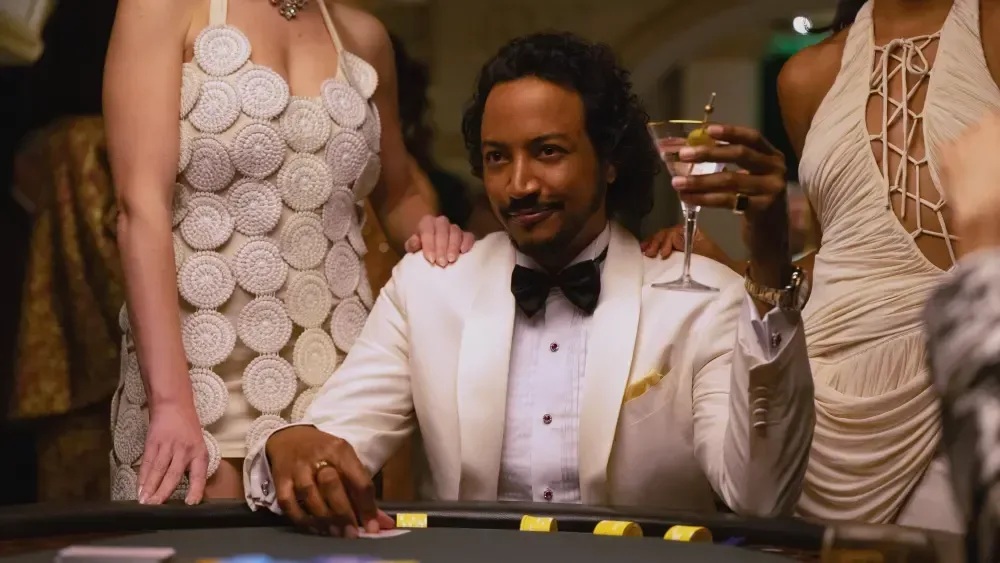
Pluribus is bringing Samba Schutte into its core ensemble for season 2. Schutte, who appeared as Mr. Diabaté in the Apple TV drama’s first season, has been promoted from guest performer to series regular while the new season is in production.
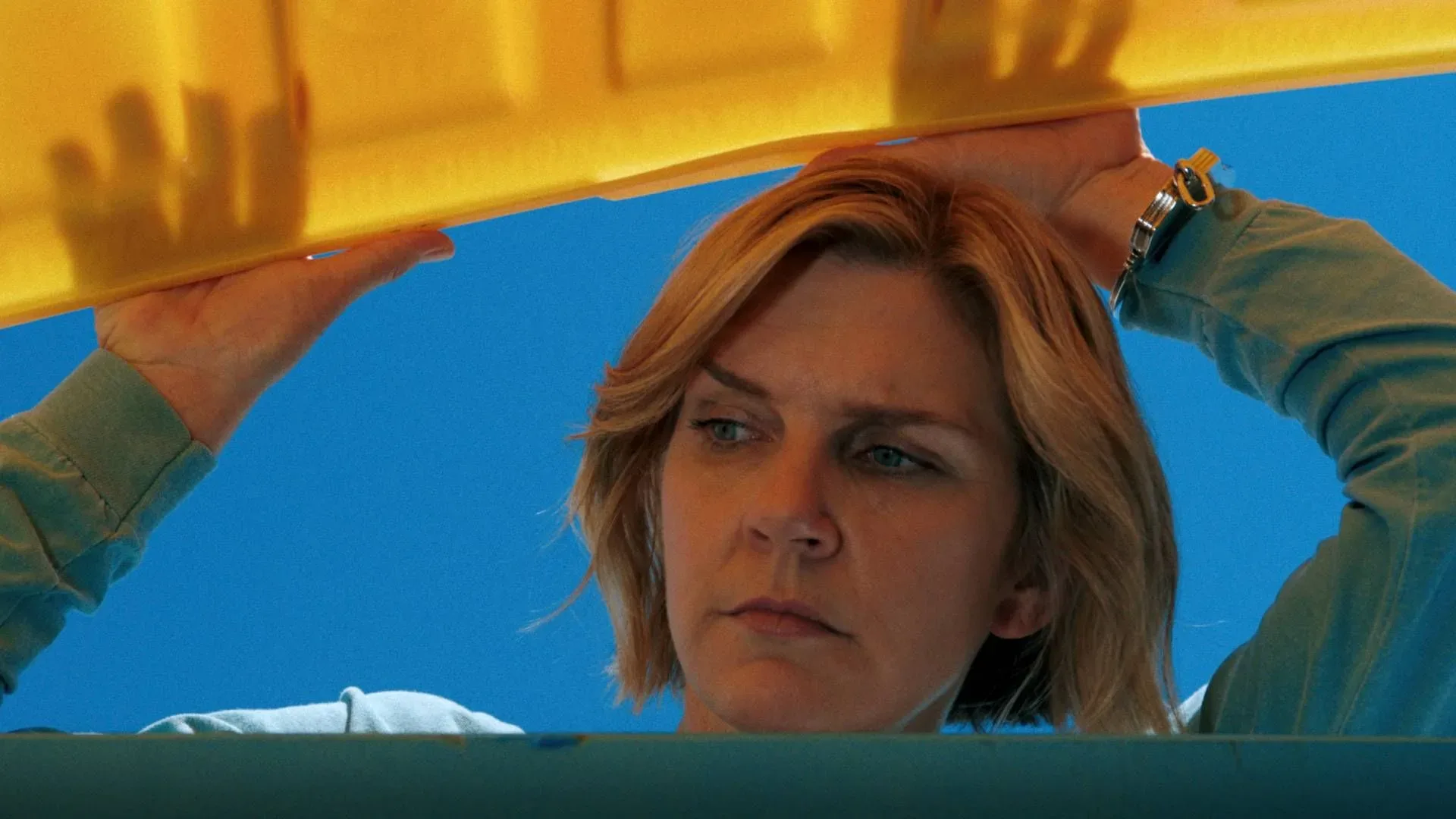
The change gives a clearer indication that Mr. Diabaté will remain important to the show’s next chapter. In season 1, he was established as one of the people immune to the outbreak at the center of the story. He shares that crucial trait with Carol, played by Rhea Seehorn, while occupying a very different space in the premise: Mr. Diabaté lives hedonistically.
That pairing of a world-altering crisis with an individual determined to pursue pleasure gives the character obvious dramatic potential. It also means Schutte’s expanded role should not be read simply as an increase in screen time. A series-regular promotion signals that the production intends to keep returning to a character as part of its ongoing storytelling fabric, though it does not disclose any specific plot developments, episode count, or release timetable.
What the promotion tells viewers—and what it does not
In television production, a series regular is generally a performer positioned as a continuing member of a show’s principal cast. A guest role, by comparison, can be significant without carrying the same expectation of sustained involvement. The terminology is useful because it reveals creative intent at a broad level: the writers and producers see continued value in having that character available across the season.
It is not, however, a spoiler. The announcement does not establish what Mr. Diabaté will do in season 2, how often he will appear, or whether his relationship with Carol will become more cooperative, more combative, or merely more complicated. Those details remain under wraps.
What is established is that immunity is a central point of connection between the two characters. When a fictional outbreak defines the circumstances around the cast, immunity is not just a personal survival advantage. It can shape a character’s freedom, isolation, responsibility, and sense of distance from everyone living with the threat. Mr. Diabaté’s hedonistic lifestyle offers a particular counterpoint to that premise: rather than treating survival purely as a burden, the character’s outlook is tied to indulgence.
That contrast is especially worth watching because it can generate tension without requiring either character to be reduced to a simple opposite. Carol and Mr. Diabaté share the same unusual status, but they do not necessarily have to draw the same conclusions from it. Season 2 now has more room to explore the consequences of that difference.
A notable expansion for Schutte
Schutte arrives in the larger role with experience across sharply different comic and television formats. He starred in the pirate comedy Our Flag Means Death and appeared in the NBC sitcom Sunnyside. Earlier in his career, he worked as a writer and correspondent on the Dutch Daily Show adaptation, De Nieuwste Show.
That background matters less as a prediction of Pluribus’ tone than as context for the performer’s range. Acting in an ensemble comedy, working in a sitcom setting, and contributing as a writer-correspondent all require distinct skills: reacting in a group, finding precision in dialogue and pacing, and communicating a point of view quickly. None of that confirms how season 2 will use Mr. Diabaté, but it helps explain why a character introduced as a guest could be a compelling candidate for a broader place in the series.
Schutte joins a cast that includes Seehorn, Karolina Wydra, and Carlos-Manuel Vesga. Seehorn’s Carol remains the clearest reference point in the information available about Mr. Diabaté because both are immune to the outbreak. With Schutte now a regular, the show’s continuing cast is set to spend more time around characters whose circumstances are linked by that defining condition.
Pluribus enters season 2 after a decorated first year
The first season of Pluribus debuted on Apple TV in November 2025 and was warmly received by critics and audiences. Its awards recognition was substantial: the show earned 18 Emmy nominations for its first season and won six awards.
Those wins included outstanding lead actress in a drama series for Seehorn and outstanding writing for a drama series for creator Vince Gilligan. The series also received Emmys for picture editing in a drama series, sound mixing for a one-hour comedy or drama, original main title theme music, and production design for a narrative contemporary program of one hour or more.
Those individual categories describe different parts of the production. Picture editing concerns the selection and arrangement of filmed material into the final episode, including rhythm, transitions, and narrative clarity. Sound mixing concerns the balance of dialogue, music, effects, and environmental sound in the finished program. Production design covers the visual world of the story—settings, spaces, and the physical look that helps establish where characters live and what kind of reality surrounds them. Recognition in all three points to a first season whose accomplishments were not limited to its performances and writing.
For viewers keeping up with Apple’s wider screen ecosystem, Apple’s current HomeView and Apple TV 4K news offers adjacent platform context, while Pluribus itself remains an Apple TV production from Sony Pictures Television.
Why Mr. Diabaté’s larger role matters
The most concrete takeaway is straightforward: season 2 is not moving on from Mr. Diabaté after his guest appearance. A continuing role for a second immune character preserves an avenue for the series to examine its outbreak premise through more than one perspective.
There is an important limit to that reading. Immunity alone does not tell audiences what a character values, whom they trust, or how they act when their freedom conflicts with the needs of others. Mr. Diabaté’s lifestyle provides a starting point, not a complete map. The show has not revealed a season 2 story synopsis or attached a release date to the promotion.
Still, the decision is meaningful in the context of an acclaimed first season. Pluribus has already established a creative team led by Gilligan and a cast anchored by Seehorn; expanding Schutte’s part signals confidence in a character whose circumstances overlap with Carol’s but whose response to them is markedly distinct.
Gilligan executive produces the series alongside Gordon Smith, Alison Tatlock, Diane Mercer, Jeff Frost, Jenn Carroll, and Trina Siopy. With production underway, the next confirmed development is Schutte’s place in that regular ensemble—not the particulars of what awaits Mr. Diabaté when Pluribus returns.