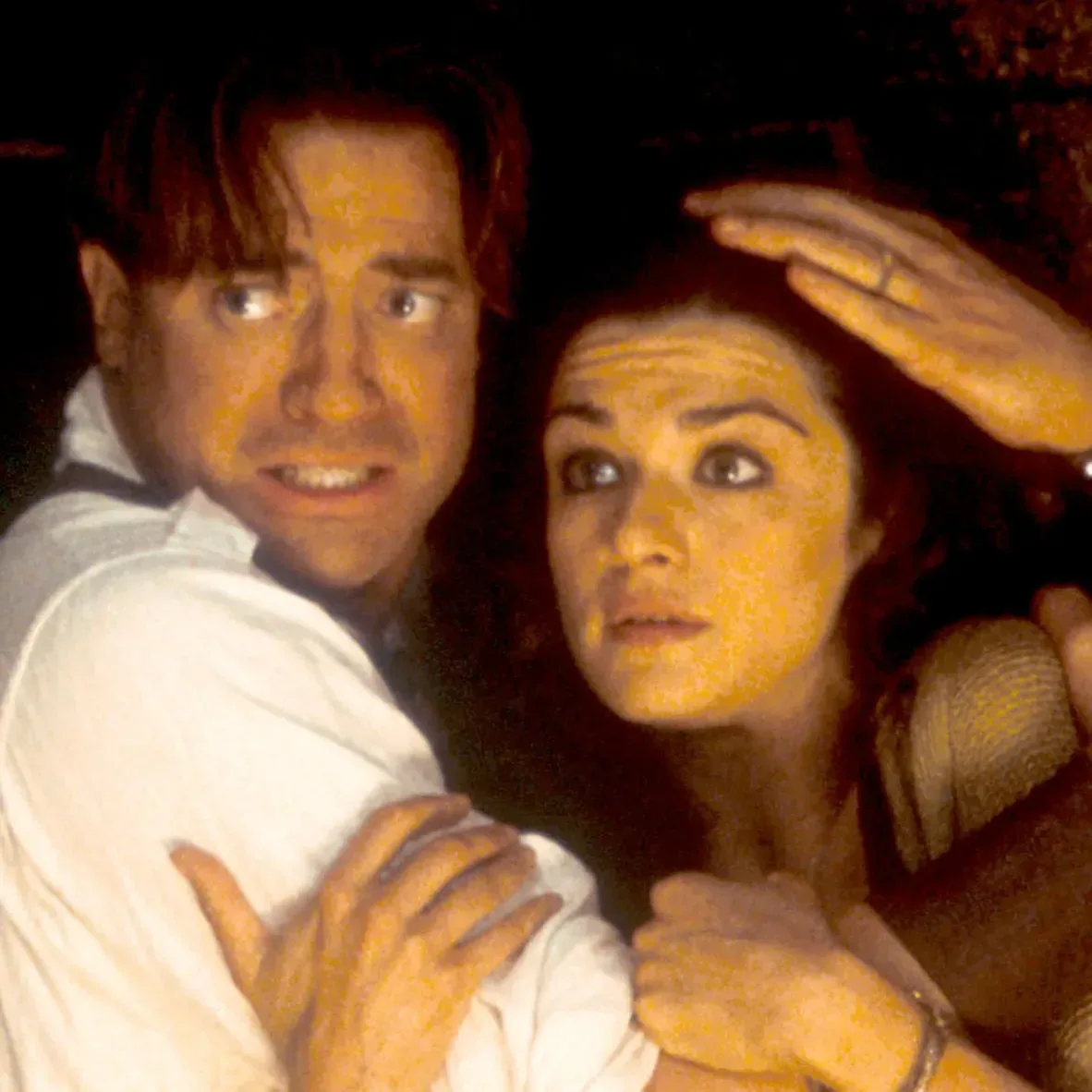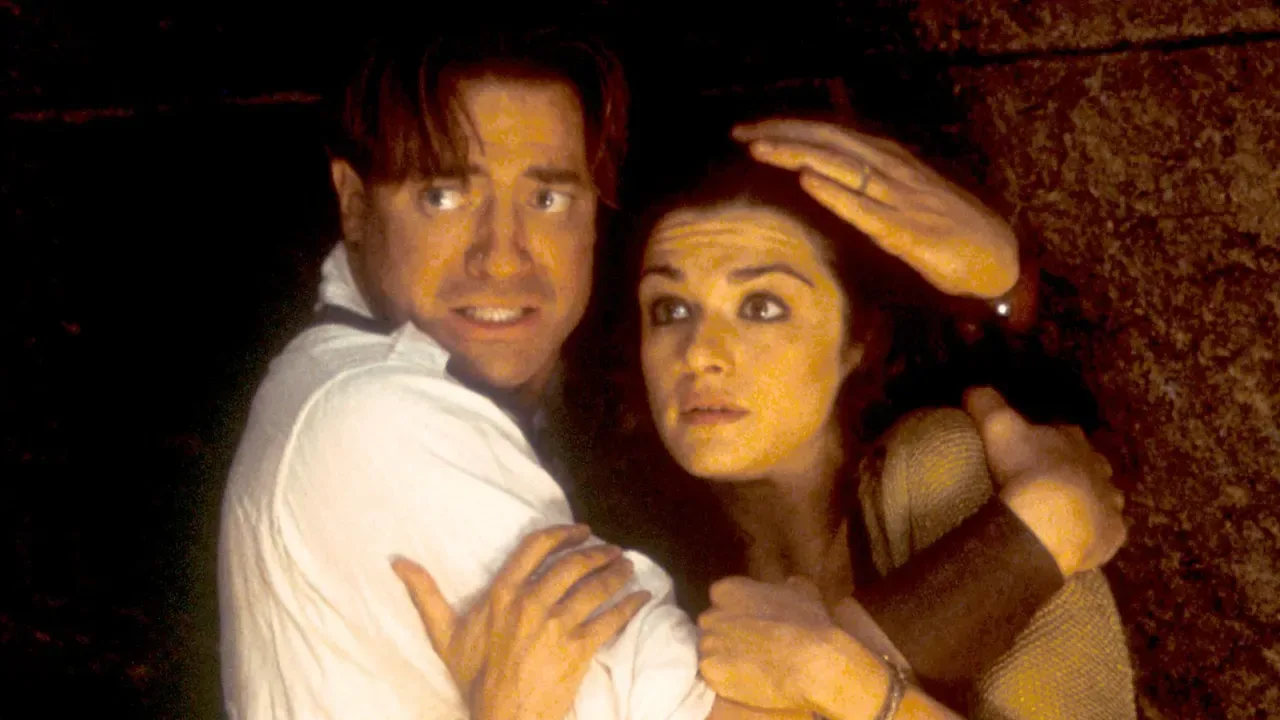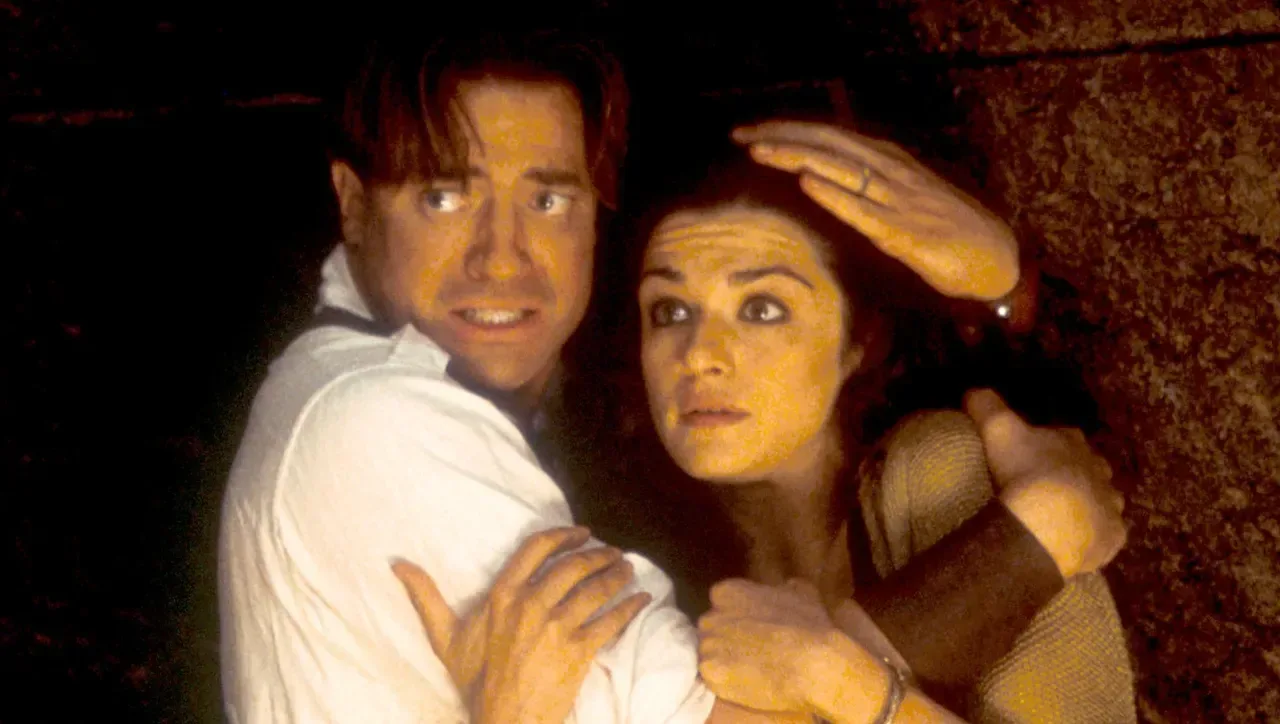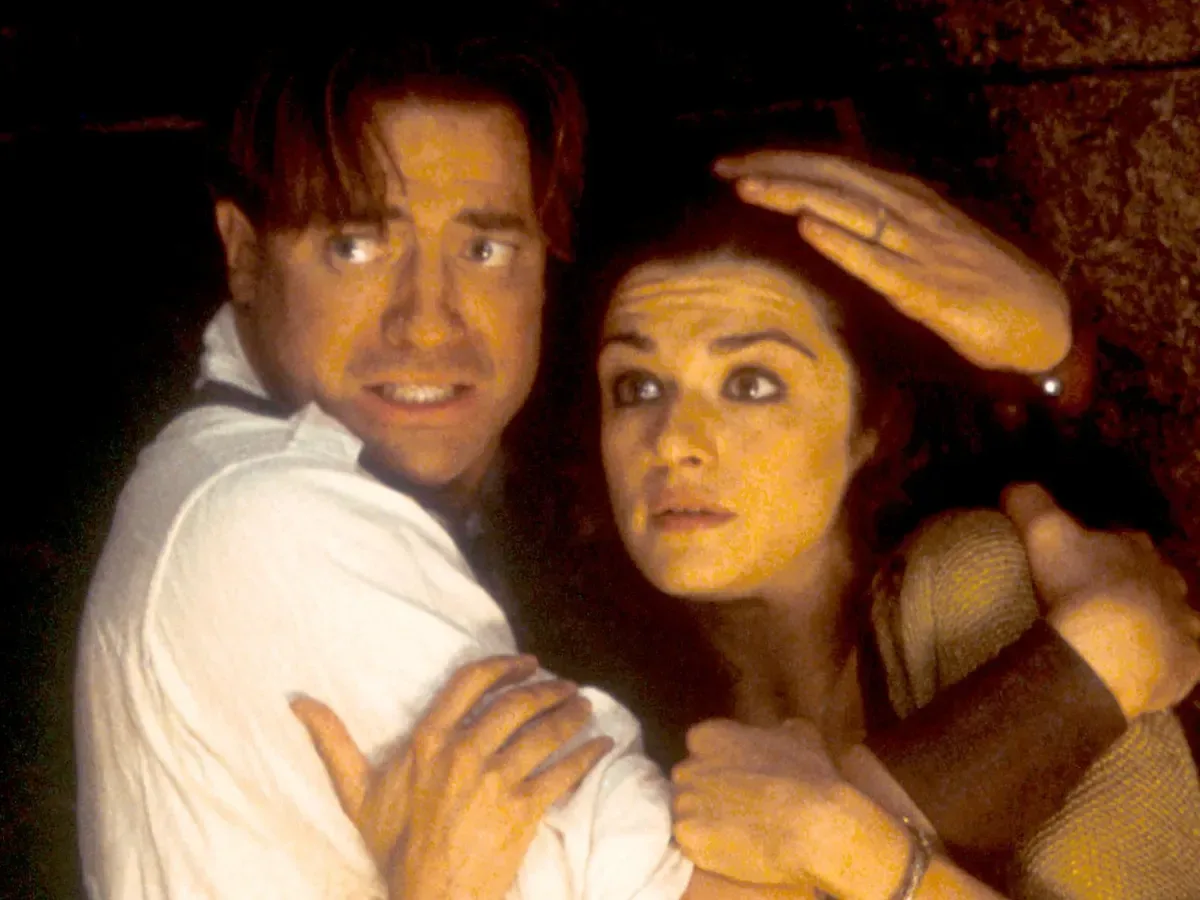
Rachel Weisz appears to be back where she belongs: near ancient history, in period clothing, and one suspiciously cursed artifact away from another very bad day for London. Newly surfaced set photos from the next The Mummy film show Weisz reprising Evelyn O’Connell, the librarian-turned-Egyptologist and action hero she played in the first two entries.
The images were taken during filming outside London’s British Museum. The sequence is reportedly intended for early in the film, although that placement, like much else surrounding the project, remains unconfirmed. What the photos do establish is more straightforward: Weisz is again playing Evelyn, reuniting with Brendan Fraser’s Rick O’Connell nearly two decades after 2008’s The Mummy: Tomb of the Dragon Emperor.
The upcoming sequel is widely being called The Mummy 4, but its final title has not been announced. It is scheduled for theatrical release on October 15, 2027.
Evelyn O’Connell is back after skipping the third film
Weisz did not appear in Tomb of the Dragon Emperor. Maria Bello played Evelyn in that film instead, making the new production the first time since The Mummy Returns that the original on-screen pairing of Weisz and Fraser has returned as Evelyn and Rick.
That distinction matters because the new movie is not simply bringing back a recognizable franchise name. It is restoring the central family and adventure dynamic associated with the earlier films. Evelyn began as a librarian and Egyptologist, but became every bit as integral to the action as Rick. Her academic knowledge gave the series a mechanism for explaining myths, languages, relics and threats; her willingness to enter danger made her much more than a person standing safely beside a bookcase while somebody else fights a mummy.
The returning ensemble goes beyond the O’Connells. John Hannah is set to reprise Jonathan Carnahan, Evelyn’s opportunistic brother, after appearing in the first three films. Oded Fehr is also returning as Ardeth Bay. Together, those cast returns suggest a deliberate attempt to reconnect the new movie with the character relationships audiences remember, rather than treating the earlier installments merely as distant background.
There is an important caveat on continuity. Directors Matt Bettinelli-Olpin and Tyler Gillett indicated in March that Tomb of the Dragon Emperor may not be considered canon. In franchise language, canon means the events a story treats as part of its official continuity. If the 2008 film is excluded, the next movie could function more directly as a follow-up to the first two adventures. That is a strong possibility raised by the filmmakers’ comments, not a complete plot map: the project has not publicly explained exactly how it will handle every prior event.
A costume prop may narrow the new film’s setting
The costumes in the images have prompted speculation that the story takes place in post-war London during the 1950s. One detail driving that discussion is an object Weisz appears to be holding that looks like a transistor radio.
A transistor radio is a portable radio built around transistor technology rather than older vacuum tubes. The supplied reporting notes that such radios were introduced in the mid-to-late 1950s. If the item is indeed a transistor radio and is being used as a period-correct prop rather than something else, it would support a setting in that era. It is still not confirmation of a specific year, and set photography cannot establish the full film chronology by itself.
Even so, a move to the 1950s would fit the broad timeline of the previous films. The Mummy was set in 1926. The Mummy Returns followed in 1933. Tomb of the Dragon Emperor moved to 1946. A post-war 1950s setting would therefore continue the O’Connells’ story forward rather than reset it to an earlier point.
It would also make the British Museum location especially meaningful as visual storytelling. Evelyn’s identity has always connected scholarship to adventure, and a museum exterior instantly communicates both London and the world of antiquities. That does not tell viewers which artifact, villain or quest will drive the film, but it is a concise reminder of the character’s roots: Evelyn has always been the person in the room most likely to recognize the historical danger before it starts glowing.
Why the cast reunion carries more weight than ordinary sequel nostalgia
Fraser and Weisz returning is naturally the headline, but the reunion arrives after a particularly long gap. Fraser previously said he had waited 20 years to get the call for another Mummy movie and said it was time to give fans what they wanted. The elapsed time makes this less like a routine back-to-back sequel and more like a revival built around performers returning to defining roles.
Fraser’s participation also arrives with serious context. He sustained multiple injuries while making the earlier Mummy films, including a torn spinal disc and a cracked rib. The injuries led to several surgeries over years, affected his health and contributed to a lengthy break from his career. Ahead of filming, Fraser emphasized the importance of stunt performers.
That acknowledgement is worth taking seriously without turning it into unsupported assumptions about the new movie’s action design. A stunt performer is a specialist who carries out, assists with or helps safely plan physically demanding screen action. In an adventure series known for fights, falls, chases and supernatural chaos, the work involves more than a star taking a tumble on camera. It depends on preparation, choreography, technical coordination and people trained for dangerous movement. Fraser’s comments provide an appropriate reminder that a screen adventure can look breezy while requiring considerable expertise behind it.
None of the available details says what kinds of action the 2027 film will feature, how large a role Rick will have, or whether the story is designed around a particular physical set piece. The better takeaway is simply that the return of the original cast comes with a renewed public awareness of the labor required to make such spectacle work.
What the photos reveal—and what they absolutely do not
Set photos are useful because they offer tangible evidence of production: an actor, a costume, a location and potentially a prop. They are limited because they arrive outside the finished film’s editing, sound, narrative framing and context. A photograph of Evelyn outside the British Museum can confirm that Weisz is in costume for a scene there. It cannot confirm the antagonist, the stakes, the meaning of the scene, or whether an object in her hand is plot-critical.
That distinction is particularly important here because several core details remain unknown. There is no confirmed final title. No official story synopsis is included in the available information. The exact year of the setting is unclear. And while the directors’ comments point toward a continuity approach that may leave out the third film, audiences do not yet have a complete explanation of how the new installment will position itself against the earlier movies.
The positive response to Weisz’s period-appropriate wardrobe is nevertheless meaningful as a sign of what viewers are eager to see: not only the return of a familiar face, but the return of a particular tone. The original Evelyn was learned, capable and funny, with a period-adventure silhouette that became inseparable from the series’ identity. The new images are not a trailer, but they do signal that the production understands the value of that visual shorthand.
For fans of physical movie artifacts and screen-used history, the British Museum setting and the suspected radio also illustrate why props and costume details invite so much attention long before a movie opens. They create a bridge between an imagined era and a production’s real-world craft. Those interested in how film-related objects are preserved and collected can also see the appeal in pieces tied to a recognizable cinematic setting, much like the buildable display appeal of this LEGO Hogwarts Castle and Grounds set.
The sensible reading of the early evidence
The most grounded interpretation of the set photos is also the most encouraging one. Weisz is returning as Evelyn O’Connell. Fraser is returning as Rick. Hannah and Fehr are returning as Jonathan and Ardeth Bay. Filming has taken place outside the British Museum in London. The wardrobe and a possible transistor radio indicate a likely post-war setting, potentially in the 1950s, but not a locked date.
Everything beyond that—including the villain, the nature of the supernatural threat, the exact status of the 2008 film and the final title—should remain in the “wait for confirmation” column. For now, the most substantial news is the simplest: Evelyn O’Connell is back in the field, or at least back at the museum. In a franchise where museums have never been especially safe, that is probably the first sign that somebody should start checking the sarcophagi.