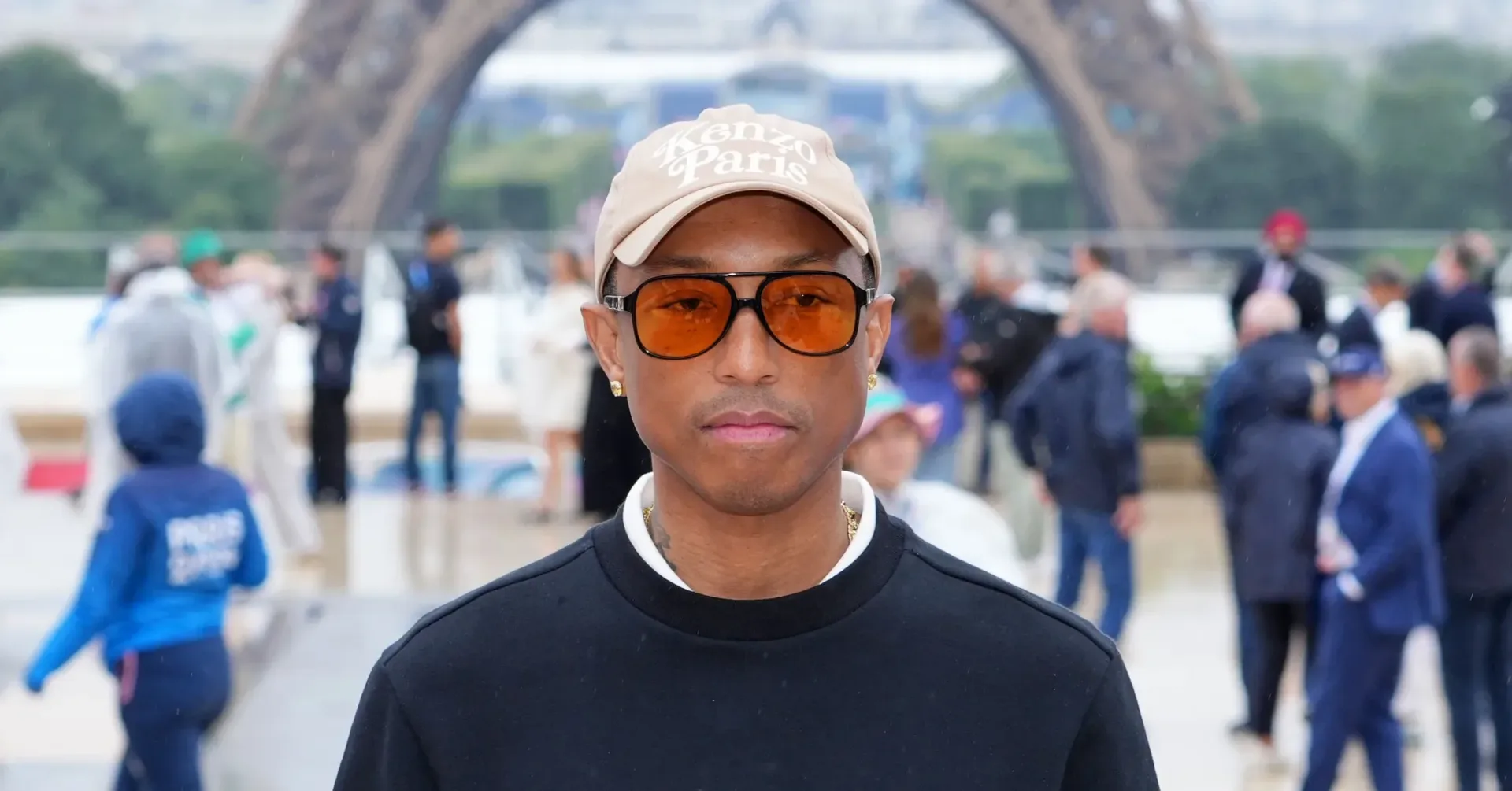
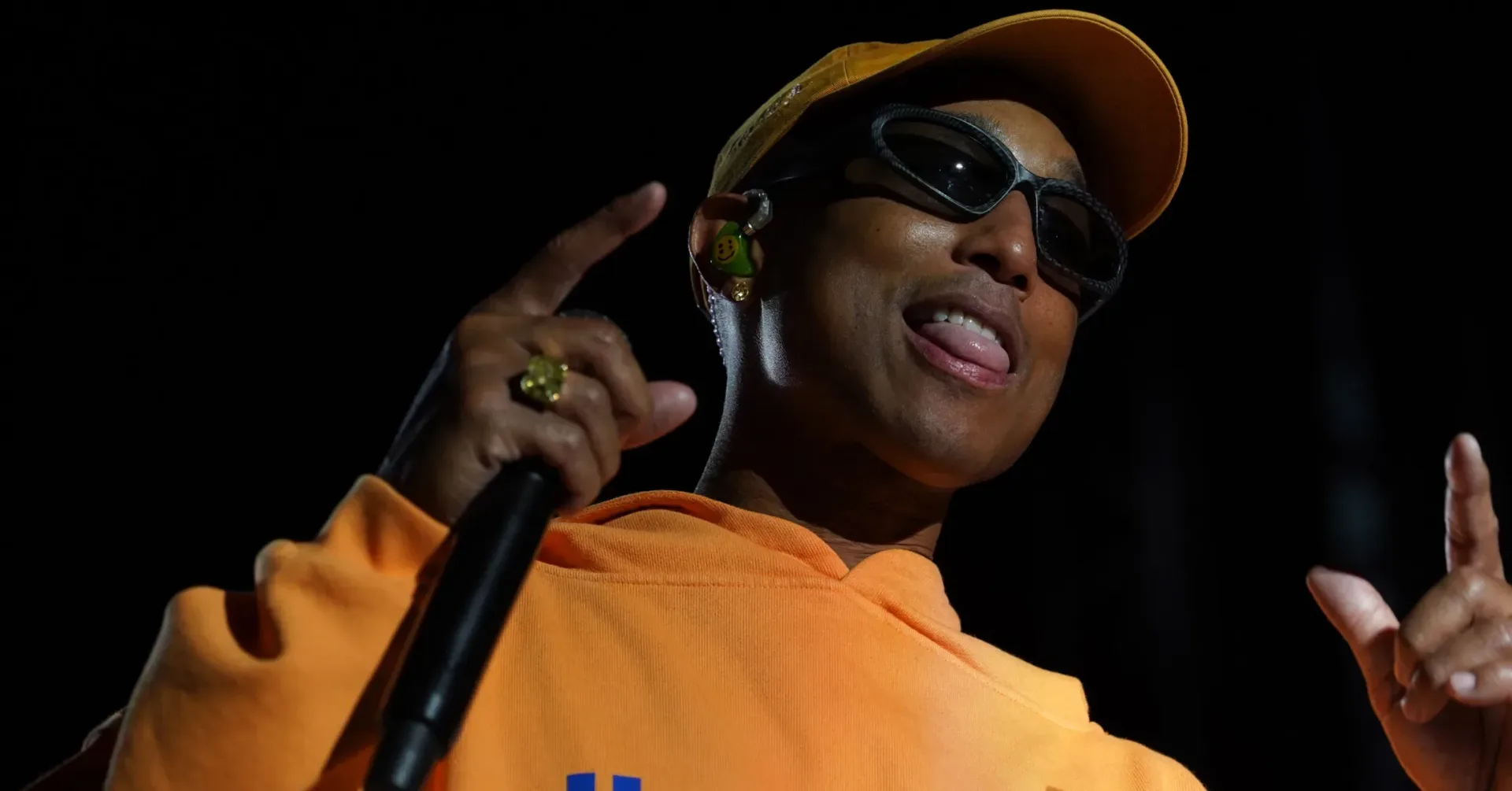
Few questions in hip-hop invite a faster, louder argument than whether a long-established producer has lost a step. Pharrell Williams is now at the middle of that exact conversation after a social-media user, Joey, who posts as @gothamhiphop, asked whether there is such a thing as “Pharrell fatigue.” The prompt was less a definitive verdict than a way to collect a set of very different frustrations: concerns about recent songs, arguments over commercial reception, and a persistent belief that some artists understand Pharrell’s production language better than others.
The debate matters because “fatigue” can mean several things at once. It can mean listeners are hearing too much of a producer. It can mean a recognizable approach is no longer connecting with a particular audience. Or it can be shorthand for a more specific complaint: that the beat and the performer are misaligned. The responses described around this discussion lean heavily toward that third explanation, especially when the subject turns to Atlanta artists.
The releases driving the discussion
Joey’s question pointed to several recent Pharrell-related releases that have drawn different kinds of scrutiny. Lil Baby’s “Dead Fresh” was cited as a song that has become more of a meme than a straightforward fan favorite. Quavo’s QROMELIFE was described as having received a poor critical response. Muse, Pharrell’s project with John Legend, was presented as a stronger artistic effort, yet one that did not reach the commercial result people expected.
Those examples are useful precisely because they do not all imply the same problem. A meme-driven reaction is not the same as a negative review, and neither is the same as a project failing to meet commercial expectations. Treating them as one clean trend would oversimplify what is actually a messy public conversation. They are, however, the releases people are using to argue that Pharrell’s 2026 record has been uneven.
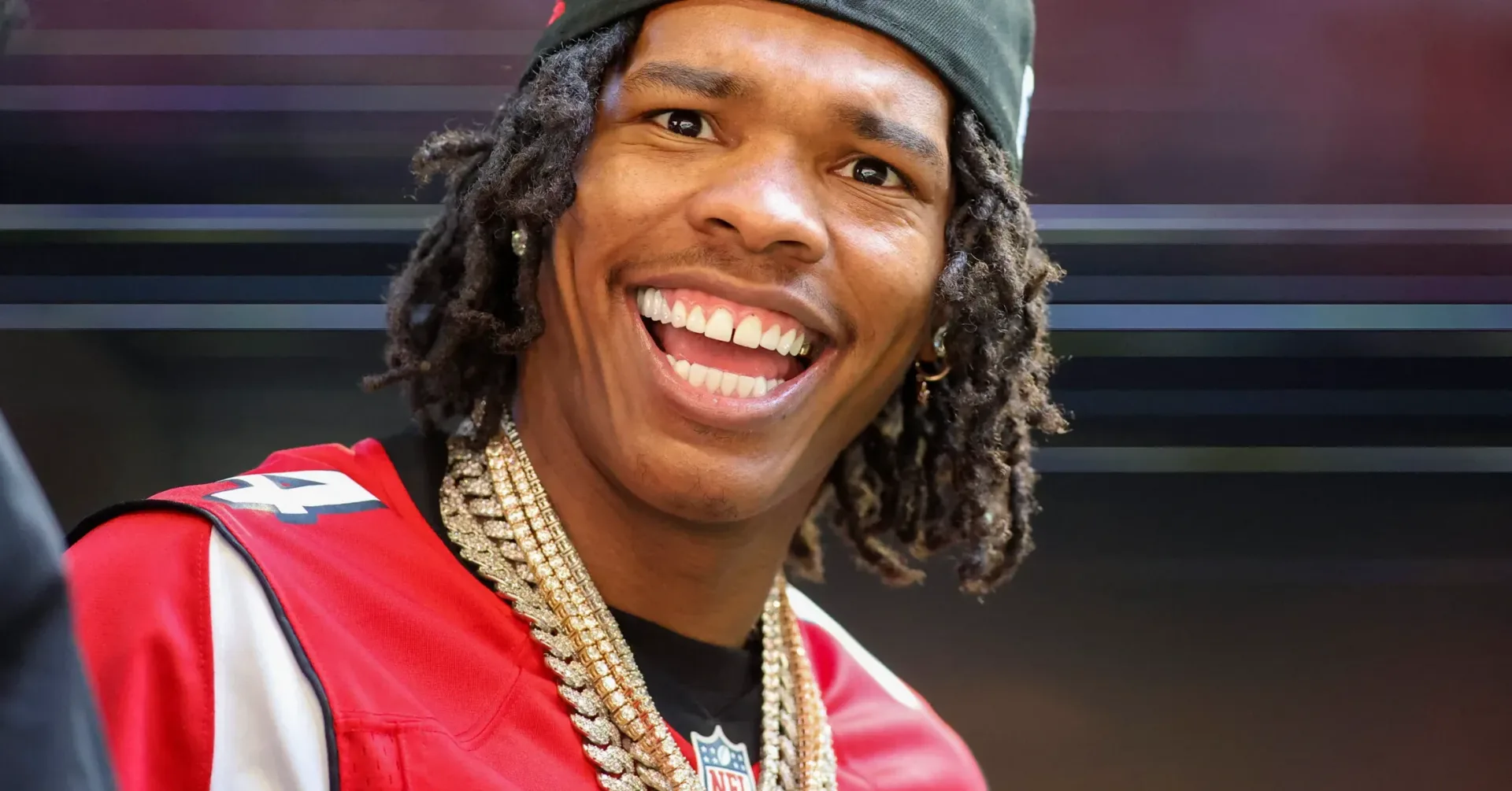
That framing also places extra attention on Lil Baby, whose broader release cycle has already become a subject of online debate. Lil Baby has recently pushed back on “fell off” commentary around Fresh, making it especially easy for listeners to fold “Dead Fresh” into a larger argument about expectations rather than judge the record in isolation.
What people mean when they say a beat does not fit
The most substantive criticism in the replies was not necessarily that Pharrell can no longer make effective music. Instead, commenters argued that his work for Atlanta artists does not always suit their style. That distinction is crucial. In music discussion, artist-producer fit describes how well a performer’s voice, writing, rhythm and persona work with a producer’s instrumental choices. A beat can be well made while still leaving a rapper with too little room, the wrong kind of momentum, or an instrumental mood that does not complement their delivery.
This is not a technical scorecard with an objective answer. It is a listener judgment about chemistry. Fans who want a specific artist to receive a particular kind of production often hear deviation as a downgrade, even if the goal is to create contrast or push toward a new texture. The result is that the producer becomes the target for a collaboration’s perceived mismatch, while the artist’s choices and the shared creative decision-making receive less attention.
In this case, the argument is framed around expectations placed on Pharrell. Some fans say artists keep seeking his beats but are not receiving what they see as his best work. Others say the beats may be fine, but the performers are not the artists best equipped to turn them into compelling songs. These are competing explanations, not facts settled by the discussion.
Why “best beats” is a loaded phrase
Calling one beat a producer’s “best” can sound simple, but it bundles together several separate claims. A listener may mean the beat is more memorable. They may mean it has a more immediate hook, a stronger rhythm for a particular rapper, or more obvious commercial potential. They may simply mean it resembles the Pharrell material they already prefer. None of those meanings automatically establishes that a less familiar production is lower quality.
That is why producer discourse regularly becomes a debate over taste disguised as a debate over performance. The available examples support the idea that recent work has divided listeners; they do not establish that Pharrell has one universal current sound, that he is withholding stronger ideas from any group of artists, or that all of his collaborations are being received poorly.
Clipse becomes the central counterargument
For many participants, Clipse is the clearest response to the fatigue theory. The duo is repeatedly raised as an example of artists who know how to use Pharrell’s production most effectively. That claim does not resolve whether other collaborations work, but it changes the question. If listeners still point to a particular partnership as especially potent, then the supposed issue may be selective compatibility rather than blanket exhaustion with the producer himself.
In practical terms, the Clipse argument suggests that a producer’s signature is not plug-and-play. A recognizable sound may demand a particular performance style or an especially confident artistic point of view. The social-media debate does not provide a precise formula for why that pairing lands for its supporters. But its prominence shows where many fans locate the difference: not in Pharrell’s ability to produce, but in what happens once a specific artist starts writing and rapping over the result.
It is also a reminder that listeners often evaluate producers through partnerships rather than individual tracks. A collaborative record has at least two public-facing authors in the audience’s mind: the artist delivering the song and the producer shaping its musical setting. When it succeeds, fans describe synergy. When it disappoints, the conversation can become a dispute over who failed to adapt.
Commercial results and critical response are not the same test
Muse with John Legend is a useful case within this small set of examples because it complicates any attempt to use popularity as the only measurement. The project was characterized as good, while also being described as falling short of the commercial success it sought. Those two observations can coexist. A project may be creatively appreciated by listeners or commentators and still not convert into the scale of attention expected around it.
That is an important distinction for the broader Pharrell conversation. Commercial performance refers to market-facing outcomes such as reach and sales-related success, while critical reception refers to evaluative response. They can overlap, but they are not interchangeable. Likewise, a track turning into a meme says something about how it circulates online, but not necessarily everything about its musical construction or long-term audience.
Social media tends to flatten these categories because a single post can put a song’s jokes, reviews, perceived underperformance and fan reactions beside one another. The speed of that format can make a handful of examples feel like a comprehensive verdict. The more cautious reading is that these releases have supplied material for disagreement, not that they have produced a consensus.
So, is the audience actually tired of Pharrell?
There is no clear yes-or-no answer in the discussion. The replies are polarized, with supporters maintaining that Pharrell remains a major creative force and detractors treating the recent run as evidence of diminished returns. But the strongest through-line is not simple rejection. It is an argument about selection: which artists should work with Pharrell, what kind of beats they should receive, and whether listeners are demanding a familiar version of his production rather than accepting a different fit.
That makes “Pharrell fatigue” a provocative label, but an imprecise one. It compresses multiple debates into two words: questions about a meme-tagged Lil Baby track, criticism around Quavo’s QROMELIFE, the commercial outcome for Muse, and the conviction that Clipse remains an ideal partner for Williams. Those points do not amount to a unified verdict on a producer’s relevance.
For now, the more defensible takeaway is that Pharrell’s recent output is generating active disagreement rather than indifference. In an online environment where every collaboration is quickly judged against a listener’s preferred sound, that disagreement is likely to continue. The unresolved issue is not whether everyone is tired of Pharrell. It is whether audiences can separate disappointment with a particular pairing from judgment of the producer behind it.