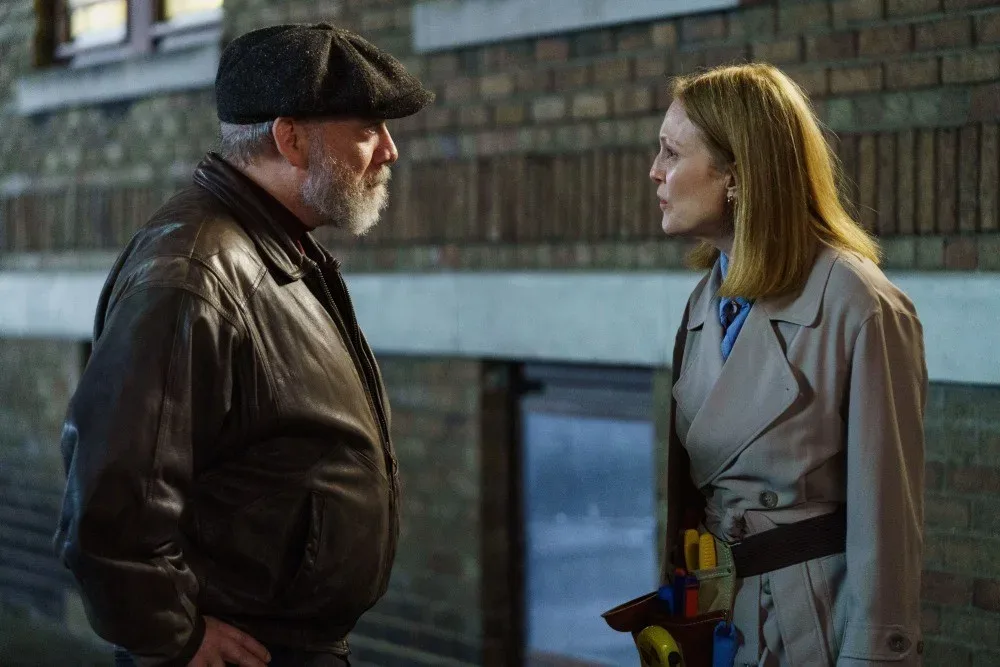

How to Rob a Bank has a premise built to collide with the modern internet: a crew of wolf-masked robbers does not merely commit headline-grabbing crimes, but records, packages and distributes them to an enormous online audience. The gang sells itself as a populist corrective to a system tilted toward the wealthy and powerful. Its leader reads Marx. Its videos speak directly to viewers. And its crimes arrive with the aggressively designed, tutorial-like visual language of online content.
That is a potent setup for a heist movie with something to say about performance, attention and the strange way political anger can be converted into content. Yet David Leitch’s 122-minute, R-rated action film is burdened by the very aesthetic it wants to interrogate. The film’s visual noise, pointed messaging and emotional material are said to compete rather than combine, leaving a story that reaches insistently for cultural relevance without establishing a persuasive emotional center.
A heist movie where the audience is part of the crime
Nicholas Hoult plays Ryan, the intellectual voice of the crew, which also includes Anna Sawai’s Emi, Pete Davidson’s Vince and Rhenzy Feliz’s Hugo. Their disguises and online persona let them function as a kind of anonymous brand. The robberies are not framed as private jobs designed to leave no trace. They are media events. Videos of their exploits use action-camera imagery, overlays and explanatory graphics, while the masked gang addresses followers with an anti-establishment pitch.
The distinction matters. Traditional heist stories often make viewers complicit through admiration for meticulous planning, nerve and execution. Here, the criminals seek a second layer of complicity: they want viewers inside the movie to see them as educators and symbols. Their channel encourages a huge audience to embrace the gang’s argument that institutions are broken and that the people at the top have long taken more than their share.
That basic idea has a clear cultural target. An explainer-video format is normally intended to simplify a topic through direct address, visual labels and brisk editing. Applied to outlaw mythology, it turns criminal image-making into a form of influencer production. The gang are not simply escaping the authorities; they are managing a public-facing narrative about themselves. Their masks serve as both concealment and branding.
But this approach also appears to create the film’s central tonal problem. The robberies repeatedly arrive in a hyperactive meta style, with the fictional videos embedded in the larger movie. What could have been a sharp formal contrast between performed online rebellion and the reality beneath it reportedly becomes visually overcrowded. Rather than clarifying the group’s strategy or raising tension, the frantic presentation makes the action harder to settle into.
The message is direct; the drama is less assured
How to Rob a Bank builds its moral argument around recognizably painful social pressures. Vince is a military veteran raising a young daughter. Hugo is the son of undocumented immigrants. Ryan and Emi are former college sweethearts whose son died after a white-collar insurance scam left them unable to afford his treatment. These elements are designed to explain why the group’s rhetoric finds an audience and why its members regard their campaign as justice rather than simple greed.
There is nothing inherently out of place about a heist story asking audiences to sympathize with lawbreakers confronting an unequal system. The genre has long depended on that tension. The fascination comes from watching characters who break rules while exposing the hypocrisy, incompetence or cruelty of institutions that claim the moral high ground. The film even nods to Point Break, another crime story that turns masks, spectacle and anti-establishment identity into inseparable ideas.
The reported issue is that the film treats its characters more as containers for social grievances than as people whose relationships, decisions and contradictions develop organically. Their histories are extremely consequential, yet the emotional material is described as economical to the point of feeling perfunctory. Later revelations reportedly land with the broad force of soap-opera twists, while the extended emotional reckoning struggles to earn the weight it seeks.
This is a difficult balance for any popular entertainment. A character can embody a social problem without becoming a slogan, but the screenplay has to give that character specific behavior, durable relationships and choices that feel like more than plot delivery. When a movie pauses to state its politics in emphatic language, it needs the surrounding drama to add complexity—not simply reiterate the point in bigger type.
In this case, the crew’s anti-capitalist language is presented in particularly conspicuous graphics and direct-to-camera messaging. The result sounds less like a movie inviting an audience to wrestle with an idea and more like one delivering a branded campaign. A critique of algorithmic outrage is strongest when it can demonstrate how the algorithm changes people; it becomes weaker when the film itself adopts the same exhausting need to announce every feeling and theme.
The pursuit side: surveillance and an uneasy buddy pairing
The other half of the movie follows FBI agent John West, played by John C. Reilly, and Raegan, a skilled programmer played by Zoë Kravitz. Raegan is under house arrest after creating illegal software capable of locating people through online imagery. John recruits her to use that tool against the wolf-masked robbers, offering the possibility of clearing her charges.
Her technology introduces a useful counterpoint to the robbers’ self-made digital mythology. The gang weaponizes online visibility to build support; investigators use the same broad ecosystem of images to identify and locate people. In plain terms, the film’s triangulation concept refers to narrowing down a person’s location by combining available clues. Here, the clues are drawn from images online, making the central chase a battle between public exposure and attempted anonymity.
That should put the movie in an interesting position. A story skeptical of powerful systems can still acknowledge that unregulated technology, private data and online notoriety create risks for everyone—not just the targets of law enforcement. Raegan’s own legal jeopardy could further complicate the difference between official justice and technologically enabled control.
Instead, the John-and-Raegan pairing is described as a conventional buddy-cop setup: a practical agent alongside an eccentric, deadpan technical specialist. Reilly plays John with unusual seriousness, while the script gives Raegan broad quirks and a stoner-coded comic presentation. Their exchanges are meant to introduce humor and open debates about policing, peacekeeping and justice in a corrupt society. But clunky wisecracks and strained eccentricity reportedly suppress much of the chemistry the performers might otherwise find.
It is a missed opportunity because their conflict could be the film’s most productive source of friction. The robbers argue that the system cannot be trusted. John represents that system, while Raegan has already crossed its legal boundaries through her software. A sharper version of the movie might have allowed those three perspectives to clash: the idealist who turns radical anger into spectacle, the agent who believes in procedure despite its failures, and the hacker who knows how easily information can become power.
Style without enough control
Leitch is associated with kinetic studio action, having directed Bullet Train and The Fall Guy, as well as one of the Deadpool films. How to Rob a Bank clearly aims for a similarly self-aware, heightened mode. Jonathan Sela serves as cinematographer, Elisabet Ronaldsdottir edited the film, and Dominic Lewis composed the music. The production’s deliberate aesthetic—speedy cuts, on-screen graphics, character bits and direct digital-age satire—is not accidental.
The problem is not that the film is stylish, or even that it is loud. Heist fiction can thrive on flamboyance. The genre often relies on a clean rhythm: establish the plan, complicate the plan, reveal what was concealed, then make the characters pay for their choices. A movie can fracture that rhythm, of course, but it needs a substitute structure strong enough to maintain orientation and tension.
Here, the film’s busy framing device reportedly makes the thrills feel overloaded rather than exhilarating. The same goes for the comedy and sentiment. The script’s quips do not sufficiently support the investigation, and the dramatic turns do not convincingly support the music cues and emotional emphasis surrounding them. At more than two hours, the cumulative effect is one of drag rather than escalation.
That length is especially punishing for a story about online velocity. A film built around clips, viral messaging and a collective with a rapidly growing audience needs to know when to slow down and when to move. Slowing down is not the issue; unearned pauses are. Emotional scenes must give audiences new understanding of a character or force an irreversible choice. Otherwise, they interrupt rather than deepen the momentum.
What remains compelling about the premise
Even with its reported shortcomings, How to Rob a Bank has a timely thematic frame. It sees rebellion as something that can be filmed, uploaded, shared, monetized and simplified into a social-media identity. It recognizes that an audience may be drawn to political rhetoric not only because it is persuasive, but because it is entertaining, anonymous and packaged with visual confidence. The wolf masks are a particularly clear image: a collective identity designed to conceal individuals while making the brand impossible to miss.
The film also locates the danger of that performance on both sides of the law. The gang’s public following turns crimes into participatory entertainment, while Raegan’s image-based tracking software makes online life a possible investigative map. Both ideas concern the same broader problem: when people leave vast trails of images and information, visibility can become leverage.
But the film seems to confuse having those ideas with fully developing them. Social commentary does not automatically create emotional stakes, and visual maximalism does not automatically create momentum. The material needed a more disciplined connection between its satire, its crime mechanics and the personal losses driving its central characters.
How to Rob a Bank is produced by Brian Grazer, Jeb Brody, Allan Mandelbaum, Leitch and Kelly McCormick, with Mark Bianculli credited as screenwriter. Its cast gives the story a potentially engaging mix of performers, and its central concept has enough bite to support a sharper genre film. As presented, though, the movie’s urge to be a viral-age statement appears to overwhelm the more fundamental demands of a satisfying heist: clear stakes, characters worth following and a plan whose complications reveal something real.
For another look at the wider screen-culture calendar, see the Sun Valley Film Festival program featuring Jessica Lange, Bill Pullman and Seth Rogen honors.