Gerry Griffith, the music executive whose early belief in Whitney Houston helped set one of pop music’s defining careers in motion, has died at 87. He died November 5 in Brooklyn after living with dementia for five years. A memorial service is planned for a later date.
Griffith’s name may not be as instantly familiar as the stars whose careers intersected with his, but his place in Houston’s story is unusually clear. He heard her perform while she was still a teenager, returned years later to hear her again, and helped bring Clive Davis to a showcase before Arista signed her. That chain of events preceded Houston’s 1985 debut and a run of major hits that made her one of the era’s central recording artists.
His career extended well beyond that pivotal connection. Griffith worked with Aretha Franklin, Dionne Warwick and Carlos Santana, had a role connected to The Bodyguard soundtrack, worked with Richard Marx during his time at EMI’s Manhattan Records, and counted Santana’s Supernatural era and the Pretty Woman soundtrack among his broader credits.
More than a lucky break
Houston’s signing is sometimes condensed into a neat industry anecdote: a spectacular unknown singer is discovered, an influential executive sees the potential, and a superstar is born. The details of Griffith’s involvement show why that version is too simple.
He first heard Houston in 1979, when she was 16 and singing alongside her mother, Cissy Houston. He then saw her again in 1983. By that point, another label was reportedly interested, raising the stakes around a performer whose voice and stage command had evidently remained with him over several years. Griffith persuaded Davis to attend a showcase, and Arista ultimately signed Houston.
That sequence matters because it describes artist development, a term for the sustained work of recognizing potential and helping establish the conditions for a career to grow. It is not merely the act of noticing a gifted singer. In this case, Griffith heard Houston, revisited that initial impression, then connected the artist to a decision-maker positioned to act on it. The process involved judgment, persistence and timing.
In a 2012 reflection on Houston, Griffith identified qualities that reached beyond vocal ability: her range, tone, emotion, confidence and presence onstage. His assessment gets at an important distinction in talent scouting. A powerful voice can attract attention, but an enduring recording career also depends on how a performer communicates songs, commands a room and projects an identity audiences can recognize immediately.
Griffith said Houston had more than talent at a young age, pointing to the combination of her voice, emotional delivery, confidence and stage presence.
Related coverage includes Gerry Griffith, Key Early Champion of Whitney Houston, Dies at 87.
That does not diminish Houston’s own artistry, or the extensive work behind her success. It instead clarifies Griffith’s contribution: he was an early advocate who saw a rare total package before the public had the chance to judge it on a world scale.
The long runway before a huge debut
Houston signed with Arista before her self-titled debut arrived in 1985, a two-year gap that underlines another useful point about major launches. A record deal and a finished debut are not necessarily the same moment. The time between them can encompass recording, material selection, strategic planning and the construction of a public introduction. The supplied record does not detail how every part of that period unfolded, but the two-year runway itself shows that Houston’s arrival was not treated as a rushed afterthought.
When the debut did arrive, its commercial impact justified the patience. “Saving All My Love for You,” “How Will I Know” and “Greatest Love of All” became consecutive No. 1 singles. Those songs also demonstrate the range of a breakout campaign: romantic balladry, bright pop momentum and an inspirational centerpiece all found an audience under the same artist’s name.
The result was not simply a first successful single followed by a scramble to repeat it. Consecutive chart leaders indicate sustained momentum, with Houston’s early catalog continuing to connect after the initial breakthrough. For listeners, that sequence made a new star feel unavoidable. For the people who had advocated for her earlier, it confirmed that the confidence placed in her had been grounded in something much larger than a one-song opportunity.
Her follow-up, Whitney, entered the album chart at No. 1 in 1987, becoming the first album by a woman to debut at the summit. It also continued Houston’s streak of chart-topping singles. The distinction is notable because a debut establishes possibility, while a second album tests whether an artist can turn recognition into permanence. Houston’s second release answered that question emphatically.
A chain of introductions—and a shared history
Deirdre O’Hara, a manager and publisher, remembered that she had encouraged Griffith to see Houston. Her recollection adds a further link to the story: one person urged Griffith to attend, Griffith then brought Davis to see Houston, and the industry process moved from there.
That is a reminder that music careers often emerge through networks of informed advocacy rather than a single lone genius making a discovery in isolation. Each person in such a chain may play a different role. A publisher or manager can recognize an artist worth championing. An executive can validate that judgment and create an introduction. A label leader can make the commitment to sign and develop the performer. The artist, of course, must then deliver work that proves the faith was warranted.
Houston’s story contains all of those elements, but Griffith occupies a particularly meaningful position within it. He did not simply hear a singer once and tell someone else. He had first encountered her in 1979, returned in 1983, and acted when the possibility of competing label interest made the moment more urgent.
For an artist, early advocates can be essential because they translate exceptional ability into access. That access is not a replacement for talent; it is the bridge that lets talent reach the people who can help bring recordings, promotion and distribution together. Griffith’s legacy includes being one of those bridge-builders for Houston.
A career that reached across major catalogues
Griffith’s work is also part of the wider story of how music executives can move among distinct artists, labels and projects. His credits included work with Franklin and Warwick, two singers with landmark careers, as well as Santana. At EMI’s Manhattan Records, he worked with Richard Marx. His broader résumé also reached the Pretty Woman soundtrack and Santana’s Supernatural era.
The range of those credits should not be flattened into a claim that every project involved the same kind of responsibility; the available information does not specify the nature of each role. What it does establish is a career with connections across major vocal performers, a rock band’s later era, a pop artist at Manhattan Records and high-profile soundtrack work.
His Houston connection continued into her film career through work related to The Bodyguard soundtrack. The album won the Grammy Award for Album of the Year, and it later returned to the Top 10 after Houston’s death, alongside her debut album. That return speaks to the continued cultural weight of Houston’s recordings and to the way her work has remained present for listeners across different moments in time.
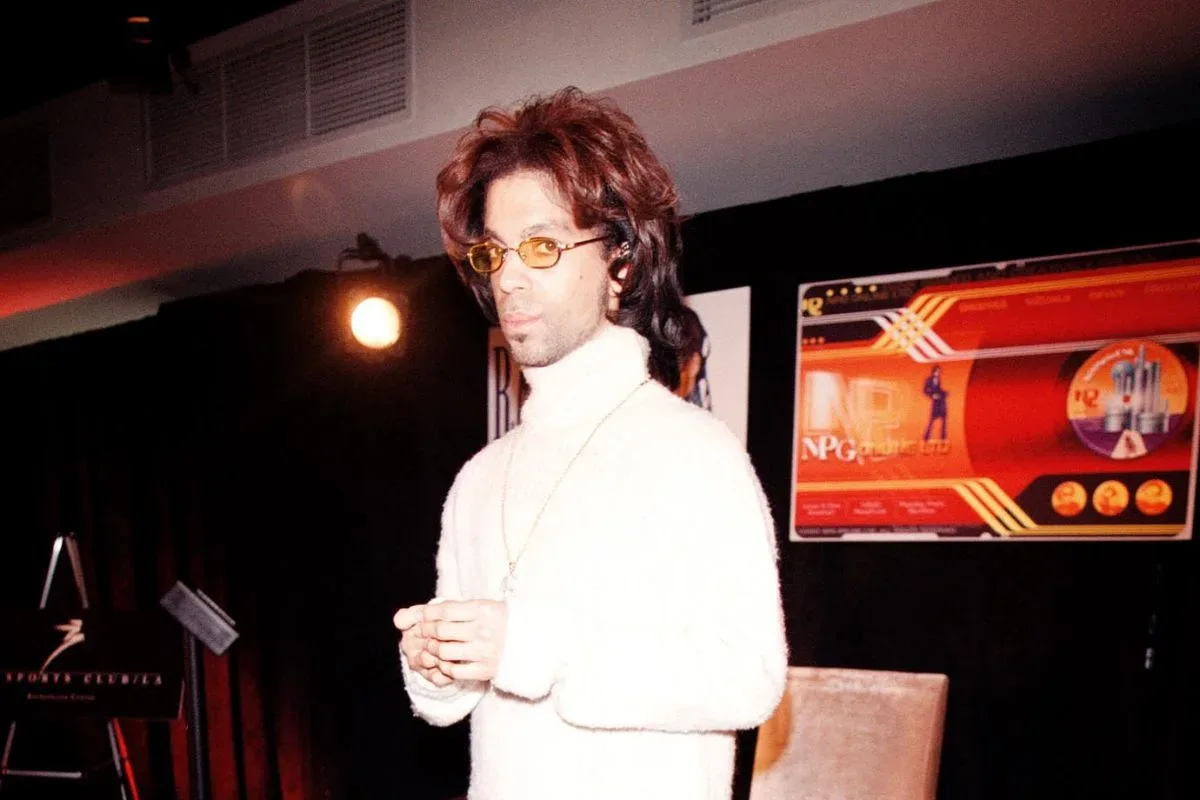
For more on another artist’s creative independence and legacy, see Paisley Park’s upcoming examination of Prince’s fight for creative control.
Why Griffith’s role endures
There is a temptation to look at a historic career only from the point at which the public can see it clearly: the debut album, the No. 1 singles, the awards or the celebrated performances. Griffith’s story directs attention to the earlier, less visible stage. Before the records, there was a teenager performing with her mother. Before the career-changing deal, there was an executive who listened more than once and believed the performer merited the attention of the label’s leadership.
That is the enduring significance of Gerry Griffith’s place in Houston’s history. He helped identify not only the force of her voice, but the broader performer she already was: a singer with range and feeling, plus the composure and presence to make an audience pay attention. The historic success that followed belongs to Houston’s work and artistry, while Griffith remains an important figure among the people who recognized the scale of that artistry early enough to help open the door.
Griffith was a Chicago native and Army veteran before entering the music business. He is survived by two daughters and two sons.