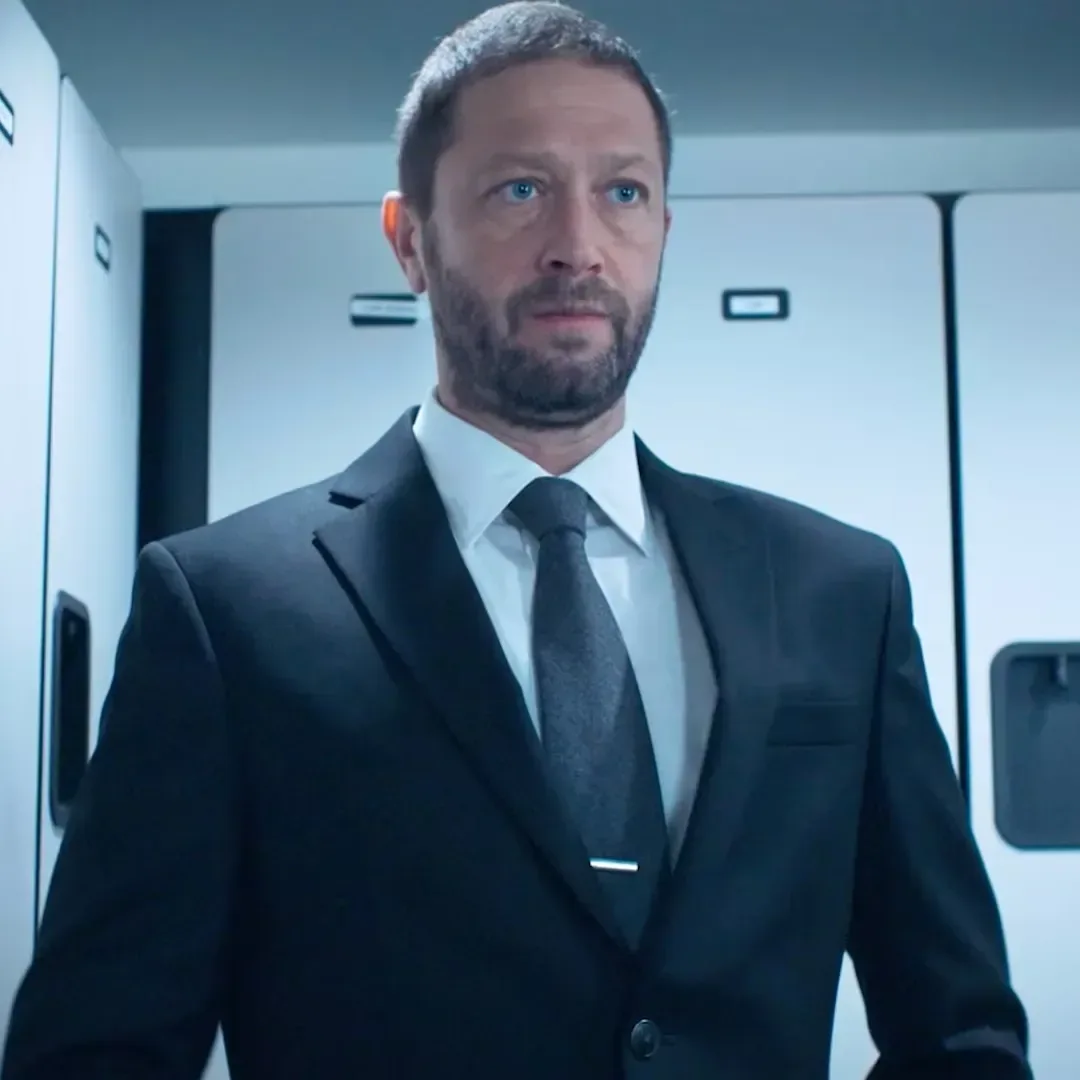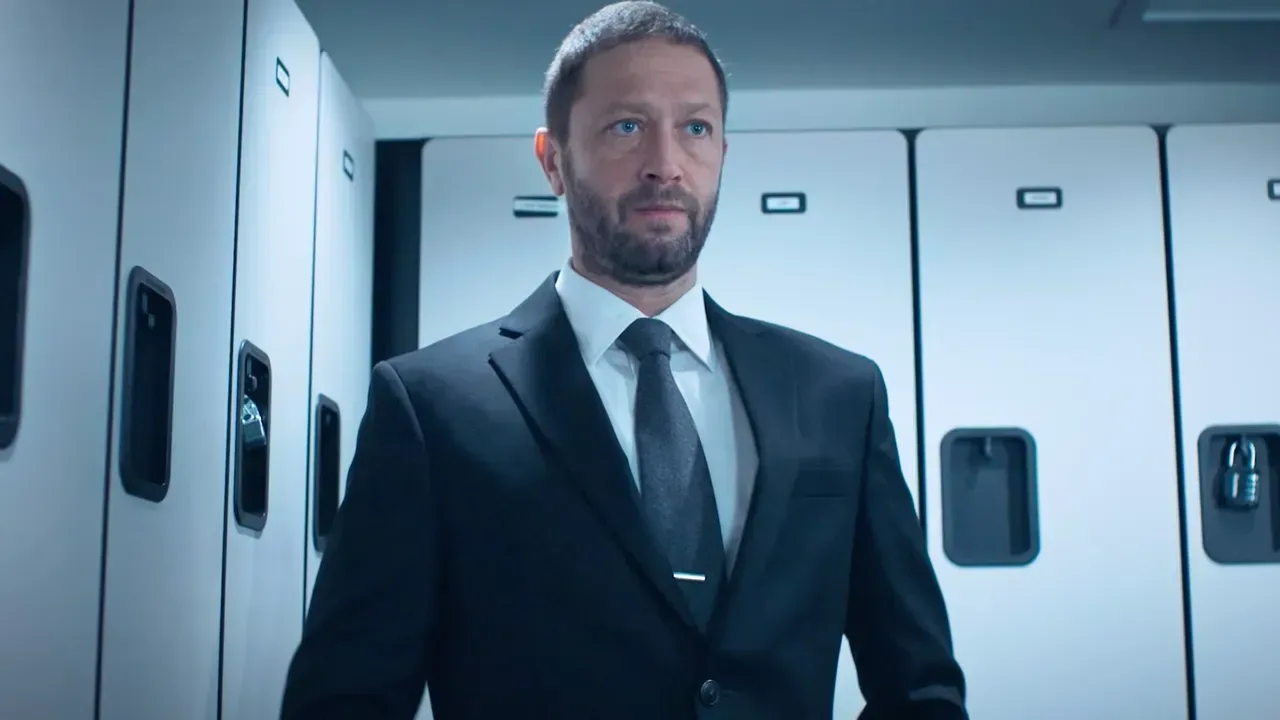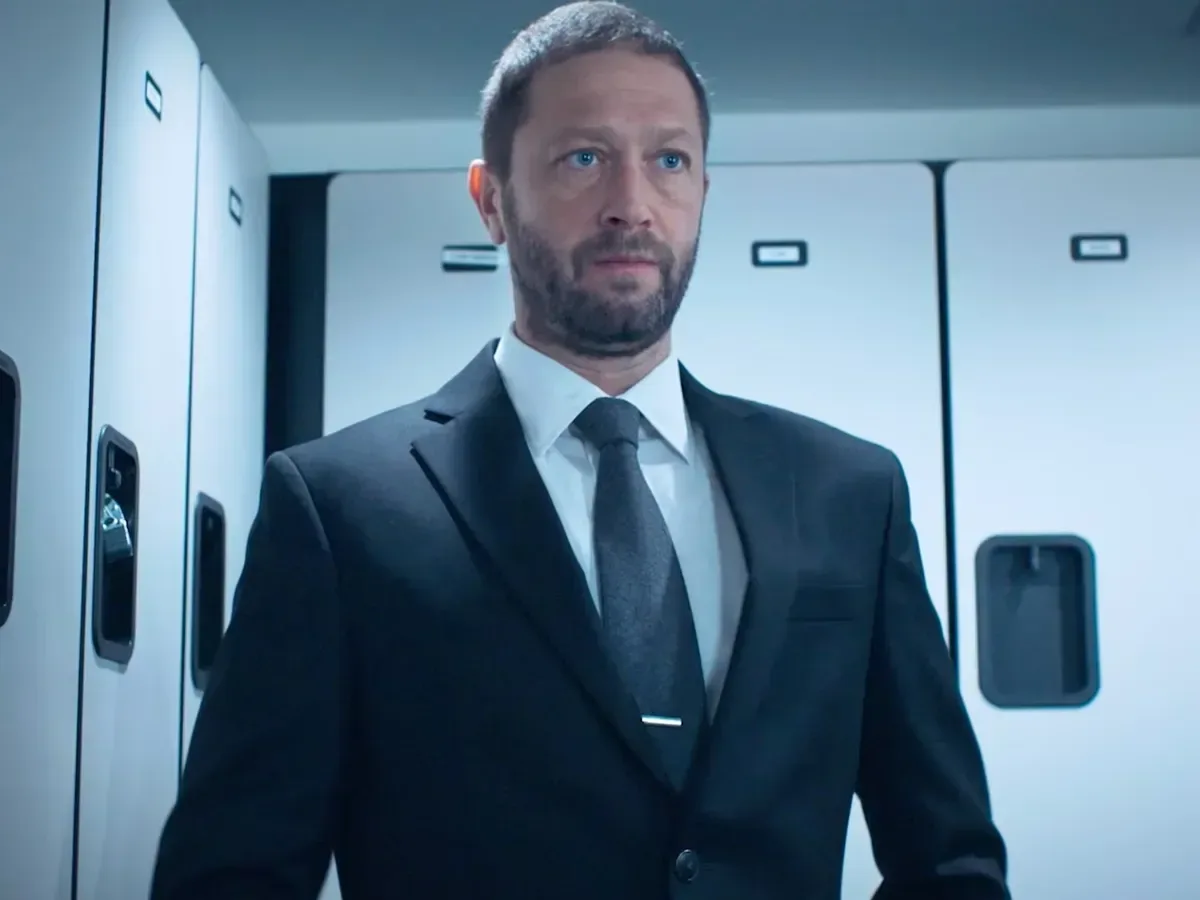
Ebon Moss-Bachrach is reportedly in final talks to join Michael Mann’s Heat 2, taking on the role of Kelso: the enigmatic former DARPA researcher and hacker who provides Neil McCauley with vital intelligence for his criminal operations.
The prospective casting is notable because Kelso is a small but memorable part of the original Heat. In Michael Mann’s 1995 crime epic, Tom Noonan played the character as a guarded, highly capable contact whose technical knowledge and information network supported McCauley’s crew. Noonan died in February.
Moss-Bachrach’s deal has not been presented as complete, so this remains a reported development rather than a formal confirmation. Still, final talks generally indicate that a production and performer are working toward an agreement, with the usual remaining steps potentially involving scheduling, contract terms, and other logistical details.
A new Kelso for a story spanning both sides of Heat
Heat 2 began as a 2022 novel by Mann and thriller writer Meg Gardiner. Its central structural wrinkle is that it is both a prequel and sequel to Heat: it looks back at events before the 1995 film while also continuing beyond them.
That format gives the screen adaptation a different task from a conventional follow-up. A straightforward sequel can concentrate on what happened after a prior story ended. A prequel can focus entirely on earlier versions of familiar people. Heat 2 is intended to do both, meaning its casting must bridge established characters, earlier timelines, and new material without simply trying to recreate every performance from the original.
Kelso is especially suited to that approach because his function is grounded in intelligence rather than a single, closed incident. In the original film, he is connected to the information that enables McCauley’s scores. That makes him a useful supporting presence in a larger crime narrative: he can illuminate the preparation behind a job, the risks behind an operation, and the distance between a crew’s confidence and the information on which that confidence rests.
The reference to DARPA, the U.S. Defense Advanced Research Projects Agency, also helps define the character’s unusual profile. Kelso is not merely described as a hacker; he is a former researcher with specialized technical expertise. In a crime story built around surveillance, planning, and professional discipline, that background positions him as an intelligence asset rather than another gunman on the crew.
What Moss-Bachrach would bring to the part
Moss-Bachrach is a two-time Emmy winner and is widely known for The Bear. If his casting is finalized, he would inherit a role previously played by Noonan rather than a blank-slate character. That distinction matters.
Legacy-role casting is often discussed as though the only choice is imitation or total reinvention. A project such as Heat 2 presents a more specific challenge: preserving the character’s narrative purpose while allowing a new actor to establish a performance appropriate to the new film’s setting and story. Kelso’s technical ability, secrecy, and connection to McCauley are the known anchors. How prominently the film uses him, and whether it places him in its earlier or later timeline—or both—has not been detailed.
For audiences, the practical takeaway is simple: Moss-Bachrach’s reported role is meaningful even if Kelso is not one of the franchise’s headline names. The character represents part of the operational infrastructure around McCauley. A heist film can make the robbery look like the main event, but its tension often comes from everything required before the robbery begins: intelligence, timing, access, surveillance, contingency plans, and the possibility that one bad piece of information can destabilize the entire plan.
The reported ensemble is taking shape
Moss-Bachrach would join a cast that reportedly includes Leonardo DiCaprio as Chris Shiherlis, Christian Bale as Detective Vincent Hanna, and Stephen Graham as Neil McCauley.
Those roles carry substantial history. Val Kilmer originated Chris Shiherlis, Al Pacino played Vincent Hanna, and Robert De Niro played Neil McCauley in the 1995 film. The new film’s premise makes recasting less about replacing a single performance than portraying characters at different points in a larger chronology.
Chris is tied to McCauley’s crew, while Hanna is the detective whose pursuit gives the first film its opposing professional force. McCauley, meanwhile, sits at the center of the criminal side of the story. With DiCaprio, Bale, and Graham reportedly attached to those parts, Moss-Bachrach’s Kelso would fit into an ensemble organized around both the people executing crimes and the people trying to stop them.
There is a useful distinction between “stacked cast” shorthand and what that means for the film itself. Big names alone do not reveal how characters will be balanced, which period of the story will receive the most attention, or how much time each role gets. But the roles reported so far do indicate that the adaptation is building around core figures from the original rather than treating the novel as unrelated franchise material.
Why the novel’s structure raises the stakes
The original Heat is widely regarded as a landmark heist film, a reputation that makes any continuation unusually scrutinized. The film’s standing is not just a marketing advantage for a successor; it creates expectations around character detail, procedural credibility, and the relationship between criminals and law enforcement.
A prequel-and-sequel design can be creatively expansive, but it also asks viewers to engage with multiple versions of familiar characters. The benefit is context. Earlier chapters can show how relationships and professional habits formed, while later chapters can explore consequence. The risk is that the film must make both directions feel essential instead of treating one as a detour from the other.
Kelso could be one of the connective figures who makes that breadth feel coherent. A character who operates through data, research, and criminal logistics can naturally appear at stages where the visible action is still being prepared. That is analysis based on the role’s established description, not a claim about any unrevealed scenes or plot points.
Similarly, the name “hacker” can imply a simplistic movie shorthand, but the supplied description gives Kelso a more specific niche: a former DARPA researcher who furnishes McCauley with intelligence. Intelligence in this context means actionable information that can shape a score—knowledge that allows a crew to assess a target, identify risks, and plan an operation. It is a role about preparation and leverage, not necessarily spectacle.
Production remains on a reported timetable
Shooting is reportedly scheduled to begin in November. No release date, plot breakdown, or further production details are established here, and readers should be cautious about treating a planned start as proof that every casting detail is finalized. Film schedules can change, and a reported negotiation can still shift before contracts are completed.
What is clear is that Mann has pursued a film version of Heat 2 for some time. In 2023, he identified the project as his planned next feature. The project is now at Amazon MGM Studios, whereas the 1995 Heat was made with Warner Bros.
That studio change is business context, not an indication of a creative change on its own. The meaningful public details remain the novel’s unusual before-and-after structure, Mann’s continuing involvement, the reported casting of major original-film roles, and the possibility that Moss-Bachrach will bring Kelso back into the fold.
For more recent film casting and production coverage, see our look at the Day Drinker trailer and its cast-led comeback narrative.
Until a deal is formally announced, Moss-Bachrach’s participation should be read as promising but unconfirmed. If it closes, the casting would add a strong character performer to a project already assembling new versions of some of crime cinema’s most recognizable roles.