For weeks, the name Fear of Missing Out gave Drake fans a familiar kind of rollout puzzle. Was it an album? A video? The name of a tour? A new merch-minded acronym waiting to acquire its own typeface and a suspiciously expensive jacket? A teaser released Saturday supplies the central answer: Fear of Missing Out, also abbreviated as FOMO, is a film project scheduled for Sept. 15.
Drake posted the preview to Instagram and described it as a “not so short film.” He also credited “the family” with directing and scoring the project. That wording establishes the broad format while leaving the finer details unresolved. No runtime, cast list, platform, plot synopsis, or additional release information was provided in the teaser material described so far.
It is a deliberately narrow reveal, but it substantially changes the conversation around FOMO. The title had been unveiled on Sept. 3 alongside its Sept. 15 date, and speculation had moved among several possible Drake-scale options: a record, a music video, or a worldwide live run. The new footage does not promise any of those things. It presents a cinematic work instead, with a mood closer to an introspective visual prologue than a conventional album announcement.
A neon-green boat and a choice between two lives
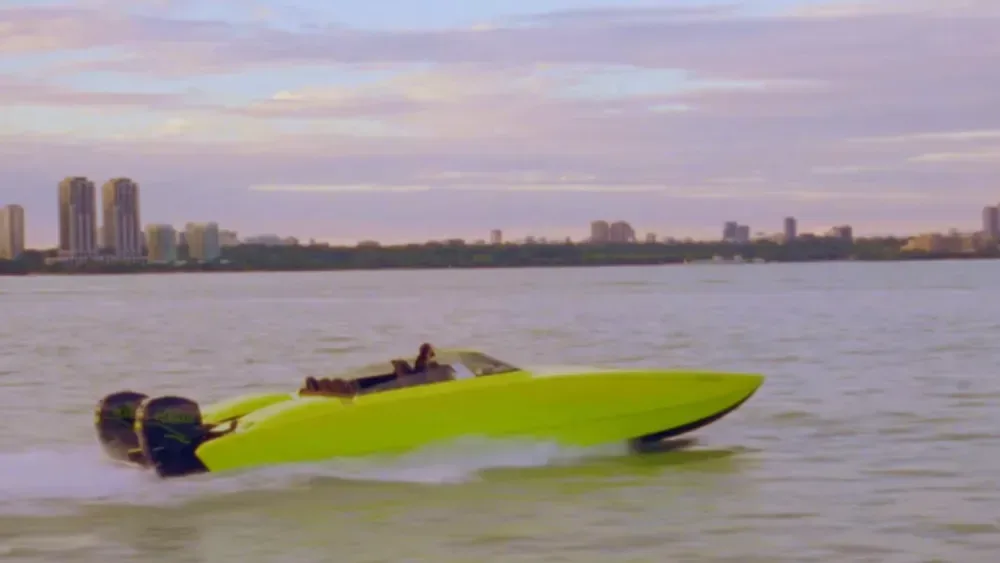
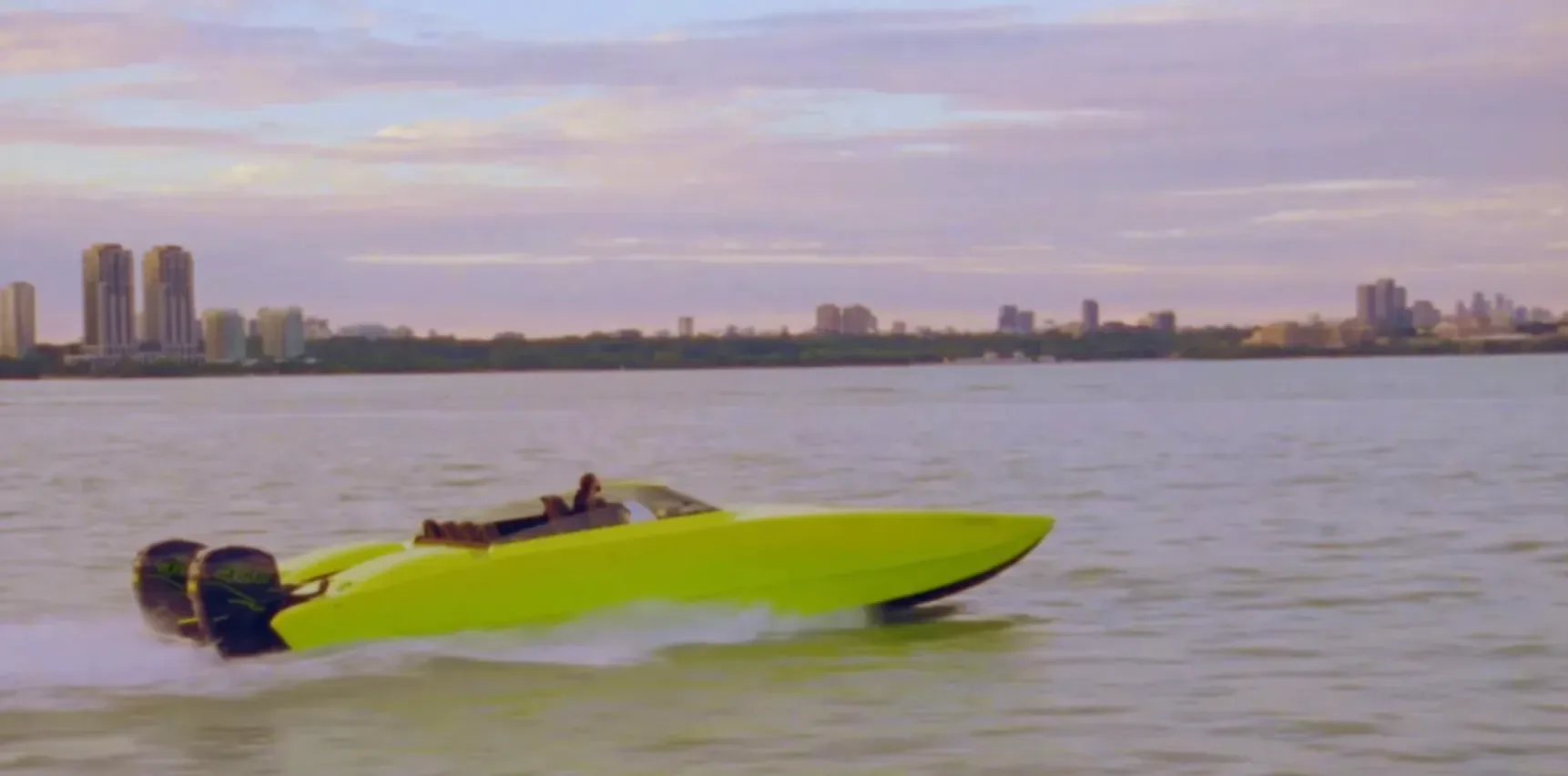
The teaser’s imagery is simple and highly composed. A man presumed to be Drake races across a calm stretch of ocean in a neon-green speedboat. Over the sequence, a woman’s voice discusses the possibility that every person might have two versions of their life: one shaped by avoiding risks and holding back love, the other by finding what has been missing.
That narration gives the title more emotional direction than its casual internet shorthand might suggest. “Fear of missing out” is often used to describe the anxiety of being absent from an event, trend, party, or opportunity. In the teaser’s framing, the concern is more internal. Missing out is not just about being somewhere else when something happens; it is about becoming detached from a fuller version of yourself through caution, emotional reserve, or indecision.
The preview ends by presenting the Fear of Missing Out title card. It is a concise piece of footage, yet its imagery and voiceover do more than simply stamp a date onto a screen. The water is smooth, the boat is conspicuously bright, and the voiceover frames the project around risk and connection. Those elements may indicate a film concerned with alternate paths, desire, distance, and the consequences of choosing safety. They are not, however, enough to establish whether FOMO will be narrative fiction, a performance-led film, a documentary-style piece, or something built around music.
That uncertainty is important. Drake has identified the project as a film, but the teaser does not spell out the exact kind of film it is. Fans looking for an album tracklist, a tour itinerary, or a traditional music-video rollout will have to wait for more information rather than treat the short preview as confirmation of any of those possibilities.
The next chapter after a crowded musical run
FOMO arrives after a particularly substantial stretch of releases from Drake. His last major release cycle included the long-rumored Iceman album and two surprise records, Habibti and Maid of Honour. Together, the three projects contained 43 songs.
Related coverage includes Drake Sets ‘Fear of Missing Out’ Film for Sept. 15.
The releases also assembled a broad group of collaborators: Future, 21 Savage, Sexyy Red, Qendresa, Molly Santana, Central Cee, Popcaan, PartyNextDoor, Loe Shimmy, Iconic Savvy, and Stunna Sandy. With that much music arriving across three records, a film project can be read as a change of format rather than another immediate addition to the pile of songs. But the teaser itself does not say whether FOMO connects to any particular release, whether it will feature new music, or whether any of those collaborators are involved.
That separation between confirmed information and reasonable curiosity is basically the entire engine of a Drake rollout. The artist’s campaigns have often used spectacle, fragments, and an incomplete map. During the push for Iceman, he installed a 25-foot-tall ice sculpture in a Toronto parking lot. A giant block of ice is not a press release, but it is hard to ignore, which is rather the point. The speedboat teaser works by a different visual language, but it similarly offers an image that is easy to circulate while withholding the practical details people instinctively want.
There is a wider pop-culture precedent for music-adjacent releases asking audiences to interpret an image before they can interpret the product. A title, an emblem, a cryptic clip, and a release date can become a public invitation to theorize. Drake’s FOMO tease now has one significant advantage over pure speculation: it has named the medium. The next task is determining what “not so short film” means in practice.
Why the “not so short” description matters
Drake’s phrase is playful, but it also sounds intentionally noncommittal. A “not so short film” could mean a work longer than the average promotional visual without necessarily approaching feature-film length. It could suggest a film with a more substantial narrative or a collection of connected sequences. Or it could simply be an intentionally loose label designed to make a brief description feel less ordinary. Until the Sept. 15 release, none of those readings can be treated as settled.
The same applies to “directed and scored by the family.” The credit signals a collective framing around the project, yet it does not identify individual directors, composers, musicians, or production personnel. There is no need to fill those blanks with guesses. For now, it is most accurate to view the wording as Drake’s stated credit language and not a complete production breakdown.
What is clear is that the teaser is not built around a single, obvious commercial instruction. It does not appear to include a preorder prompt, a song title, a venue list, or a release platform. Instead, it prioritizes atmosphere: open water, forward motion, a glowing boat, and narration about the costs of emotional self-protection. That makes Sept. 15 the crucial date, because the teaser is functioning as a question generator as much as an answer.
A rollout designed for discussion, not certainty
There is a useful distinction between a campaign that hides information and one that gives audiences something specific to discuss. FOMO does the latter. The project has a name, a date, a declared form, and a recognizable visual setup. At the same time, its creative intent remains open enough for viewers to debate what they are seeing.
The voiceover’s focus on withheld love and avoided risk may be the best available clue to the film’s thematic direction. It positions the story, whatever shape it takes, around a fork in the road: one life constrained by fear and another reached through engagement. The title then becomes less about a social-media-era panic and more about absence from one’s own potential. That is a notable shift in tone from the acronym’s usual quick-use meaning.
Drake’s audience is accustomed to reading rollout gestures as part of the work, and the FOMO teaser leaves ample room for that instinct without confirming the usual fan predictions. The film could still contain music; it could still be related to a broader campaign; it could still lead into another public-facing development. But those remain possibilities, not revealed facts. The only confirmed destination is a film arriving Sept. 15.
For readers keeping an eye on how artists use narrative, teaser culture, and public attention outside a standard music release, recent music teasers and their wider storylines offer another example of the format’s pull. In Drake’s case, the tactic is especially direct: show a boat, offer a philosophical choice, name the project, and let the unanswered questions travel faster than the vessel.
On Sept. 15, viewers should finally learn whether Fear of Missing Out is a compact visual statement, a more expansive narrative experiment, or something that bends the expectations attached to both film and music promotion. Until then, the teaser has done exactly what a teaser is meant to do: it has turned a cryptic title into a defined project while preserving the mystery around nearly everything else.