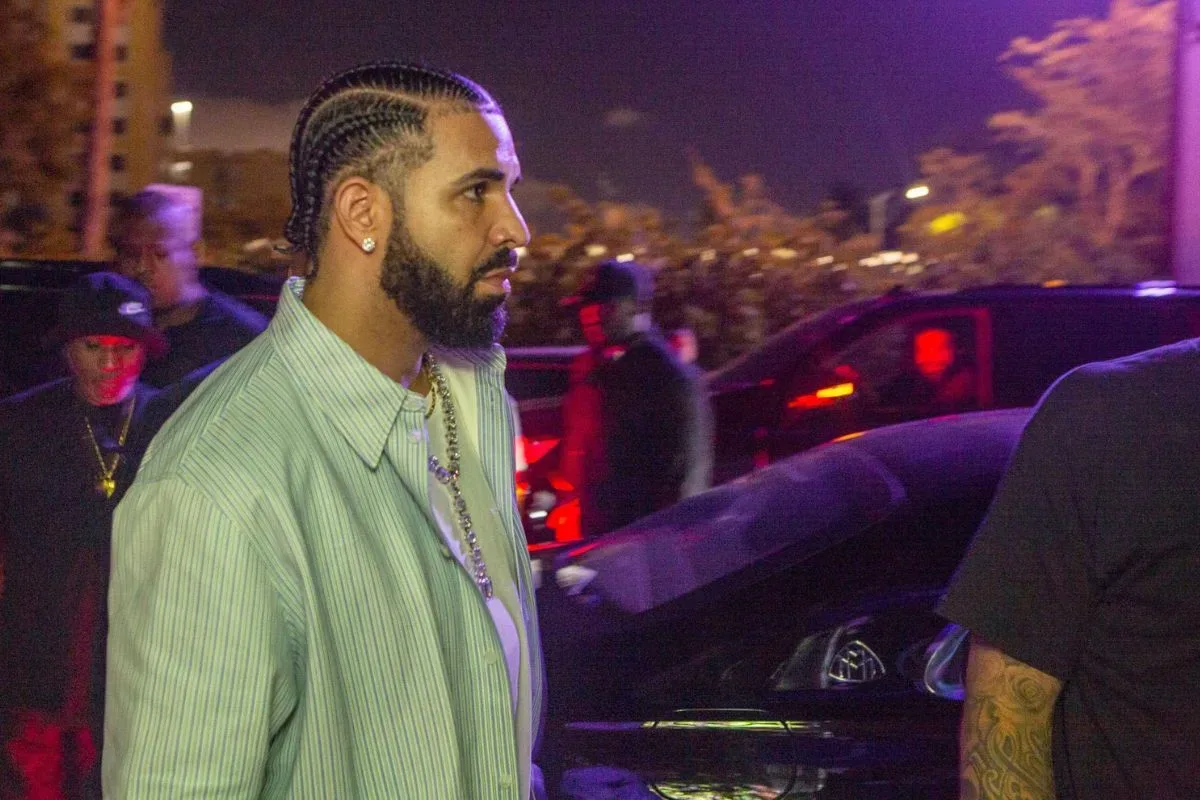

Drake’s complicated relationship with the Grammys has produced an unusual new chapter: he has received a nomination despite choosing not to submit his own music for consideration.
The nomination comes through Karol G’s “Ahí,” on which Drake appears as a featured artist. The track is nominated for Best Latin Song, a category making its debut this year. That makes the recognition significant beyond the usual awards-season tally: “Ahí” is among the first songs ever nominated in the category, and its credited performers are attached to that inaugural class.
It is also a distinction that sits apart from Drake’s own 2026 output. He released ICEMAN, HABIBTI, and MAID OF HONOR during the year, but opted not to enter those releases into the Grammy process. “Ahí,” however, has put his name on the nominee list anyway through a collaboration that became an international success earlier this year.
For a closer itemization of the featured-artist nomination, the nomination is tied specifically to Drake’s credit on Karol G’s “Ahí”.
For more context, explore GTA VI Unlock Times: What the PS5 Store Listings Suggest for November 19.
A nomination outside Drake’s own campaign
The key detail is the difference between a performer’s personal awards campaign and a song on which that performer is credited. Drake’s decision to forgo submissions for his own material did not prevent “Ahí” from reaching the Grammy ballot as a Karol G song featuring him.
That distinction matters because it keeps two separate stories from being flattened into one. Drake did not reverse course and submit ICEMAN, HABIBTI, or MAID OF HONOR. Nor does the nomination erase his long-running skepticism toward the institution. Instead, it reflects that a collaboration can carry multiple credited artists into the awards conversation.
Featured artist is the music-credit term for a performer who appears on another artist’s release. In this case, Karol G is the central artist attached to “Ahí,” while Drake’s credited role gives the nomination an extra layer of attention. The song’s placement in Best Latin Song places both artists at the center of the category’s opening year.
That is a markedly different position from a headline nomination built around an artist’s own album rollout. Drake’s presence is still meaningful—his name is on a Grammy-nominated song—but the achievement is shared with Karol G and rooted in a release that moved across an international audience.
Why the new category gives “Ahí” added weight
Best Latin Song is not simply another familiar slot on an established awards slate. It is an inaugural category, meaning this year’s nominees establish its first competitive field. Whatever happens when the winner is announced, “Ahí” and its credited artists will remain part of the category’s first nomination class.
That context helps explain why this particular nod carries more resonance than a routine appearance on a long-running ballot. A first-year category creates a new formal lane for recognition, and the nominees become the earliest reference point for how that lane begins. For Karol G, the nomination recognizes a song described as an immediate international success. For Drake, it creates an awards-season result that arrived without an apparent attempt to place his own releases before voters.
There is a tendency to read every Grammy nomination as either total endorsement or total contradiction, especially when an artist has openly criticized the awards. This case is more specific. The supplied facts support a straightforward reading: Drake is nominated because of his featured role on “Ahí,” while his separate decision not to submit his own releases remains unchanged.
That does not tell us how he feels about the nomination, whether he considers it meaningful, or whether it changes his view of the Grammys. Those conclusions would go beyond what is known. The tangible fact is narrower and more interesting: an artist who declined to pursue recognition for his own recent releases is now connected to a historic new-category nomination through a collaboration.
Drake’s criticism of the Grammys remains part of the story
Drake has been openly critical of the Grammy Awards over the years. He has previously used an acceptance moment to tell fellow artists that a Grammy does not define them—even while accepting one himself. That tension has long been central to his public posture toward the ceremony: recognition may be welcome, but it is not presented as the ultimate measure of artistic worth.
His choice not to submit his own 2026 music fits that established outlook. It suggested that the awards race was not a priority for those releases. The “Ahí” nomination does not neatly resolve that stance, because it did not arise from a push around his own records.
There is an important practical takeaway for fans watching award-season headlines. “Nominated” is not always synonymous with “actively campaigned.” Credits, collaborations, and category eligibility can lead to recognition even when a prominent artist has stepped away from promoting their solo work within that process. In Drake’s case, the nomination is real, but its route is collaborative rather than self-directed.
Will Drake attend? Nothing is confirmed
The nomination also naturally raises the question of whether Drake will attend the ceremony. There is no confirmation that he will, and the available context offers reason not to assume an appearance.
During each of the previous two Grammy broadcasts, Drake was the subject of jokes connected to his feud with Kendrick Lamar. In 2025, performers danced to Lamar’s “Not Like Us” during the show. The repeated use of that rivalry as entertainment could make a return to the room less appealing, but that remains analysis rather than a confirmed decision from Drake.
It is therefore best to separate expectation from fact. Fact: Drake is nominated as a featured artist on “Ahí.” Fact: he skipped submitting his own releases. Fact: the prior two ceremonies included jokes involving his Kendrick Lamar feud. Unknown: whether he will attend, participate in any way, or address the nomination publicly.
The outcome is also unknown. “Ahí” has an inaugural Best Latin Song nomination, not a guaranteed win. If it prevails, the result would add a Grammy victory to a collaboration already characterized by international success. If it does not, the song will still have secured a place in the first-ever nominee group for the new category.
Karol G remains central to the achievement
Drake’s awards relationship and celebrity profile may dominate the conversation, but the nomination should not obscure the collaborative record at its center. “Ahí” is Karol G’s song, with Drake listed as a featured artist, and the nomination follows the track’s rapid international impact.
That framing is particularly important in a new Latin-focused song category. The historic element is not merely that Drake received a nod without submitting his own work. It is that Karol G and Drake’s collaboration has been selected for the inaugural Best Latin Song field.
For Drake, the nomination is an unexpected detour into a ceremony he has often treated with distance. For Karol G, it is a major recognition for a song that connected internationally. For the Grammys, it creates an immediate talking point around one of the music industry’s most scrutinized artists—while also documenting the beginning of a brand-new category.
Whether Drake shows up or stays away, “Ahí” has already created an awards-season paradox: the artist who declined to submit his own music is still headed into Grammy night as a nominee.