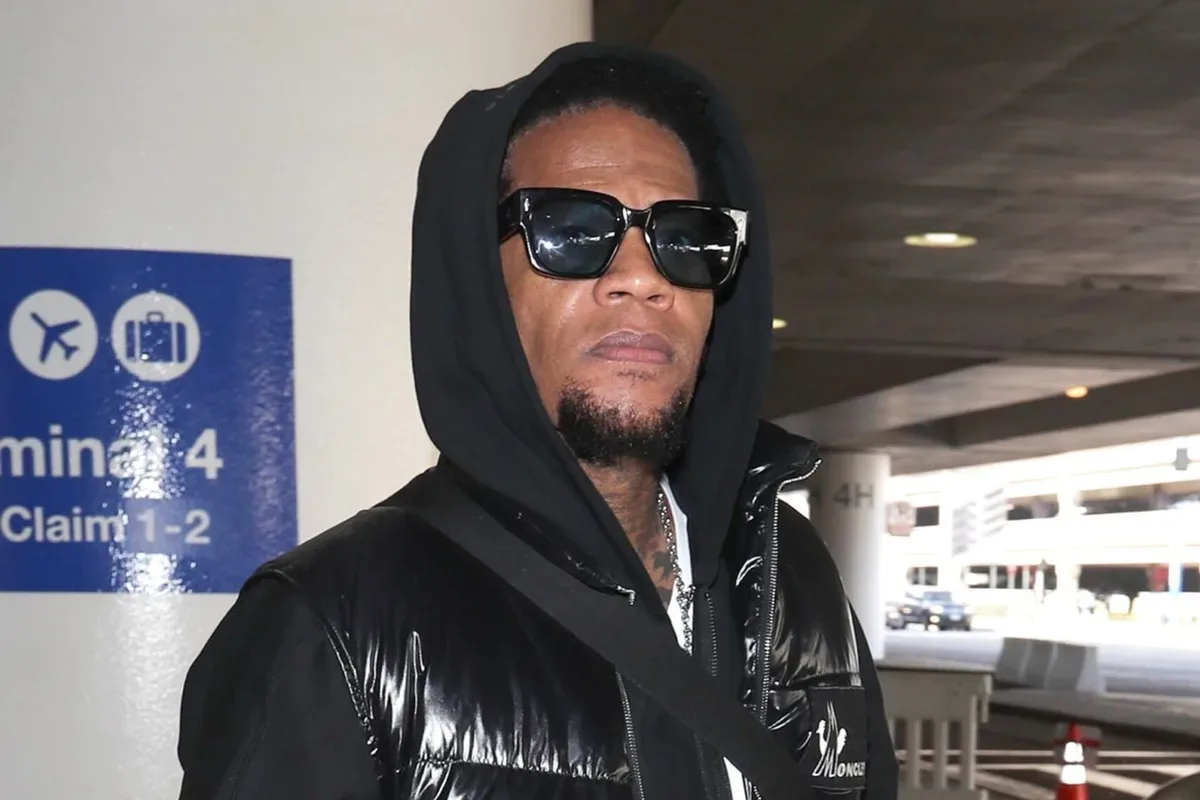
D.L. Hughley has revisited an alleged off-air radio confrontation with Bill Cosby, saying the exchange was recorded during a New York radio appearance but was removed before the public could hear it.
Hughley discussed the episode while speaking about his memoir, Charlie’s Boy, and framed it as part of a larger, difficult conversation about celebrity, institutional power and the limits of a public legacy. His account does not present the lost recording as something listeners can now evaluate for themselves: Hughley said the tape was taken by executives, never aired and never resurfaced.
The reported encounter began when Cosby appeared on Hughley’s radio program. Hughley said Cosby was dismissive toward the show’s co-hosts, Jacque Reid and Steve Wilson. Anticipating conflict, Hughley entered the interview himself.
Cosby challenged Hughley over his use of the N-word, Hughley said. Hughley responded by referring to sexual-assault allegations involving Cosby. In Hughley’s recollection, he told Cosby that while he used profanity, he had never had a college student wake up “with their panties on backwards.”
Hughley said Cosby immediately told him that the interview would not be broadcast. Executives then arrived, collected the recording and prevented the segment from going to air, he said. Hughley did not identify those executives or specify who had the final authority over the decision. That uncertainty matters: the account describes Hughley’s memory of the event, but the recording itself is not available to independently settle the precise wording, sequence or internal discussions that followed.
An account of a confrontation that audiences never heard
There is an unusual tension in Hughley’s story. Radio interviews are ordinarily immediate public records: a host asks, a guest answers, and listeners are able to interpret the tone and substance for themselves. In this case, Hughley says, the encounter became an invisible one. It existed as a recording, then disappeared from public reach before it could become part of the day’s broadcast.
That does not make the anecdote unimportant. Rather, it shifts the center of the story from a viral on-air argument to questions of editorial control. Editorial control is the ability of a broadcaster, producer or executive to decide what is aired, edited, delayed or withheld. It can be used for legal review, standards decisions, fairness concerns or business considerations. Hughley did not claim to know the complete rationale in this case, and no identified executive is quoted explaining it.
What Hughley does make clear is his view of what the removal represented: a powerful entertainer’s influence was, in his telling, capable of shaping not just the conversation but whether the conversation reached an audience at all.
Related coverage includes D.L. Hughley Says His Bill Cosby Radio Clash Never Reached the Air.
The anecdote also turns on a clash between two very different forms of public judgment. Cosby’s objection, as Hughley recounts it, concerned language and respectability. Hughley’s reply redirected the discussion toward accusations of sexual misconduct and the gap between public moral criticism and alleged private behavior. Hughley’s point was not subtle, but neither was it meant to be. His recollection places the disagreement in the open conflict between who gets to police language and who is held accountable for conduct.
“Bill wasn’t Cliff”: separating a performer from a role
Hughley’s most concise observation was also the one with the broadest cultural weight: “Bill wasn’t Cliff.” The line distinguishes Cosby from Cliff Huxtable, the beloved television father Cosby portrayed. It is a reminder that a character’s warmth, integrity and family role do not transfer automatically to the actor who plays him.
Hughley did not argue that Cosby’s television influence should be erased. He acknowledged Cosby’s role in changing television and expanding the space available for Black families on screen. That recognition is central to why the discussion remains fraught. Cultural influence can be real and substantial while still falling short of moral exoneration.
This is often where arguments about legacy become imprecise. A legacy can describe artistic accomplishment, historical influence, commercial success, public memory or a body of work. It is not a legal defense, and it is not a substitute for examining allegations or court findings. Hughley’s position, as presented in his discussion, is that achievement may help explain how someone accumulated influence, but it does not justify shielding that person from scrutiny.
That distinction is especially important with television figures whose best-known work becomes part of viewers’ domestic lives. Audiences may associate a performer with a character’s values for years after a series ends. Hughley’s statement rejects that substitution. Viewers can acknowledge the significance of the work without confusing a fictional father figure with the person behind him.
The civil verdict and the separate Pennsylvania criminal case
The wider context around Cosby includes both civil litigation and a prior criminal prosecution, and they should not be treated as the same proceeding.
In March 2026, a California jury found Cosby liable for sexually assaulting and battering Donna Motsinger in 1972. The jury awarded Motsinger $19.25 million. Cosby’s attorney, Jennifer Bonjean, said an appeal was planned.
Civil liability concerns a legal finding in a lawsuit between private parties and can result in monetary damages. The California verdict is therefore distinct from a criminal conviction, which involves the state prosecuting an alleged offense and can carry penalties such as incarceration.
Cosby’s earlier Pennsylvania criminal case had a different outcome. He was convicted in 2018, but the state’s highest court overturned that conviction in 2021. The court ruled that prosecutors had violated an earlier non-prosecution agreement. Cosby was released after serving nearly three years.
An overturned criminal conviction does not transform the California civil case into something else, nor does a civil verdict reinstate the Pennsylvania conviction. They are separate legal matters, with different proceedings and consequences. Keeping those categories clear is necessary when discussing a story that can otherwise get flattened into a single headline about a public figure.
It is also why Hughley’s language about the alleged radio exchange is consequential. He is not simply revisiting an old argument between comedians. He is placing an earlier moment of resistance alongside later legal developments and asking audiences to reconsider the systems that can protect a famous person’s image.
Why the memoir context changes the meaning of the story
Hughley has included the Cosby episode in Charlie’s Boy, his memoir about growing up in South Central Los Angeles, gang involvement, family trauma and his later life as a comedian and father. In that setting, the story is not just entertainment-industry gossip or a recovered backstage insult. It becomes one part of a personal account about surviving difficult circumstances, gaining a voice and deciding when to use it.
Memoir is a first-person form. It is built from the author’s recollections, interpretation and chosen emphasis. That does not automatically resolve questions surrounding a disputed or unrecorded event, but it explains why Hughley connects this particular encounter to wider themes of power. He is describing how he understood the moment and what it came to mean within his life story.
For Hughley, the radio confrontation appears to have crystallized a familiar imbalance: a major star arrives with institutional standing, an uncomfortable response is made, and the version that reaches the public is controlled by people with the power to remove the evidence. The story’s lasting force, in his telling, comes from the fact that it was not broadcast.
There is no recovered audio attached to Hughley’s account, and no named executive explanation for the decision to bury the segment. Those limits should remain in view. But Hughley’s account still draws a sharp line between admiration and immunity. A person may have transformed a medium, influenced generations of viewers and opened doors that were previously closed. None of those accomplishments, Hughley argues, should end the conversation about what power enabled or protected.
That approach has relevance beyond one performer or one lost radio tape. Public culture regularly asks audiences to weigh work against conduct, nostalgia against new information, and achievements against accountability. The useful question is not whether cultural accomplishments vanish from history. It is whether they are allowed to dominate the entire record.
Hughley’s answer is clear. The contribution can be recognized. The role can be remembered. But the person and the character cannot be treated as interchangeable, and influence cannot be used as a mute button on scrutiny.
That broader celebrity-accountability conversation also extends into other areas of pop culture, including public discussion around risk and behavior, as seen in this look at Offset’s comments on gambling.