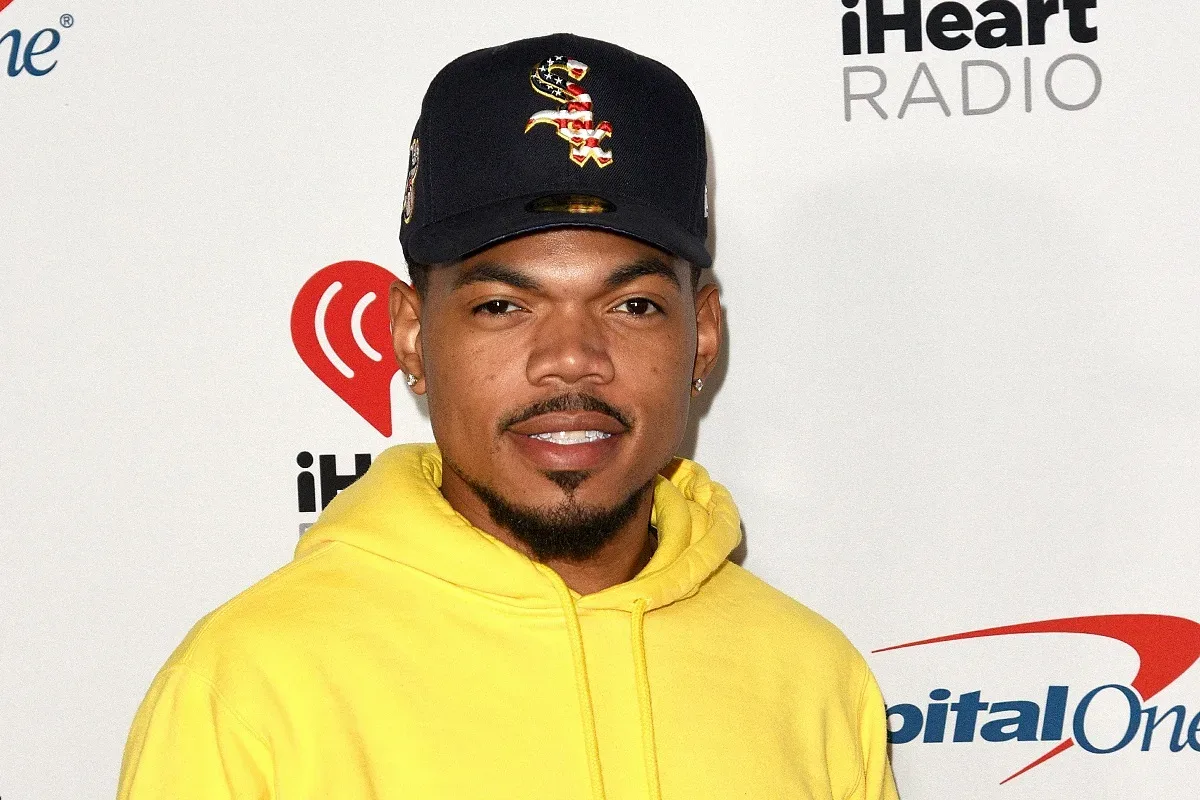
Chance the Rapper has welcomed his third daughter, Hayli. The Chicago artist shared the family news on Instagram on Sunday, November 15, posting photographs alongside a brief message for the newborn: “Welcome to the world Hayli. Mom n Dad love you. God is with you.”
Hayli joins Chance’s two older daughters, Kensli and Marli. The announcement was intentionally simple: a name, family photos and a message of love and faith. It did not include further details about the birth, and there is no reason to read beyond what Chance chose to share publicly.
For fans who have followed his work over the past decade, though, the update has a clear connection to an established part of his public life. Fatherhood has repeatedly informed the way Chance has spoken about music, family schedules and the trade-offs of touring. Rather than being a detached celebrity milestone, Hayli’s arrival sits within a record of choices he has openly linked to being present for his children.
Hayli joins Kensli and Marli
Chance shares Kensli and Marli with Kirsten Corley. The pair married in March 2019 and announced their separation in April 2024, saying at that time that they would continue to raise their daughters together.
Kensli was born in September 2015, while Marli arrived in August 2019. Their names have been discussed by Chance in earlier interviews, not as branding exercises but as personal family decisions. He explained that Kensli’s name combines those of his parents, Ken and Lisa. Later, he said that he and Corley liked the “li” ending and retained it for Marli’s name.
That detail makes Hayli’s name feel consistent with a naming pattern already familiar to the family, though Chance has not publicly explained its origin. It is worth separating that observation from a claim: the shared ending is visible, while any deeper meaning behind Hayli’s name remains private unless the family chooses to discuss it.
Chance has also previously stressed that siblings should be recognized as individuals. When discussing Marli’s name, he noted that her middle name, Grace, had been chosen by her older sister. The anecdote captures a family-focused approach to an event that can often be covered only as a headline: a new child does not simply expand a tally, but enters an existing relationship between parents and siblings.
Fatherhood’s place in Chance’s music
Parenthood has been a recurring influence in Chance’s artistic outlook since Kensli’s birth. In a 2017 television interview, he connected becoming a father to the sensibility behind Coloring Book, saying he wanted to make music his daughter could dance to.
The comment is concise, but it says something useful about how personal circumstances can affect creative decision-making. It is not a claim that every song was written for a child, nor does it reduce a major project to a single inspiration. Instead, it identifies a practical and emotional filter: music made in a period of life when a new parent is considering what can exist around their child.
That distinction matters. Fans sometimes treat an artist’s personal life as a decoder ring for every lyric, production choice or public appearance. Chance’s own comments support a narrower, better-grounded reading. Fatherhood was part of the experience surrounding his work and helped shape the kind of music he wanted to create. It does not automatically explain everything in his catalog.
In a separate archival television interview released in 2023, Chance discussed the way his daughters understand his public profile. Their awareness of their father’s fame does not necessarily mean they are impressed by celebrity culture generally, which is a relatable contrast within a highly public career. For the artist, public recognition and private parenting clearly occupy different spaces.
Why a postponed tour became part of the story
The clearest example of Chance placing family needs ahead of a conventional promotional schedule came after Marli’s arrival in 2019. A planned October concert was moved, with an announcement citing both the birth of his daughter and his recent marriage.
Chance explained the reasoning in direct terms. After Kensli was born, he had gone on tour two weeks later and felt that he had missed milestones. With two daughters, he did not want to repeat that experience. He said he wanted to be present and available as they grew up.
That context is important because “postponed tour” can easily be flattened into an industry scheduling note. A tour delay affects venues, ticket holders, crews and routing, but the public explanation in this case centered on a choice about time with family. Chance was not presenting the decision as an abstract lifestyle preference. He was comparing it with a prior experience and explaining why he wanted a different approach.
For artists, touring is often an especially difficult part of work-life balance. It is not just a concert night; it can mean extended travel, rehearsals, transportation and time away across multiple dates. Chance’s 2019 explanation framed presence as something that cannot always be reclaimed after the fact. The milestones he referenced are precisely the kind that happen on a child’s timetable rather than a performer’s calendar.
Hayli’s arrival does not come with any announced change to his professional plans in the information shared publicly. It would be speculation to predict one. The relevant point is more modest: Chance has already established, in his own words and actions, that parenting can influence how he weighs touring commitments.
A family update, shared on the family’s terms
Celebrity birth announcements can trigger an immediate cycle of searches for medical details, timelines and commentary. This one offers a useful reminder that a public post has boundaries. Chance shared Hayli’s first name, photographs and a welcome message. Beyond that, the family’s private life remains private.
That boundary is especially relevant in the context of separation and co-parenting. Chance and Corley stated in 2024 that they would continue raising their daughters together. Co-parenting, in straightforward terms, means separated parents continuing to share responsibility for their children’s care and upbringing. It is not synonymous with reconciliation, and it does not invite outside observers to fill in details that the parents have not made public.
The appropriate takeaway from the announcement is therefore the simplest one: Chance the Rapper has welcomed a daughter named Hayli, and she joins Kensli and Marli in a family whose importance has long been visible in his public comments and career choices.
Stories about artists becoming parents are often treated as fleeting entertainment updates. In this case, there is also a documented through-line. From wanting his daughter to dance to his music, to explaining the roots of his children’s names, to postponing a tour so he could avoid missing milestones, Chance has made room to articulate what fatherhood means to him.
For another recent account of a musician sharing a personal family-health update, read our coverage of Stefflon Don’s postpartum preeclampsia hospitalization.