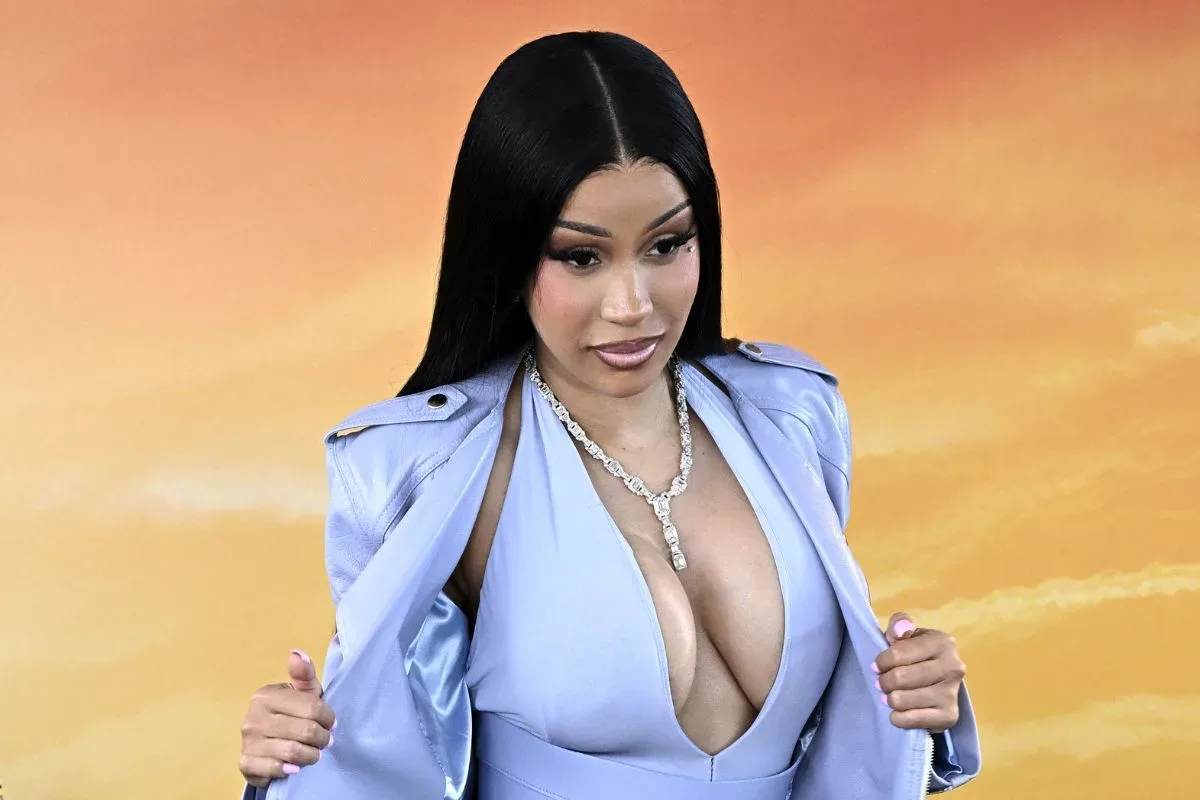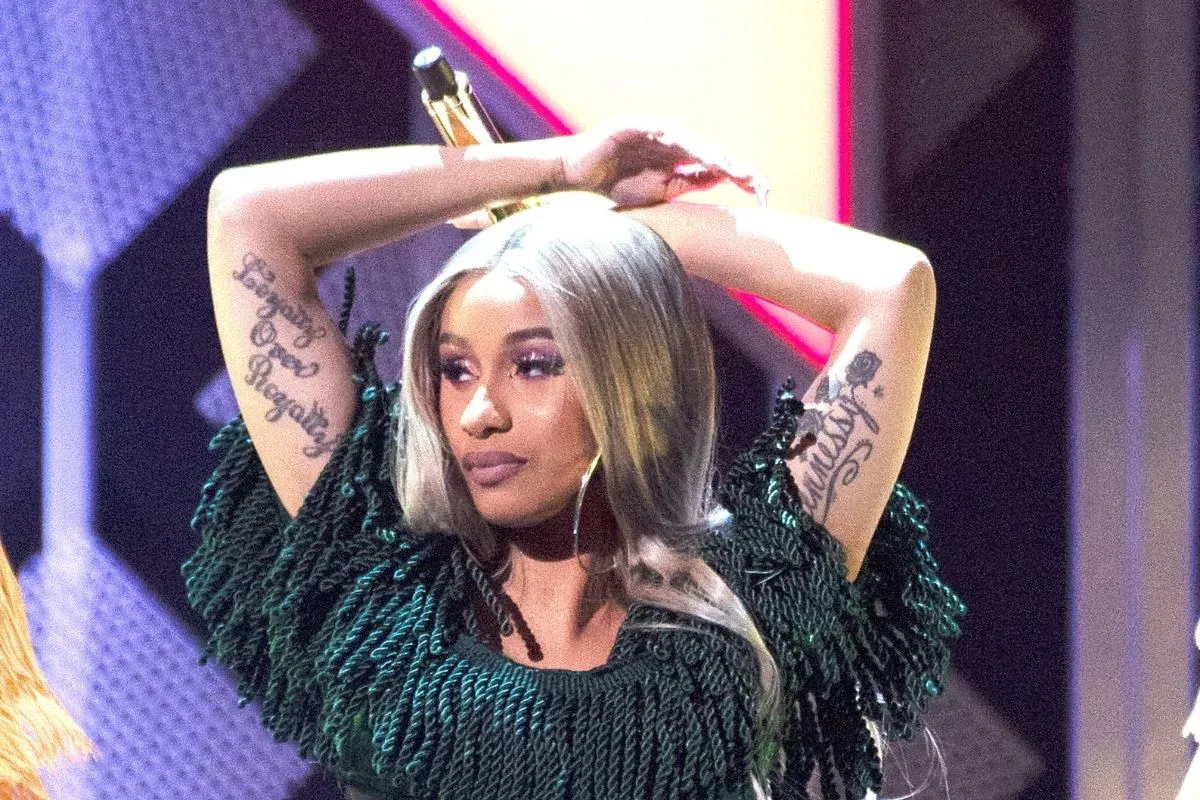
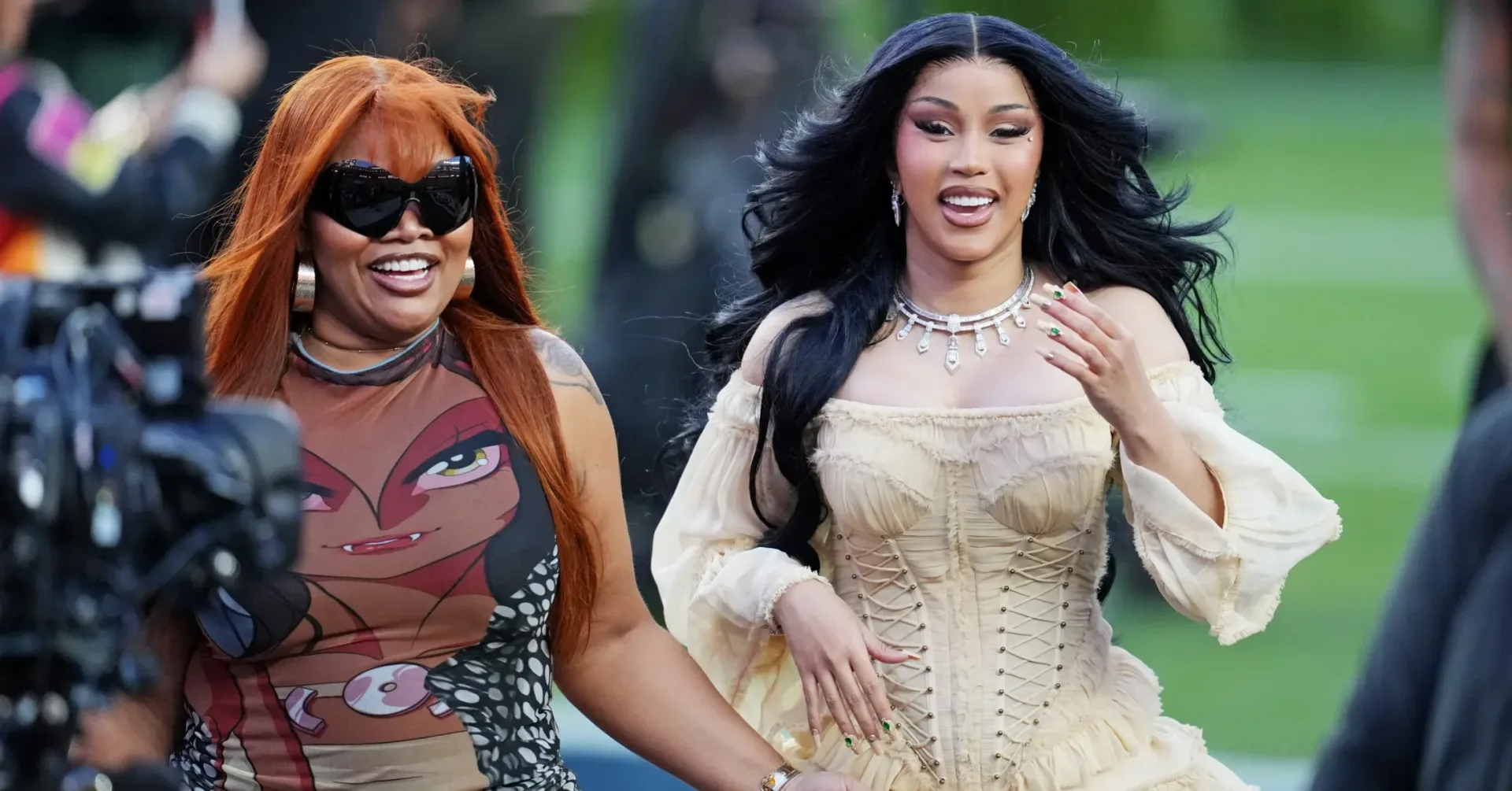
Cardi B and BZR WKND Jamaica organizer Ryan Burke are publicly disputing the financial terms behind her canceled October 18 appearance at Kingston’s National Stadium. The disagreement now includes competing accounts of what the rapper was paid, when money was due for production, and whether either side will bring the matter to court.
Burke said during a television appearance that he was pursuing legal action and alleged Cardi B had been paid in full, putting the total at $2.5 million. Cardi B rejected that account in a social-media video, saying she had agreed to a $1 million advance and received $900,000 of it. She further said that money needed for production had not arrived by September 17, and that she received a further $750,000 only after withdrawing from the event.
Those are sharply different claims, and neither side’s version establishes the final contractual accounting on its own. What is clear from the public exchange is that the canceled performance has become a dispute over more than a missed headline set: the parties appear to disagree over payment status, responsibility for staging and logistics, and whether the event should be treated as a festival or a standalone Cardi B concert.
The cancellation became a payment dispute
Cardi B was scheduled to perform at BZR WKND Jamaica in Kingston on October 18, but the appearance was canceled 10 days before the show. At the time, she told followers that the cancellation was not her doing. Her newer comments provide the broad outline of why she says the date became impossible to complete.
She said production funds were supposed to arrive by September 17. In her telling, the lack of that money left insufficient time to move cargo and secure travel and hotel arrangements, all of which would become far more costly close to the performance date. She said she was effectively being asked to cover the production for the whole show.
“It would be too late for cargo to send. All the flights are extremely expensive. The hotels are extremely expensive,” Cardi B said, arguing that the production money should have been sent earlier.
That timeline matters because major live shows do not begin and end with an artist arriving for a set. “Production” can refer broadly to the operational work and resources needed to put on a performance: transporting equipment or cargo, arranging crew travel and accommodations, coordinating the venue setup, and preparing the technical presentation. The precise duties, budget and deadlines in this instance are not publicly established in the available information. Still, Cardi B’s argument is that delayed production funding made the planned logistics unworkable.
Her account is also specific about the distinction between the payments she says she received and the payment Burke says she received. She says $900,000 was paid from a planned $1 million advance, followed by $750,000 after she pulled out. Burke’s allegation was that she had already received the full $2.5 million. Those figures are central to the dispute, but they remain assertions made by opposing sides rather than settled findings.
Related coverage includes Cardi B Disputes $2.5M Payment Claim in BZR WKND Jamaica Clash.
Why “festival” versus “concert” is at the center of Cardi B’s response
One of Cardi B’s main objections concerns how the event was being characterized. She said Burke attempted to frame it as a Cardi B concert, while she considered it a festival where she was the headlining performer. The labels may sound interchangeable to ticket buyers, but they can describe very different roles and expectations behind the scenes.
A headliner is the prominent performer scheduled at the top of a multi-artist event. A festival, as Cardi B used the term, is a broader bill with an organizer responsible for the overall event. A standalone concert centers on one artist, which can potentially affect how participants understand the show’s production responsibilities. Cardi B’s contention is that, because BZR WKND Jamaica was a festival and she was its headliner, she should not have been made responsible for producing the entire event.
“This is not a Cardi B concert. This is a festival and I’m headlining. This is two different things,” she said.
That does not resolve the contractual question. Public descriptions of an event and the written terms agreed by an artist and promoter can be separate things. But the point explains why Cardi B’s answer did not focus only on the $2.5 million figure. Her response treats the payment issue and the production issue as connected: she says needed production money was not provided on time, while Burke has alleged that she was already paid in full.
What the legal threats do—and do not—mean
Burke said he was seeking legal action. Cardi B responded by urging him to sue and said she would bring a claim of her own over what she views as false statements about the money. She used the term defamation in her response.
Defamation is generally a claim alleging that a false statement of fact damaged someone’s reputation. Whether a particular statement supports such a claim depends on facts and legal standards that are not established by the public back-and-forth, including the statement’s meaning, its truth or falsity, the evidence supporting it, and the applicable legal process. Cardi B saying that she may sue is not the same thing as a court filing, and Burke saying he seeks legal action is not a ruling that either party is right.
For now, the public record presented here consists of conflicting accounts. Burke’s position is that Cardi B received $2.5 million in full. Cardi B’s position is that she did not receive that amount, that $900,000 of a $1 million advance was paid before the cancellation, and that an additional $750,000 arrived afterward. She also says production funding that was due earlier never came in time for the show to proceed.
Any formal case could bring additional detail into view, such as the relevant agreement, payment documentation, production budgets, cancellation terms, communication timelines and the obligations assigned to each side. None of those materials have been provided in the information available here, so firm conclusions about liability would be premature.
Practical stakes for promoters, performers and fans
The clash is a reminder that the public-facing part of a concert—the poster, lineup and ticketed date—rests on a less visible layer of scheduling and financial coordination. If funds tied to production are delayed, the issue is not necessarily limited to an artist fee. It can affect freight, personnel, lodging and time-sensitive travel arrangements. Conversely, a promoter challenging a cancellation may argue that an artist’s compensation and contractual obligations were already fulfilled. Those competing viewpoints are exactly what Cardi B and Burke are now airing.
For fans, the immediate consequence was the loss of Cardi B’s planned October 18 performance. For the parties, the next significant development would be verifiable documentation or an actual legal filing rather than another exchange of social-media statements. Until then, the amounts, deadlines and responsibilities remain contested.
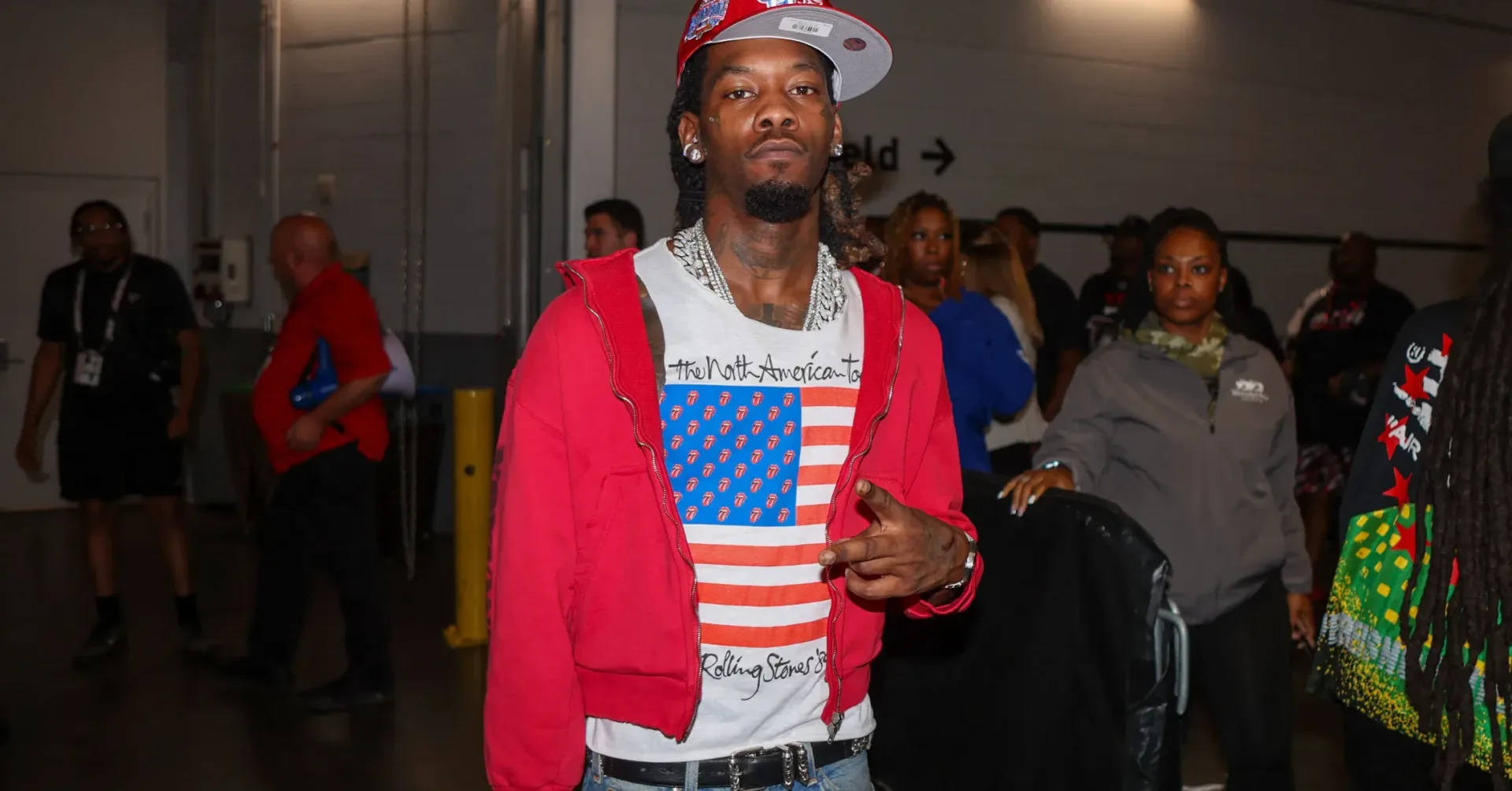
Cardi B’s dispute also lands in a wider pop-culture moment where music news travels quickly across several platforms and formats. Readers following other developments around major artists and releases can also see the details currently available on Offset’s upcoming GMFU.
At present, Cardi B has made her position unmistakable: she denies being paid the $2.5 million Burke alleged, says the show’s production funding failed to arrive when needed, and is prepared to contest the matter in court if Burke follows through on his stated legal plans. The substance of the financial disagreement remains unresolved.