
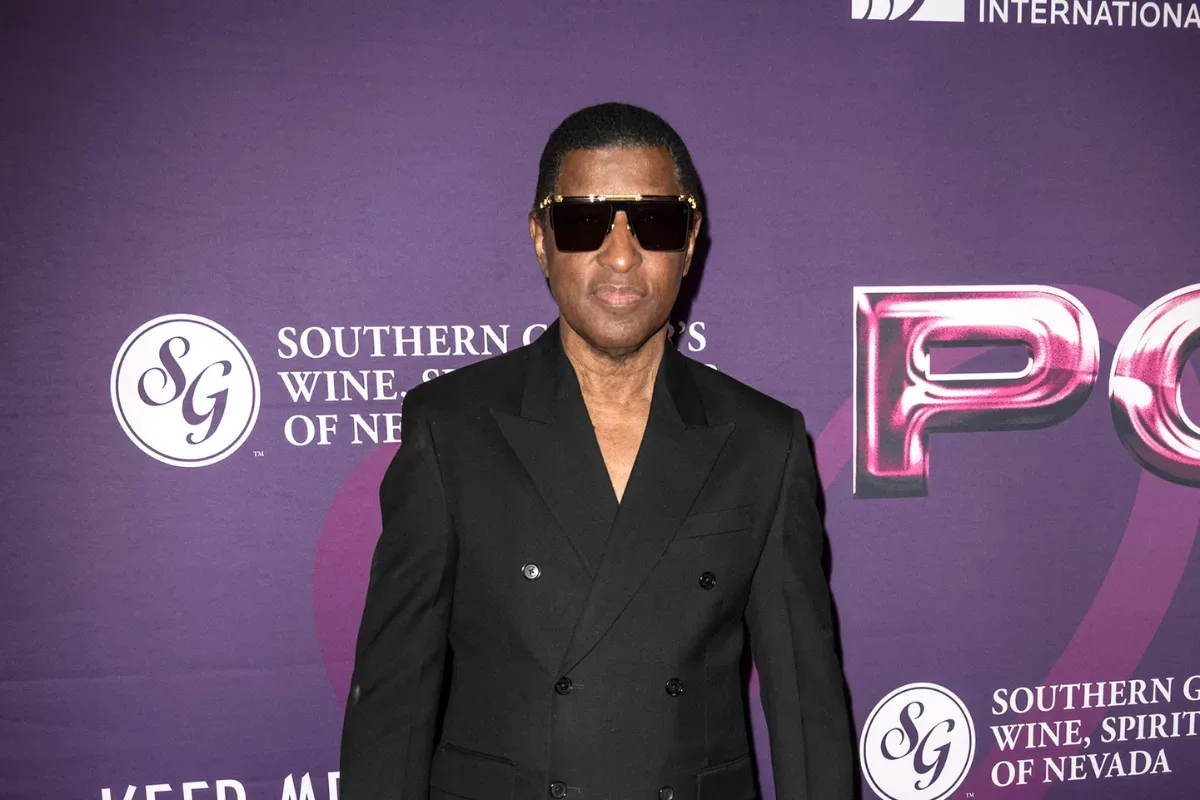
Babyface has offered a straightforward explanation for why so many singers want to be credited as writers: it is not solely a creative statement. It is also about ownership, income and the life of a song after its first release.
Speaking on the November 10 episode of Baby, This Is Keke Palmer, the singer, songwriter and producer discussed the financial appeal of publishing. His point was not that every vocalist must become a songwriter, or that a performer without a writing credit has made a lesser artistic contribution. Instead, he drew attention to a practical divide in the music business: the person who sings a record and the person who owns part of the underlying song can occupy very different positions.
“Being the writer and being the publisher was no question, you know, where you would make most of the money,” Babyface said.
That observation helps put a familiar contemporary debate in sharper focus. Fans often see an artist’s name in a list of songwriters and read it as proof of complete self-sufficiency. But the incentive to participate in songwriting can be as much economic as expressive. Writing credits can mean a stake in the composition, while a vocal performance alone does not automatically give the singer ownership of that composition.
Two copyrights, one song, and a lot of confusion
The essential technical point is that a commercially released track can involve two distinct copyrights. The first is the composition: the song as written, including lyrics. The second is the sound recording: a particular recorded performance of that composition.
They travel together when a listener presses play, but they are not the same asset. The composition can be owned or controlled by songwriters and publishers. The sound recording can be owned or controlled separately. Ownership of one does not, by itself, provide ownership of the other.
This distinction is why a listener can hear the same song performed by different artists. A new version may use the same composition—its lyrics and written song—while producing a wholly different sound recording. The new performer’s recording is not simply interchangeable with the first artist’s recording, even though both versions stem from the same underlying work.
That is the heart of Babyface’s argument about publishing: the writing can have a commercial life that is not limited to one singer, one session or one recording. A hit vocal can make the public associate a song with a particular artist. Yet the songwriting interest is a different kind of participation in what that song is and how it can be used.
Related coverage includes Babyface Breaks Down Why Publishing Drives Singers to Write.
What “publishing” means in this conversation
In broad terms, music publishing relates to the composition side of the business. It is not a synonym for simply uploading a track or releasing an album. It concerns the rights attached to the written song and the ways those rights may be licensed or generate income.
That does not mean publishing is a magic route to wealth, or that every writing credit has equal value. Babyface’s point is more limited and more useful: when a record succeeds, writers and publishers have a distinct interest in the composition that can remain relevant beyond the original recording. A singer who wants a share of that side of the business has a reason to pursue songwriting.
It also explains why the phrase “the artist made the song” can be true in a cultural sense without describing every legal or financial relationship behind the song. A vocalist may provide the defining voice, phrasing and identity of a record. A songwriter may be responsible for its lyrics and composition. Other people may have interests connected to the particular recording. Those roles can overlap, but they do not have to.
Why a strong singer is not automatically a strong writer
Palmer raised a concern that will sound familiar to many performers: artists can feel pressure to do every job themselves. Write, sing, perform, build a public identity and take responsibility for business decisions, all while meeting the pace of a fast-moving release cycle.
Babyface did not turn that concern into a blanket warning against performers writing their own material. He acknowledged the financial frustration that can lead singers to pursue writing. But he also stressed a basic creative reality: singing well and songwriting well are separate skills.
That distinction matters because the current conversation can become needlessly binary. It is tempting to frame self-written songs as more authentic and externally written songs as somehow less personal. But a singer’s interpretation is still a meaningful creative act, and songwriting has its own craft. A compelling lyric, structure or composition does not automatically result from a powerful voice. Likewise, a songwriter may create a lasting song without being its definitive vocalist.
Babyface’s own recollection of being discouraged about his singing reinforces that point. He did not use that experience to argue that artists should be shut out of songwriting. Rather, he recognized that a record he might doubt could still connect and become a hit. The lesson is not that artistic instincts are irrelevant; it is that no single ability offers a reliable shortcut to predicting audience response.
For performers, that should relieve some of the false all-or-nothing pressure. Writing can be worth learning because it is a creative discipline and because it may create a publishing interest. But a singer does not become artistically invalid by collaborating with writers. Conversely, having a writing credit should not be treated as an automatic measure of vocal ability, authorship of every element, or business control over an entire release.
Credits are not merely ceremonial
The conversation also underlines why clear crediting matters. A credit list is more than album-booklet trivia or a social-media talking point. It identifies who is connected to the composition and who may have an interest in its publishing side. Because the composition and recording are separate, a listener cannot reliably infer the full ownership picture from the artist name displayed on a streaming service.
For audiences, the practical takeaway is to resist treating “artist,” “writer,” “publisher” and “recording owner” as interchangeable labels. They can describe one person in some cases, especially when a performer writes their own material. In many other cases they describe several people with different responsibilities and rights.
For emerging singers, Babyface’s framing suggests a more grounded question than “Should I write everything?”: what role am I actually playing in the creation of this song, and do the credits reflect that work? The answer can vary record to record. Collaboration is not a flaw in the process; it is often the process. What matters is understanding the distinction between being featured on a recording and owning an interest in the underlying composition.
That clarity is especially important when a song later takes on a life beyond the original version. Another performer can make a new recording of the composition, creating a separate sound recording. The original vocalist’s performance remains part of their own recording, while the composition itself remains a distinct work with its own rights. The track heard by the public may feel like one unified object, but its legal and commercial foundations are layered.
Babyface’s perspective comes from both roles
Babyface’s remarks carry weight because his career spans the performer and songwriter-producer sides of R&B. His solo catalogue includes Tender Lover, The Day and For The Cool In You, while his work has also kept him connected to newer performers.
His Girls Night Out collaborations include Kehlani, Queen Naija and Ella Mai. He also recently appeared with Jack Harlow in a new-music preview following Harlow’s move toward R&B. That ongoing visibility makes the discussion feel less like nostalgia for an older version of the industry and more like a continuing business question for artists at different career stages.
There is a concrete recent example on the writing side, too. Babyface shared the 2024 Grammy for Best R&B Song as one of the writers of SZA’s “Snooze.” That recognition illustrates the central separation he described: a songwriter’s contribution can be fundamental to a record’s success even when public attention naturally centers on the performer delivering it.
That broader connection between performers, collaborators and ownership is also part of music’s continuing pop-cultural story. The relationships around an artist’s identity can extend well beyond a single track, as seen in IDK’s Shady Records partnership and Eminem collaboration.
The useful lesson is understanding, not doing every job
Babyface’s comments do not prescribe one ideal creative model. They explain why singers may feel compelled to write, particularly when they see the potential value attached to publishing. That motive can sit alongside a sincere wish for artistic control, but it is not identical to it.
In the end, the cleanest way to read the issue is through the split between song and recording. The vocalist can make a record unforgettable. The songwriter can hold an interest in the composition that exists beyond that one performance. A single artist can be both people, but they do not need to be.
For anyone listening to debates about writing credits, that is the key distinction. A song is a creative work, a recording is a separate creative work, and the people attached to each may differ. Understanding that structure makes the push toward songwriting easier to understand—without pretending every singer must become a writer or that every writer must stand behind the microphone.