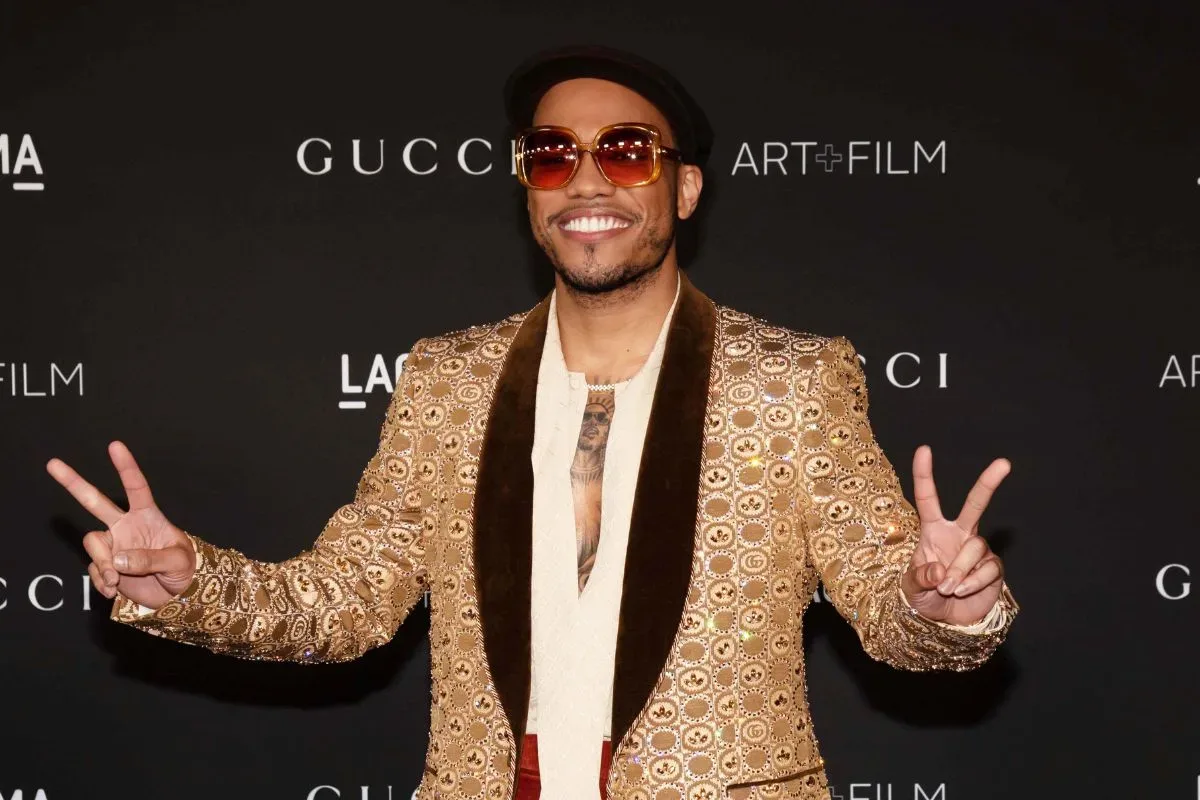
Anderson .Paak has received a community-service honor from In a Perfect World, with the recognition focusing on the work of the Brandon Anderson Foundation rather than a new music release. The singer was celebrated at the nonprofit’s A World of Good gala in Beverly Hills on November 8.
In a November 12 announcement, In a Perfect World said the Brandon Anderson Foundation has helped raise more than $4 million and served more than 21,000 people in Ventura and Los Angeles counties since 2016. The stated work covers scholarships, music and arts access for low-income families, and community-focused events built to connect families with local programs and partners.
“Giving back means remembering where you came from and opening doors for the next generation,” .Paak said in the announcement.
What the honor recognizes
The recognition is notable because it centers on an organization with a program structure broader than a one-night benefit show. The foundation’s efforts include direct support for students and families, while its .Paak House program uses a festival format to bring performances, food and family activities together in Southern California.
Donated tickets are part of that model, allowing at-risk and low-income families to attend. The events also operate as a connection point: local partners can introduce attendees to the foundation’s wider community resources. That distinction matters. A concert can raise funds or gather a crowd; pairing it with access initiatives and partner organizations aims to make the event part of an ongoing local support network.
What “access to music and the arts” means here: the announcement identifies arts opportunities as a priority alongside scholarships. It does not detail every class, curriculum or service funded, so the clearest reading is that the foundation is directing support toward opportunities that may otherwise be harder for low-income families to reach, rather than presenting a single standalone music program.
.Paak House and the role of community events
.Paak House is the most visible expression of those goals. Its combination of musical performances, family activities and food gives the program a public-facing festival identity, but the donated-ticket element and local partnerships show that attendance is intended to be more than a conventional concert transaction.
This model has precedent in the foundation’s earlier events. A 2018 gathering at MacArthur Park drew more than 4,000 people and raised $155,000. The figures illustrate two separate measures of impact: attendance reflects the size of the public gathering, while money raised reflects resources that can potentially support continuing work. Neither number alone explains every outcome, but together they help show why events remain central to the foundation’s approach.
Related coverage includes Anderson .Paak Honored for Brandon Anderson Foundation’s Community Work.
A later .Paak House concert at California State University, Channel Islands drew roughly 9,500 people. Ciara and Snoop Dogg joined .Paak onstage, and the foundation’s archive described the show, citing local reporting, as the largest concert the campus had hosted. The scale is significant in context: a campus event of that size can bring greater visibility to the broader programs linked to the festival, while also creating a family-oriented regional gathering.
Roots in Oxnard and a long-running community-space idea
The foundation’s focus on Ventura County connects with .Paak’s Oxnard upbringing and a community-space proposal he discussed in 2019. As the Oxnard Performing Arts Center faced the loss of its city subsidy, he asked fans to help save the venue. His vision went beyond preserving a performance site: he described a possible foundation headquarters and community space where residents could record music, rehearse plays and hold boxing matches.
That proposal is useful context for interpreting the present-day work. It brought several needs under one roof: creative production, performing-arts rehearsal and recreational activity. The supplied record does not establish that this specific headquarters plan was realized, so it should not be treated as a completed project. It does, however, show a longstanding interest in community infrastructure rather than exclusively celebrity-driven fundraising.
Why physical space matters: a dedicated place to record, rehearse or gather can reduce practical barriers to participation. The original vision also placed music beside theater and boxing, suggesting a wider definition of youth opportunity—one that includes creative expression, recreation and a reliable place for local residents to meet.
Support beyond the festival stage
The foundation’s work has also extended to families facing acute disruption. In July 2025, it highlighted financial assistance for immigrant farmers and fieldworkers displaced from their homes and communities. The available information does not specify the number of recipients, the dollar amount or the exact delivery mechanism. What it does establish is that the organization has addressed needs outside its scholarships and arts-access work.
That matters because a foundation’s public image can easily become tied to its marquee concert appearances. The reported assistance for displaced farmers and fieldworkers points to a more flexible role: responding to community hardship while retaining longer-term programs focused on students, arts participation and family access.
In a Perfect World’s broader education focus
The November gala recognition also sits within In a Perfect World’s own youth-oriented work. Its programs include classroom support, technology training and youth-led service, meaning projects in which young people are given opportunities to organize aid in their own communities. The organization reports supporting more than 500 high-poverty classrooms and completing 35 school projects across eight countries.
In a Perfect World also noted an existing $50,000 BeyGOOD grant supporting its youth programs. The grant preceded the gala; the organization had already highlighted coverage of the award in October. Separating the timing is important: the grant was not newly created by the November ceremony, even though it was recognized in connection with the event.
What “youth-led service” means: rather than positioning young people only as recipients of help, this approach gives them a role in organizing assistance for others. The supplied details do not identify individual projects, but the framework points toward participation and leadership alongside classroom and technology support.
Why the reported numbers need careful reading
The headline figures—more than $4 million raised and more than 21,000 people served since 2016—are meaningful measures of reach, but they describe different things. Funds raised indicate financial mobilization over time. People served describes the reported number of individuals reached by the foundation’s efforts. Those figures should not be collapsed into a claim that every dollar can be directly assigned to a particular person or program; the available material does not provide that breakdown.
Similarly, the 9,500-person Channel Islands concert should not be read as proof that all attendees received direct aid. Its significance is its scale as a community event and its capacity to spotlight or connect people to a larger set of initiatives. The practical takeaway is that the foundation uses multiple channels—events, scholarships, arts access, donated tickets, partnerships and targeted financial assistance—rather than relying on one single method of service.
A recognition focused on sustained local work
.Paak’s honor places the Brandon Anderson Foundation’s community record at the center of the conversation: more than a decade’s worth of stated service beginning in 2016, concentrated across Ventura and Los Angeles counties, with festival programming serving as both a gathering place and a gateway to broader support.
For readers following music figures whose work reaches outside recording and touring, the distinction is worth keeping in view. The gala celebrated a documented network of scholarship, arts and family-access priorities, while the foundation’s earlier Oxnard venue vision and assistance for displaced agricultural workers offer additional context for its local orientation. For more coverage of music-world developments, see this report on Looze Cannon’s new-project push.