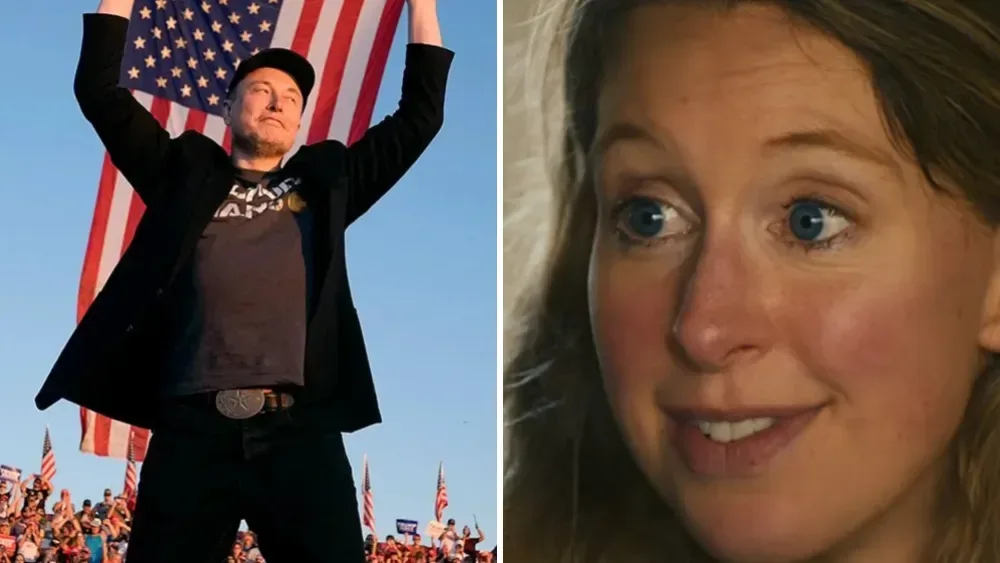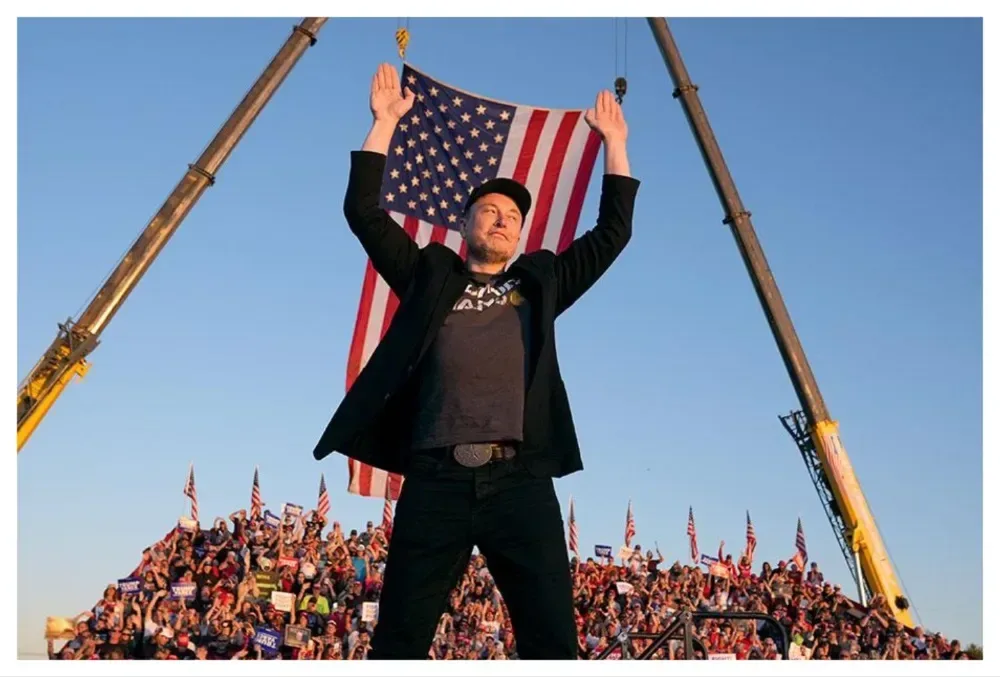
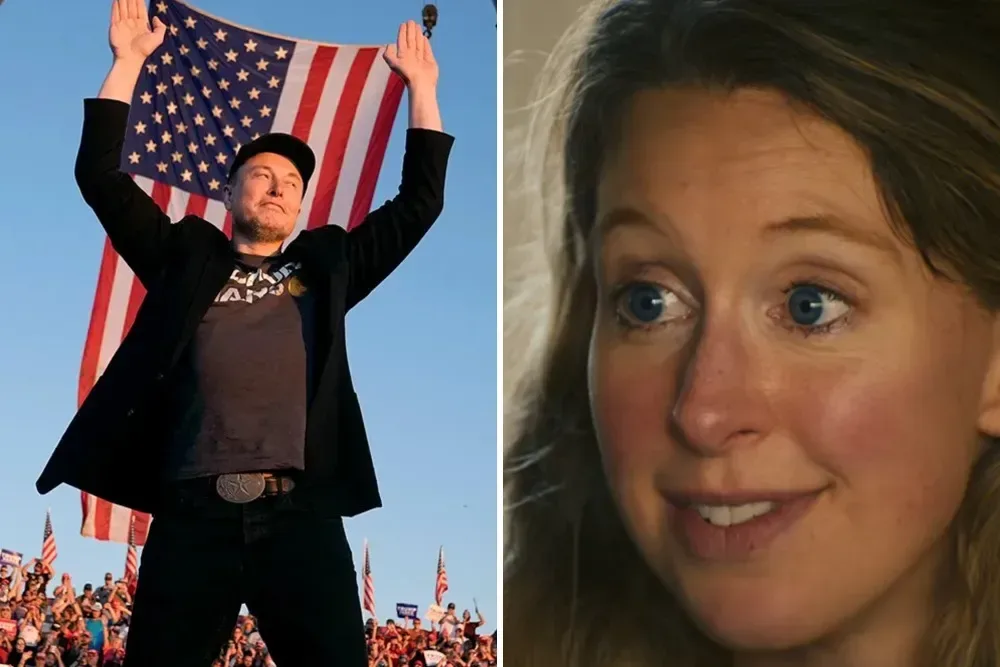
Documentary filmmaker Alex Gibney has spent much of his career examining people and institutions that wield enormous influence while selling an irresistible story about themselves. His newest subject, Elon Musk, is a particularly large-scale version of that familiar challenge: a business figure whose identity crosses technology, finance, communications, celebrity and politics.
Gibney’s nearly four-hour documentary Musk began production in 2022. He described the project as growing beyond an expected corporate or biographical investigation as technological and financial influence became intertwined with political power. That premise is central to the film’s apparent scope: it is less interested in treating Musk as a lone, exceptional inventor than in asking how a public persona becomes powerful across several systems at once.
For viewers, the distinction matters. A documentary about a famous entrepreneur can easily become a parade of achievements, controversies and eccentricities. Gibney’s comments point to a broader inquiry: who supplies the money, platforms, legal protections, institutional access and cultural mythology that allow a highly visible figure to exercise influence? It is a question he also raised when discussing Elizabeth Holmes.
Gibney’s argument about image-making
Gibney drew a comparison between Musk and Donald Trump, focusing on what he called their shared capacity for self-invention and branding. His formulation is deliberately provocative: he argued that Trump’s public identity was built through a branded association with buildings, while Musk’s was built around the image of a science-fiction-style inventor.
That is an interpretive argument, rather than a simple statement of biography. In documentary terms, interpretation is the filmmaker’s framework for connecting facts, interview testimony and archival material. It can be useful because it gives viewers a lens through which to evaluate a sprawling subject. It must also be recognized as a framework, not as a neutral substitute for the underlying evidence.
Gibney said that Musk’s political shift began around the onset of the Covid pandemic in 2020 and later led to his role as Trump’s largest individual supporter during the 2024 presidential campaign. He said the film presents several suggested explanations for that turn, including family matters, pandemic-era regulation and a perceived snub from President Biden.
Gibney’s own view is more specific. He said he believes legal pressure was the primary factor, asserting that Musk faced roughly 32 inquiries from 11 federal agencies, including what he characterized as a criminal fraud investigation connected to Tesla. He argued that Musk saw Trump as someone likely to act transactionally and could therefore view a Trump victory as a route to ending those matters.
Those remarks are Gibney’s assessment of motive. Motive is notoriously difficult to establish in a documentary because it concerns a person’s private reasoning, not merely what happened publicly. A film can support a motive argument through records, timelines, interviews and patterns of conduct, but audiences should separate a filmmaker’s conclusion from independently established proof of what was in someone’s mind.
The Starlink discussion needs careful reading
The most consequential material Gibney described involves the 2024 election. He said former far-right commentator Ashley St. Clair shared texts with the production that, in Gibney’s telling, showed Musk claiming he knew Trump had won before the result was widely known. One message reportedly referred to finding “an anomaly in the matrix” and having “10,000 space lasers” to help understand it.
Gibney said the language appeared to refer somehow to Starlink, the satellite communications system. He also said that neither he nor, in his belief, Musk thought the statement meant votes had been changed. Instead, Gibney speculated that it could indicate early interception of reporting signals from ballot locations, allowing Musk to know the result in advance.
That proposed explanation is not presented as verified evidence of election interference. It is important not to turn it into one. The account contains several separate layers:
- Gibney said St. Clair provided texts attributed to Musk.
- The reported wording is open to interpretation and is not, by itself, a technical explanation.
- Gibney linked the message to Starlink.
- He then offered a theory about early access to reporting signals.
- He explicitly rejected the idea that this meant votes were switched.
Starlink is relevant in this discussion because it is a communications network, and communications infrastructure can prompt legitimate questions about access, reliability, data handling and institutional dependence. But “communications” does not automatically mean “surveillance,” and a striking text message does not establish how any system was used. Gibney’s wider point is that infrastructure capable of connecting people can also become an object of concern when it is associated with a powerful individual whose interests span business and politics.
The filmmaker said Musk’s legal representatives threatened to sue over this aspect of the film. That context signals why viewers should expect careful sourcing and precise language around the sequence when evaluating the documentary itself. The seriousness of a claim does not increase because it is dramatic; it increases when the evidence for each step can withstand scrutiny.
When advertising platforms become part of the story
Gibney also said YouTube, TikTok and Meta declined paid advertising for the Musk trailer on the basis that it was political content. He contrasted that decision with the platforms’ willingness to carry advertisements for a documentary about Melania Trump, and he connected the episode to a White House dinner involving Musk, Xi Jinping, Jeff Bezos and Mark Zuckerberg.
His conclusion was blunt: discourse that displeases powerful technology figures, he suggested, can be denied room on the very platforms they influence. Again, that is Gibney’s reading of events, not a demonstrated account of those companies’ internal decision-making. Yet the episode raises a practical media question that extends beyond one documentary.
Paid promotion has become a major part of how films find an audience. When a handful of large platforms mediate that access, their political-content rules can have a meaningful effect on which projects are seen, how widely they circulate and whether a filmmaker can reach viewers outside existing media coverage. Consistent rules, clearly explained and fairly applied, are essential when the subject of an ad is itself a person connected to the technology sector.
That does not mean every rejection is censorship; platforms may impose content policies for many reasons. But it does mean a rejected campaign can become part of the story when the film examines the political and commercial reach of a platform owner or fellow technology executive. For a filmmaker like Gibney, distribution is not merely a business matter. It can illustrate the concentration of power that the film is trying to investigate.
Elizabeth Holmes: the person and the system behind the person
Gibney also revisited his 2019 documentary The Inventor: Out for Blood in Silicon Valley, which examined Elizabeth Holmes. He welcomed the enormous attention being paid to You Can See Everything, the documentary project involving Nathan Fielder and Lance Oppenheim, but explained why his own interest in Holmes focused on more than her individual deception.
Gibney described Holmes as a confidence artist who used structures of power to enrich herself. He contrasted that lens with a portrayal of Holmes as a person who now has little power and is attempting to create a more sympathetic persona. His point was not that a person’s current vulnerability is irrelevant. Rather, it was that the most consequential part of the Theranos story, in his view, involved the network around Holmes: influential lawyers and prominent backers including George Shultz and Henry Kissinger.
This is a useful distinction for documentary audiences. A character-driven approach can be emotionally compelling, especially when a subject is trying to explain or reshape their public image. A systems-focused approach asks a more uncomfortable question: why did influential people accept, defend or amplify a story that should have faced more resistance?
Both approaches can reveal something meaningful, but they do different jobs. The first explores character and performance. The second examines gatekeeping, prestige and accountability. Gibney’s comments place Musk squarely in the latter tradition, even when the film is dealing with a subject whose public persona is unusually theatrical.
Readers interested in another recent entertainment-industry story centered on a public figure navigating an independent career can also see this look at RAYE’s 2026 Hitmaker recognition.
A wider documentary slate built around human-scale stories
The discussion around Musk was part of a broader group of documentary presentations, and the other films reveal how wide the form can be. Jana Hojdová’s Robert Richardson: The White Devil follows three-time Oscar-winning cinematographer Robert Richardson, whose credits include Platoon, Casino and Kill Bill Vols. 1 & 2. Hojdová said she spent a decade following Richardson after first contacting him by email while studying in Prague.
Her production challenges show the less glamorous mechanics behind a film portrait. She had around 650 hours of footage to cut into a feature, and licensing scenes from Richardson’s films created another hurdle. Richardson’s collaborators Oliver Stone, Quentin Tarantino and Martin Scorsese ultimately participated, though Hojdová said securing them took three years. Richardson also named Paul Thomas Anderson as a filmmaker he still hopes to work with.
Mary Mazzio’s Mighty Mary turns to the first all-women’s team to compete in the America’s Cup, in 1995. The team entered a competition with a 144-year history, initially attracting dismissive treatment and sexist insults before defeating elite sailors. Mazzio, a former Olympic rower, said the story contained more reversals than a murder mystery. Hugh Jackman and Elizabeth Banks executive produced and narrated the documentary; Mazzio said she approached Jackman’s team by noting that she could help improve his rowing-machine form.
Standout: The Ben Kjar Story, directed by Tanner Christensen, follows Ben Kjar, who was born with Crouzon syndrome, a rare genetic disorder associated with craniofacial anomalies. Kjar became a three-time Utah high school state wrestling champion, Utah Valley University’s first NCAA Division I Wrestling All-American and, at 40, a Greco-Roman World Championship winner. He described learning that vulnerability could be a leadership strength after years of reluctance to discuss his experiences.
Two other projects put intimate lives in the foreground of much larger political realities. The Secret Reading Club of Kabul, co-directed by Shakiba Adil and Elina Hirvonen, follows young women in Afghanistan documenting their lives under Taliban rule, with inspiration from The Diary of Anne Frank. The film includes graphic cellphone footage, including public executions and whippings. Adil said the difficult images were necessary to convey the reality being documented; she also appears in the film and helped several women leave Kabul for other countries.
Meanwhile, Dana Nachman’s 20-minute short The Second Life of Freddie Nole follows a formerly incarcerated man helping people who are leaving prison. Nole meets them at release, helping to provide clothing, a cellphone and job leads. The film follows him as he welcomes a man named Ed, including everyday stops at Walmart and a diner. Nachman described a portion of it as a buddy comedy involving Nole and his wife, an approach that keeps the focus on friendship and the practical work of rebuilding a life.
What connects these very different films
At first glance, Musk, Holmes, America’s Cup sailors, a celebrated cinematographer, an Afghan reading circle, a wrestler and a prison reentry helper have little in common. The connection is documentary’s ability to scale between systems and individuals. Gibney’s work asks how famous people can accumulate influence through institutions. Other films ask what endurance, artistry, mutual aid or personal testimony look like at ground level.
The stronger documentaries in this group, based on their creators’ descriptions, do not rely solely on a big name or an attention-grabbing premise. They define a point of view. In Musk, the point of view concerns the relationship among wealth, technology, narrative and politics. In the Holmes discussion, it is the difference between studying a charismatic individual and studying the elite networks that validated her. Elsewhere, filmmakers use specific lives to make the audience confront barriers faced by women athletes, people with disabilities, Afghan women and people returning from prison.
Gibney also confirmed that he is working on a Hulu documentary about Luigi Mangione, but declined to discuss whether he plans to interview Mangione in prison. For now, that project remains largely unspecified. The clearest picture comes from Musk: a documentary designed not just to recount the career of one exceptionally famous person, but to interrogate the structures that make such power possible.