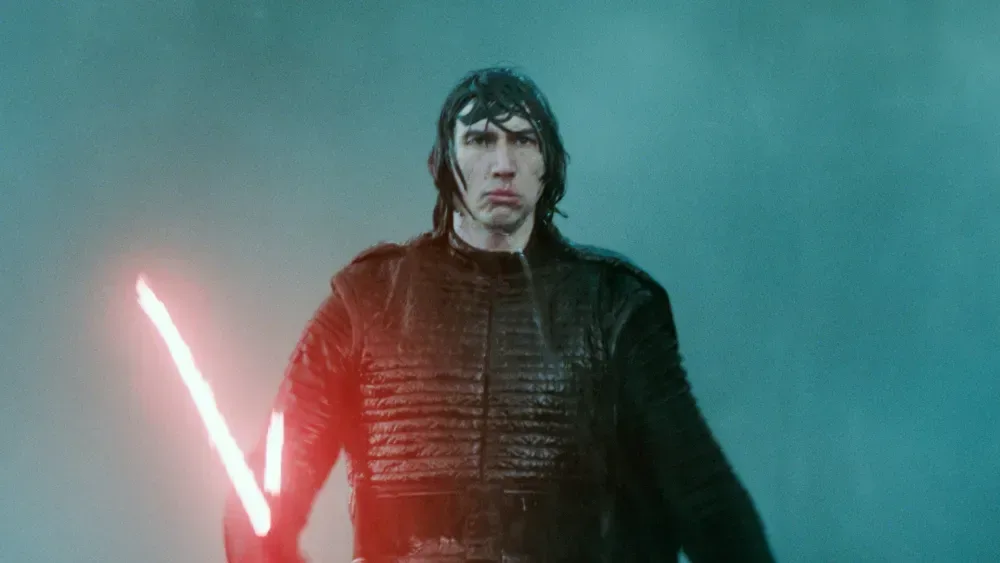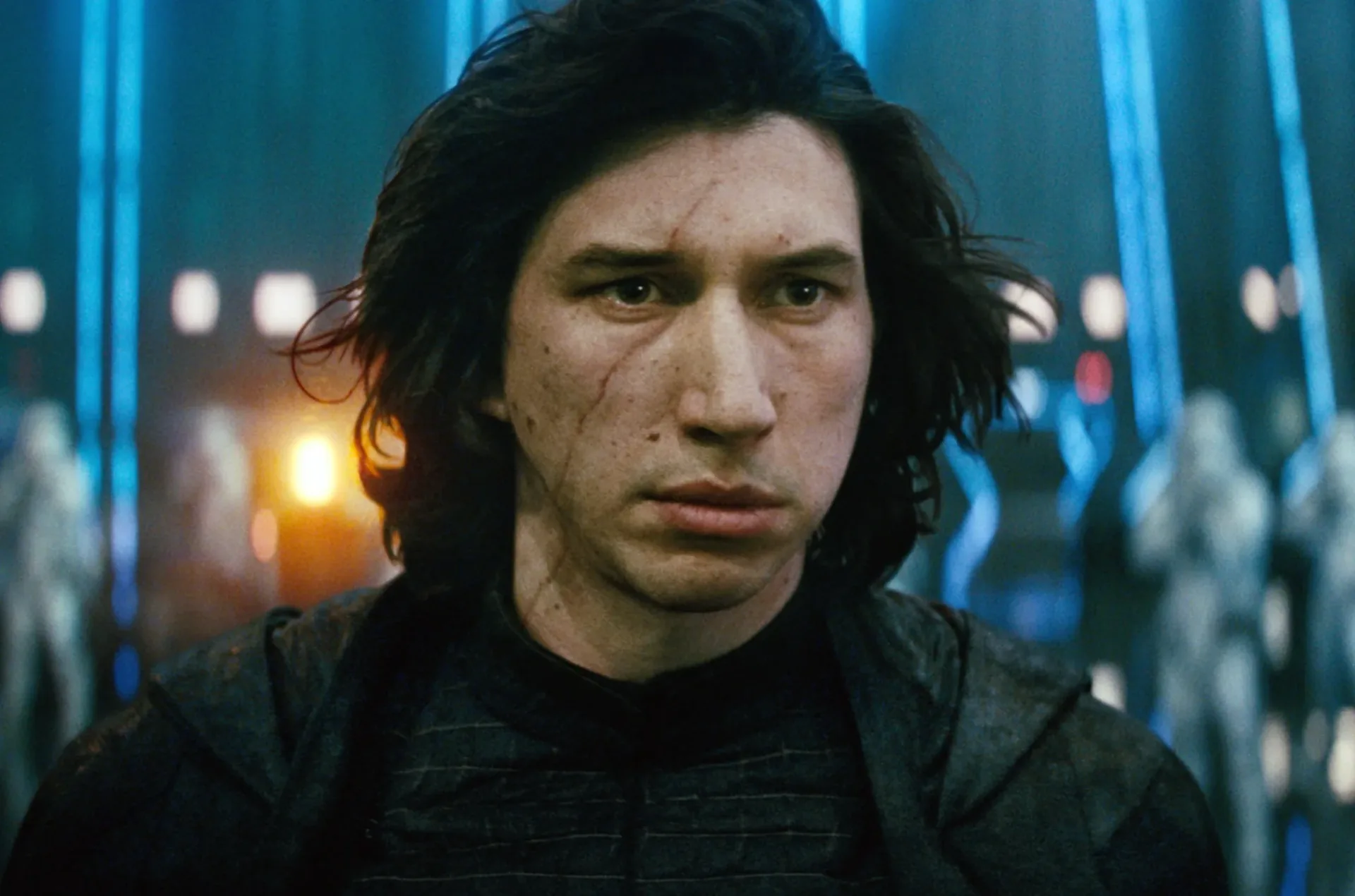
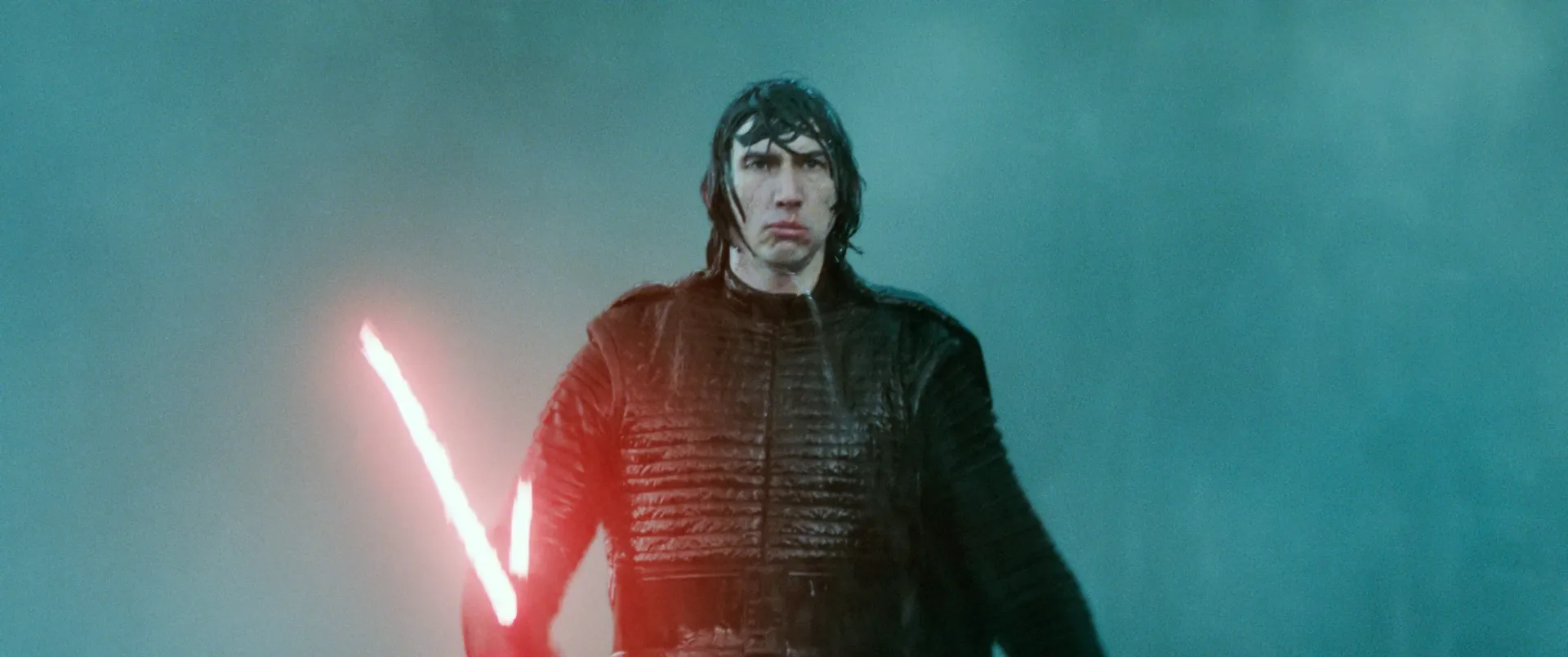
Adam Driver has renewed his criticism of the decision not to proceed with The Hunt for Ben Solo, the proposed Star Wars film that would have brought him back to the role of Kylo Ren/Ben Solo. Speaking while promoting Paper Tiger, Driver described the project’s cancellation in unusually blunt terms, saying the decision “felt criminal” to him.
The proposed film was developed by Driver and director Steven Soderbergh over roughly two and a half years. Driver’s frustration is rooted not simply in the loss of another acting job, but in the apparent combination of a character he says he loved playing, a story he believed in, and a filmmaker whose involvement he viewed as a major creative opportunity.
“For me it was: Steven Soderbergh wants to make a ‘Star Wars’ film. What are we debating?” Driver said. “It’s what it is. It’s criminal. Or it felt criminal. We’re all moving on. On to the next.”
Driver also said Soderbergh has since written another project that he considers among the director’s best work. That detail underlines an important reality of unmade films: development can demand substantial creative time even when a production never reaches cameras, sets, casting announcements, or a release date.
A developed project, not a confirmed future release
The Hunt for Ben Solo is best understood as a scrapped development project. It was not a film that entered production, and no release plan, cast list beyond Driver’s involvement, plot synopsis, or production schedule has been established in the information available.
“Development” is the stage in which a film’s creative and business foundations are worked out. That may involve story discussions, writing, directing conversations, studio review, and decisions about whether the project fits a larger franchise strategy. A film can remain in that stage for a long time, change significantly, or stop entirely. Its existence does not mean it was guaranteed to be made.
Driver first publicly discussed the project in October 2025. He said then that he had been interested in returning to Star Wars and had discussed the possibility of another film since 2021. He also said Kathleen Kennedy had reached out, and that his condition for returning was straightforward: a strong director and a strong story.
That context matters because it frames the proposed film as a selective return rather than an open-ended commitment to revive the role. Driver had previously played the character across the sequel trilogy, beginning as Kylo Ren and ultimately revealing the restored Ben Solo identity in Star Wars: The Rise of Skywalker.
Related coverage includes Adam Driver Calls Scrapped Ben Solo Film Decision ‘Criminal’.
The central obstacle: Ben Solo’s apparent death
Driver said executives could not reconcile a new Ben Solo story with the character’s apparent death in 2019’s Star Wars: The Rise of Skywalker. That was the barrier that reportedly stopped the project rather than a public dispute over Soderbergh’s involvement or Driver’s willingness to return.
The word apparent carries weight in franchise storytelling. It reflects that audiences may debate what a story leaves open, while a studio must decide whether a continuation is clear enough to market and whether it preserves the meaning of the earlier ending. In this case, the studio’s reported concern was not merely whether Ben Solo could physically return within a fictional universe. It was whether such a return made narrative sense after the conclusion audiences had already seen.
That distinction also explains why enthusiastic fan interest does not automatically translate into a revived production. A fan campaign can demonstrate demand for a character, a pairing, an actor, or a premise. It cannot, by itself, resolve the creative question of how a story should continue, nor can it make the ultimate greenlight decision. A “greenlight” is the internal approval that allows a project to advance into full production planning; it is a studio decision, not a public vote.
Driver acknowledged that limit directly in an earlier appearance, saying a return would not be his decision and that he believed “the ship has sailed.” His comments leave a narrow theoretical opening—he said “if they wanted to, fine”—but his overall message is that he considers this particular effort finished.
Why Soderbergh’s involvement became the flashpoint
Driver’s newest remarks focus heavily on Steven Soderbergh. The actor’s reaction makes clear that, from his perspective, a filmmaker of Soderbergh’s stature made the proposition compelling enough that the hesitation felt difficult to understand.
That is an artistic argument, not confirmation that a studio had no reasonable commercial or continuity concerns. Large franchise productions must balance individual filmmakers’ approaches with character continuity, future plans and the expectations set by previous installments. But Driver’s point is equally clear: he saw the prospect of Soderbergh directing a Star Wars story as an opportunity worth seizing.
There is a broader tension here between a franchise’s need for long-range coherence and the appeal of letting distinct filmmakers pursue specific character-driven ideas. The available details do not reveal the full screenplay, the intended scope of the story, or every reason the project was declined. As a result, it would be premature to treat the cancellation as proof of a particular creative disagreement beyond the stated question of Ben Solo’s return.
What can be said is that Driver and Soderbergh spent a significant period developing an idea, Driver wanted to revisit the role under those circumstances, and the project ultimately did not move forward.
Fans turn an unmade movie into a visible campaign
The disclosure of The Hunt for Ben Solo prompted an immediate response from parts of the Star Wars fan community. Online calls to restore the project were followed by more visible gestures: supporters funded a plane banner reading “Save ‘The Hunt for Ben Solo’” over Walt Disney Studios in Burbank, California, and Driver referenced billboards in Times Square.
Daisy Ridley, Driver’s sequel-trilogy co-star as Rey, also supported fans who were championing the project. Her support helped turn the story from an account of an unmade film into a broader conversation about unresolved audience interest in characters from that trilogy.
Driver said he was surprised by the scale of the reaction. Rather than presenting the response as a contractual or industrial turning point, he described it as moving and communal: a discussion among people sharing the movies they hoped existed.
“I was blown away by the response to it,” Driver said. “In no way did I think there would be billboards in Times Square. It’s so moving. It did feel like we were all at the bar having a conversation about the films we wanted to see.”
That response is meaningful even if it does not change the project’s status. It shows that the announcement of an unmade film can become its own cultural event, particularly when it involves a major franchise character and a creative team fans find intriguing. The campaign also gives supporters a clear focal point: not a vague wish for more Star Wars, but a named, character-specific project tied to Driver and Soderbergh.
What the comments do—and do not—mean
- They do mean Driver remains disappointed that The Hunt for Ben Solo was not made.
- They do mean he and Soderbergh developed the project for about two and a half years.
- They do mean the reported stumbling block was the challenge of bringing Ben Solo back after the ending of The Rise of Skywalker.
- They do not mean the film has returned to active development.
- They do not mean a new Ben Solo film has been announced, scheduled, or approved.
- They do not establish the project’s full plot, intended supporting cast, budget, or release format.
That final set of distinctions is particularly useful in an era when a project’s title can circulate online as though it were a confirmed upcoming release. For now, The Hunt for Ben Solo is an example of a proposed film that generated powerful interest precisely because audiences learned it had existed and would not be made.
It also arrives amid ongoing public attention on how large franchises choose which stories to pursue. Similar questions around creative oversight and sequel development have surfaced elsewhere in blockbuster cinema; recent discussion around the next Superman film likewise shows how quickly unconfirmed claims and creative decisions can become points of fan debate.
Driver appears ready to leave Ben Solo behind
Despite his strong language, Driver’s comments do not sound like an attempt to launch a new negotiation in public. He has repeatedly paired disappointment with acceptance. His latest statement says that everyone involved is moving on, while his earlier comments suggest he does not expect the project to be revived.
That makes the story less about a pending comeback than about a missed creative collaboration. Driver’s emphasis on Soderbergh, combined with his attachment to Ben Solo, explains why the cancellation still clearly frustrates him. Yet the actor has also drawn a line under the role as things stand.
For fans, the campaign has made their interest highly visible. For Driver, it has been an unexpected and emotional indication that audiences still care about the character. But until the project’s status changes through an actual studio decision, The Hunt for Ben Solo remains a notable unrealized chapter rather than the next confirmed chapter of Star Wars.