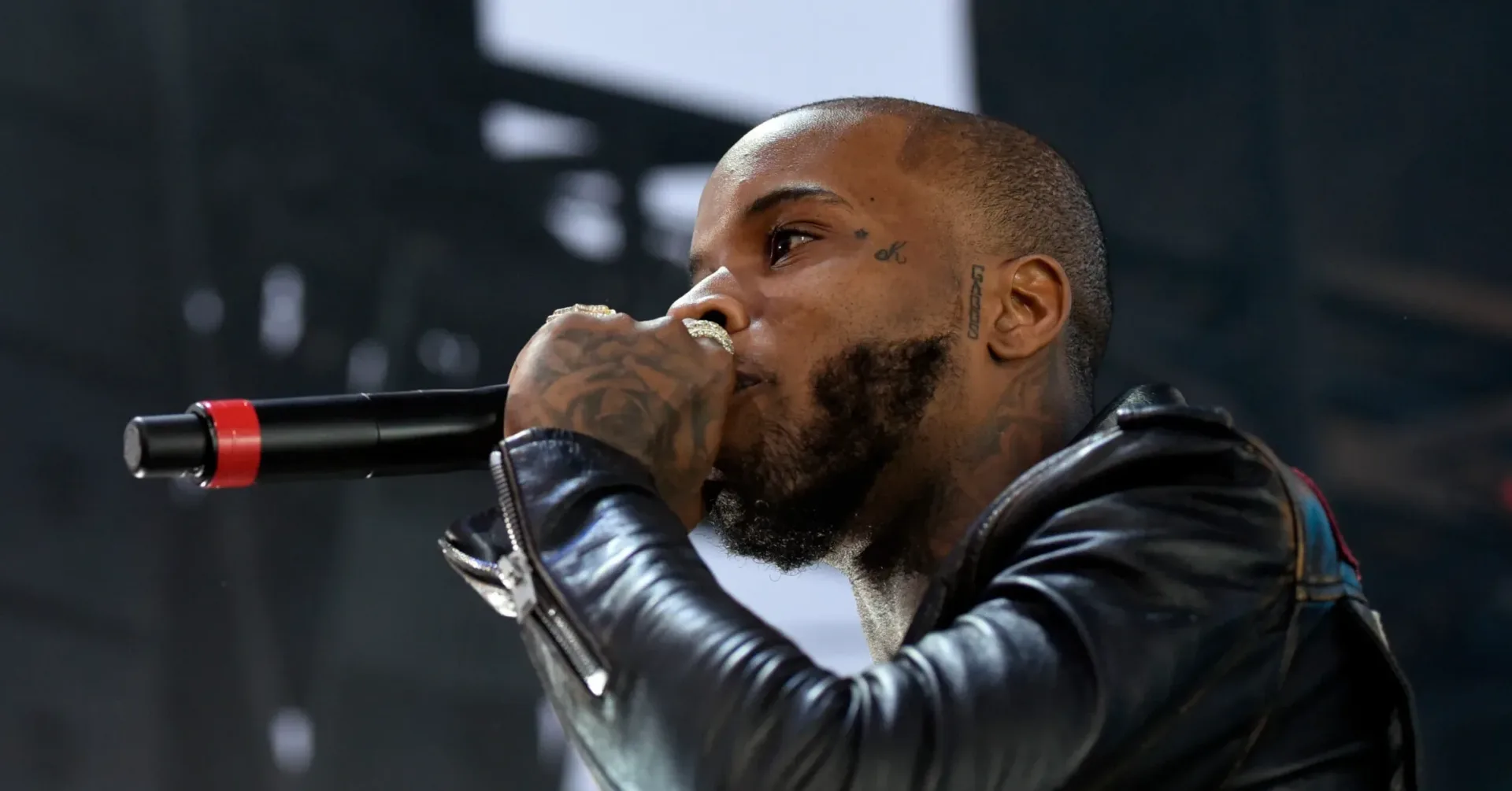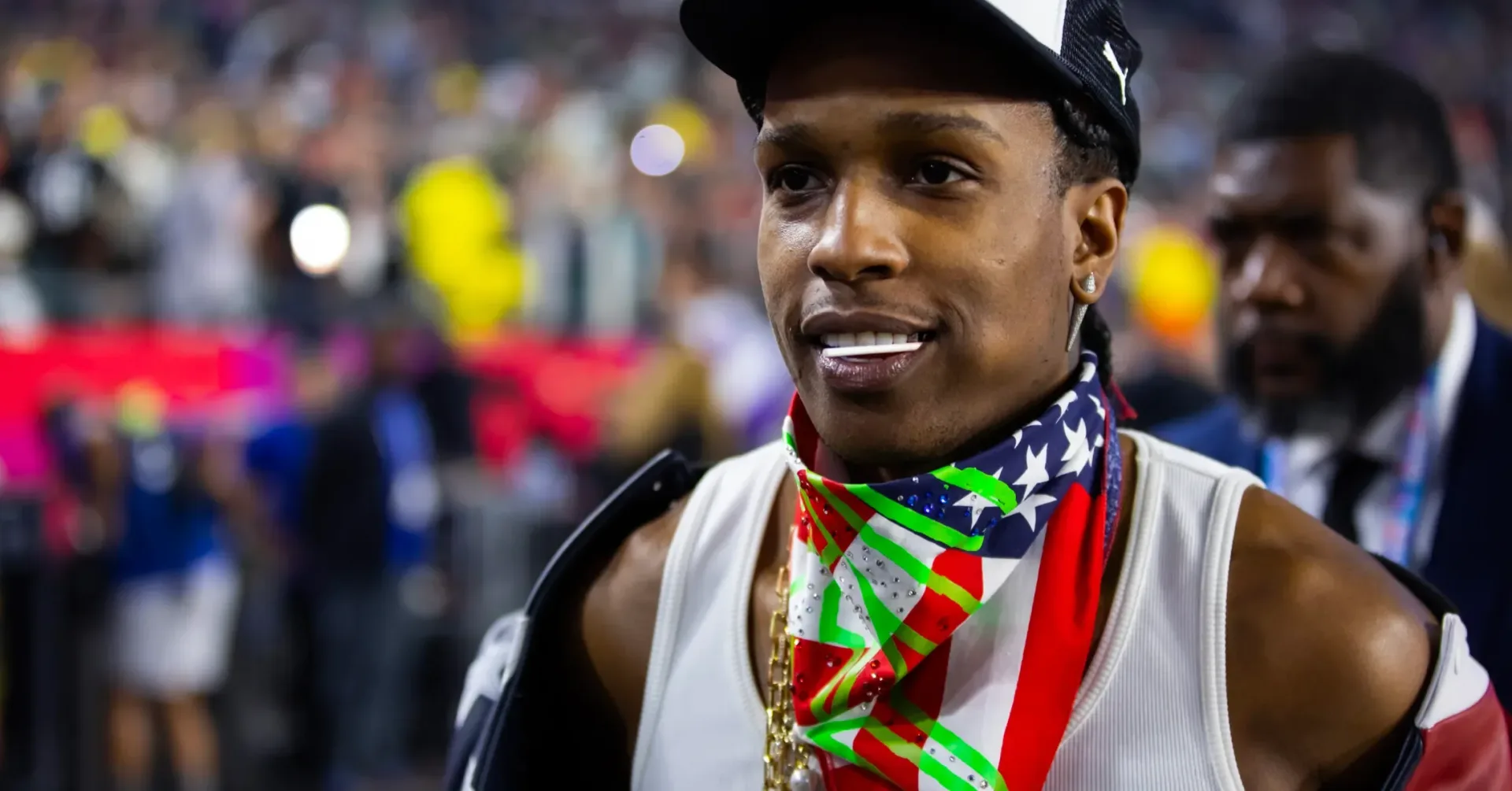
A$AP Rocky’s Don’t Be Dumb world tour has arrived in Stockholm, Sweden, putting the rapper back in a city inseparable from one of the most public and difficult episodes of his career. The visit is notable not simply as another European tour date, but because Rocky was arrested and detained in Sweden for nearly a month in 2019 following an alleged altercation.
That case spread far beyond music coverage at the time. It entered mainstream political conversation when President Donald Trump posted, “Get home ASAP, ASAP,” a line that attached Rocky’s stage name to a highly visible call for his release. For an artist whose work and public image are built around control of presentation, the period put his name at the center of a story shaped by legal proceedings and international attention rather than a release or performance.
Returning to Stockholm during a world tour changes neither the seriousness of that history nor the fact that the earlier incident remains part of how many people remember the city’s connection to Rocky. It does, however, place the relationship in a different context: he is back as a headlining performer, with Don’t Be Dumb now released and a major tour underway across North America and Europe.
Why Stockholm carries more weight than a standard tour stop
Tour routing is usually discussed in practical terms: venue schedules, local demand, travel logistics and the ability to connect one city to the next. But some stops acquire a second layer of meaning because of what happened there before. Stockholm is plainly one of those places for Rocky.
In 2019, his detention followed an alleged altercation and lasted close to a month. The details supplied here do not establish the legal outcome or revisit the underlying allegations, so it is important not to fill those gaps with assumptions. What is clear is the scale of the detention itself and the extraordinary public attention it received, including intervention in the form of Trump’s social-media message.
For artists, a return to a place linked with a traumatic or legally fraught period can be read in more than one way. It may be a professional decision driven by audience demand. It can also signal that an artist is unwilling to let one episode permanently dictate where they work. Those interpretations are analysis, not a statement of Rocky’s personal motivation; he has not been quoted here explaining why he chose to return. Still, the visual fact of a Stockholm date on a successful world tour naturally carries a sense of reclamation.
The supplied account describes the appearance as Rocky’s first return to Sweden in seven years, while also noting that he went back only months after coming home for a comeback show. Those two descriptions cannot be treated as identical without further detail. They may be referring to different kinds of appearances or visits, but that is not established. The safest reading is that Stockholm is a significant return during this tour, rather than assigning a precise “first return” label beyond what can be reconciled.
Don’t Be Dumb moves from album title to touring platform
The Stockholm date comes amid a busy period for Rocky. Don’t Be Dumb has been released, and the album is serving as the focal point for the current world tour. In touring language, a world tour is a run of performances across multiple countries or continents rather than a single regional leg. Here, the reported itinerary has included sold-out crowds in the United States and Canada before the move into Europe.
That distinction matters because an album campaign and a touring campaign are related, but not interchangeable. A record gives fans new material and a current era to rally around. A live run turns that era into an event shared in real time, city by city. The larger the route, the more an artist must sustain audience interest across different markets rather than relying on the momentum of one home region.
The available information characterizes the Don’t Be Dumb run as one of the year’s largest tours and says Rocky has drawn sold-out audiences across those territories. A sellout means all tickets offered for a particular show have been purchased; it does not by itself reveal the venue’s capacity, the number of dates, ticket prices or the tour’s total revenue. Those details have not been provided and should not be inferred. Even so, repeated sellouts across the United States, Canada and Europe are a meaningful indicator of active demand for the live show.
Stockholm is therefore not presented as a nostalgic detour. It is part of a live campaign that has reached several major markets, with the city’s personal history adding unusual emotional and cultural stakes to an otherwise conventional piece of global tour scheduling.
A reminder that live demand is not the same as chart dominance
The broader point around Rocky’s tour is about the difference between two measures of music success: chart visibility and concert attendance. Charts generally track consumption or sales during a defined period. Touring measures whether people will buy a ticket to attend a performance at a specific place and time. Both are important, but they answer different questions.
An artist can have tremendous live pull even when a genre is not leading broader chart conversation. Rocky’s run is being cited alongside major tours by Don Toliver and J. Cole as evidence that rap audiences are still showing up in force for concerts. That does not require a claim that every rap release is a chart leader, or that all artists share the same commercial position. It points instead to the durability of a fan relationship that is often easier to see in packed venues than in weekly rankings.
For fans, that gap has practical implications. A touring cycle may be the clearest opportunity to experience a particular album era in a communal setting, especially when its dates are selling quickly. For the artist, strong demand across territories makes a worldwide route more than a branding label: it demonstrates that a catalog, current project and live identity can travel.
It also underscores why personal history can become part of a show’s context without becoming its entire purpose. Rocky’s Stockholm performance is tied to his 2019 detention in the public memory, but it arrives amid a contemporary campaign around Don’t Be Dumb and a run of heavily attended concerts. Both things can be true: the location evokes an earlier ordeal, and the present date is about performing for an audience.
What the return represents—and what it does not establish
It is tempting to frame every return to a difficult place as a complete resolution. That would overstate what a concert can prove. A show cannot erase a detention, settle public debate around the events of 2019, or tell outsiders how Rocky personally feels about Sweden. No such claims are necessary to understand why this particular date stands out.
What the performance does establish is simpler and more concrete. Rocky is touring internationally after releasing Don’t Be Dumb. Stockholm is on that itinerary. The city is associated with his detention seven years earlier, and the visit puts him back before a Swedish audience in a markedly different role: a touring headliner rather than the subject of an international legal story.
That contrast is the real significance of the moment. The old headlines were about whether Rocky would leave Sweden. The current one is about his arrival, his performance and the scale of his active live audience. In an entertainment landscape where music narratives can move rapidly from album releases to social posts to ticket sales, Stockholm has become a rare stop that visibly connects all three kinds of public attention.
For more music-and-culture coverage, see our report on Chicago’s Donda West Way dedication attended by Ye.