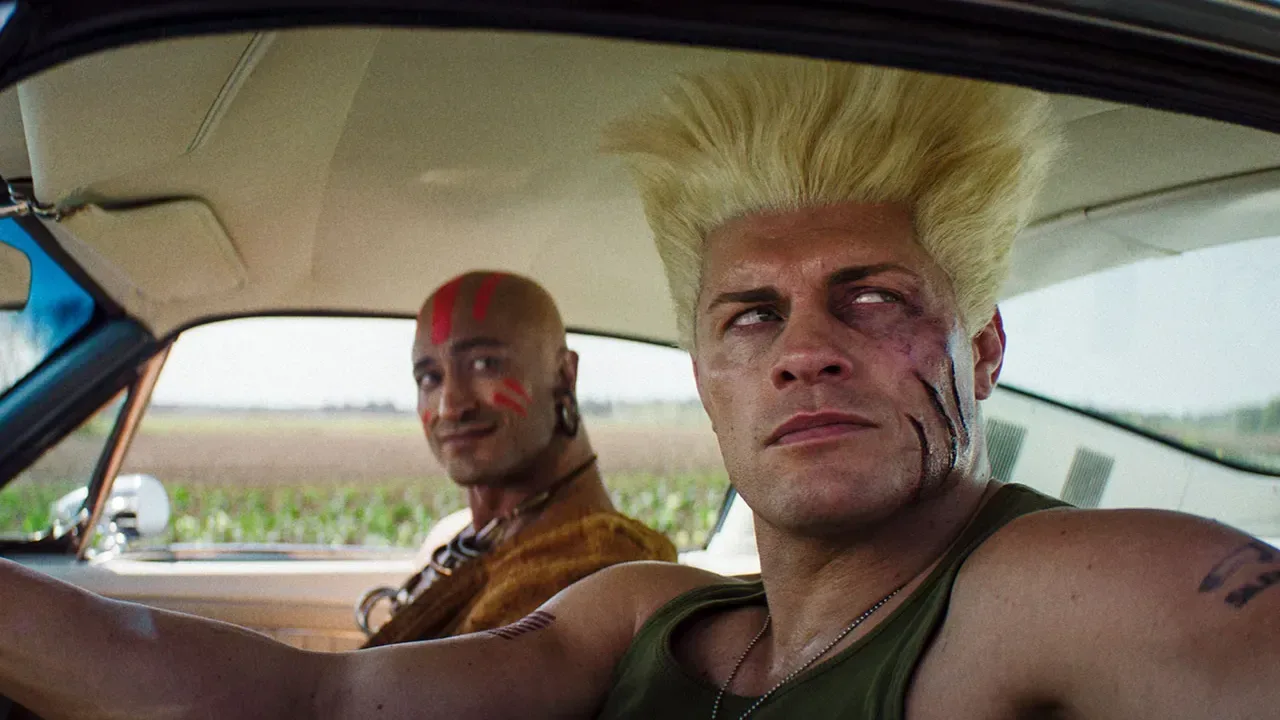

Street Fighter’s return to theaters has landed in record-chasing territory. The 2026 film, released on October 16, has accumulated an estimated $99.1 million worldwide less than a month into its run. Its reported total is made up of $57.4 million from North America and $41.7 million from international territories.
That is a notable result for a game adaptation with a reported $80 million production budget before marketing costs, and it places the film extraordinarily close to the long-standing theatrical benchmark set by 1994’s Street Fighter, starring Jean-Claude Van Damme and Raúl Julia. But there is an important numerical wrinkle in the record claim: the comparison figures currently published for the 1994 film are approximately $99,431,786 worldwide. That is about $331,786 above $99.1 million, not below it.
In other words, the newer film appears to be within striking distance of becoming the biggest-grossing Street Fighter movie worldwide, but the supplied estimates do not yet conclusively show that it has passed the 1994 release. Box-office figures can be revised as late returns are counted, and rounded totals can obscure a narrow gap. For a record separated by only a few hundred thousand dollars, precision matters more than a celebratory headline.
A very close worldwide race
Both films have reached roughly the same global total through very different regional splits. The 2026 movie’s estimated $57.4 million in North America accounts for the larger portion of its current take. The 1994 picture, by comparison, is estimated at $33,423,521 domestically and $66,008,265 internationally.
That difference is useful context beyond the simple record question. A worldwide box office gross is the combined ticket-sales total reported across domestic and international markets. In this case, “domestic” refers to North America, while “international” covers the rest of the tracked markets. It is a measure of the money generated at the box office, not a direct measure of what a studio ultimately receives.
The modern film’s stronger North American showing has helped it close in on its predecessor despite having a smaller reported international component. The 1994 movie, meanwhile, derived much more of its final total from markets outside North America. Neither profile is inherently better in isolation; the key immediate point is that both paths lead to nearly identical worldwide estimates.
The newer release began with a reported $51.1 million opening weekend, enough to lead the box office. Subsequent weeks reportedly brought a sharp decline, followed by steadier progress. Its current $99.1 million estimate suggests that the opening was central to the film’s theatrical performance, while later ticket sales have continued adding to the total.
Why a $99 million gross is not the same as a $19 million profit
It is tempting to take the reported $99.1 million worldwide gross, subtract the reported $80 million production budget, and call the difference a profit of roughly $19 million. That calculation is understandable, but it is not how film profitability can be established.
Related coverage includes Street Fighter's 2026 Film Reportedly Becomes the Franchise's Biggest Box Office Hit.
First, the $80 million figure is described as a production budget and does not include marketing. Advertising, promotional partnerships, distribution expenses, and other release costs can materially change the equation. Second, theaters do not send every dollar from ticket sales back to the film’s distributor. The amount returned after exhibitors retain their share is often referred to as theatrical rentals or distributor revenue, and it is distinct from the public-facing box-office gross.
So the reported box-office number is a positive commercial signal, particularly for a film now challenging a franchise record, but it does not itself prove a specific profit figure. The eventual financial picture may also involve home entertainment, licensing, and other revenue streams, none of which should be assumed from the theatrical total alone.
That distinction is especially relevant here because the film’s future has been tied to the reception of the first installment. A strong gross can improve the case for more films, yet sequel decisions are generally based on a wider set of internal financial expectations than a single public total.
The sequel groundwork is already visible
There is nevertheless clear evidence that the creative team has been thinking beyond one movie. Director Kitao Sakurai has said a sequel is being written. The first film also ends on a cliffhanger designed to point toward another chapter and a character absent from this installment.
Olivier Richters, who plays Zangief, has additionally said on social media that the cast signed on for a trilogy. He framed the arrangement as part of the reason certain characters received less screen time than some viewers expected: the intention was to leave room for later films to develop them further.
Those comments indicate preparation and ambition, not a formal guarantee that all three movies will be made. A script in development is not the same as a sequel receiving a production green light, and cast agreements can make a return possible without obligating a studio to proceed. Still, the combination of a cliffhanger, ongoing writing, and a cast reportedly positioned for multiple entries makes this more than a vague wish for a follow-up.
For an ensemble built around a fighting-game roster, the approach also has an obvious practical logic. A movie has limited time to introduce protagonists, rivals, villains, and supporting combatants while maintaining a story that works for viewers who may not know the games. Holding some material back for a possible continuation can preserve space in the first installment, though it also raises expectations that a sequel will arrive to pay off those setups.
A franchise milestone with caveats
The 1994 film remains a distinctive part of Street Fighter’s screen legacy, in no small part because of its cast and its enduring reputation among fans. Its reported $99.43 million worldwide gross has stood as the adaptation benchmark for decades. The 2026 release, starring Andrew Koji, Callina Liang, and Noah Centineo alongside wrestling and music figures, has now brought the franchise back to essentially the same commercial neighborhood.
Whether the newer film has already taken the record depends on which updated total is used. On the estimates available here, it has not quite done so yet. The margin is sufficiently small that another revision or additional theatrical earnings could change that answer, but the accurate present wording is that it is challenging the record rather than definitively owning it.
There is also a confirmed 4K Steelbook planned with separate hero- and villain-focused cover variants. That release gives physical-media collectors a forthcoming option, although no release date, price, or ordering details are established here. It should not be treated as evidence of theatrical revenue, but it does show that the film’s post-cinema life is already being considered.
For the wider games business, film performance remains one piece of a busy entertainment picture; readers tracking that side of the calendar can also find details on how to watch the Golden Joystick Awards 2026. In Street Fighter’s case, the immediate story is more focused: a new adaptation has come remarkably close to a 1994 box-office mark, and it has given sequel advocates a stronger argument than they had at opening night.
The next reported worldwide update will matter. Passing the older estimate would make the 2026 film the franchise’s top theatrical earner on the available figures. Remaining just short would still leave it as a major showing for a video-game adaptation—and one with an unfinished on-screen story and a sequel script already in progress.