Xbox Game Studios has been reduced from a broad label covering a large collection of first-party developers to an organization with just three remaining game-making studios: The Coalition, inXile Entertainment, and Playground Games. Xbox Game Studios Publishing also remains under the banner, but it is a publishing operation rather than a development studio.
The change is the clearest picture yet of Microsoft’s ongoing restructuring of its games business. Teams once associated directly with Xbox Game Studios have been sold back to management, transferred beneath Bethesda or Activision, folded into other studios, moved to other Xbox leadership, or placed at risk of closure. Microsoft’s overall gaming footprint is still enormous after its Bethesda and Activision Blizzard acquisitions. But the compact group of studios directly housed under the Xbox Game Studios name is now dramatically smaller.
In corporate-organizational terms, this is a distinction worth making. A studio can remain part of Microsoft’s gaming business while no longer reporting through Xbox Game Studios. That means the company is not necessarily exiting game development altogether. It is instead redrawing who oversees particular teams, franchises, budgets, and release plans—and reducing the number of teams that sit in the old Xbox studio structure.
What remains under Xbox Game Studios
The remaining development studios are:
- The Coalition
- inXile Entertainment
- Playground Games
Xbox Game Studios Publishing remains alongside them. That group has worked on projects including Ninja Gaiden 4, released in 2025, as well as Kojima Productions’ upcoming OD and Physint. Its survival matters because publishing is a different job from operating an internal studio. A publishing team can help fund, coordinate, market, and bring games to market without employing the developers making every one of those games.
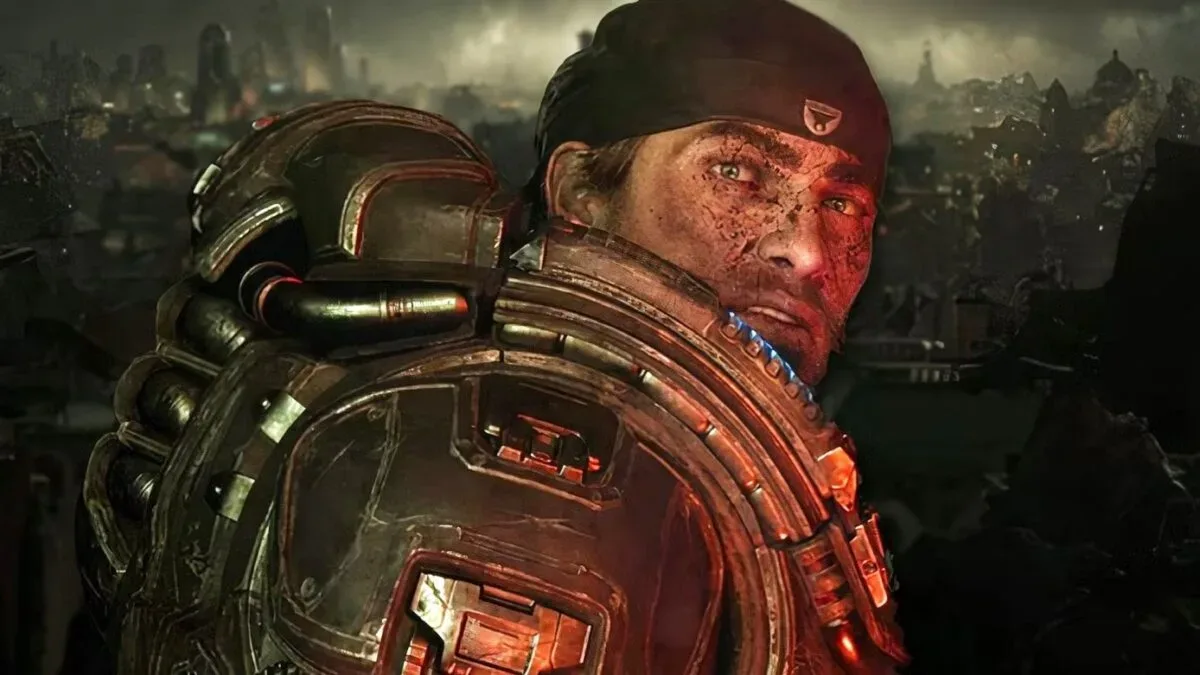
All three remaining internal development teams have games expected within the next year. The next listed arrival is Gears of War: E-Day in October, followed by projects including inXile’s Clockwork Revolution. That release proximity may help explain why the remaining structure has not yet changed further: moving teams or leadership during the final stages of a major game can create avoidable disruption. It is still only an inference, however, not a stated commitment that the three-studio arrangement will remain permanent.
The Coalition’s immediate importance is especially apparent given E-Day. Recent changes around that game have also brought scrutiny; its story director was laid off shortly after the project reached a gold milestone. “Gold” is an industry term for a build considered ready to proceed toward release, though developers can still issue patches and continue other post-gold work.
How the studio map changed
In 2021, Xbox Game Studios included 343 Industries, The Coalition, Compulsion Games, Double Fine Productions, The Initiative, inXile Entertainment, Mojang Studios, Ninja Theory, Obsidian Entertainment, Playground Games, Turn 10 Studios, Rare, Undead Labs, World’s Edge, and Xbox Game Studios Publishing.
Related coverage includes Xbox Game Studios Shrinks to Three Core Developers in Microsoft's Latest Restructuring.
That list represented a strategy built around owning a wide assortment of specialized teams. It covered racing, role-playing games, survival games, family-friendly creative games, historical strategy, action projects, and marquee Xbox series. The Initiatve was introduced as a new AAA studio and announced a new Perfect Dark project with a 2020 Game Awards teaser. AAA generally refers to a large-budget, high-resource game production. In 2025, Microsoft shut down the Perfect Dark project after years of troubled development and closed The Initiative.
The larger acceleration came in June. Double Fine Productions and Compulsion Games were sold back to their studio management. Undead Labs later joined them in being sold back to management as well. A sale back to management, sometimes called a management buyout in broader business language, means the studio’s leadership regains ownership rather than the team simply being reassigned inside the same parent company.
Mojang, the team behind Minecraft, was removed from the Xbox Game Studios umbrella and began reporting directly to Xbox CEO Asha Sharma. It remains an Xbox business, but it is no longer part of this particular studio group.
Other changes emphasize consolidation into Microsoft’s other game-publishing organizations. Obsidian Entertainment was moved under Bethesda. Rare and Age of Empires developer World’s Edge were shifted under Activision. Microsoft Casual Games, which handles games including Microsoft Solitaire Collection, was transferred to King, the maker of Candy Crush. Turn 10’s remaining operations were subsumed by Playground Games.
The Halo situation is among the most consequential of the moves. 343 Industries, later renamed Halo Studios, has been severely downsized. Its remaining staff will support Activision. Halo has long been foundational to Xbox’s identity, so a support role for the former franchise steward represents a notable shift in how Microsoft is arranging work around the series. More detail on the staffing reduction and the transition of Halo work is available in this report on Halo Studios’ transfer to Activision.
Ninja Theory is in a more uncertain position. It has not found a buyer and could close in the coming months if that does not change. That uncertainty is distinct from a completed divestiture or a transfer. Its future should not be treated as settled until there is a final outcome.
Three quarters through a restructuring
Matt Booty, Microsoft’s chief content officer, described the actions completed since July, including the studio divestitures, as bringing the company “roughly three-quarters” of the way through its previously announced restructuring.
“At our October 6 town hall, we will come together as an ALL-XBOX team to reflect on our progress and look ahead to one of the strongest game lineups in our history.”
The 75 percent figure is an organizational-progress measure, not a complete guide to what comes next. Still, it reinforces the central practical reality: this process is ongoing. The present list of three studios is accurate as a snapshot, but it does not guarantee that the list is final.
For fans, the immediate question is not simply whether a favorite studio still exists. It is who now holds responsibility for a franchise and whether that move affects staffing, creative leadership, release schedules, platform plans, or long-term support. The evidence here establishes the reporting-line and ownership changes, but it does not establish new product roadmaps for every team. A transfer beneath Activision or Bethesda is not automatically a cancellation, sequel confirmation, or promise of a particular release strategy.
A smaller label inside a larger games business
It can sound contradictory to say Xbox Game Studios is shrinking while Microsoft gaming remains huge. Both can be true. Microsoft expanded its games holdings through Bethesda and Activision Blizzard, gaining major publishers and development networks. The current restructuring suggests that the company is increasingly organizing many development teams around those acquired publishing groups rather than maintaining a large standalone Xbox Game Studios roster.
That organizational choice may have practical consequences. A publisher has its own production processes, support functions, leadership hierarchy, and portfolio priorities. Placing a studio under Bethesda or Activision could create access to those systems, while also meaning that the old Xbox Game Studios structure has less direct control over the team. The supplied information does not specify how individual projects will change internally, so claims about creative outcomes would be premature.
It does, however, make the Xbox Game Studios brand less representative of the full set of developers working across Microsoft gaming. The name once signaled a large internal federation of teams. Now it primarily denotes three developers and a publishing group, while several former members operate under different Microsoft divisions or outside Microsoft after management buyouts.
Why the release calendar matters
The timing of these decisions has attracted attention because major projects remain close to release. Halo: Campaign Evolved released in July before the latest Halo Studios change was announced. Gears of War: E-Day is set for October. Clockwork Revolution is expected in the first half of 2027.
There is a straightforward business reason why companies often avoid major public reorganizations during a project’s final stretch: teams need stable decision-making, testing, certification, marketing coordination, and production support. But no public statement in the supplied information says Microsoft is preserving the remaining Xbox Game Studios units until their games ship. The calendar supplies context, not proof.
That distinction is important amid a restructuring of this scale. Players can reasonably watch upcoming releases for signs of what the new structure means, but they should avoid turning a release date into a guarantee about a studio’s future. A shipped game is a milestone. It is not, by itself, an assurance of independence, staffing levels, or an eventual sequel.
The enduring tension behind the reset
Xbox has historically combined internally managed teams with external partnerships and acquisitions. Halo itself began as an Xbox-defining exclusive developed by outside talent before becoming central to Microsoft’s first-party identity. The current reorganization sharpens an old tension: owning acclaimed intellectual property and operating a stable in-house development network are related goals, but they are not the same thing.
“First-party” describes games or studios owned by a platform holder or publisher. It is often used as shorthand for exclusivity, but ownership, publishing, platform availability, and creative control can all be arranged in different ways. The studio changes outlined here concern corporate placement. They do not, on their own, answer where every future Microsoft game will launch or which hardware it will support.
Microsoft’s leadership is framing the remaining organization around a strong future lineup. The more immediate, verifiable picture is narrower: the old Xbox Game Studios roster has been substantially dismantled and redistributed, leaving The Coalition, inXile, Playground Games, and the publishing group under the label. What follows for the three remaining studios—and for Ninja Theory—will determine whether this is the end point of the reset or another stop in a still-moving reorganization.