Project Helix has moved one important step away from the realm of codename fog. Xbox has now described its next-generation effort as a console capable of playing games from a PC—a distinction that is doing a surprising amount of work.
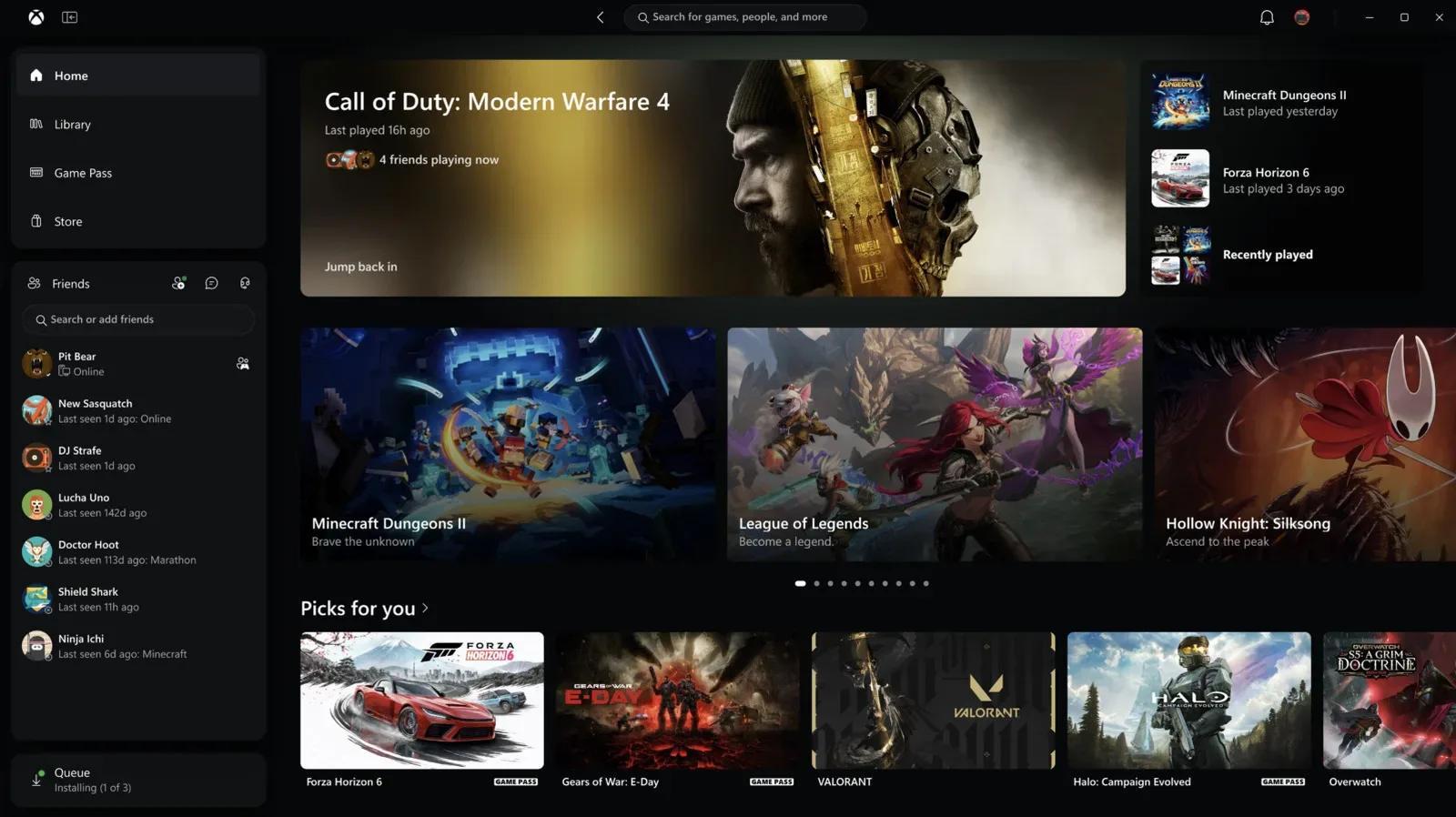
The message is not that Xbox plans to put a Windows PC in a box, sprinkle it with dashboard dust, and call it a day. The stated design goal is a console experience first: straightforward, immediate and recognizably Xbox. PC-style flexibility, including deeper settings and performance options, is presented as something available to players who want to venture beyond the simple “pick game, press play” route.
That ambition sits inside a broader Project Helix promise. Xbox has previously called it a “family of devices,” while the latest details frame it as a platform intended to reduce the long-standing separation between console and PC gaming. It is a very large idea, and, appropriately for a project still without a confirmed launch date, it remains short on vital specifics: hardware configuration, price, exact device lineup, operating system behavior, which PC game stores or libraries could be supported, and how compatibility will work game by game.
Still, the clarification matters. It provides the clearest indication yet of what Xbox wants Helix to be—and what it does not want people to assume it is.
A console with a PC door, not a PC wearing a console hat
Jason Ronald, Xbox’s vice president of next generation, drew the boundary plainly: Helix is envisioned as a console that can play PC games, rather than a PC that can play console games. That may sound like branding semantics until the practical difference is unpacked.
A traditional console is built around consistency. The interface, controller experience, setup process and general expectations are designed to feel predictable. Players generally do not need to examine graphics presets, background processes, driver versions or a buffet of display toggles before starting a game. A PC, by contrast, can offer considerably more choice and adaptability, but that choice can bring more decisions and troubleshooting.
Xbox is attempting to combine those worlds without letting the second overwhelm the first. In its stated ideal, someone who simply wants an Xbox game library available quickly can use Helix like a familiar console. A player who cares about performance behavior or detailed settings can dig further in. Whether those two audiences can be served cleanly by one interface is a major design challenge, but the intent is clearer than it had been.
“Customizability” in this context refers to the ability to alter settings that affect how a game runs or looks. Ronald specifically cited settings and performance options. The company has not said which controls will be present, how broad they will be, or whether every title will expose the same choices. Those unknowns are important: a promise of PC-game support is not yet a complete explanation of the player experience.
Likewise, “capable of playing games from your PC” establishes a direction, not a confirmed list of compatible games. It should not be read as a guarantee that every PC title, launcher, peripheral or mod setup will work on Project Helix. Xbox has not supplied that level of detail.
The central promise is a library that travels
Ronald’s larger vision is that a player’s Xbox library, progression and history can remain accessible across four generations of Xbox games. That focus gives Helix a much more practical identity than its codename might suggest. Instead of asking players to start over with each hardware transition, Xbox wants the next platform to carry their existing purchases and saved progress forward, while blurring the historical line between console and PC software.
Compatibility is more than a bullet point for people who still regularly play older releases. It affects purchasing confidence. Players who have built digital libraries over several console generations naturally want to know whether those games will survive the next hardware shift. Ronald said preservation is core to Xbox’s plans, and that compatibility is shaping both platform design and collaboration with partners.
The stated goal goes beyond merely keeping past games runnable. Xbox wants games to be playable “better than ever” on future hardware, while also designing current platforms and games with preservation decades ahead in mind. That is a meaningful aspiration, though the company has not detailed the technical approach Helix will use to achieve it.
For players with older Xbox libraries, it is encouraging that preservation has been discussed as an architectural consideration rather than a late-cycle feature. It is not, however, a game-by-game compatibility announcement. The eventual proof will be in the support list, the quality of each game’s implementation and the treatment of saved data, accessories and digital entitlements.
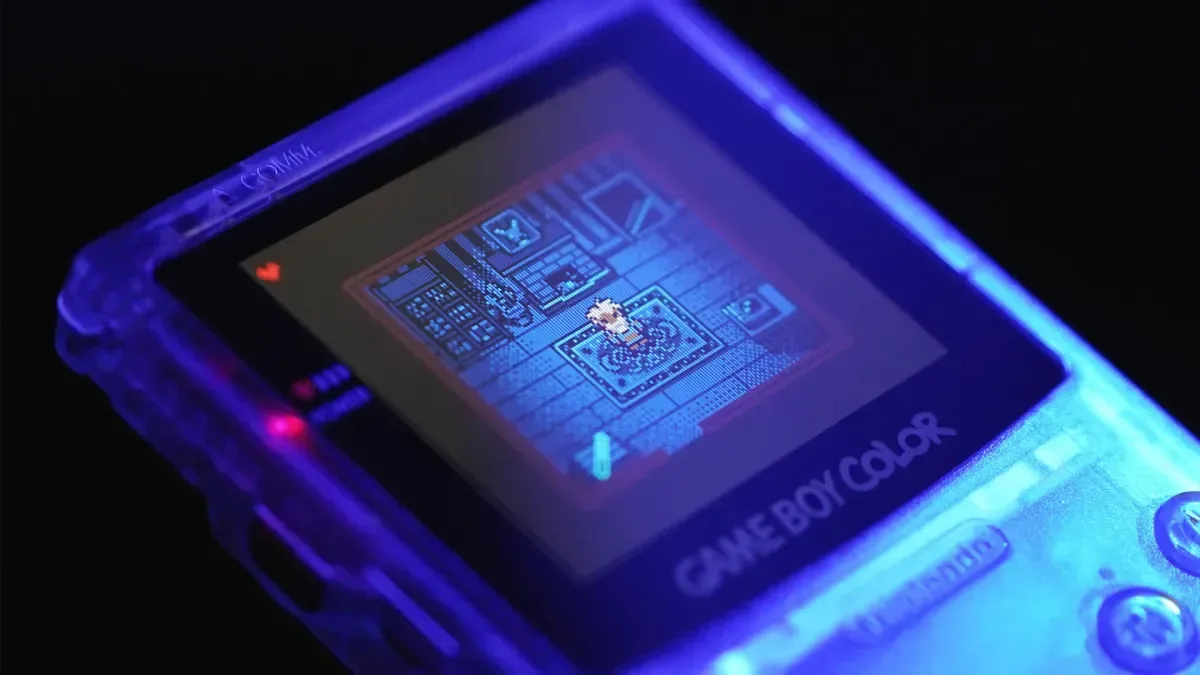
The preservation angle also has a natural connection to the wider retro-gaming community. New machines do not replace the appeal of original hardware, but better access to established libraries can keep older games in active circulation. That ongoing enthusiasm for older formats is visible well beyond Xbox; for example, developers are still producing new work for classic handhelds, including a Game Boy Color rebuild scheduled for December.
One Xbox feel across very different screens
Xbox calls Project Helix part of a platform that can move with the player. Ronald described a goal in which the experience remains intuitively Xbox across a living-room television, a handheld screen, streaming and PC use, while adapting to the strengths of each device.
That is a more nuanced objective than simply placing the same menu everywhere. A television setup typically favors couch-friendly navigation and controller input. A handheld has a smaller display and different portability constraints. A PC can offer more visual information at once, plus the precision of a mouse and keyboard. Xbox’s stated plan is for the experience to feel familiar across those contexts without pretending every screen and input method should be treated identically.
This is where the “family of devices” label becomes especially relevant. It suggests Helix may be broader than one conventional box under a TV, but Xbox has not revealed what every device in that family will be. The details available now do not confirm a particular handheld Helix product, a streaming device, a release schedule, or a specific product configuration.
Xbox has pointed to the ROG Xbox Ally and Xbox mode as an early indication of the design direction. Ronald called the Ally a precursor to Helix, while also saying that Helix’s own design ideas informed it. That does not turn the Ally into a complete preview of the next console. It does indicate that the company is learning from a device and interface designed around more portable, PC-adjacent play.
Why neural rendering keeps coming up
Project Helix arrives amid a component crisis that has increased costs across consoles and storage. That has made price a central concern well before Xbox has announced a Helix price tag. Ronald acknowledged the difficult environment while arguing that it is pushing platform designers toward new technical solutions that can improve performance without simply relying on more expensive hardware.
One term Xbox highlighted is neural rendering. In Ronald’s explanation, this is a way to generate a frame without demanding additional computational horsepower or memory. In plain language, it is being discussed as a route to better visuals or performance that does not depend solely on putting ever more raw processing resources into a machine.
“Rendering” is the process of generating the image a player sees. A “frame” is one of the individual images shown in sequence to create motion. Computational horsepower describes the processing capacity available to run those tasks, while memory is working space a system uses to hold the data needed while software is running. Xbox’s argument is that advances in neural rendering could change how those resources are used.
That is a significant technical direction, but it should be viewed as a design priority rather than a finished product specification. Xbox has not outlined Helix’s exact neural-rendering hardware, the results players should expect, or which games will use it. Nor has the company announced a final retail price. The potential value is clear: if new techniques ease the need for additional processing power and memory, they could help developers and hardware makers face cost pressure. Potential is not the same thing as a confirmed affordability outcome.
Big ambitions meet an unsettled Xbox moment
The Helix discussion arrives after a turbulent year for Xbox. Asha Sharma became Xbox CEO in the early months of 2026, while layoffs affecting thousands and studio closures made the company’s future difficult to view without caution. Sharma said in July that Microsoft’s gaming business was “not healthy.”
That context does not invalidate the platform vision, but it changes the way it will be received. “Remove barriers” is an attractive mission statement. Players and developers will reasonably measure it against the tangible questions still unanswered: What will Helix cost? How accessible will it be? What software will it support? How reliable will backward compatibility prove? And what does a platform-first strategy mean for the teams making games?
Ronald has also connected Xbox’s future planning to younger players accustomed to content that is not confined to one device. He expects barriers to user-generated content creation to fall and players to gain more agency and control over their experiences. These are broad observations rather than a list of promised Helix tools, but they reinforce the company’s bigger objective: less emphasis on a single fixed device, more emphasis on access, continuity and adaptable ways to play.
What players can reasonably take from this now
There is a solid outline, but not a spec sheet. Project Helix is Xbox’s proposed next-generation transition, designed around a console-first identity with an opening to PC games. It is intended to preserve and carry forward Xbox libraries and progression, adapt its experience to TVs, handhelds and PCs, and offer optional depth for players who want more control.
There is also plenty that remains unknown. Reports have speculated about a possible late-2027 arrival, but Xbox has not confirmed a launch date. No price, full hardware design, supported PC ecosystem, confirmed compatibility catalog or final device family has been announced.
For now, Helix’s most important line is also its simplest: Xbox wants the next machine to behave like a console without forcing players to leave PC gaming at the door. Turning that into something easy, affordable and dependable will be the real boss fight.