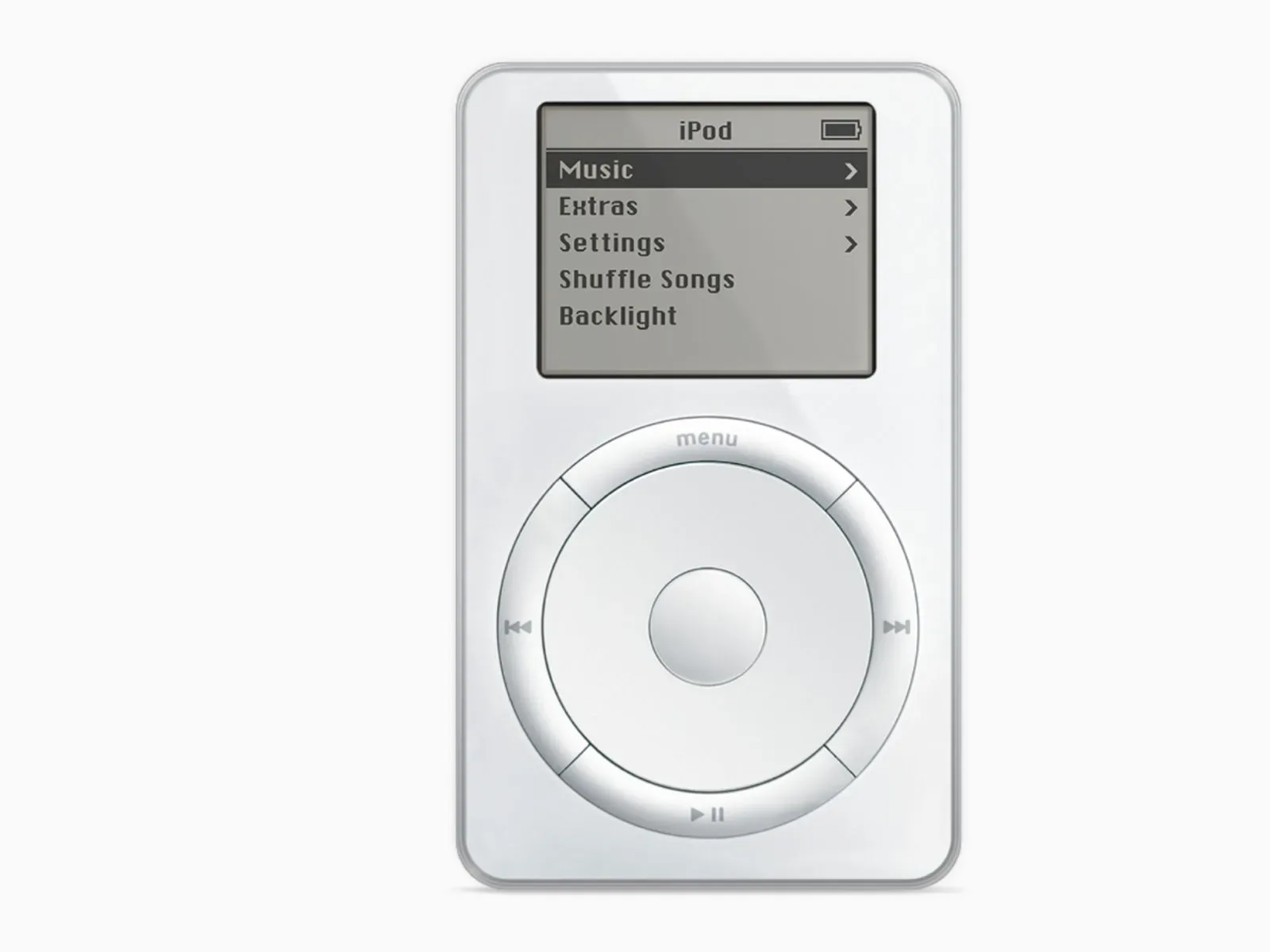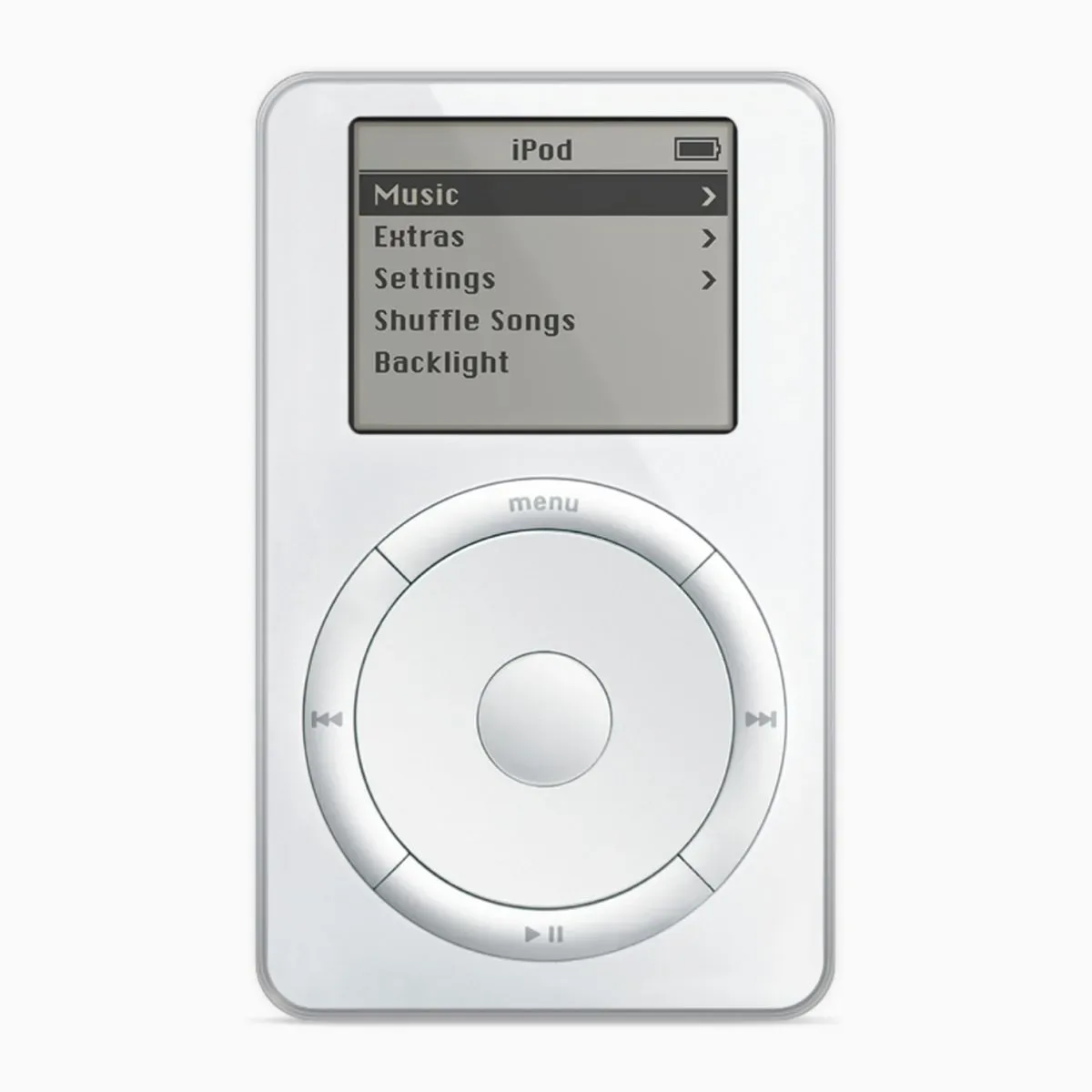
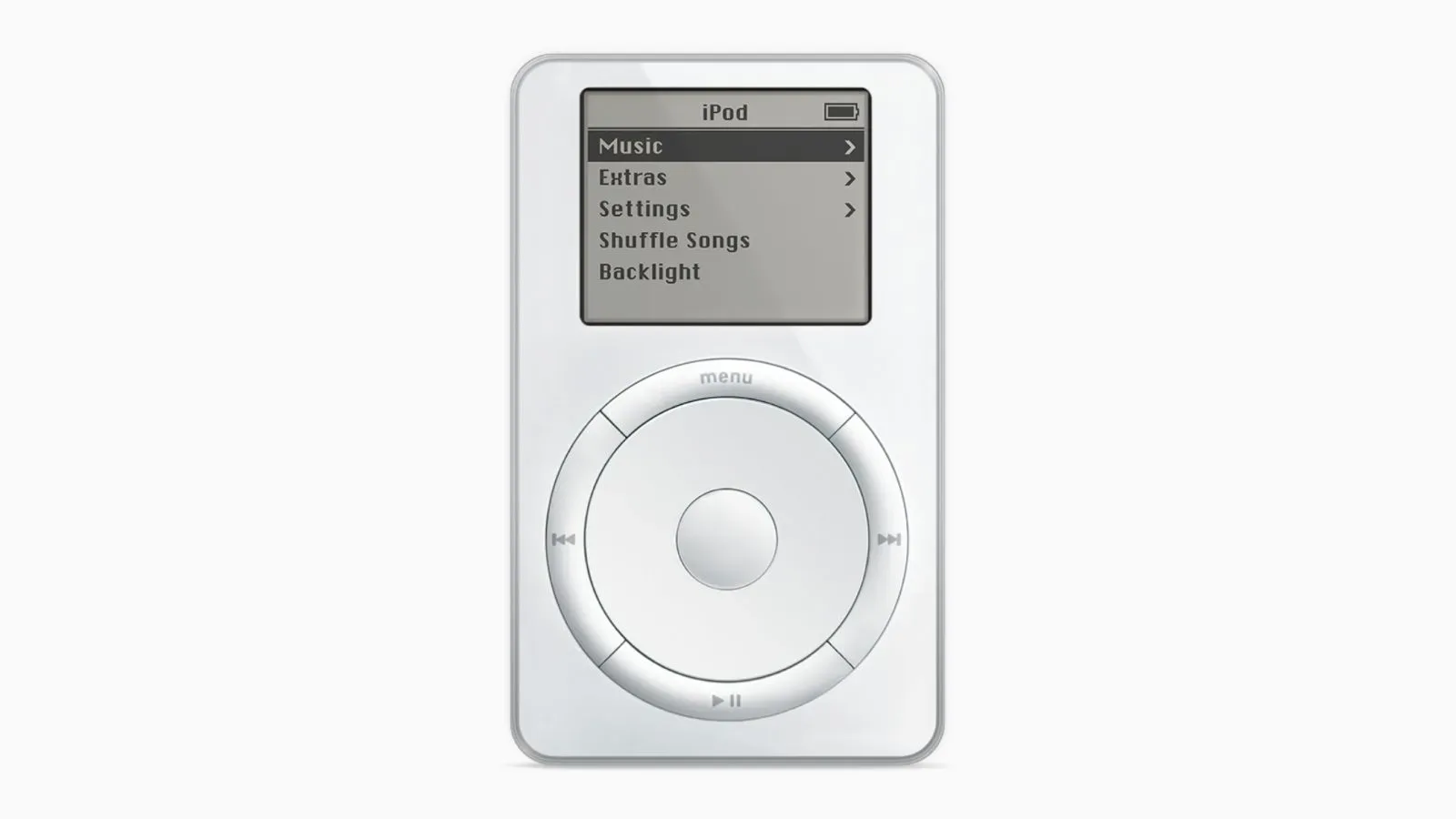
Twenty-five years ago, on November 10, 2001, Apple put the original iPod on sale. It cost $399, worked only with a Mac, and arrived as a dedicated music player at a moment when its purpose was not universally obvious. Yet its compact combination of a 5GB hard drive, a monochrome display, a mechanical scroll wheel and iTunes synchronization helped turn the iPod into one of the company’s most consequential products.
The headline promise was memorably direct: 1,000 songs in a pocket. That claim was about capacity, but the device’s larger idea was convenience. Rather than treat digital music as a collection of individual files that needed to be selected and moved one by one, the iPod was designed around a library. Music and playlists could automatically synchronize from iTunes to the player. The result was a portable extension of a person’s existing music collection, rather than merely a storage device with headphones attached.
That approach has become so familiar that it can be easy to miss why it mattered. The original iPod was not the first portable digital music player, nor was it inexpensive. Its advantage was the way hardware, connection, desktop software and navigation were arranged into a single routine. Plug it in, let it charge, let the library update, and take it away again. The iPod’s long journey from a skeptical reception to more than 304 million sales by October 2011 shows how much that routine resonated.
A small unveiling for a big bet
Steve Jobs introduced the first iPod on October 23, 2001, a little over two weeks before it went on sale. The event was held in the Town Hall auditorium at Apple’s Infinite Loop headquarters. Beforehand, invitees had been told to expect a breakthrough digital device, while also being told it was not a Mac. That left room for speculation ranging from a music player and a home-stereo accessory to a handwriting-recognition handheld.
Reports had even circulated the iPod name shortly before the event. Once the product was revealed, the basic specification was clear: a 5GB hard drive, monochrome LCD, mechanical scroll wheel, and battery life of up to 10 hours. Apple said a full CD could transfer in under 10 seconds, while a 1,000-song library could be moved in less than 10 minutes through FireWire.
FireWire was the wired connection used for both data transfer and charging on the original iPod. That dual role was important to its everyday usability: the same cable that replenished the battery was also the route for syncing music. The hard drive was not restricted to audio, either. It could hold documents and other files, giving the hardware a second purpose as portable storage.
The original unit’s dependence on iTunes was equally fundamental. Synchronization, in this context, means software automatically copying selected material from a computer library to a connected device. The iPod could copy songs and playlists from iTunes rather than asking the owner to manually manage each transfer. For listeners building playlists for a trip, commute, party or walk, that automation was a practical feature, not background technical jargon.
The criticism was real—and understandable
The early response was mixed. The $399 entry price, Mac-only compatibility and the perceived lack of novelty all drew criticism. Some early discussion dismissed the device as far from revolutionary, while another reaction viewed the attention around it as excessive. People also focused on more ordinary concerns: fingerprints on the polished rear casing, heat during charging and the quality of the included earbuds.
Those reactions are useful now because they distinguish the iPod’s eventual cultural prominence from an assumption that everyone recognized its potential immediately. The first model asked buyers to accept several constraints. It was expensive. It only worked with Macs initially. It depended on iTunes. Its design also made its shiny rear surface a point of anxiety for people who wanted their costly new gadget to remain unmarked.
In other words, the iPod did not succeed because it escaped trade-offs. It succeeded despite obvious ones, while providing a polished answer to the central question of how to keep a substantial digital music library portable and manageable. A capacity of 5GB sounds modest beside modern devices, but its advertised 1,000-song figure expressed a meaningful shift in what a portable player could hold.
The scroll wheel was an interface, not just a shape
The original iPod’s mechanical scroll wheel became a defining part of its identity. Navigating a music library requires moving rapidly through artists, albums and tracks; a scrolling control made that task feel different from repeatedly pressing a directional button. Apple refined the idea quickly. The second-generation iPod swapped in a touch-sensitive scroll wheel.
Then came the Click Wheel, introduced with the iPod mini in January 2004. It combined playback buttons with the touch-sensitive scrolling surface. The player could remain small while retaining controls that were easy to reach without surrounding the display with a clutter of separate buttons. Apple brought the same control to the fourth-generation full-size iPod later in 2004.
The mini also established that “iPod” could be a family rather than one product. It had a smaller anodized aluminum enclosure and came in silver, gold, pink, blue and green. That variety made the line more visibly personal while retaining the familiar core concept: a portable music library operated through a scroll-based interface.
As the family evolved, the hardware changed with it. The third-generation iPod added the 30-pin Dock Connector in 2003. The full-size model gained a color screen in 2004 and video playback in 2005. Each update expanded what an iPod might be used for, but the product line’s foundations remained recognizable: portable media, a compact interface and connection to a larger library.
One name, several distinct answers
Apple’s later iPod releases did not simply make the original design smaller or larger. They split the idea into different priorities.
- iPod mini: a smaller model with an anodized aluminum body and the debut of the Click Wheel.
- iPod shuffle: introduced in 2005 as an even smaller and simpler music player, deliberately leaving out a display.
- iPod nano: also introduced in 2005, replacing the mini with a thin flash-storage design. Subsequent nanos added video playback, a video camera and a touchscreen.
- iPod touch: introduced in September 2007 with a 3.5-inch Multi-Touch display, Wi-Fi and Safari, without requiring a cellular plan.
Flash storage refers to storage that retains data without relying on a spinning hard drive. In the iPod nano, its use enabled a thin design. The shuffle’s lack of a display took a different route: fewer visual controls in exchange for an especially simple player. These were not merely cosmetic variations. They recognized that portable music listeners had different expectations around size, screens and interaction.
The nano’s later transformations show how flexible the category became. The sixth-generation square model, introduced in 2010, could be worn on the wrist with third-party watch straps. That detail looks especially notable now: a music player was being adapted into something watch-like years before music playback became integrated into Apple Watch and other devices.
The touch model brought the iPod nearer to games and apps
The iPod touch arrived several months after the first iPhone went on sale. Its 3.5-inch Multi-Touch display, Wi-Fi connection and Safari browser set it apart from the earlier click-wheel players. Without requiring a cellular plan, it offered a route into a broader touch-screen experience that could be used over Wi-Fi.
For gaming culture, that distinction matters. A dedicated music player could now be closer in form to a pocket computer: a screen large enough for touch interaction, web access and the software ecosystem associated with Apple’s mobile devices. It did not replace the phone’s cellular role, but it helped establish that the iPod name was no longer only about putting songs in a pocket.
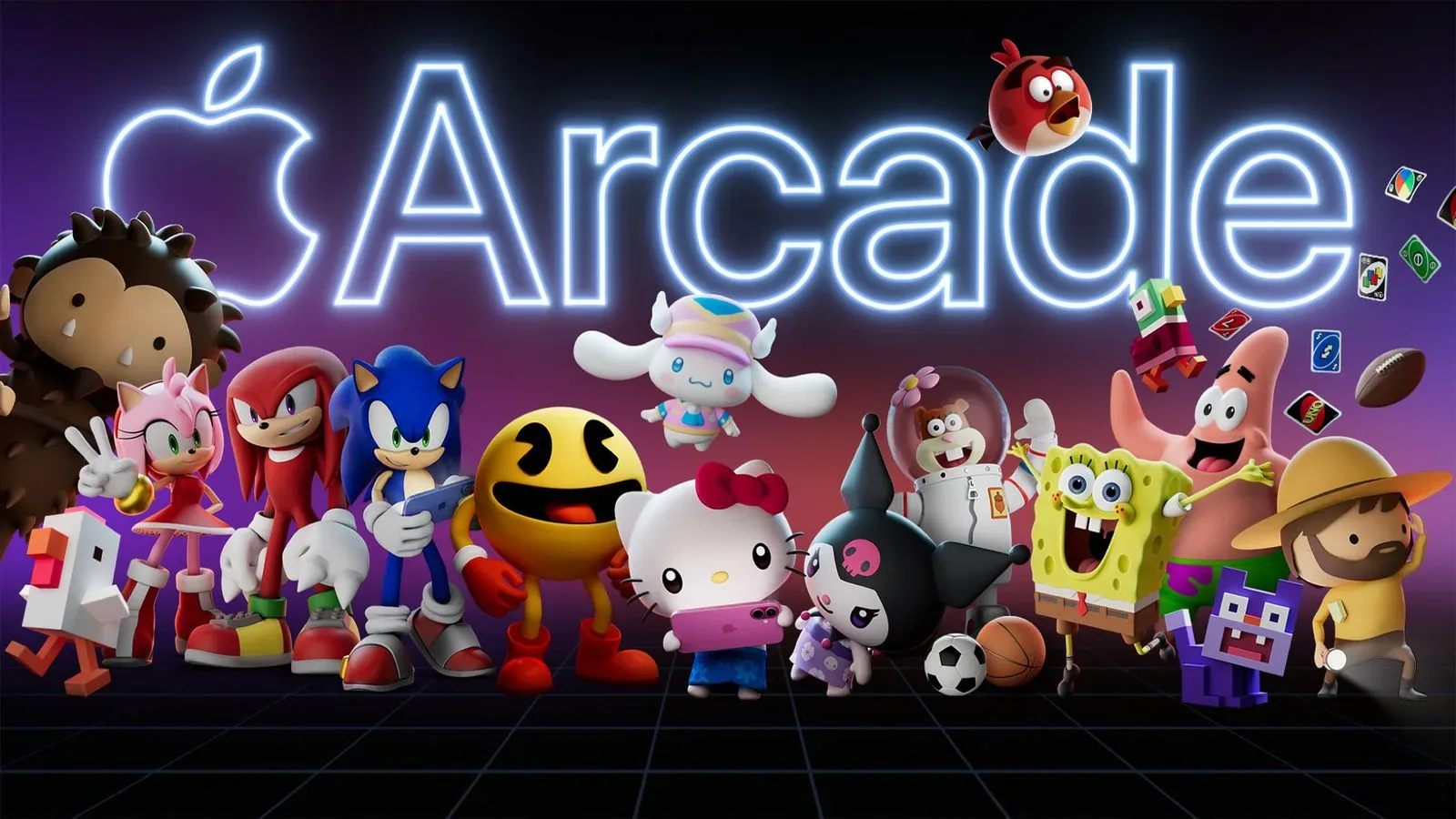
That legacy is visible in Apple’s current broader entertainment ecosystem, including subscription game offerings such as Apple Arcade’s expanding game catalog. The connection is not that the first iPod was a game machine—it was built around music—but that later iPod touch hardware represented a major shift from fixed-function playback toward a Multi-Touch, Wi-Fi device that could take part in app-based entertainment.
From category-defining product to integrated feature
The sales milestones explain why the iPod became a defining Apple product. By April 2007, fewer than six years after the first unit reached buyers, Apple had sold 100 million iPods. Sales had passed 304 million by October 2011. The line had grown well beyond one $399 hard-drive player into an assortment of models with sharply different designs and purposes.
Its wind-down was gradual. Apple discontinued the iPod classic in September 2014, five years after that model’s final hardware revision. The iPod nano and iPod shuffle were discontinued in July 2017, leaving the iPod touch as the only remaining model.
The seventh-generation iPod touch arrived in May 2019 with an A10 Fusion chip and storage options up to 256GB. It continued without another hardware revision until May 10, 2022, when Apple announced the end of the iPod lineup and said remaining units would be available while supplies lasted.
The explanation for that ending was straightforward: music playback had become integrated across other products. Apple pointed to the iPhone, Apple Watch, HomePod mini, Mac, iPad and Apple TV as devices carrying the iPod’s spirit forward. That is a fitting outcome for a product initially defined by taking a personal media library away from the computer. Over time, the ability to play music stopped needing its own single-purpose hardware family.
The original iPod’s 25th sales anniversary is therefore more than an occasion to remember a polished white gadget and a wheel. It marks a product that made the experience around digital music—transferring, organizing, carrying and choosing it—feel coherent for a huge audience. The device began as a Mac-only, $399 proposition that plenty of people questioned. It ended as the name attached to a product family whose central function had become ordinary across a wide range of devices. That transition is exactly why the first iPod remains a landmark.