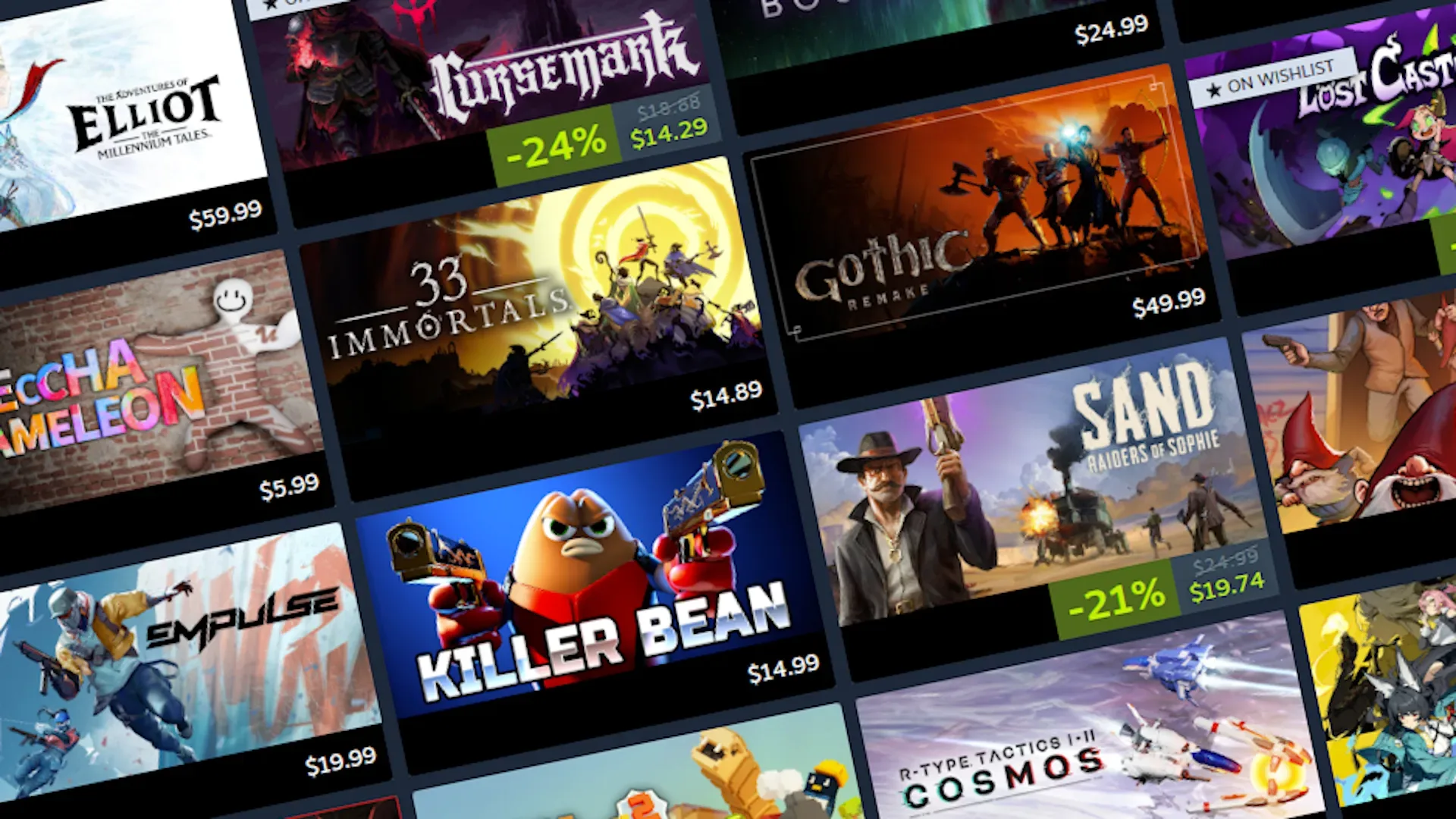
Steam has competitors, alternatives, and more than a few critics. What it does not currently have is a challenger that appears ready to dislodge it as PC gaming’s default storefront and library. That is the central point emerging from renewed debate around Valve’s position: beating Steam would require more than a lower platform fee, a cleaner launcher, or a few major exclusives. It would mean persuading players to rebuild habits around the place where they already keep their games and friends.
Emmanuel Rosier, director of market intelligence at research and analyst firm Newzoo, characterizes the present moment as a particularly Steam-heavy phase in a longer cycle. Major publishers have tried operating their own PC distribution platforms in the past, only for many to return to Steam. EA and Ubisoft are examples raised in that discussion, while Blizzard’s Overwatch is also available on Steam. That history makes a new mass retreat from Valve’s storefront look unlikely in the near term.
Steam’s real moat is not one feature
The obvious answer to Steam’s staying power is its catalog. That is true, but incomplete. A player’s Steam account can hold a long-running digital library, friend connections, and accumulated familiarity with how purchases and game access work. Those pieces reinforce each other. The more games and social connections users have on one service, the more inconvenient it becomes to start buying elsewhere.
This is a network effect: a service gains practical value as more people use it. In Steam’s case, the effect is not simply that a customer can find more games there. It is also that players may already know where their friends are, where their existing purchases reside, and where they expect new PC releases to appear. A competing store therefore has to overcome a meaningful amount of friction before its individual features even become relevant.
Rosier’s assessment is straightforward: a rival needs to offer a clearly better experience, because merely asking people to start purchasing games on another platform introduces resistance. That does not mean players never use more than one launcher. They plainly do. It means that becoming a supplementary destination is a much smaller task than replacing Steam as the center of a user’s PC game collection.
For consumers, the practical implication is that a promising rival can still struggle even if it has a strong deal, a desirable title, or a more favorable design. The purchase decision is tied to where a game will live afterwards. A new game is not just a transaction; it becomes another item in a library that players expect to revisit, organize, download, and see alongside everything they already own.
Choice exists, but a replacement has not emerged
PC players are not confined to one storefront. GOG is a destination for particular games; Itch.io serves a very different, eclectic niche; and local launchers have found success in parts of Asia. Battle.net now sells The Witcher, an example of how boundaries between publisher ecosystems can shift. The Epic Games Store remains a high-profile alternative as well.
These examples matter because they show that Steam is not the only viable way to distribute games on PC. They do not, on their own, demonstrate that the market leader is close to being overtaken. Different stores can succeed by serving specific audiences, catalogs, or regional needs without demanding that every player permanently move their main library.
Related coverage includes Why Steam Still Looks Nearly Impossible to Overthrow on PC.
That distinction is important when discussing “competition.” A platform can create useful pressure by giving developers another route to market and giving players another place to buy games. It can be commercially meaningful without becoming the primary home for the average PC player’s library. Steam’s difficult-to-challenge position is about that primary-home status.
The publisher-launcher pendulum has already swung back
Rosier describes the market as a pendulum. Roughly 10 or 20 years ago, large publishers made a more concerted effort to distribute on their own platforms. The current direction is different: publishers that once emphasized standalone ecosystems have, in many cases, brought games back to Steam.
There are sensible reasons a publisher might want its own store. Direct distribution can provide greater control over the customer relationship and avoid relying entirely on an external marketplace. Yet publishing exclusively through a proprietary platform also asks consumers to add another account, another launcher, and another place to maintain purchases. The return to Steam suggests the reach and familiarity of the larger storefront can outweigh the appeal of going it alone.
For developers, that reach is the key trade-off. Steam’s standard revenue share has long been a flashpoint, described here as 30% with a smaller sliding scale. Critics debate whether that share is justified by the platform’s access, support, and features, and whether lower-revenue games in particular should receive better terms. Those questions are consequential, especially for smaller studios. But a reduced fee elsewhere does not automatically solve the visibility and customer-access problem created by asking an audience to shop outside its established routine.
In other words, platform fees and platform reach are inseparable parts of the same decision. A developer may prefer a better financial split, but it still needs players to show up. That is why a challenger’s offer has to be compelling on multiple fronts at once: terms for creators, practical benefits for players, and enough trust that users feel comfortable making a new storefront part of their purchasing habits.
Private ownership may be Valve’s strategic advantage
Rosier identifies Valve’s private ownership as an especially significant factor. Valve is not publicly traded, which means it is not subject to the same shareholder expectations placed on public companies. His argument is not that Valve has no ambitions; it is that the company can pursue them without needing to satisfy extraordinary growth demands from outside investors.
Publicly traded means a company’s shares are bought and sold by public investors. Such firms commonly face intense expectations around revenue growth, profitability, and shareholder value. A privately held company can still make commercial decisions and seek profit, but it may have more latitude over timing and priorities. In this case, Rosier sees that latitude as helping Valve make player-first decisions that build goodwill.
That goodwill is itself an asset. Players do not need to agree with every Steam policy, including its approach to games involving AI, to recognize the appeal of a storefront they know well and have used for years. When the customer experience remains sufficiently dependable, the burden shifts to competitors to explain why leaving—or even meaningfully splitting purchases—will be worth the trouble.
Steam’s financial model also gives Valve considerable room to operate. The platform takes a share of sales and, as noted in the current debate, generates an unusually large amount of money per employee compared with many major public technology businesses. Whether the service earns its cut is a legitimate and ongoing dispute. What is much harder to dispute is that the current model has worked well enough to sustain Steam’s position.
Microsoft’s next move remains an open question
One major variable is Microsoft and Xbox Project Helix. Microsoft owns Activision Blizzard and, through that acquisition, Battle.net. Its next console has been positioned as a PC hybrid, raising a foundational question: will it run Steam?
The answer has not been established, and the shape of Microsoft’s ecosystem remains unclear. That uncertainty matters because an accessible Steam experience on a PC-hybrid console could reinforce Steam’s role across another kind of device. A more closed approach, by contrast, would put greater emphasis on Microsoft’s own software and store infrastructure. Either way, it is an ecosystem question rather than clear evidence that Steam is about to lose its PC position.
Players watching that space should separate confirmed details from speculation. The available facts establish the PC-hybrid positioning and Microsoft’s ownership of Activision Blizzard and Battle.net. They do not settle exactly how Steam will fit into Project Helix. Until that is clarified, it is best understood as a potentially important strategic question, not a verdict on the market.
Microsoft’s broader cross-device direction is relevant to the ongoing discussion around PC libraries and account ecosystems. For a related example of how platform-linked features such as cross-saves and shared achievements can affect where and how people play, see this look at Karate Survivor’s upgraded Xbox version.
What could actually change Steam’s standing?
The strongest version of the current argument is not that Steam is literally unbeatable. Markets change, user expectations change, and companies can make serious errors. Rather, Steam’s accumulated advantages make a normal competitive challenge look insufficient. A rival would need a noticeably better experience and a persuasive reason for players to tolerate the short-term inconvenience of changing behavior.
That is a high bar because Steam’s position compounds over time. Every additional purchase can deepen the feeling that a player’s collection belongs there. Every friend connection and familiar routine adds a small reason not to move. This is commonly described as switching cost: not necessarily a direct fee, but the time, inconvenience, lost familiarity, and fragmentation associated with changing services.
For Steam, this creates a powerful but not unconditional advantage. The same structure that makes customers reluctant to leave can also make goodwill more valuable. If Valve maintains a service players find useful and familiar, the library effect remains a defense. If it were to make a major mistake, the dissatisfaction would occur among a vast and highly connected customer base with plenty of alternative storefronts already available.
Former Epic Games animation programmer Kiaran Ritchie has argued that Steam is so deeply entrenched that Valve would need to make a substantial mistake before it could lose in a meaningful way. Rosier agrees that this is a sound perspective. It captures the imbalance facing competitors: they must be exceptional to pull people away, while Steam largely needs to avoid giving them a decisive opening.
That does not make the debate over fees, discovery, AI-related policy, and developer support any less important. Those issues shape the quality and fairness of the PC game marketplace. But they also show why the path to a different market leader is so difficult. A competitor must do more than identify Steam’s weaknesses. It must turn those weaknesses into enough concrete value that players and developers are willing to change established habits at scale.
For now, the PC storefront landscape looks less like a race with a clear new leader approaching and more like a system built around an incumbent whose greatest advantage is the place it already occupies in players’ digital lives.