Path of Exile 2 is approaching a significant business-model change on December 11: its 1.0 release is expected to move the action RPG from paid early access to free-to-play. That would normally make the question of launch-day conversion—how many newcomers eventually spend money—a central concern. But Michael Douse, Larian Studios’ director of publishing, has argued that Grinding Gear Games may have placed itself in an unusually comfortable position before the free release even begins.
In a public social-media discussion about the audience Path of Exile 2 could reach once there is no purchase required to start playing, Douse called the approach “fucking genius.” His core point was blunt: the game has sold enough during early access that it may already have earned sufficient revenue for a quieter-than-expected spending response after the free-to-play transition to matter far less than it ordinarily would.
“Path of Exile 2 is so fucking genius because they’re selling so many copies it won’t even matter if nobody buys anything when it goes free,” Douse wrote.
That is an opinion, not a financial disclosure. There are no sales totals, revenue figures, operating costs, or post-launch spending forecasts attached to the remark. Still, the observable audience figure cited alongside the discussion gives the argument some scale: Path of Exile 2 reached a peak concurrent-player count of 578,562 while it was still a paid early-access game.
Why paid early access changes the free-to-play conversation
Early access is a development and release model in which players can buy into a game before its full 1.0 launch. For players, it means access to the game while it is still being developed. For a studio, it can create a live player base, a stream of feedback and—crucially in this case—revenue before the final release.
Free-to-play, meanwhile, removes the upfront purchase requirement. It can lower the barrier for curious players substantially, but it also creates a different business challenge: a game needs some portion of its audience to make optional purchases or otherwise generate ongoing revenue. The supplied information does not detail Path of Exile 2’s eventual monetization, so it would be premature to predict how that side of the model will perform.
What Douse is describing is the potential advantage of doing both in sequence. A successful paid early-access period can help fund development and demonstrate demand before the audience expands at 1.0. In that framing, the game does not need to treat its free-to-play debut as the sole moment that determines whether the project has worked commercially.
That does not mean the December 11 transition is unimportant. A large free-to-play audience can affect matchmaking, the social environment around the game, the volume of community feedback and the long-term prospects for continued support. It simply means the launch can potentially be judged by more than immediate spending alone.
Related coverage includes Path of Exile 2's Early Access Momentum Draws Major Praise Ahead of Free-to-Play 1.0.
A large peak is meaningful, but it is not a complete picture
The 578,562 peak-concurrent figure is a strong indication that Path of Exile 2 attracted substantial attention during paid early access. Concurrent players means people playing at the same time; a peak is the highest simultaneous count measured during a period. It is not the same as total copies sold, total accounts created, unique lifetime players, or the number of people still playing on an average day.
Those distinctions matter. A peak can reflect intense launch interest or a particularly busy update window, while sales and retention are separate measurements. Likewise, no financial conclusion can be calculated from a concurrent-player count alone. Douse’s confidence therefore remains an outside assessment rather than proof of the game’s profitability.
Even with those limits, reaching that peak while charging an entry price gives the discussion a useful anchor. The game was not relying solely on a zero-cost download to bring in players during early access. For an online action RPG intended to grow over years, establishing that kind of community before 1.0 can be strategically valuable.
It also makes December 11 more than a routine version-number milestone. The date is when Path of Exile 2’s existing paid audience and a potentially much broader new audience are set to meet in the same live game. How large that expansion will be is unknown, but the removal of an upfront cost makes it plausible that many players who waited through early access will finally be able to try it.
Douse’s praise, and the Diablo comparison
Douse did not limit his comments to the commercial structure. He also praised the game itself, writing that it was “so good in Early Access” and that it was “obviously much better than Diablo 4 1.0 in its EA state.” He described Grinding Gear Games as “the absolute best at what they do.”
That is particularly emphatic praise from a publishing executive at Larian, though it should still be read as a personal assessment. It is not a review score, an industry-wide consensus or a direct financial comparison between the games.
The comparison also has a practical measurement problem. Douse’s comments arise in a genre where players often compare large, evolving action RPGs through updates, endgame systems and community momentum. Yet the available information specifically notes that equivalent public statistics are not available for the Diablo games because they are primarily played through BattleNet, which does not offer a SteamCharts-style public reference point.
In other words, Path of Exile 2’s cited peak is a useful datapoint, but it does not establish a like-for-like numerical contest with Diablo. Public player-count comparisons are only as good as the platforms and methods behind them. The responsible takeaway is narrower: Path of Exile 2 has demonstrated a very large publicly visible early-access peak, and it has attracted unusually strong praise from Douse ahead of 1.0.
Douse also said he plays Path of Exile 2 “every other evening,” with World of Warcraft taking up the rest of his play time. That personal routine helps explain the warmth of the comments, but it does not alter the uncertainty around what happens after the business-model switch.
What players should watch on December 11
The free-to-play launch will be a test of scale rather than a simple referendum on whether the early-access period was successful. The paid phase has already produced a substantial peak concurrent audience. The next question is whether the transition brings in a larger and sustainable community without undermining the experience valued by existing players.
There are several separate outcomes worth keeping distinct:
- New-player interest: Removing the entry price could bring in people who followed the game but chose not to buy into early access.
- Retention: A large arrival day is not the same as a stable long-term population. Whether newcomers keep playing is a separate question.
- Community growth: More players can broaden the game’s social and feedback ecosystem, but a larger community also brings different expectations and demands.
- Commercial performance: No revenue forecast can be inferred from the early-access peak alone, and the available information does not establish how optional spending will look after 1.0.
The wider industry relevance is the sequencing. Studios often have to choose between asking players to fund an unfinished game early and pursuing the maximum reach of a free launch. Path of Exile 2’s path combines the two: a paid early-access runway followed by a free-to-play 1.0 release. Douse’s argument is that the first phase has been successful enough to reduce the pressure on the second.
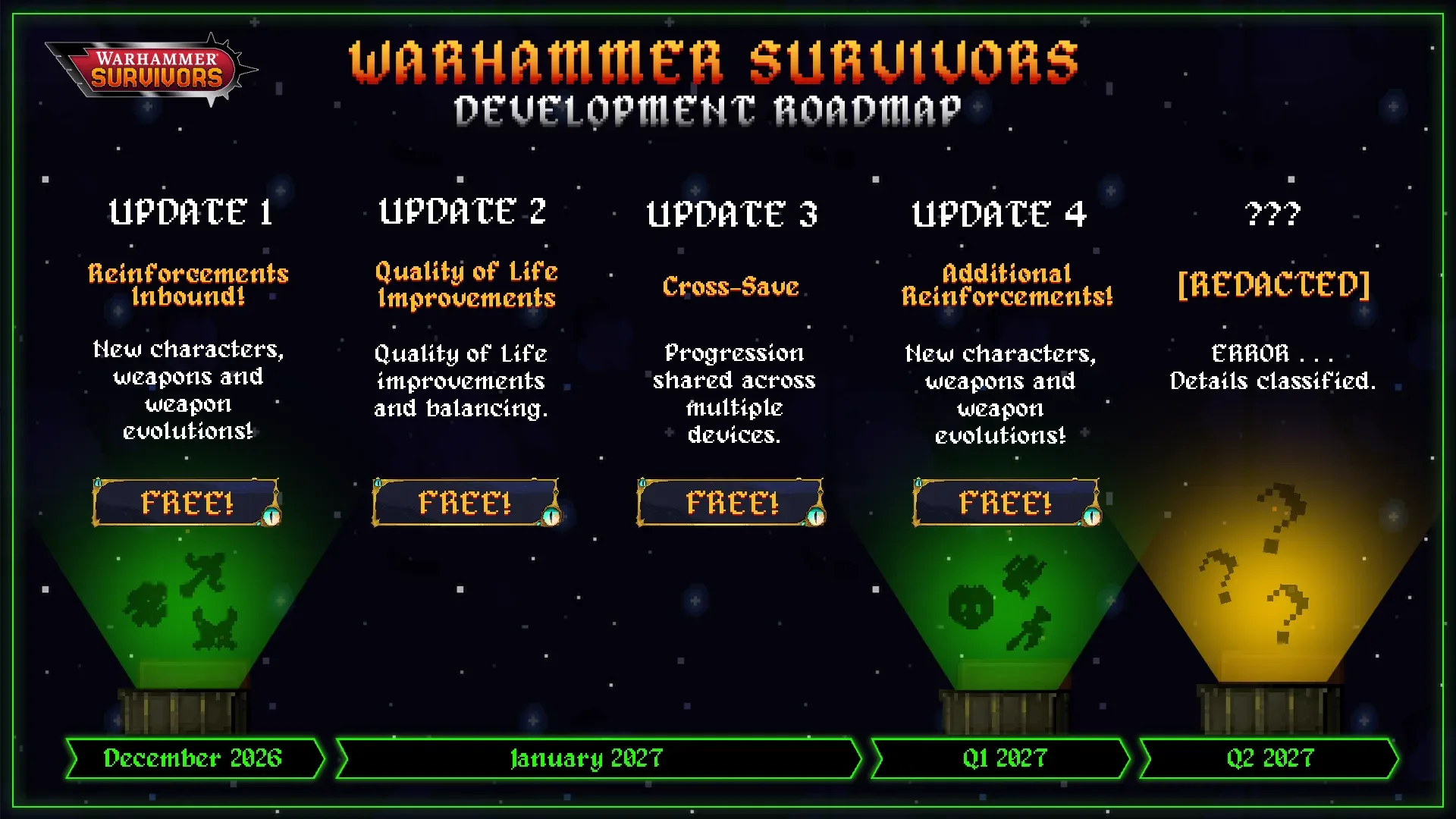
That remains to be tested when 1.0 arrives. But with a reported 578,562 peak concurrent players already achieved during its paid period, Grinding Gear Games enters December 11 with an audience signal many games would be happy to have at launch. For another example of how PC games use continued updates and free additions to sustain attention, see the Warhammer Survivors roadmap.
For Path of Exile 2, the immediate facts are straightforward: 1.0 is due December 11, the game is expected to become free-to-play, and a prominent publishing figure believes its paid early-access success has already made that move less financially risky. Everything beyond that—new-player totals, retention and spending—will only become clearer after the free release is underway.