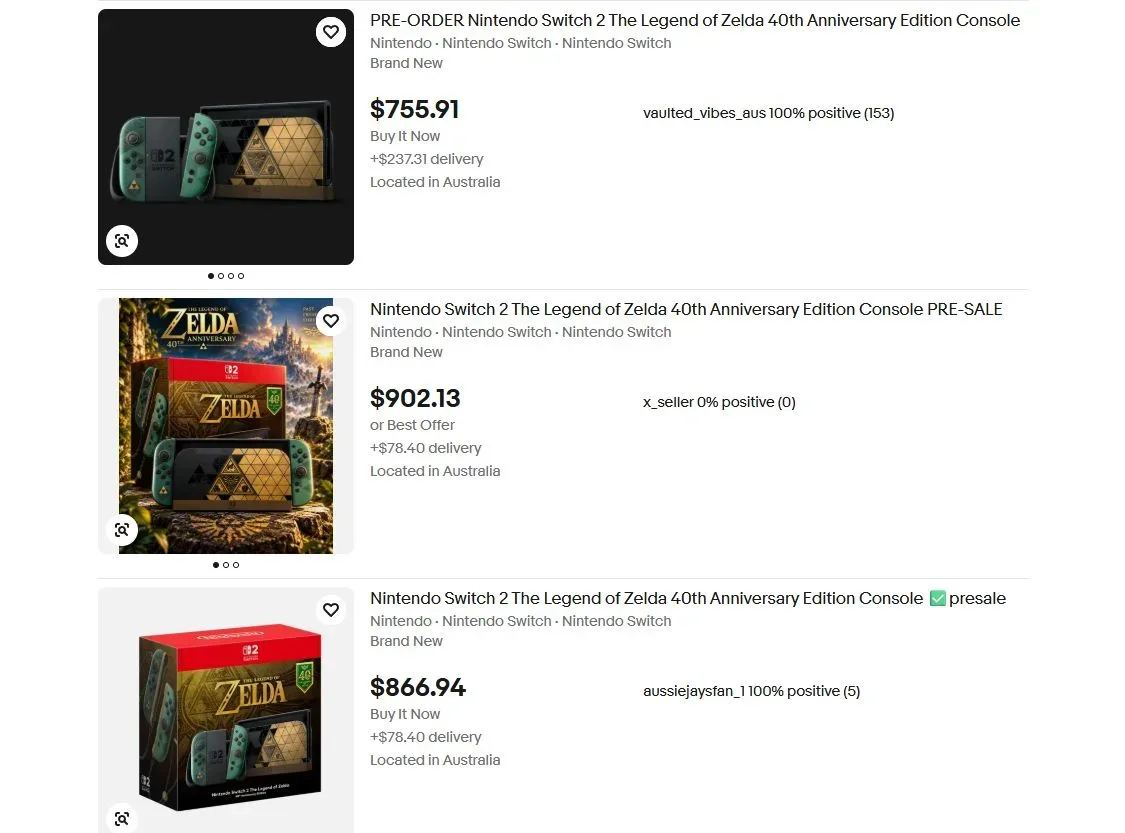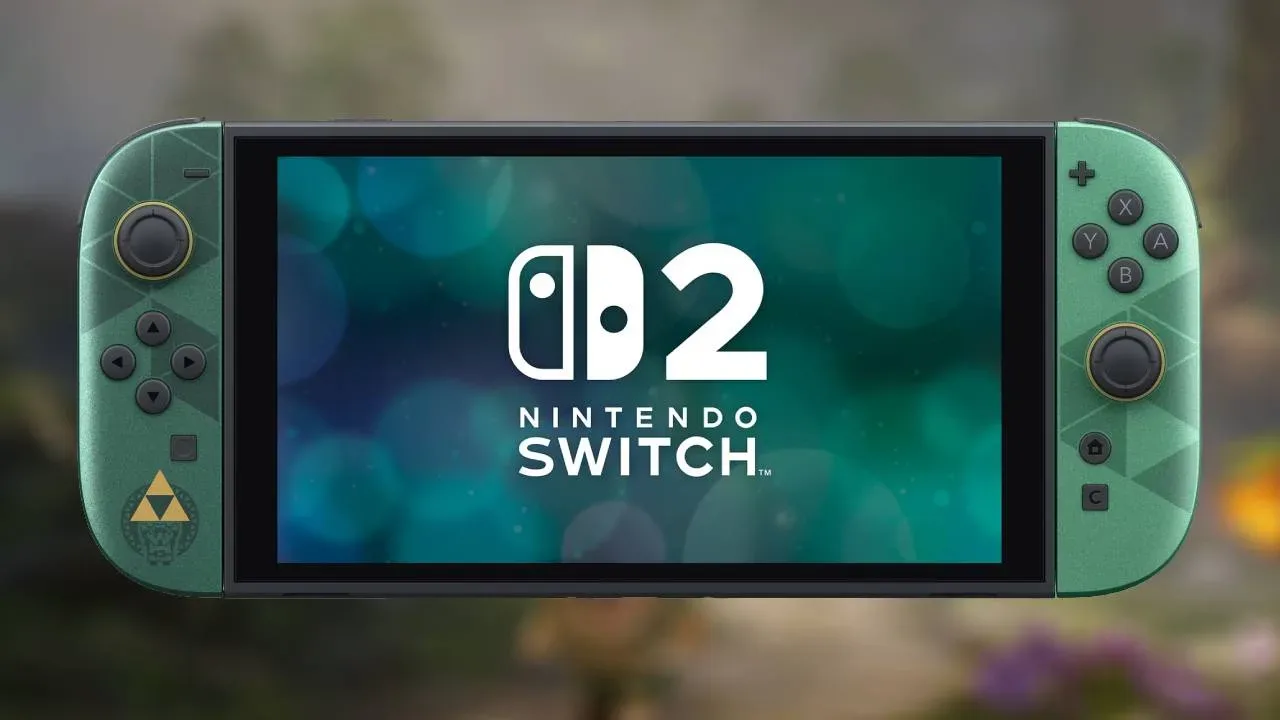
Nintendo has finally given Switch 2 collectors a special-edition console to chase, and the predictable boss battle has begun before the hardware even reaches its October 29 release date. The Legend of Zelda 40th anniversary edition Switch 2 appeared for pre-order at major retailers for $520, then promptly sold through. Resale listings have followed at roughly $700 to $985—a steep markup for a console whose extra power is decorative rather than magical.
That timing matters. This is Nintendo’s first special-edition Switch 2 during the system’s first year, making it an understandably tempting purchase for Zelda fans, Switch collectors, and people who had already planned to pick up the console for the winter. But the early sellout has created a familiar problem: prospective buyers now face listings that ask hundreds beyond retail for a product that has not launched and may yet return through standard retail channels.
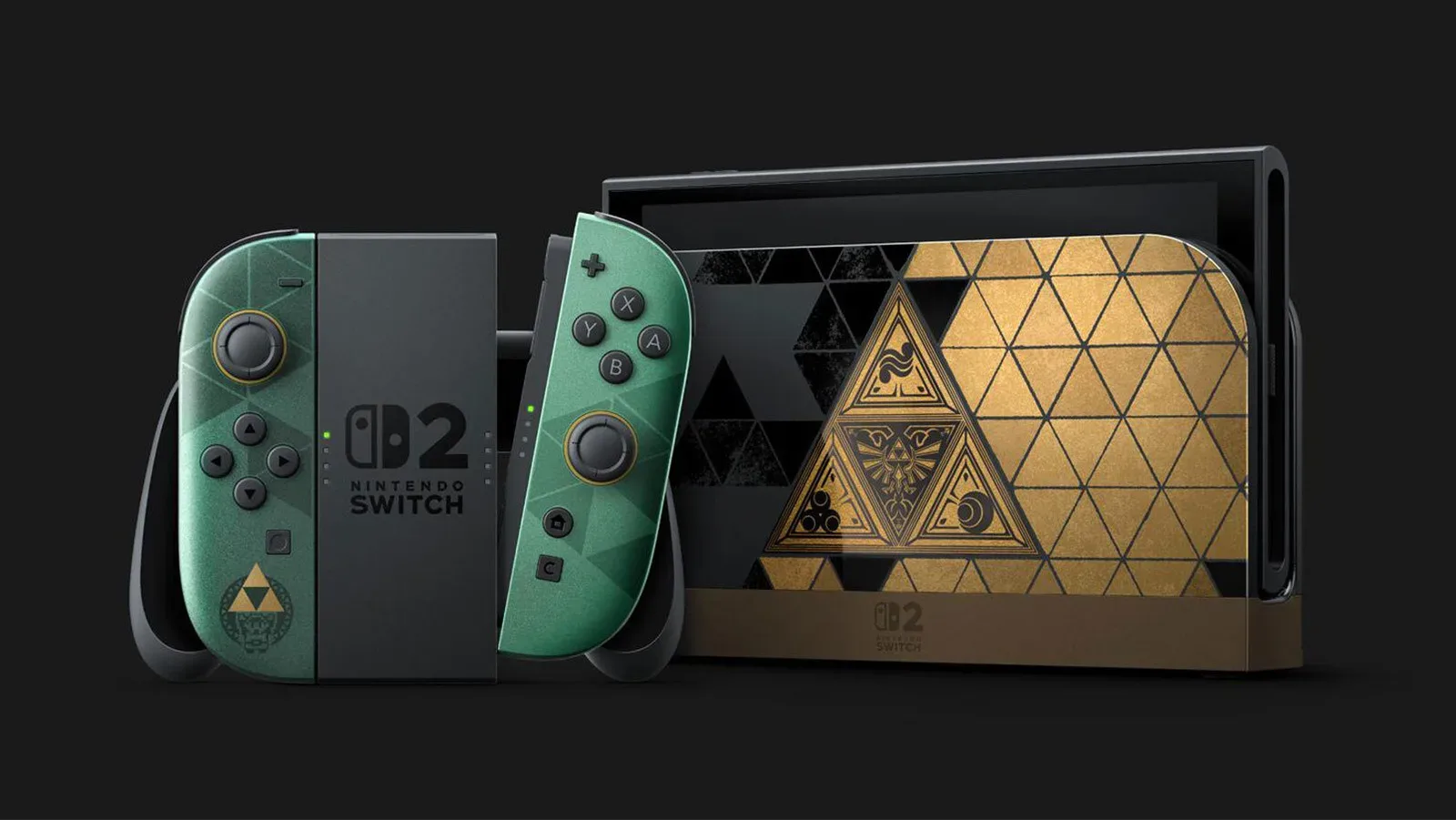
A 40th anniversary design built around Zelda’s colors
The appeal is not difficult to understand. The anniversary Switch 2 uses black-and-gold detailing on its dock, black-and-gold triangular motifs on the back of the handheld, and green-and-gold Joy-Cons. Nintendo is also offering a matching case with a gold Triforce emblem and a special-edition Pro Controller that incorporates the same black, gold, and green palette.
It is the sort of coordinated hardware presentation that speaks directly to collectors. A standard Switch 2 remains a standard Switch 2 when it is sitting on a shelf; an anniversary model signals a particular series, moment, and fandom immediately. Zelda’s iconography is especially well suited to this treatment. The Triforce, gold accents, deep green, and geometric design language have carried across the franchise for decades, so the color scheme does not need an explanatory plaque beside it.
Still, buyers should separate the visual edition from a performance revision. Nothing in the announced details suggests this Switch 2 runs games differently from the regular model. The value proposition is the cosmetic hardware package and its collectibility, not a faster processor, extra storage, unique software capability, or superior game performance.
$520 at retail, then a sharp jump on resale sites
Best Buy, Walmart, and Target listed the Zelda 40th anniversary Switch 2 for pre-order at $520. That is $20 above the recently increased price of the regular Switch 2. Those retailer allocations sold out quickly, and resale listings began appearing at considerably higher numbers, ranging from about $700 to as much as $985.
At the low end of that reported resale range, the premium is already $180 over the listed retail price. At the high end, it is $465 more. Put another way, a buyer near the top of the range would be paying close to twice retail for the finish, the anniversary association, and the chance to lock in a unit ahead of release.
That is an awkward proposition when the actual retail product is still weeks away. A listing is not evidence that the market has established a lasting value at that number; it is evidence that a seller has decided to ask for that number. Early resale markets are often full of optimistic prices, and completed sales, further retailer inventory, or official ordering options can change the picture quickly. For anyone who simply wants a Switch 2 to play games, the standard hardware remains the practical benchmark for what the underlying machine is worth.
Related coverage includes Metroid Ravenous Special Edition Sells Out Soon After Switch 2 Pre-Orders Open.
The safest move is patience
The most sensible response to an early sold-out pre-order is not automatically to pay a reseller’s premium. Retailer pages can receive additional stock, orders can be cancelled, and Nintendo has not yet opened pre-orders for this edition through its own store. None of those possibilities guarantee that everybody who wants one will get one at retail, but they do mean the supply story is not necessarily finished on September 10.
Nintendo previously made special efforts to sell the original Switch 2 to customers through its own channels around the 2025 launch. Whether a comparable process will be used for the Zelda edition has not been confirmed. Until Nintendo says more, it is best treated as a possibility—not a promise.
- Keep the $520 retail price in view. It is the clearest measure of what this specific edition officially costs through the retailers that listed it.
- Watch official Nintendo and retailer pages. A sold-out page today is not necessarily a permanent verdict on future stock.
- Be cautious with pre-release resale listings. The item is not due until October 29, so any purchase involves relying on the seller to fulfill later.
- Check what is actually included. A console listing, a controller listing, a case listing, and a reseller-created package are not interchangeable purchases.
- Decide whether the edition is for play, display, or both. That answer can make a large markup feel either clearly unreasonable or, at least, easier to evaluate honestly.
The Ocarina of Time timing makes the package more peculiar
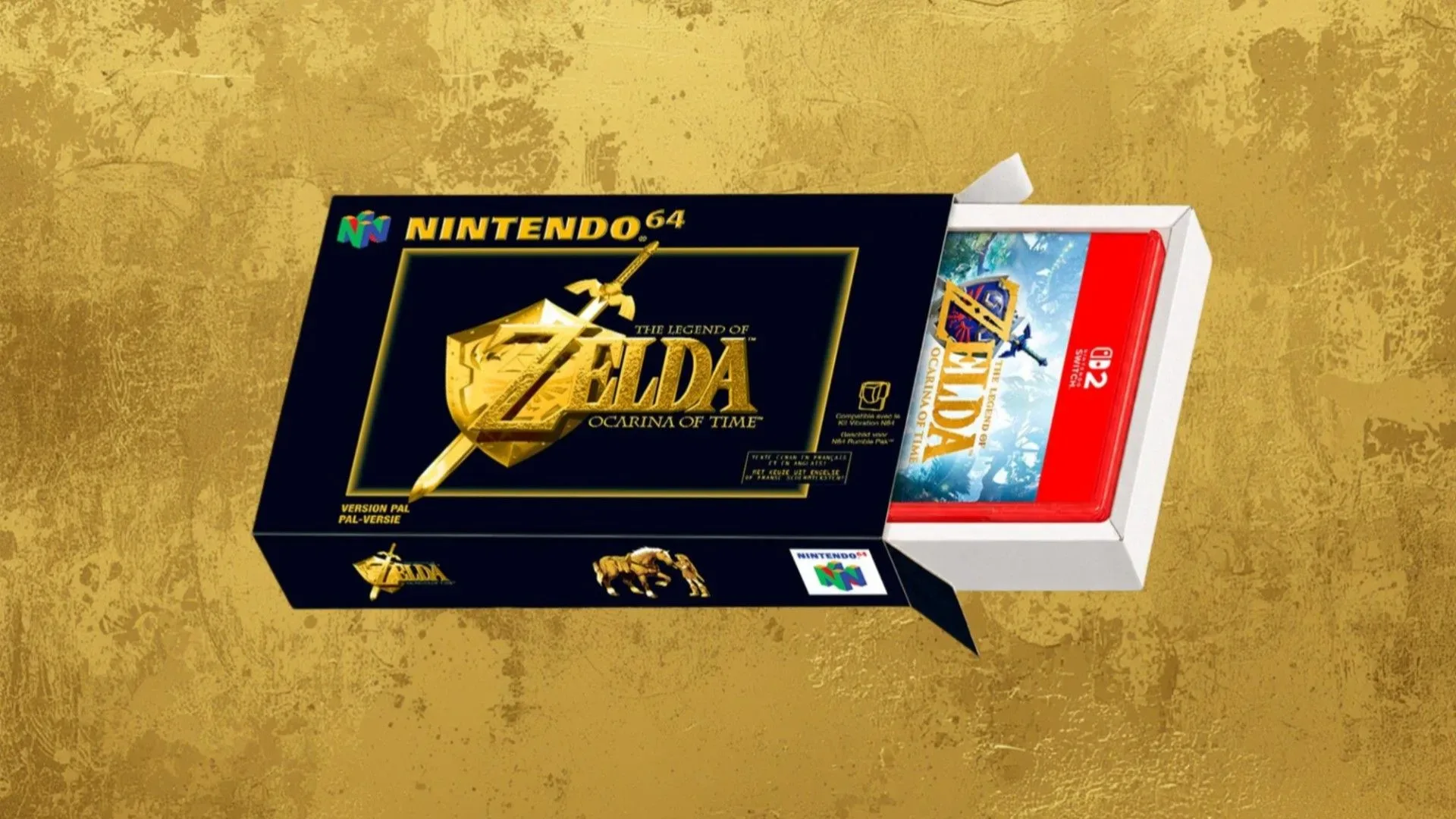
The anniversary console’s launch is also separated from the new Ocarina of Time remake. The Switch 2 hardware arrives on October 29, while the updated classic is due November 6, one week later. Nintendo is not bundling the game with the special edition.
That choice leaves the 40th anniversary console as a hardware celebration rather than an all-in-one commemorative package. Some resale listings have paired the console with the forthcoming remake, but those are seller-created combinations rather than an official Nintendo bundle. Buyers comparing listings should account for that difference, particularly when a package price makes the included game look like a premium bonus rather than a separately priced product.
It is also an important detail for collectors trying to define what they are collecting. The console, matching case, and special Pro Controller make up a recognizable hardware family, while Ocarina of Time arrives later as its own release. There may be a natural desire to display or buy them together, but the official schedule does not make that a single retail product.
For Zelda fans, the remake’s November 6 date gives the anniversary edition an obvious thematic companion even without a bundle. For shoppers, however, it reinforces why a reseller’s inflated all-in price needs scrutiny. The excitement around two closely timed Zelda releases should not obscure the fact that the console and game are distinct purchases.
Scarcity turns a celebration into a collecting pressure test
Special-edition hardware always sits at an uncomfortable intersection of enthusiasm and scarcity. A limited-looking console can be genuinely beautiful, meaningful to longtime fans, and worth seeking out. It can also become a target for buyers who have no interest in using it, but expect demand to make a quick flip profitable. The Zelda 40th anniversary Switch 2 appears to have entered that second phase almost immediately.
The frustrating part is that scarcity is not always easy to measure in the first hours of pre-orders. Fast sellouts show strong demand against the stock made available at that moment. They do not, by themselves, reveal total production, future restocks, Nintendo’s direct-sales plans, or the eventual number of consoles in circulation. A $985 asking price therefore says more about reseller ambition and buyer anxiety than it does about a settled long-term collectible value.
Collectors can take the long view here. Zelda has a remarkable history, and a 40th anniversary console naturally carries appeal beyond an ordinary color variant. Yet its importance as an anniversary item does not require treating every early resale offer as the only road to ownership. The visual design will still be the visual design if more official inventory appears. The October 29 release date will still be October 29. And the Switch 2 inside will still play like a Switch 2.
For now, the cleanest reading of the situation is simple: the Zelda edition is an attractive, officially priced $520 console that sold out at its initial listed retailers, while resellers are testing prices from $700 to $985. Fans who value the design have every reason to keep an eye on legitimate restocks. Fans who only want the games have an even better reason to avoid paying hundreds extra for triangles and trim.
While waiting for clearer inventory news, Nintendo fans can also keep up with other upcoming projects, including Level-5’s newly detailed Decapolice plans. In the immediate Zelda hardware hunt, though, patience may be the rarest collectible of all.