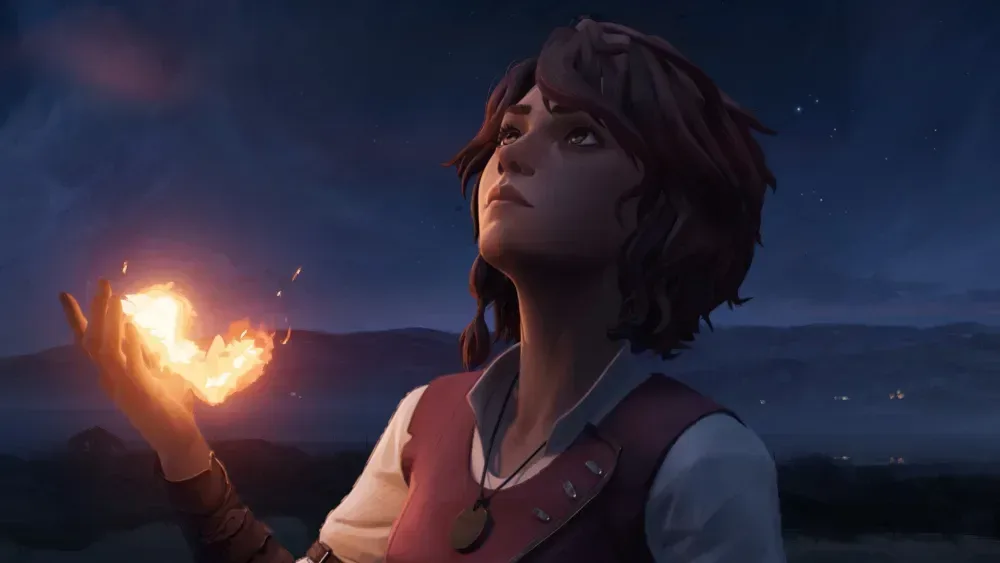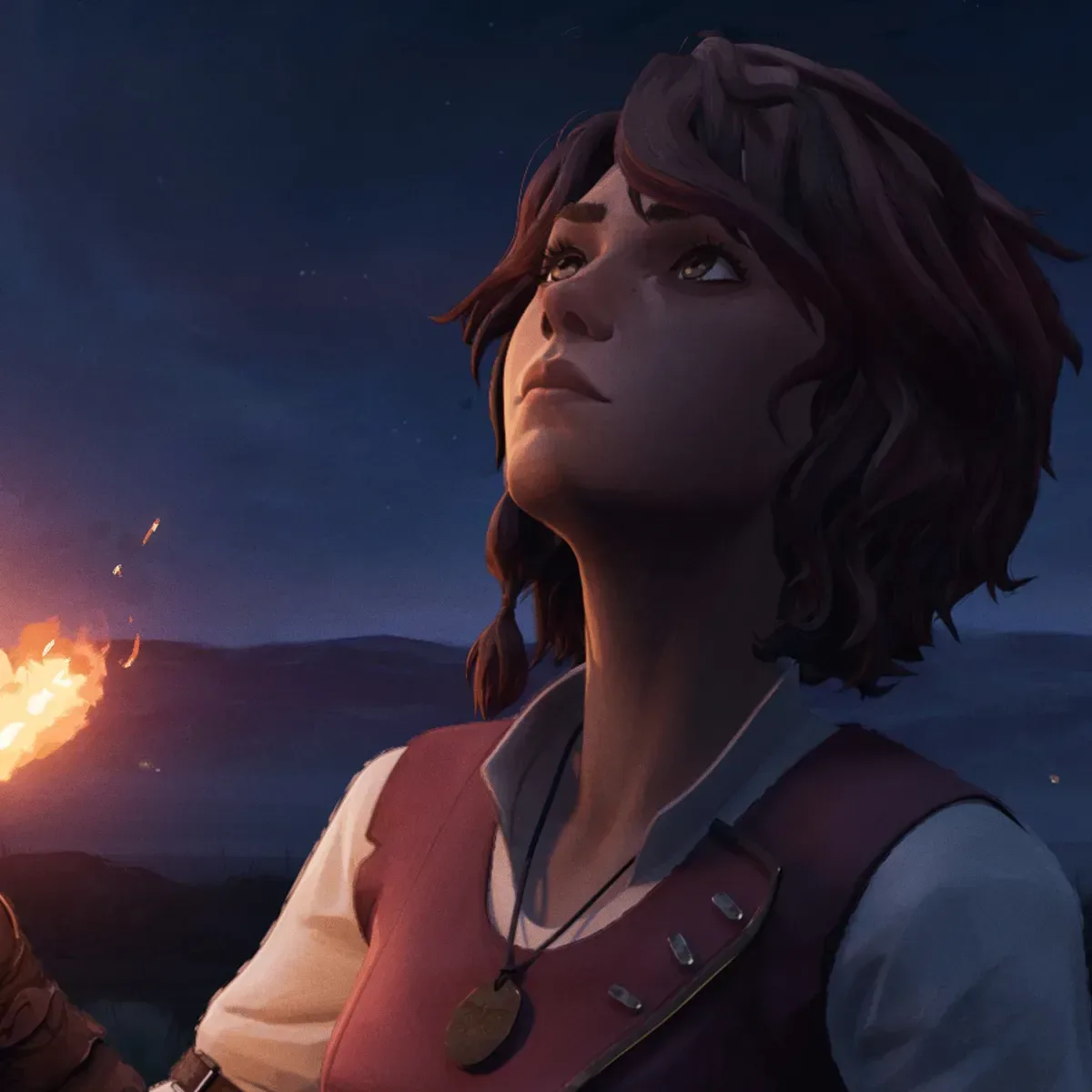
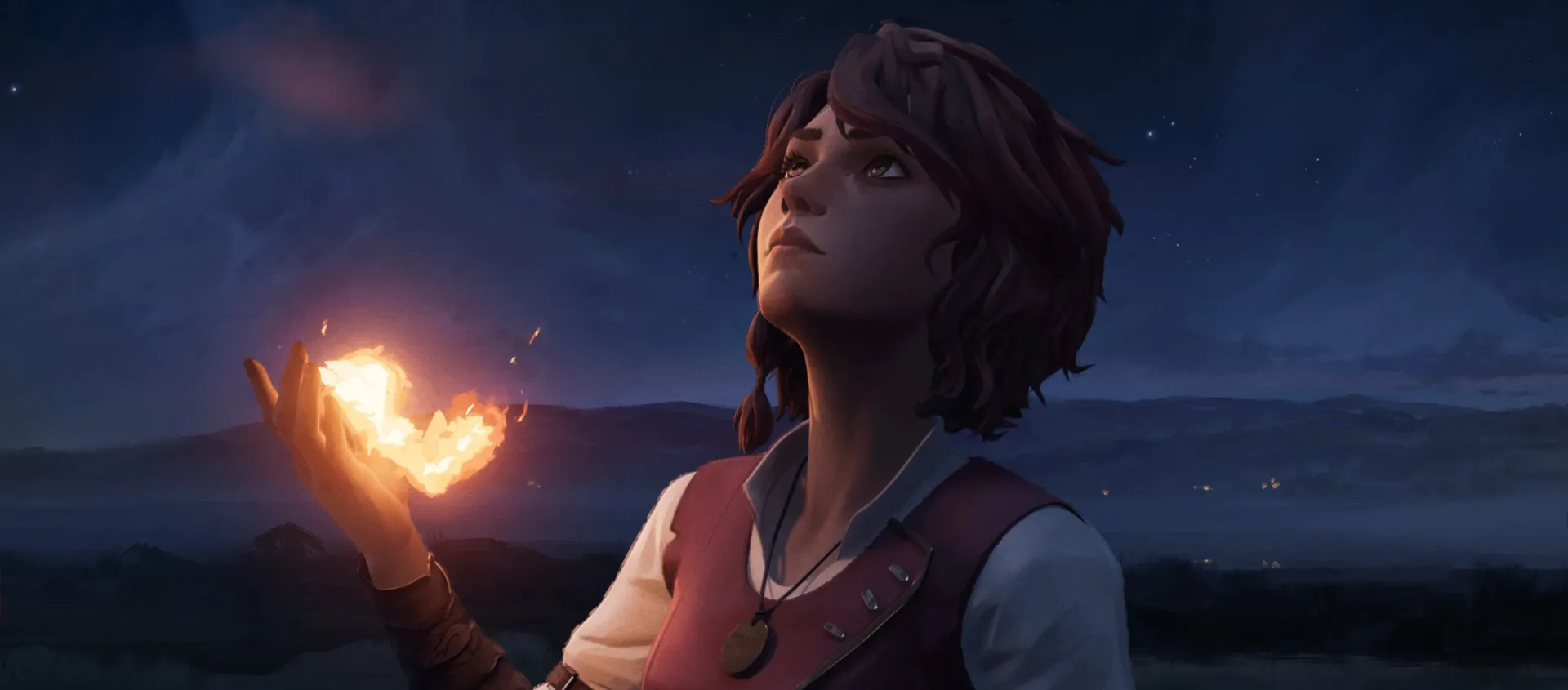
Magic: The Gathering’s long-gestating animated adaptation has surfaced again with a first-look image, a formal title and a broad release window. The Netflix series is called Planeswalker, and it is slated to arrive in 2027. A precise premiere date has not been announced.
The new information is significant less because it fills in every remaining blank than because it confirms the project is moving forward after years of public uncertainty. First announced in 2019, the series has changed creative leadership more than once and went through an extended stretch with little visible progress. Now, the stated premise puts Chandra at the center of an epic fantasy story built around Magic’s multiverse-spanning mages.
Chandra is at the center of Planeswalker
Planeswalker follows a clash involving powerful mages known as Planeswalkers. In Magic terminology, a Planeswalker is a character able to travel between worlds, or planes. That concept gives the franchise its unusually wide fantasy canvas: rather than being confined to one kingdom, continent or planet, stories can move across distinct settings with different cultures, conflicts and magical rules.
The series’ official setup identifies Chandra as its focal character. She is described as a volatile pyromancer, meaning her magic is associated with fire, who is being hunted because of her gifts while also carrying the weight of her past. An insidious threat forces her and several legendary Planeswalkers to use their abilities, manage dangerous alliances and reckon with personal struggles in an attempt to stop a war with consequences for thousands of worlds.
That is a deliberately high-stakes premise, but its more useful takeaway is the character choice. An adaptation of a card game with decades of lore needs an emotional throughline, not merely a parade of spells and famous faces. Centering the conflict on a hunted mage gives the series a defined human—or, in this case, character—perspective through which to approach a setting built on enormous scale.
It also establishes a likely tension between spectacle and intimacy. The promised cataclysmic war points to large-scale fantasy action, while Chandra’s history and the references to inner demons suggest that the story is intended to be about more than a contest of magical firepower. Whether the show can make those elements feel equally earned will be one of its major creative questions.
What the name means for a Magic adaptation
The title Planeswalker directly draws on one of Magic’s foundational story concepts. In the tabletop game, cards represent spells, creatures, artifacts and other pieces of a duel between players. Within the fiction, Planeswalkers are among the setting’s most consequential figures because they can cross the boundaries between planes. The term is therefore a concise signal that the show is engaging with Magic’s narrative universe, rather than simply borrowing the game’s name for a generic fantasy adventure.
For newcomers, the terminology does not require prior knowledge of deck construction or gameplay. A pyromancer is simply a wielder of fire magic; a plane is a world; and a Planeswalker is someone who can journey from one such world to another. Those are accessible ideas for animation, even if the franchise’s deeper continuity can be extensive.
For established fans, the premise leaves considerable room for speculation without providing a roster beyond Chandra and a reference to other legendary Planeswalkers. No release date beyond 2027, episode count, voice cast or detailed list of characters has been provided. The first-look image is a concrete new piece of promotional material, but there is not enough confirmed information to infer which storylines, settings or cards the series will adapt.
A project with a long and uneven public path
The route to Planeswalker has been notably long. The series was initially announced in 2019, when the Russo brothers were overseeing an earlier version of the project. They later left because of creative differences. In 2021, Jeff Kline was announced as executive producer and creative lead, and Brandon Routh was subsequently announced as the voice of the lead.
Public updates then became scarce. In 2024, Routh said he believed the series was no longer happening. Not long afterward, Terry Matalas was named the project’s new showrunner. The current confirmation of a 2027 debut gives the production its clearest forward-facing status in some time, but it is important not to blur that status into details that have not been announced. There is no exact launch date yet, and the earlier publicly associated talent should not automatically be assumed to reflect the present version unless it is reconfirmed.
That distinction matters for fans who have followed the project’s stops and starts. A newly revealed title and first-look image are meaningful indicators, but they are not the same as a full rollout of casting, format and story specifics. For now, the reliable picture is a 2027 animated series focused on Chandra and the dangers facing the Planeswalkers.
The team currently attached to the show
The series is being produced in partnership with Hasbro Entertainment and Wizards of the Coast. Matalas and Cindy Appel are executive producers and co-showrunners. Patrick Osborne is an executive producer and supervising director, a role that generally combines senior creative oversight with responsibility for guiding the directing work across an animated production.
Gabriel Marano is also an executive producer. Lauren Chavez-Myers is co-executive producer for Hasbro Entertainment, while Daisy West is credited as producer. Digic is handling animation.
The credits indicate a structure with creative leadership shared between the showrunners and production oversight distributed across the partners. In broad terms, a showrunner guides a series’ creative direction and production process, while executive producers hold senior responsibility for developing and delivering the project. A supervising director is particularly relevant in animation, where visual consistency, staging and execution need to hold together across the series.
What remains unknown is just as relevant: no information has been provided about the show’s episode length, number of episodes, rating, animation style beyond Digic’s involvement, or how directly it will connect to a particular era of Magic storytelling.
Why Magic has the material for an animated saga
Magic: The Gathering was created by Richard Garfield and first released in 1993. Since then, its tabletop card game has expanded into a broader entertainment property that includes a digital game, an esports league, comic books and a best-selling novel. It has been published in 11 languages across more than 70 countries.
That long history supplies an adaptation with a vast pool of characters, worlds and visual ideas. It also creates a challenge. Magic is not a single linear narrative in the way that a novel series might be. Its identity comes from a game system and an expansive fictional framework that has grown across many products. An animated series has to turn that breadth into a story that works for viewers who may never have played a game or encountered a card.
The announced focus on Chandra appears designed to meet that challenge. A central protagonist with a defined threat and personal baggage can make an immense setting navigable. Meanwhile, the Planeswalker concept makes it possible to visit a range of worlds without abandoning the show’s core perspective.
There is a broader audience opportunity, too. Trading-card properties are often introduced through mechanics, rarity and competitive play, while a scripted series needs motivations, relationships and dramatic escalation. Planeswalker will be judged on whether its characters and worldbuilding stand on their own—not on whether viewers recognize every reference. That does not diminish the tabletop game; it reflects the difference between adapting a game universe and recreating a game session.
For those following card-game-related entertainment more generally, Joking Joystick’s coverage of Pokémon Champions’ monthly challenge series is another look at how established game properties continue to build activity around their communities.
What to watch for before 2027
The next meaningful updates for Planeswalker will be the details that establish its actual shape: an exact release date, confirmed voice cast, a trailer, episode information and a clearer sense of the worlds and characters involved. Until then, viewers should treat the confirmed material narrowly. The show has a title, a 2027 target, a first-look image, a Chandra-led premise and a named creative team.
After years in development, that is enough to put the project firmly back on the map. It is not yet enough to determine how faithful, expansive or newcomer-friendly the finished series will be. The spark has been lit; the rest of the spell still needs to resolve.