For a long time, entertainment’s biggest financial characters were easy to recognize: public media conglomerates, private-equity firms, institutional investors and the occasional famous founder. Family offices are increasingly changing that picture. These privately controlled investment organizations manage the wealth of an ultra-wealthy individual or family, and they are now taking meaningful positions across studios, television networks, talent representation, music rights and sports.
The shift is not simply that rich people have discovered Hollywood. It is that the scale of private family capital, and the ways it can be deployed, can differ sharply from conventional investment money. A family office may be able to hold an asset for a long time, fund a deal without the same shareholder-facing demands as a public company, and pursue goals that mix financial return with legacy, influence or a particular creative mission.
That makes these investors powerful potential partners for entertainment businesses. It also makes their arrival worth watching closely. Patient ownership can give companies room to build. It can also concentrate enormous decision-making power in a small number of private hands, while high-profile transactions can still rely heavily on debt and cost cuts.
What a family office actually is
A family office is, at its simplest, an organization set up to manage a family’s capital and affairs. It can oversee investments, banking, trusts and other wealth-management functions. A single-family office serves one wealthy family; a multi-family office pools services for several families. The structure gives a family a permanent operating base for deciding where its money goes, rather than relying only on outside funds or advisers.
That definition is important because it explains why the term covers a broad range of behavior. Some offices focus primarily on preserving wealth. Others make direct investments in operating companies. Some will buy a minority position, while others may pursue control of a company or property. Their decisions are shaped not only by financial expectations, but also by the priorities of the people whose wealth they manage.
That last point separates family offices from an investment fund with a fixed mandate. An office might fund businesses it believes can generate returns while also supporting a family’s interests in technology, sports, cultural impact or storytelling. The source material describes three recurring concerns: core trust, treasury and banking functions; the effort to grow the family’s underlying wealth; and the family’s own motivations, politics and values.
Family offices have become a very large investor class. Analysis cited in the material puts their global number at more than 8,000, growing at nearly 5% annually, with $5 trillion or more in assets under management. The 50 largest are estimated to oversee $2.4 trillion, while the largest 10 account for $1.5 trillion. Those figures help clarify why media executives, dealmakers and talent companies are building services around this pool of capital.
Launching a large single-investor office generally requires around $250 million in seed capital, though offices can be formed with $50 million to $100 million and can work together in multi-family structures. At the top end are exceptionally large operations: Walton Enterprises is described as managing about $225 billion, Excession about $200 billion, Cascade Investment about $170 billion, Lawrence Investments about $160 billion and Bezos Expeditions about $107 billion.
The Skydance deals show both the opportunity and the risk
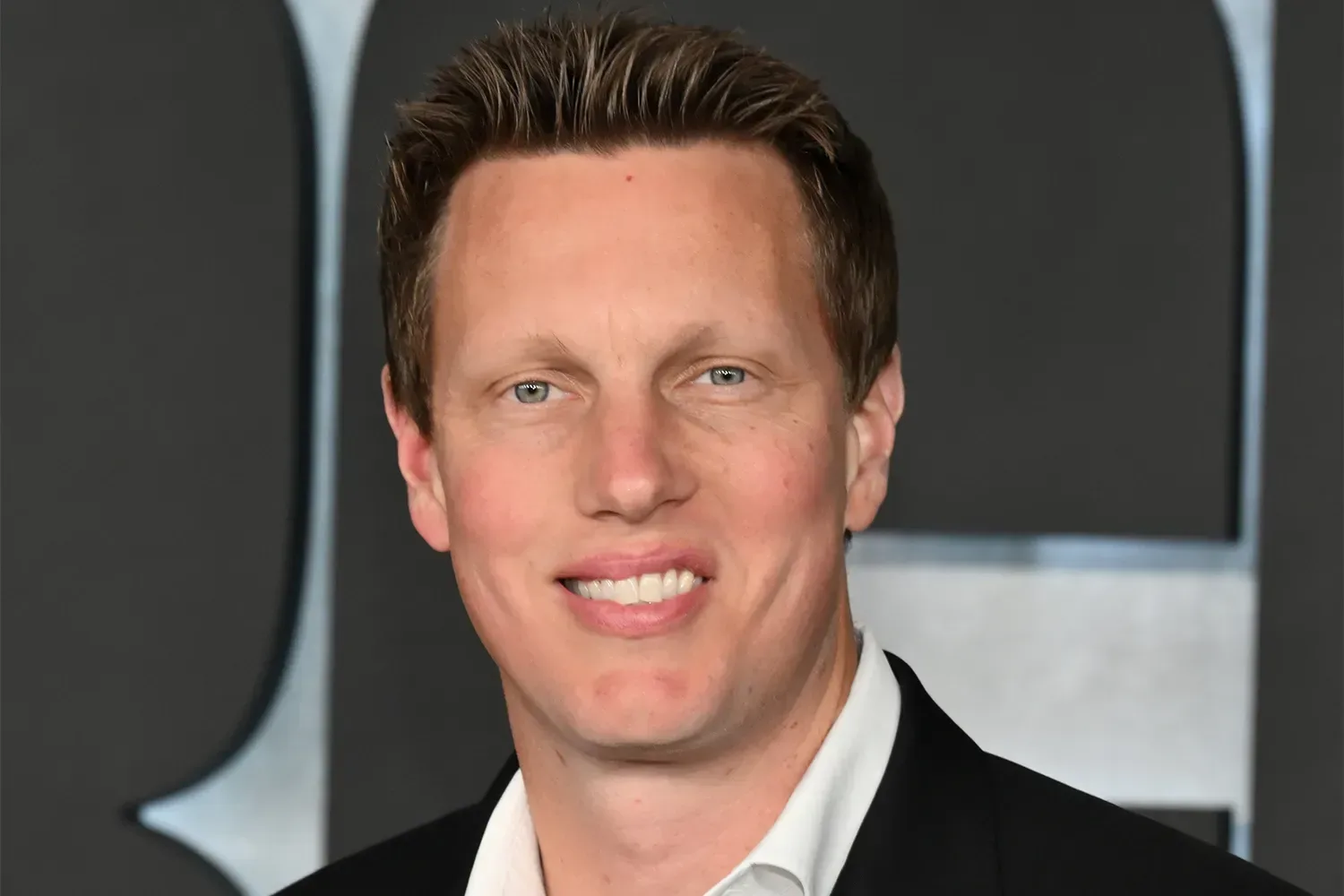
The most dramatic example is the expansion of Skydance under chairman and CEO David Ellison, backed by his father Larry Ellison’s family wealth through Lawrence Investments. David Ellison first acquired Paramount and CBS in an $8 billion transaction, then pursued Warner Bros. Discovery’s assets, including Warner Bros., HBO, CNN, Discovery and additional channels. The Warner Bros. Discovery transaction closed on Oct. 6 at $111 billion.
Lawrence Investments is estimated to have $160 billion in assets under management. That family backing was central to making deals of that magnitude possible. But its presence does not mean the acquisitions are risk-free or paid for purely with cash. The enlarged Skydance carries $80 billion in debt. If it fails to meet aggressive debt and cost-reduction targets across the following three years, Larry Ellison could personally be responsible for up to $40 billion in payments to lenders.
This is a useful corrective to the idea that family-office ownership automatically means serene, debt-free stewardship. Debt financing means borrowed money helps pay for an acquisition. It can allow buyers to undertake transactions well beyond what they would fund directly, but it also creates fixed obligations. When a company must service large debt, operating results and cost controls become especially consequential. For employees, creators and audiences, that can translate into pressure on spending, staffing and the strategic direction of a combined company.
The Ellison example therefore contains two seemingly opposing truths. Family wealth can help finance acquisitions at a scale few other buyers can attempt. At the same time, the eventual company can still face intense financial pressure. Ownership structure tells observers something important, but it does not answer every question about how a company will operate after a deal closes.
Why entertainment assets appeal to private family capital
Media and sports are especially attractive to this kind of investor because they are both business assets and cultural assets. A studio, a franchise or a talent company can generate revenue, but it can also carry prestige, public visibility and the promise of a lasting legacy. Sports teams intensify that combination: they are scarce, highly visible properties that can be tied to local identity and personal passion.
Music catalogs have also emerged as a significant target. The reasoning in the supplied material is that recorded music and songwriting rights may retain value even as the ways audiences consume music evolve in the streaming era. A catalog is not a one-time box-office bet. It can potentially deliver income over time through licensing, use and continued listening. That does not eliminate investment risk, but it helps explain why long-horizon buyers may be interested.
The family-office model may be suited to assets that do not fit a standard fund’s timetable. Traditional private equity often works toward a sale or an initial public offering within roughly seven to 10 years. Family offices generally do not face the same built-in need to exit. In practical terms, a buyer with no expected near-term sale can tolerate a longer plan for building a studio, developing a creative brand or improving a sports operation.
That flexibility can also lead to what are often called trophy investments: purchases valued partly for status, legacy or personal meaning. Full or partial sports-team ownership is a straightforward example. The scarcity itself matters. There are only so many major franchises, and an owner may be willing to emphasize long-term association with an asset rather than optimize for a fund’s eventual exit.
None of this means financial discipline disappears. Family offices still have to protect and expand wealth. Rather, they can have more than one definition of success. A deal might be expected to make money, build relationships with other holdings, further a family’s creative priorities or establish a lasting public footprint. The business consequence is that a rival bidder cannot always assume its own spreadsheet will determine the winner.
From big mergers to targeted creative backing
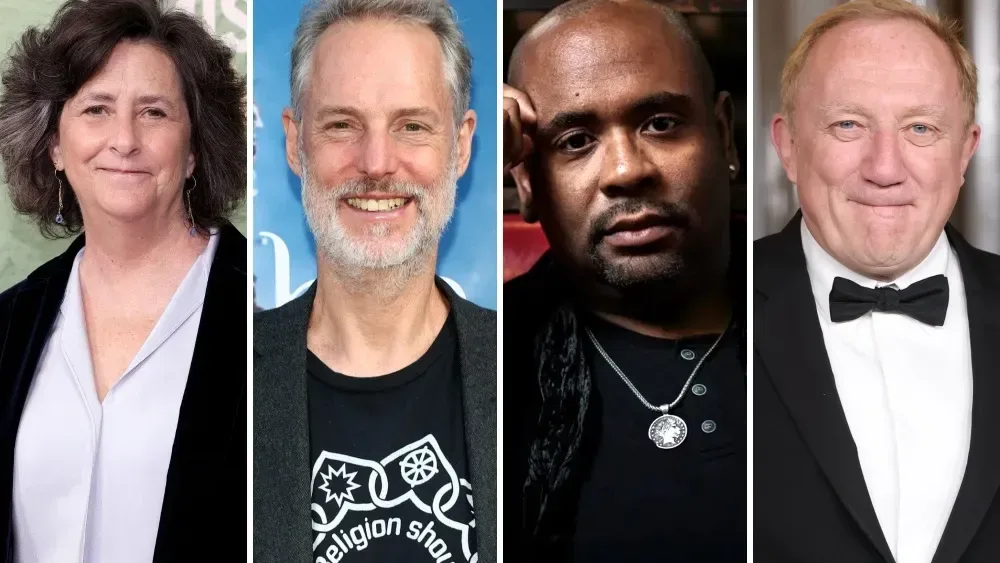
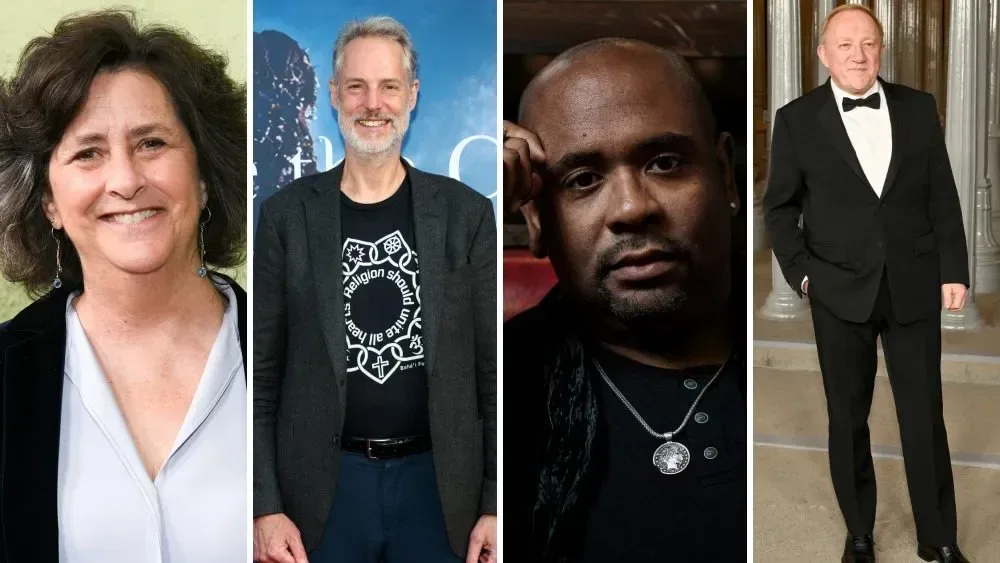
The trend is broader than giant media consolidation. François-Henri Pinault acquired CAA through Artemis Group in 2023. In another model, Steve Sarowitz’s Illinois-based 4S Bay Partners partnered with Justin Baldoni to launch Wayfarer Studios, the production company behind It Ends With Us. These examples show family-backed capital appearing at different points in the entertainment pipeline: representation on one side, production on the other.
David Steward II’s investments offer a further variation. He has put money into comic-book imprints and the Lion Forge Entertainment animation studio, with the stated aim of helping bring more diverse stories into family animation. The Steward family also sponsored Bubba Wallace’s work with NASCAR and Richard Petty Motorsports, and held an ownership stake in the St. Louis Blues from 2012 until it sold that stake in 2024.
The stated rationale behind Steward II’s entertainment investments is explicitly mission-oriented: support stories from varied racial, socioeconomic and gender backgrounds, with patience for outcomes because the goal includes change as well as returns. That does not establish a universal rule for family offices. It does, however, demonstrate why the category cannot be understood only as another name for private equity. The owner’s vision can be directly material to what gets financed.
There can also be operational links between a family’s existing businesses and its entertainment investments. The Steward family’s NASCAR involvement led World Wide Technology to upgrade the circuit’s digital infrastructure, including work aimed at helping NASCAR use AI and other newer technology. This kind of synergy is the potential benefit created when different holdings reinforce each other. It may involve technology, marketing, distribution, relationships or expertise rather than merely transferring money.
Privacy is a strength—and a public-interest complication
One of the defining features of family offices is privacy. They often do not have the same financial-disclosure requirements as public companies and may not have outside partners or publicly traded debt. For an owner, that can enable quiet negotiations and long-term planning without quarterly shareholder scrutiny.
For the public, it can make the ownership landscape harder to read. Audiences may care who controls a studio, a news operation, a sports team or a large talent agency, particularly when ownership can shape corporate strategy and creative priorities. The issue is not that privacy proves misconduct; it does not. The issue is that less frequent disclosure can mean outsiders have fewer routine ways to evaluate performance, leverage and influence.
That tension is especially relevant as media distribution keeps evolving. Platform and technology decisions can affect what audiences can access and how programming is monetized. For a current example of the broader business environment, Apple’s expanding video-podcast plans underline how entertainment companies must think across formats, devices and large-scale distribution. Deep-pocketed owners may provide options in that environment, but they also become central figures in setting the strategy.
What this means for entertainment workers and audiences
Family-office investment is not inherently good or bad for creative work. Its effects will depend on the individual owner, the asset, the financing and the management team. A long-term investor may give a company more room to cultivate talent or sustain a mission. A passionate owner may back projects that conventional models would consider too unconventional, too slow or too niche. A family with relevant technology, retail or marketing businesses may provide connections an independent studio could not easily build on its own.
There are clear reasons for caution as well. Concentrated ownership can make a single family’s preferences unusually influential. A trophy purchase can be motivated by passion, but passion is not a substitute for good operating decisions. And, as the Skydance transaction illustrates, family backing can coexist with major debt exposure and demanding cost targets.
For workers, the meaningful questions are concrete: Is the new owner hiring the right operating leaders? Does it have a credible plan for the business? Is it investing in production and people, or mainly reducing costs? Is the organization expected to grow over time, or is it carrying obligations that narrow its choices? These questions matter more than the family-office label alone.
For audiences, the changes may show up gradually in the volume and variety of programming, the survival of brands, the availability of niche stories and the corporate combinations that determine where media lives. The rise of family offices will not replace every other form of ownership, but it is reshaping the bidder pool. In a business where a studio, catalog, team or agency can be financially valuable and culturally symbolic at the same time, private family capital now has more power to decide what gets built, bought and kept.