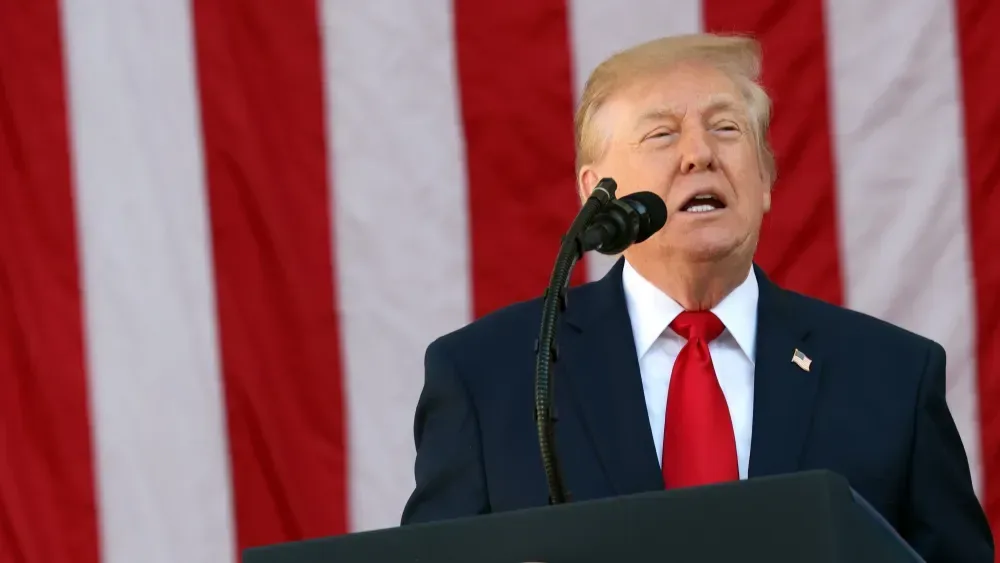
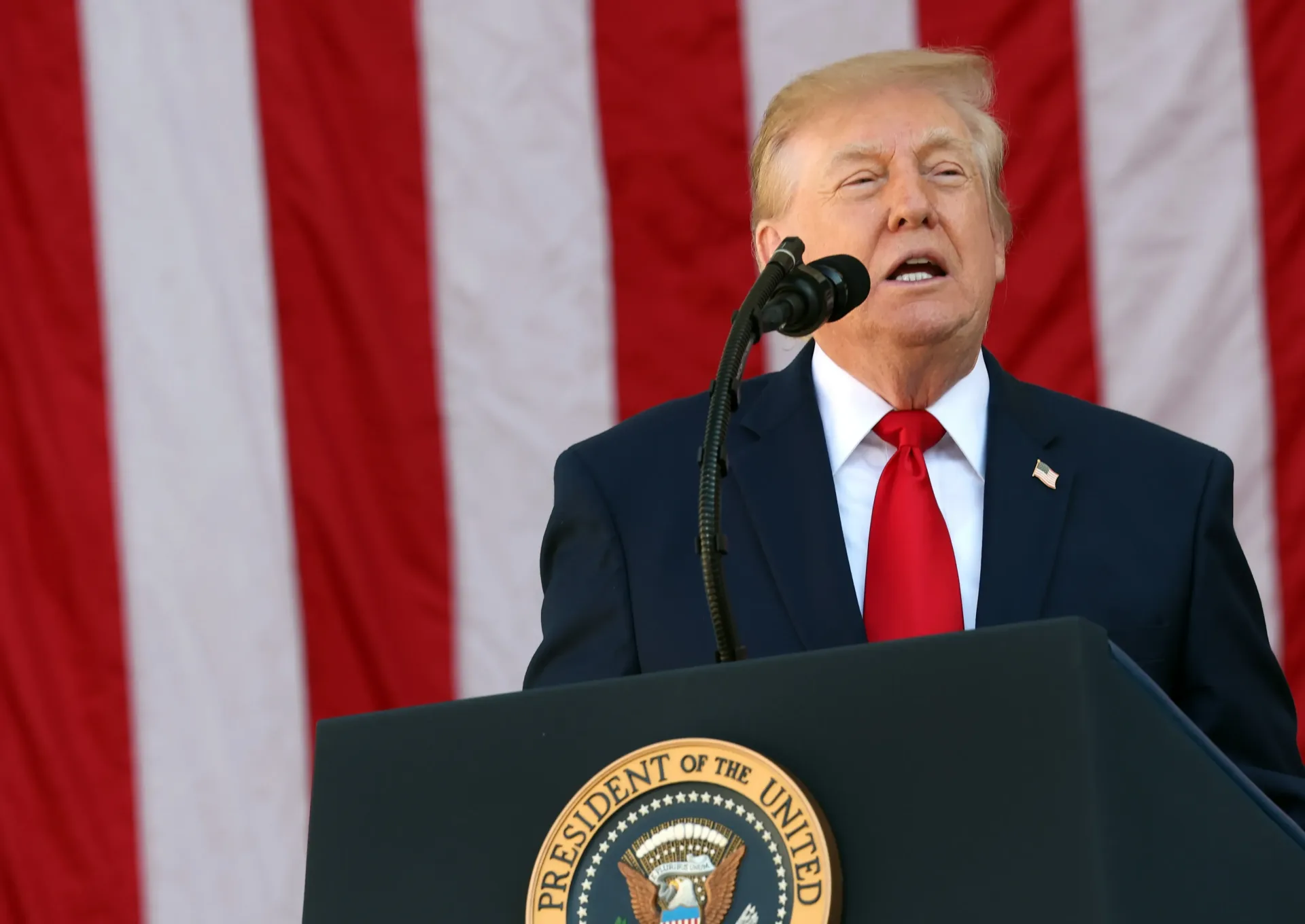
President Donald Trump has publicly backed a proposed federal film and television incentive, using a Truth Social post to say he is working with senators and representatives from both parties on the Motion Picture, Television, and Entertainment Revitalization Act.
The message arrived Friday as a nationwide ground stop delayed more than 10,000 flights. Trump had not issued a public statement on the disruption at the time described. Homeland security secretary Markwayne Mullin characterized the event as a telecommunications outage and said it was not another 9/11.
The two developments are separate, but the timing made Trump’s entertainment-industry message conspicuous: rather than commenting on the aviation interruption, the president focused on a proposed policy intended to encourage film and television activity in the United States.
What Trump said about the proposed legislation
Trump named Senators Tim Scott, Adam Schiff, John Cornyn, Raphael Warnock, Steve Daines, Bernie Moreno, Tim Sheehy, Alex Padilla, Mark Warner, Thom Tillis, Chris Coons, Katie Britt and Dick Durbin, along with Representatives Jason Smith, Nathaniel Moran, Brian Jack and Linda Sanchez. He said additional lawmakers were involved as well.
His post framed the measure as a bipartisan effort and said meetings with leaders of both parties were being scheduled. Trump argued that productions and industry activity have shifted to Canada, the United Kingdom, Australia and other countries because of tax incentives and other factors.
“The Entertainment Industry has largely moved to Canada, the United Kingdom, Australia, and other countries,” Trump wrote, adding that actors, producers and other workers want to return.
He also argued that passage would benefit hundreds of thousands of blue-collar workers and that the public money used for incentives would be recouped through increased Treasury revenue. Those are the president’s stated expectations for the proposal, rather than independently established outcomes in the material available here.
What a film tax incentive is meant to do
A production tax incentive is a government policy that reduces a qualifying production’s tax burden or otherwise provides financial support tied to making a project in a particular place. The basic idea is straightforward: film and television productions spend money across a wide local network, not only on performers and producers but also on crews, construction, transport, lodging, catering, equipment and post-production.
For studios and producers, location decisions can be heavily influenced by the total cost of a shoot. A tax incentive can therefore make one jurisdiction more competitive with another. Trump’s post places the proposed federal policy in precisely that competitive context, describing other countries’ incentives as part of the reason entertainment production has moved abroad.
The supplied information does not establish the bill’s incentive rate, eligibility rules, budget, duration, enforcement provisions, application process or current legislative text. Those details matter greatly. A proposal called a federal film and television tax incentive can cover very different policies depending on whether it is a credit, deduction, rebate, grant or another mechanism; who can claim it; and what spending or hiring must take place in the United States to qualify.
Why federal policy would be a consequential change
Trump’s post specifically presents the Motion Picture, Television, and Entertainment Revitalization Act as federal legislation. That matters because the policy conversation described is not limited to a single city or state. In his account, the objective is to make U.S. production more attractive against overseas competition.
The practical questions for industry workers and companies would be substantial if legislation advances. Productions would need clear rules before they could calculate budgets around a new incentive. Workers would want to know whether the policy creates sustained opportunities or merely moves a finite number of shoots from one location to another. Policymakers would need to decide how to measure whether public support generates enough broader economic activity to justify its cost.
None of those outcomes can be assumed from a social-media statement. For now, the concrete development is Trump’s stated support, his list of named congressional participants and his assertion that negotiations are active.
A bipartisan pitch, with policy details still absent
The notable political element of Trump’s statement is the breadth of the coalition he described. He emphasized that Republicans and Democrats were participating, even singling out the partnership with Schiff with the phrase “believe it or not.” He also said the issue particularly affects money flowing out of blue states.
That framing suggests an effort to position domestic production as an economic and labor issue rather than an entertainment-world concern alone. Trump repeatedly connected the proposal to workers, national competitiveness and revenue. The post’s slogan-like close — “MAKE OUR ENTERTAINMENT INDUSTRY GREAT AGAIN!” — makes the intended message even clearer.
However, bipartisan interest is not the same thing as an enacted law. Trump called for lawmakers to finalize what he described as actively negotiated legislation, but the supplied material does not say that a bill has passed either chamber, cleared committees or been scheduled for a vote. It also does not identify a formal bill number or provide statutory language.
That distinction is important for entertainment businesses. A production company cannot reliably budget against a proposed incentive until the policy’s terms are known and it becomes available. Likewise, workers should separate the political case for a policy from confirmed job creation. Trump forecast significant benefits, but the source material provides no analysis by which to quantify them.
Why the production-location debate reaches beyond Hollywood
Trump described “Hollywood, and so many other places” as having been emptied out by overseas tax incentives. Whether one agrees with that characterization or not, it points toward a broader production ecosystem. Screen projects may be associated with a studio, streamer or celebrity cast, yet the work itself extends to many trades and services.
That is why the proposed act is being presented as an entertainment revitalization measure rather than a narrow benefit for movie stars. The president’s emphasis on blue-collar jobs is a bid to center the people who make sets, move equipment and support productions. Its actual impact would depend on the still-undisclosed design of the legislation and whether productions respond by changing their location decisions.
The proposal also lands at a time when audiences encounter entertainment across theatrical releases, television, streaming and animation. Industry incentives do not determine creative quality, but they can affect where production infrastructure develops and where crews can find work. The wider pop-culture pipeline relies on that infrastructure, from a film or series through the marketing, licensed products and fandom that follow. Recent coverage of projects such as Jason Voorhees entering animation in Never Hike Alone: Ghosts in the Fog is a small reminder that screen properties can continue across formats.
The ground stop remained the more immediate public disruption
While Trump’s post concerned long-term industry policy, the nationwide ground stop was an immediate transportation issue. More than 10,000 flights had been delayed at the point described. Mullin attributed the situation to a telecommunications outage and sought to distinguish it from a terrorist event.
There is no supplied evidence connecting the ground stop to the entertainment proposal, and they should not be treated as related developments. The relevant overlap is simply the president’s public focus on Friday: he promoted the film and television measure while no presidential statement on the flight disruption had yet been issued.
What to watch next
- Legislative text: The key missing item is the actual substance of the Motion Picture, Television, and Entertainment Revitalization Act, including what kind of incentive it would create.
- Congressional movement: Trump described ongoing bipartisan negotiations, but no vote, committee action or passage is established here.
- Qualification standards: Any eventual policy would need to define which productions and expenses qualify, and what domestic work must be performed.
- Economic claims: Trump predicts a major worker benefit and increased Treasury revenue. Those claims would need to be assessed against the final policy rather than the broad proposal alone.
At present, the most supportable reading is limited but meaningful: Trump has placed his support behind a proposed federal effort to strengthen U.S. film and television production, and he says lawmakers across party lines are participating. The details that would determine the proposal’s real value to crews, producers and the public have not been provided.