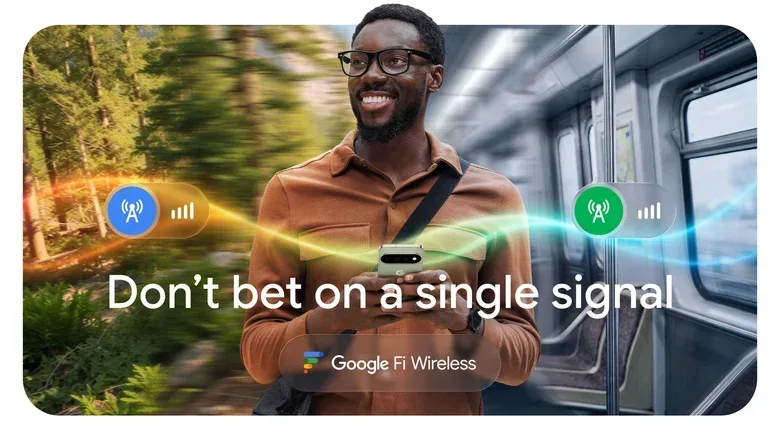
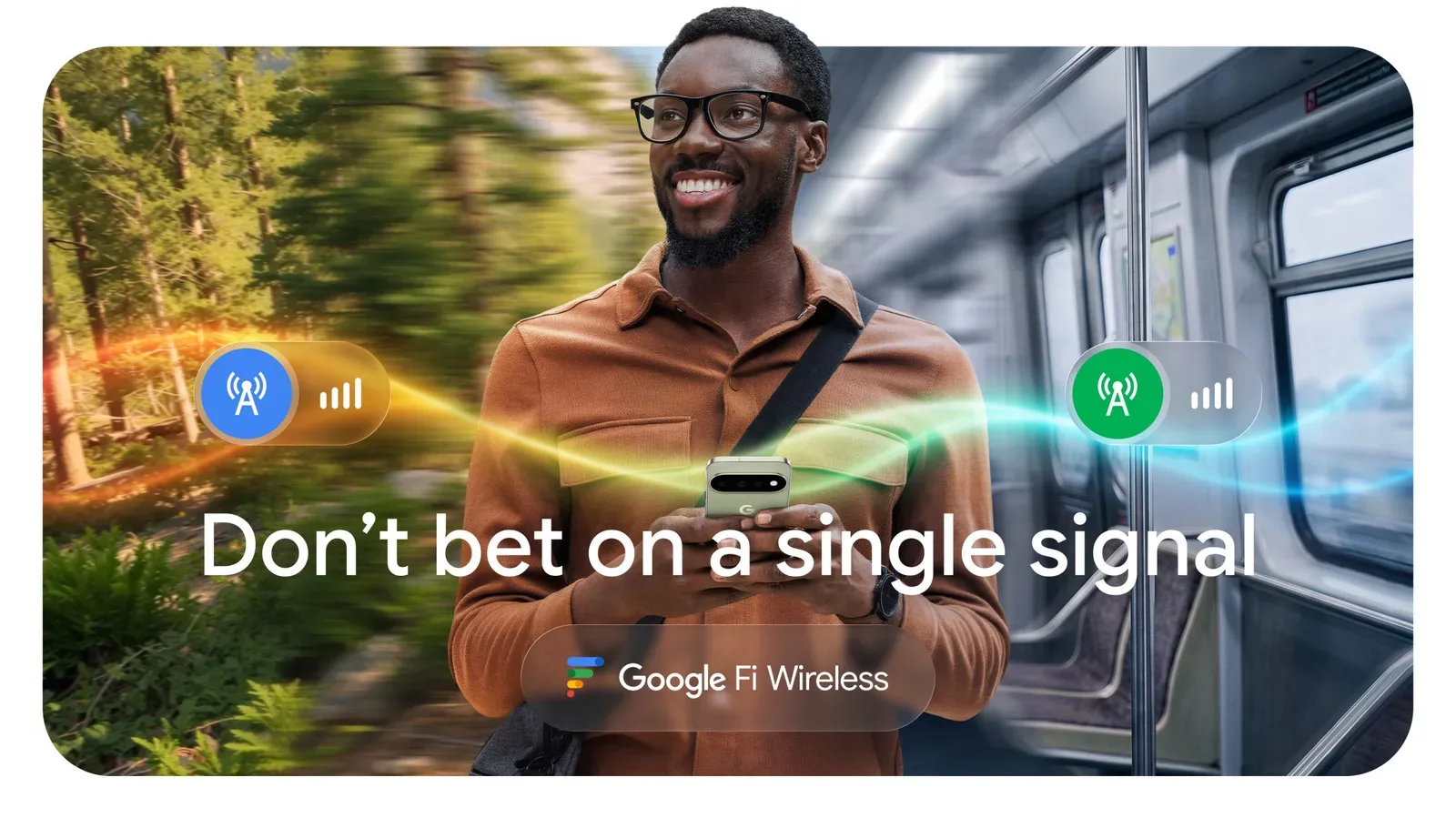
Google Fi is introducing a new connectivity feature called Super Network, designed to automatically move a phone between two cellular carriers when the current connection is weak or congested. The idea is straightforward: a phone stuck with one poor signal should not have to remain stuck when another usable cellular signal is available.
The rollout starts with Pixel 9 and newer Pixel phones using eSIM. Google Fi says wider availability is planned for 2027. For the players, commuters and travelers whose phone is also their hotspot, party-chat fallback and always-on pocket computer, that distinction matters: this is a network-management feature, not simply a promise of one carrier having better coverage everywhere.
Alongside Super Network, Fi is launching Wi-Fi Auto-Connect+, an automatic Wi-Fi option intended to help in indoor locations where cellular reception can struggle. It is also adding an AI-powered Ask Fi assistant inside its app for account, billing and troubleshooting questions. Both network features are included at no extra cost on Fi’s Unlimited Premium and Flexible plans, with support stated for more than 200 international destinations.
What Super Network is meant to do
Cellular performance can drop for several different reasons. A dead zone is an area where a usable signal is absent or too weak. Congestion is different: the phone may show signal, but a heavily used local cell can still deliver slow data. A building can create another kind of problem by weakening radio signals indoors even if service is fine immediately outside.
Super Network is intended to address the first two cases by checking the quality of the active connection and automatically switching between two carrier networks if that connection becomes sluggish. The important promise is the lack of manual work. A subscriber should not have to change a setting, select a network or recognize which carrier is having a difficult day in a particular place.
Google Fi has not named the two carriers participating in Super Network. One may be T-Mobile based on Fi’s prior partnerships, but that is not confirmed as part of this feature. Until the carrier arrangement is officially specified, subscribers should avoid treating a particular carrier pairing as guaranteed.
The eligibility requirement at launch is equally important. Super Network begins on Pixel 9 and later Pixel models with eSIM. An eSIM is a digital SIM built into a phone rather than a removable physical card. In practical terms, it can make it easier for a device and carrier service to manage mobile subscriptions digitally. It does not mean every eSIM phone can use Super Network; the initial rollout is specifically limited to the listed Pixel range.
Automatic switching is not a magic signal generator
There is a useful limit to understand. Switching networks can only help when an alternative connection is available and better. It cannot create cellular service in a location where neither participating carrier has a workable signal. Nor does the announcement establish a particular speed target, latency result or guarantee that every slowdown will trigger an immediate swap.
Related coverage includes Google Fi Begins Super Network Rollout on Eligible Pixel Phones.
That does not make the feature insignificant. Network quality is highly location-dependent. One side of a street, a transit station platform, a crowded venue or a particular floor in an office can produce a very different result from another nearby spot. The value proposition is that the phone can respond to those shifting conditions without turning the customer into an amateur telecom dispatcher.
For online games, a fast-looking download number is only part of the experience. Latency is the time it takes for information to travel between the device and a server, while stability concerns whether that connection remains consistent. A carrier switch might be useful when a cellular path is badly congested, but it can also represent a change in the underlying connection. The announcement does not make claims about uninterrupted multiplayer sessions, improved ping or reduced packet loss, so those should remain possibilities to watch rather than promised outcomes.
Wi-Fi Auto-Connect+ targets the indoor problem
Super Network handles cellular selection; Wi-Fi Auto-Connect+ approaches a separate challenge. Google Fi says the feature is aimed at improving data speeds indoors at locations such as malls and airports, where walls, layout and building materials can interfere with cellular reception.
When Wi-Fi is available in supported locations, Wi-Fi Auto-Connect+ can move the phone onto it automatically. Google Fi says the connection uses automatic encryption to protect data. Encryption is the process of scrambling information so that it is not readable to someone who intercepts it without the necessary authorization. That is especially relevant to automatic Wi-Fi use because a person may be connecting in a public environment rather than a network they set up at home.
The initial device scope is broader than Super Network’s. Wi-Fi Auto-Connect+ is set to be available on Pixel 5a and newer phones, plus certain Motorola and Samsung phones running OneUI 9 or later. Availability is limited to select locations across the US, Europe, Asia and Brazil. That phrasing leaves several practical unknowns: not every venue in those regions is necessarily supported, and compatible hardware alone does not establish that the feature will be available at a given airport, mall or other indoor site.
For someone downloading a game update before a trip, using cloud-connected services on the move, or simply trying to keep a stable connection in a big public building, automatic Wi-Fi handoff could be more consequential than a theoretical peak cellular speed. Still, it is important to separate the design goal from a blanket coverage claim. The rollout is location-based and begins with a defined set of compatible devices.
Who gets the new connectivity tools
Google Fi says Super Network and Wi-Fi Auto-Connect+ are available without an additional fee to customers on Unlimited Premium and Flexible plans. The two features are also intended to work in more than 200 global destinations, a potentially meaningful point for international travelers who may encounter unfamiliar coverage patterns and indoor connectivity hurdles.
Plan eligibility should be checked before treating the launch as a universal Fi upgrade. The announcement names Unlimited Premium and Flexible, not every possible plan. Likewise, the initial Pixel and software requirements mean that a subscriber’s plan, phone model, eSIM status and location can all affect whether a feature is available.
- Super Network: starts on Pixel 9 and newer models with eSIM, with broader availability planned in 2027.
- Wi-Fi Auto-Connect+: starts on Pixel 5a and newer models, plus some Motorola and Samsung devices on OneUI 9 or above.
- Plan access: included for Unlimited Premium and Flexible customers at no extra cost.
- International scope: both features are stated to work in more than 200 destinations.
- Location caveat: Wi-Fi Auto-Connect+ is initially available only in select locations in the US, Europe, Asia and Brazil.
Ask Fi brings an AI option to support, with human help still available
Google Fi is also rolling out Ask Fi, an AI-powered assistant within the Fi app. It is intended to answer questions, help resolve billing issues and troubleshoot connectivity problems in real time. These are precisely the kinds of support tasks that can become frustrating when the customer is already unable to connect reliably, so the usefulness of the tool will depend on whether it can turn a vague complaint into clear, actionable guidance.
Fi says customers can still reach human support if they prefer. That availability matters because some requests—especially billing disputes or a complex device-specific connectivity issue—can require context that a quick automated exchange may not capture. An AI assistant can be a convenient first stop, but it does not remove the value of an escalation route.
The launch also places another consumer support tool in a period of wider AI adoption across technology companies. Google’s broader use of AI in administrative work has also reached healthcare, as explored in Google’s healthcare administration push. Ask Fi is much narrower: it is built around a mobile service account, bills and connection troubleshooting rather than clinical or healthcare administration tasks.
The Pixel 11 Pro offer needs the fine print
To promote the Super Network launch, Google Fi is offering new subscribers what it describes as a free Pixel 11 Pro through a combination of a $500 instant rebate and $599 in credits spread across 24 months. The structure is worth spelling out. The immediate discount and the future monthly credits together add up to the phone’s stated offer value, but the credits arrive over two years rather than all at once.
New Unlimited Premium customers can also receive a $10 monthly service credit. That offer lasts until November 18, 2026. New subscribers who already own a Pixel phone can receive 50 percent off select unlimited plans for 12 months; that offer ends December 1, 2026.
Because the Pixel 11 Pro promotion relies partly on 24 months of credits, prospective subscribers should regard it as a long-term service incentive, not just a point-of-sale price cut. The supplied offer details do not spell out all eligibility conditions or what happens if service changes before the credit period ends, so those details should be verified directly before committing.
What to watch as the rollout expands
The core test for Super Network will be consistency in ordinary difficult places, not simply an impressive speed reading in favorable conditions. Can it recognize a genuinely poor connection? Does it select a stronger alternative when one exists? How smoothly does the device move among cellular and Wi-Fi options over the course of a busy day? Those are practical questions the announced feature is designed to address, but they are not yet answered by its specifications alone.
Google Fi’s approach is notable because it combines three layers: automatic cellular carrier switching, automatic protected Wi-Fi connections in supported public locations, and in-app help when something still goes wrong. Each layer addresses a different failure point. The first concerns which cellular network the phone uses; the second covers difficult indoor reception; the third concerns the support process.
For eligible Fi subscribers, the most immediate action is simple: identify the phone model, confirm eSIM and software requirements where applicable, check plan eligibility, and treat local rollout availability as a real factor. For everyone else, the wider 2027 availability target is the key date to watch. The promise is less about one permanently superior network than a phone that is better able to avoid staying attached to the wrong connection.