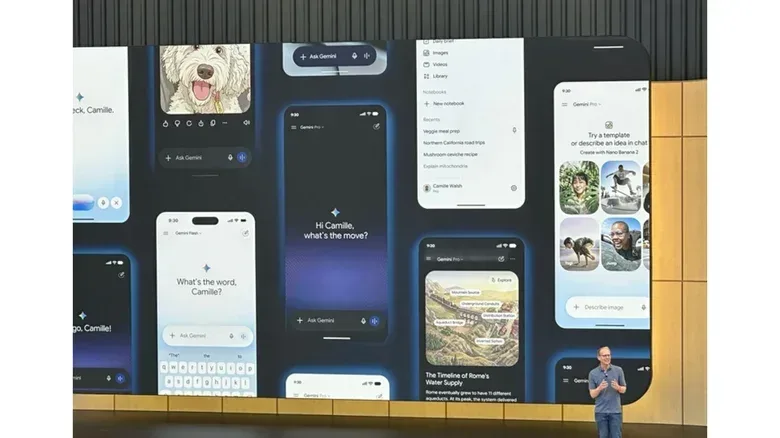
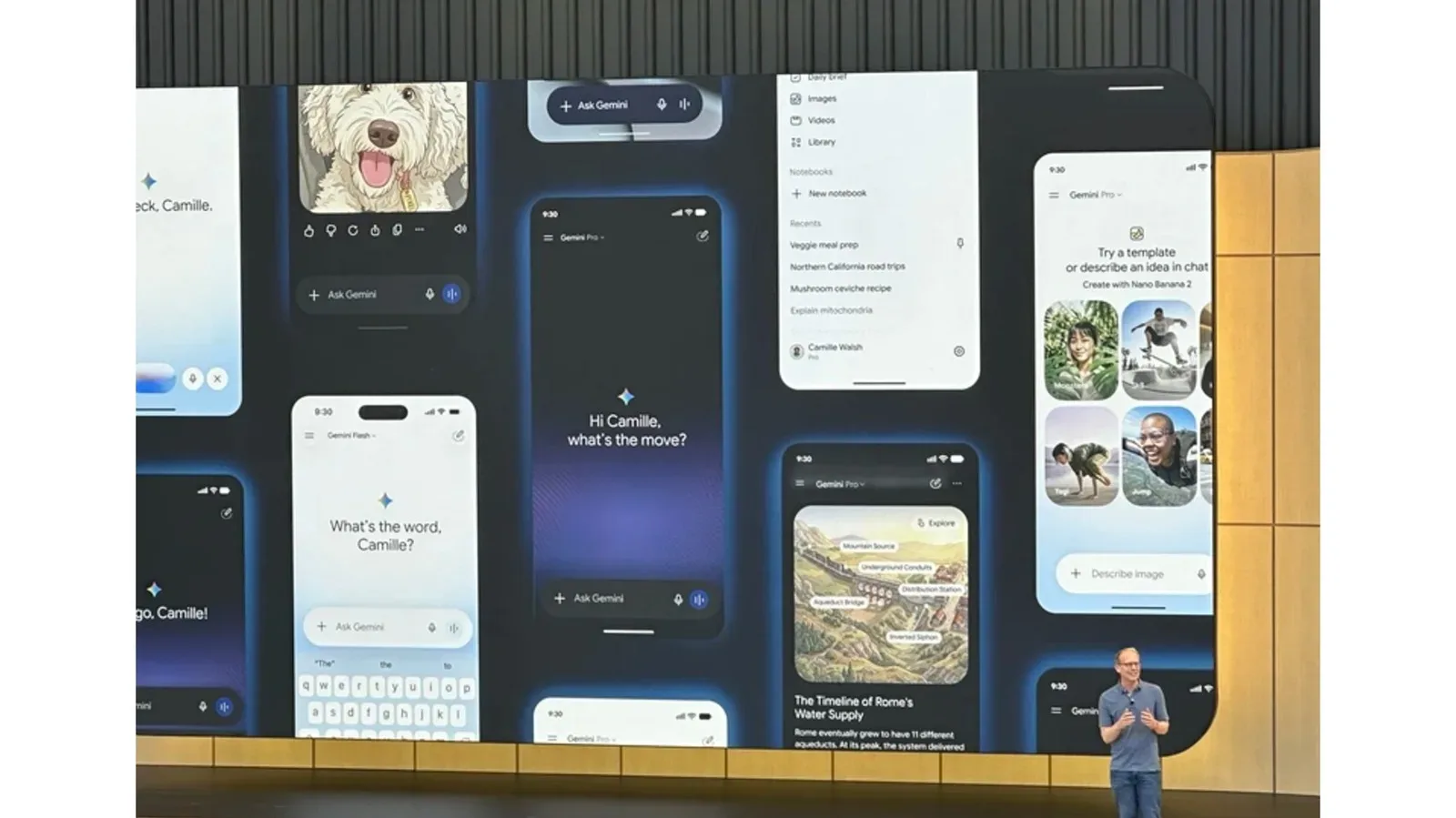
Gemini is getting a much wider range of regional voices. Google has added 66 regional dialects to the assistant’s Android and iOS apps, moving beyond the familiar smooth, broadly neutral sound associated with many conversational AI products.
The rollout includes a substantial set of UK options. Users can select Geordie, Scouse and Brummie voices, associated with Tyneside, Merseyside and Birmingham respectively, alongside Scots, Welsh, Northern Irish and Multicultural London English. The expansion is not limited to Britain: Google also lists dialect support for India, Brazil, Indonesia and Korea.
That makes this less about simply giving an assistant a novelty voice and more about a practical question hanging over voice AI: who gets to sound ordinary? A supposedly universal default voice can be convenient, but it can also make huge numbers of real speech communities feel absent from the technology they use every day.
What Gemini is adding — and what it is not
The key distinction is between a dialect and a language. A language is a broad communication system, while dialect can describe regional or social variation within it, including pronunciation, rhythm, vocabulary and grammar. An accent, more narrowly, usually refers to pronunciation. In everyday usage, the boundaries are not always neat, but the important point for this update is that Gemini is offering more localized ways for its spoken responses to sound.
Google’s stated aim is not to have the assistant perform a barrage of regional slang. It says the voices are intended to sound more like a local speaker, rather than an exaggerated character. That is a vital limitation. A regional voice that turns every reply into a stack of catchphrases would not feel inclusive; it would feel like the assistant had mistaken a community for a costume.
The company says it worked with native speakers to make the voices authentic and clear. That is meaningful context, but it does not settle the question of whether each voice lands well. Dialects are living, varied and intensely personal. Two people from the same city may speak differently because of age, family, neighborhood, ethnicity, class, migration, work or simply individual habit. No single synthetic voice can stand in for everyone.
Still, a localized option does not need to claim to represent every person in a region to be useful. The better standard is more modest: does it sound respectful, intelligible and recognizably grounded rather than broad or cartoonish? Google’s reliance on native-speaker involvement suggests it recognizes that standard, and users will ultimately decide whether the execution meets it.
Why regional speech matters in an assistant
Voice assistants are unusual pieces of software because they occupy a conversational role. A spreadsheet can be impersonal without much consequence. An assistant that speaks aloud, answers questions and potentially becomes part of a person’s routine invites a more immediate reaction to its voice.
That creates what might be called a flattening problem. When an assistant consistently defaults to a polished, geographically vague tone, it can imply that this is the neutral version of speech and everything else is an optional variation. In reality, regional speech is not a glitch around a standard voice. It is part of how many people express belonging, identity and heritage.
The issue is particularly apparent in the UK, where listeners often identify regional origins from a handful of sounds, patterns of stress or turns of phrase. The same broader concern applies internationally. Adding options for India, Brazil, Indonesia and Korea acknowledges that a product used across many places should not always present one narrow idea of what an assistant ought to sound like.
There is also a straightforward comfort factor. Some users may simply prefer an assistant whose cadence feels closer to the speech they hear at home, among friends or in their local community. Others will prefer a more neutral-sounding setting. The point of a larger voice menu is not to prescribe the “right” option; it is to make room for choice.
How to find the new voices
Gemini users on Android and iOS can access the options through the app’s voice settings. Google also points users to the three-dot menu as a route to the relevant controls.
A sensible first test is to ask for a recommendation for local food. It is the sort of open-ended prompt that gives a voice time to demonstrate its pacing, intonation and overall character. It is also preferable to trying to force a voice into stereotypical vocabulary just to see whether it will comply. The feature is meant to alter how Gemini speaks, not turn its answers into a performance of regional clichés.
- Open the Gemini app on Android or iOS.
- Go to voice settings, or use the three-dot menu to locate the voice controls.
- Select an available regional option.
- Try a natural prompt, such as asking about local food, to hear the voice’s rhythm and tone across a fuller reply.
Authenticity will be the actual test
“Authentic” is an especially demanding word for synthetic speech. Technical clarity can be evaluated relatively easily: are words understandable, are pauses natural, and does speech flow cleanly? Cultural credibility is harder. A voice may be perfectly intelligible and still sound off to listeners who know the dialect intimately.
That is why this rollout should be judged as an ongoing interaction with users, not merely a count of 66 additions. The number signals scale, but the quality of individual options matters more than a headline total. A listener from Tyneside will have a different ear for a Geordie voice than someone encountering it for the first time; the same is true across every region included in the expansion.
Google appears aware of the risk. Its emphasis on native-speaker collaboration and restraint around slang addresses two common failure modes for regional voice work: getting the sound wrong, and treating local speech as a collection of gags. Whether the company has avoided those pitfalls will be clearer once the intended communities spend time with the new options.
A broader design lesson for conversational tech
The Gemini change also carries a lesson beyond assistants. Interfaces increasingly speak: phones, cars, accessibility tools, virtual characters and game-adjacent services all use spoken interaction. The choices developers make about voice affect whether a system feels welcoming, generic or oddly detached from its audience.
In entertainment and gaming, a believable voice can shape how people receive a character, a world or an in-game guide. It is one reason the industry’s conversations about dialogue and personality matter, whether the subject is a voice assistant or, in a very different context, how a memorable joke can become part of game-industry lore. Speech carries more than literal information: tone, timing and cultural context change the meaning of an interaction.
For Gemini, the immediate practical change is simple: more people can choose a voice that feels closer to their own world. The larger challenge is equally simple to describe and difficult to fulfill. Regional representation must sound like respect, not imitation. Google has expanded the menu; the response from the communities represented will determine whether the voices truly feel like home.