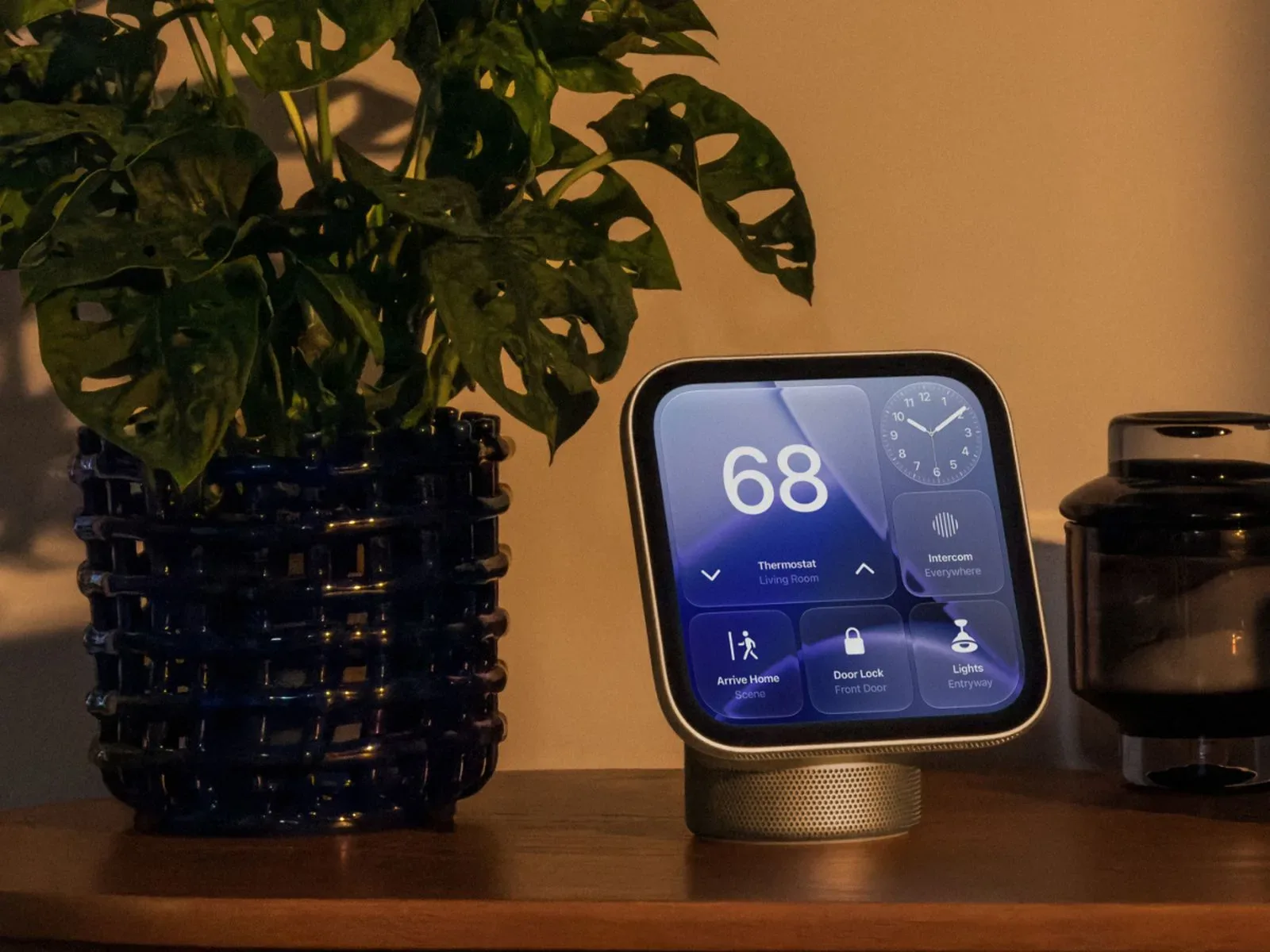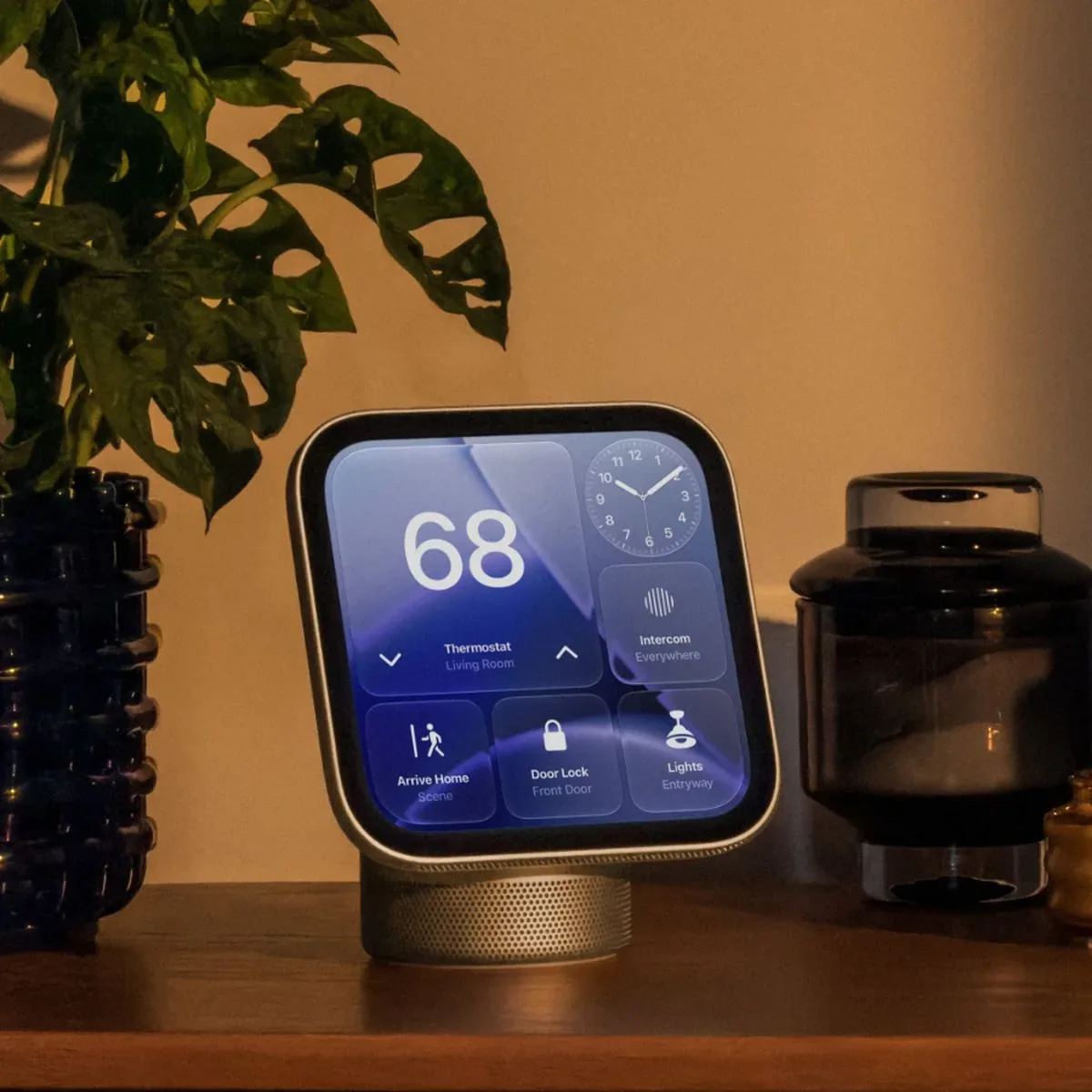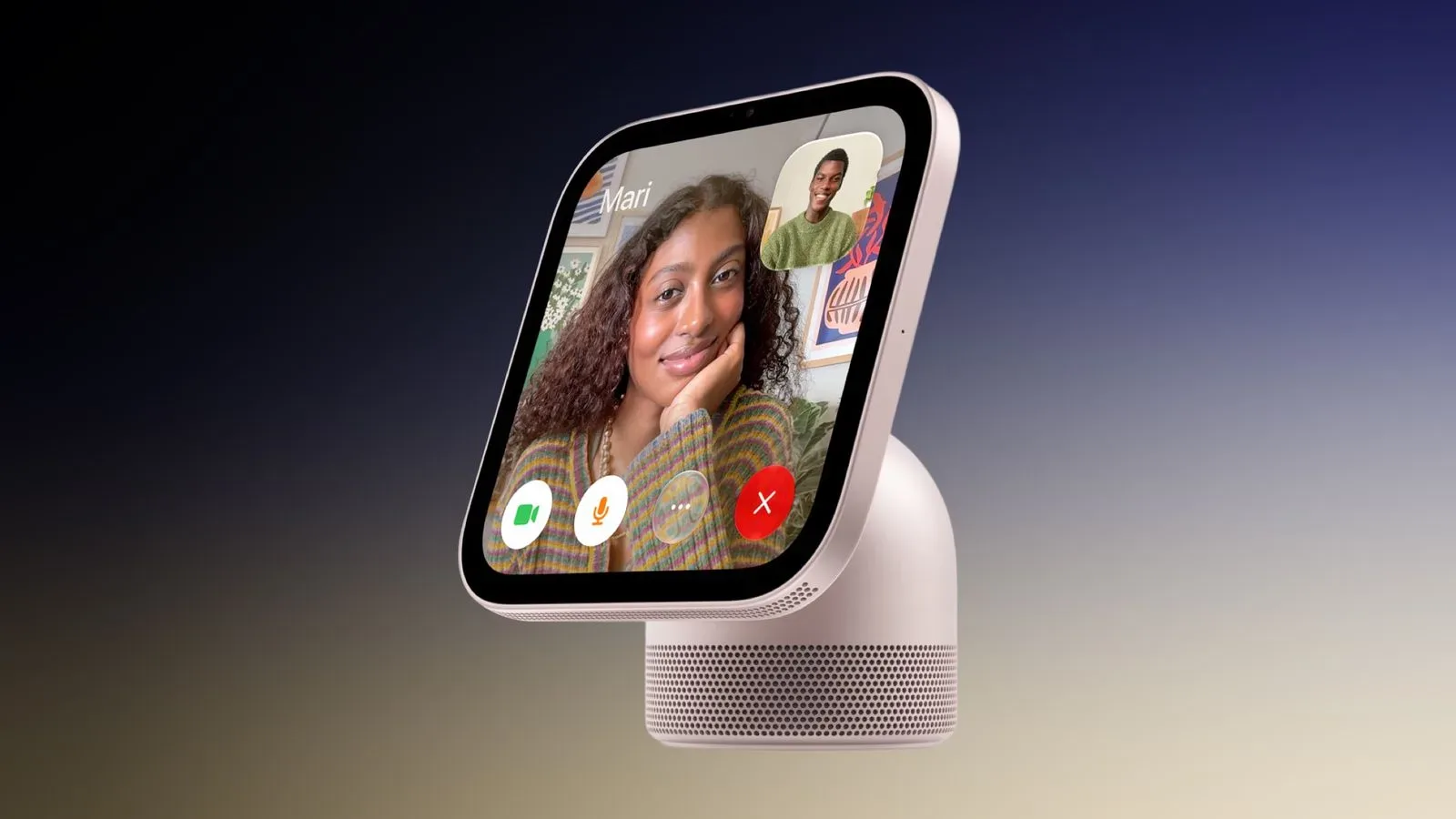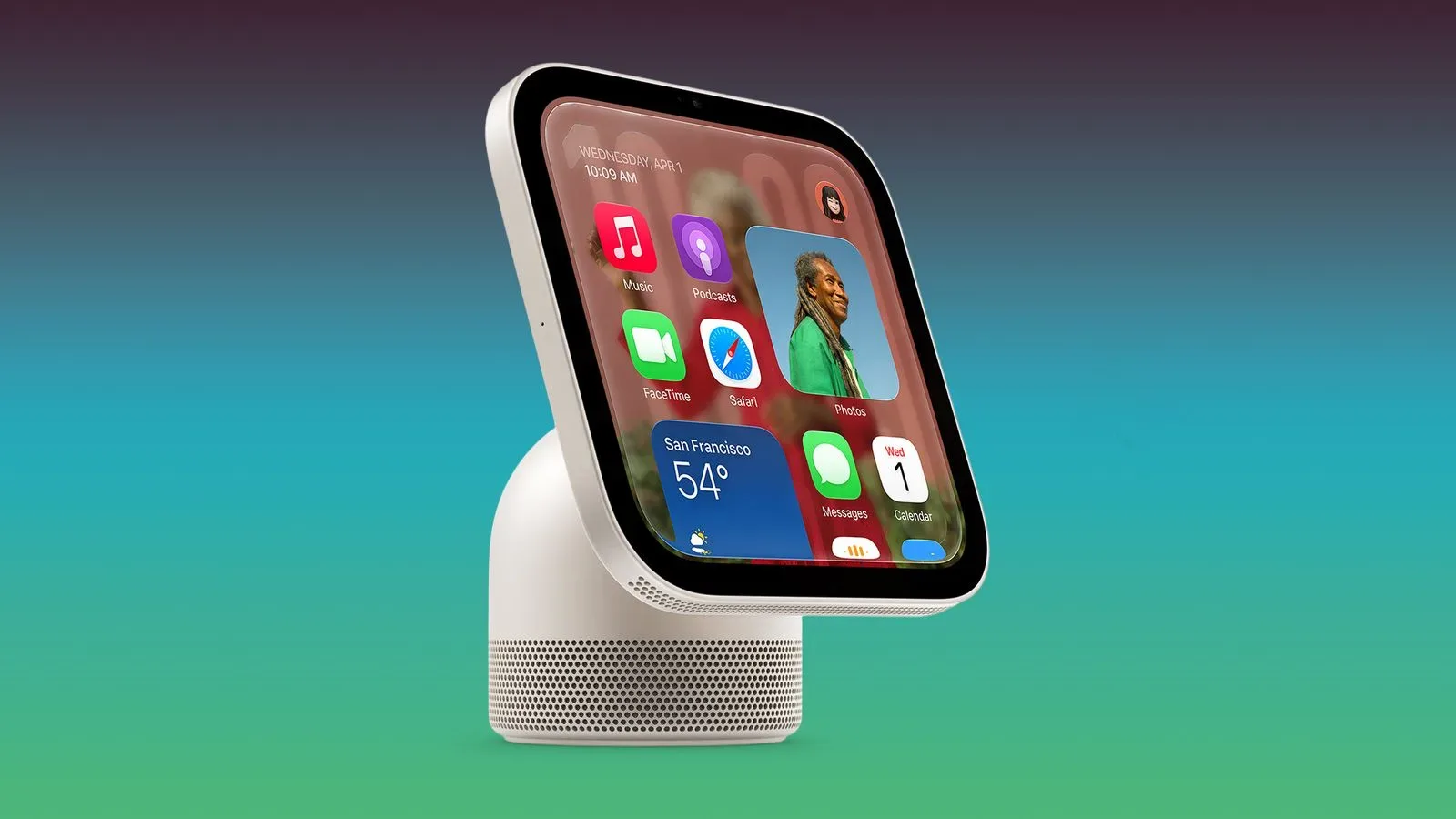
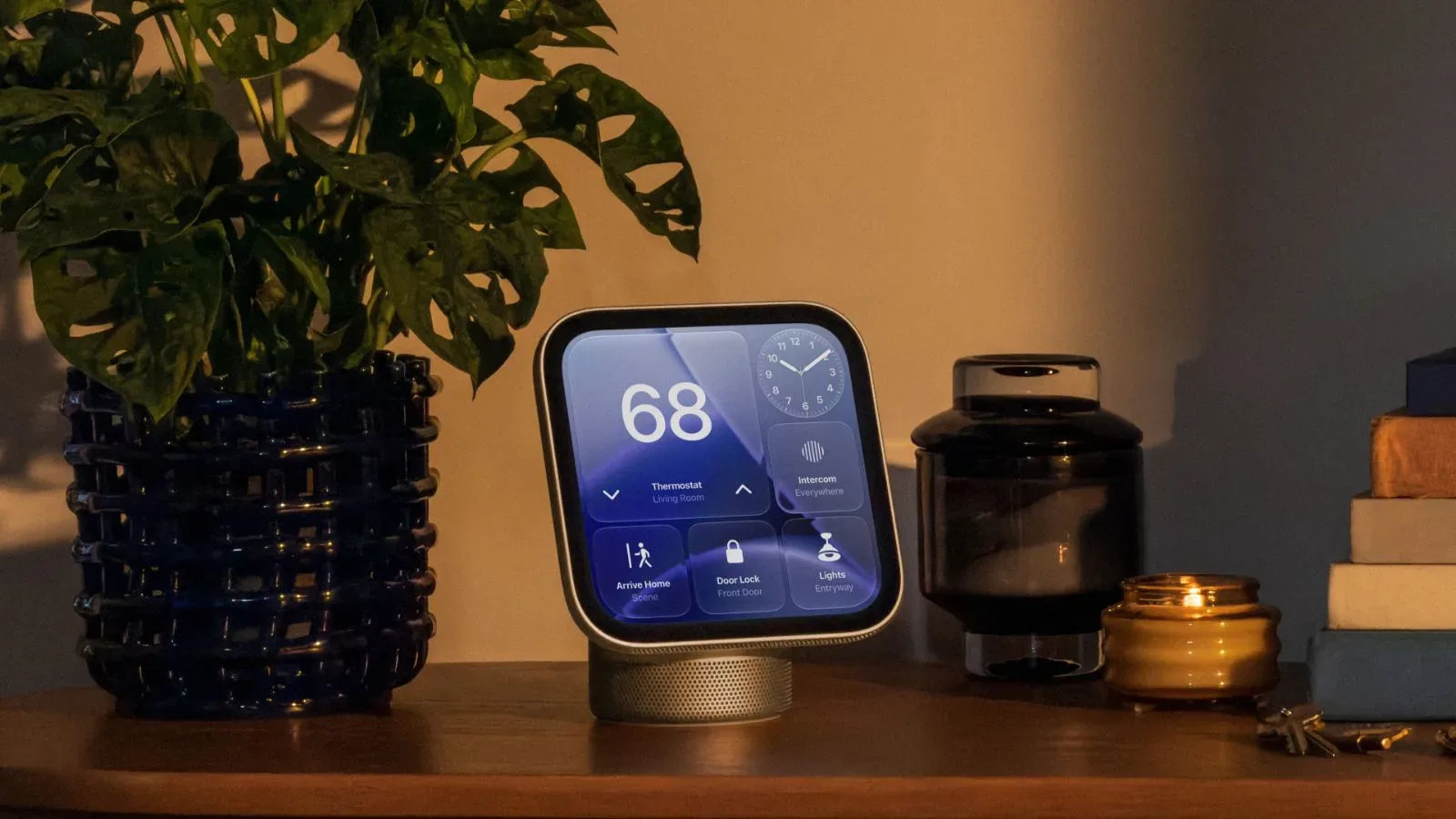
Apple’s new HomeView smart-home display is making an unusually specific hardware claim: its screen can automatically fall to 0.3 nits, which Apple calls the lowest-light display performance it has engineered into any of its products.
That number is small enough to sound like pure specification-sheet theater, but it gets at a practical challenge for any screen expected to live in a bedroom. A display can be useful at night—for a glanceable home control, information, or an AI-assisted interaction—without becoming the brightest object in the room. Apple’s stated 0.3-nit floor positions HomeView around that tension: visible enough to function, but designed to reduce the chance that it feels like a miniature floodlight on a bedside table.
HomeView is available starting today. The device reaches a maximum brightness of 500 nits, so its defining display story is not merely that it can get bright enough for ordinary use. It is the claimed span between its maximum output and its exceptionally low automatic dimming point.
What 0.3 nits actually means
A nit is a measurement of luminance: the light emitted from a display across a given area. In uncomplicated terms, more nits generally means a brighter-looking screen. It is a useful measurement because a display’s suitability changes with its surroundings. A higher level may be needed when a room is brightly lit, while a low level matters when eyes have adjusted to darkness.
Apple says HomeView can automatically reach 0.3 nits. For perspective, the latest iPhones and iPad mini models are advertised with a minimum brightness of 1 nit. HomeView’s quoted minimum is therefore less than one-third of that comparison point.
That comparison should not be read as a blanket claim that HomeView has a better display than every other Apple device. Displays are built for different jobs, sizes, locations, and interaction patterns. A phone needs to remain usable in many environments and may be viewed close-up at any hour. A home display can be designed around a more fixed role. The important claim here is narrower: Apple says HomeView establishes its internal record for the dimmest low-light display behavior.
Matthew Costello, Apple’s vice president of hardware engineering, described 0.3 nits as the company’s lowest-light performance engineered into a product. He also jokingly characterized HomeView as Apple’s “most dim” product. It is an easy line, but it neatly captures the device’s intended personality: not a screen demanding attention, but one that can recede into a dark room.
Why a bedside use case puts dimming under a microscope
“Night mode” is often treated as a simple setting. In reality, useful nighttime behavior involves more than changing colors or applying a dark interface. Even a mostly black screen can be distracting if bright interface elements remain too luminous. The amount of emitted light still matters.
Apple explicitly identified bedside placement as a scenario where HomeView’s ultra-low brightness is especially relevant. That makes sense for a stationary home device. Unlike a phone, which users may pick up and move between rooms, a smart-home display can become part of a particular space and its routine. Its illumination needs to fit that space over time, including when occupants are trying to sleep.
The key word in Apple’s specification is also automatically. The provided details say the display brightness can automatically lower to 0.3 nits. Automatic adjustment is significant because it reduces the need to manually hunt for a brightness control every time ambient conditions change. The information available does not explain precisely what sensors, thresholds, or user controls govern that behavior, so it would be premature to make claims about how it performs in every bedroom or lighting setup. But the purpose of the low-end target is clear.
At the other end, HomeView tops out at 500 nits. Maximum brightness and minimum brightness solve opposite problems: the first addresses visibility when surroundings are brighter; the second aims to preserve comfort when they are dark. For a device intended to remain in a home rather than travel in a pocket, that range may be more meaningful than a headline brightness contest.
A screen designed around the home—and Siri AI
Costello said HomeView was constructed around Siri. Apple also says it custom-built the interface for the home, placing the apps and experiences that matter most in that setting front and center.
That language distinguishes a home display from a general-purpose tablet without requiring a long list of claimed features. A general-purpose device tends to begin with the assumption that the user chooses and launches individual apps. Apple’s description of HomeView instead emphasizes a prepared home context, where the most relevant experiences are meant to be immediately present.
The phrase Siri AI is central to that pitch, though the available information does not detail every AI capability or the full set of home experiences involved. What is known is that Apple sees Siri as foundational to HomeView’s construction, not merely an additional voice option placed beside a conventional app grid.
For prospective buyers, that distinction is worth keeping in mind. HomeView’s appeal is likely tied not just to its panel specification but to whether its home-first interface matches how a household wants information and controls presented. The 0.3-nit figure is the most concrete headline, while the long-term everyday experience will depend on how effectively that interface surfaces the things people actually use at home.
Recognition without repeated sign-ins
Apple’s other notable design claim is about identity. Costello said users do not have to log in and out: HomeView recognizes an individual and their information disappears after they step away.
That is a deceptively consequential promise for a shared screen. A phone is generally personal by default. A display installed in a communal room or placed by a bed must balance two expectations that can clash: people want their own information when they approach, but they may not want it remaining visible for the next person.
Apple’s description suggests HomeView is intended to handle that handoff without making the user repeatedly manage accounts. The provided material does not explain how recognition works, which data is included in a person’s displayed information, or the precise conditions under which it disappears. Those unanswered details matter for evaluating privacy in practice. Still, the design direction is unambiguous: personal relevance should appear when it is useful, then retreat when the person is no longer there.
It also fits the device’s broader framing. HomeView is not being presented simply as a large screen for a counter. Apple is describing it as an ambient household device that adapts to lighting, recognizes a person, and foregrounds home-oriented interactions through Siri AI.
The practical takeaway from Apple’s dimmest screen claim
HomeView’s 0.3-nit minimum should be treated as a targeted quality-of-life specification rather than an all-purpose verdict on display quality. Its relevance will be strongest for people who expect the device to stay on or remain glanceable in low-light spaces. In that context, the ability to become extremely dim can matter as much as the ability to become bright.
Apple’s 500-nit maximum provides the other side of the equation, while the company’s home-specific interface and recognition claims explain why the product is being built as its own category of screen. The result is a device whose design priorities appear to be less about portable computing and more about fitting quietly into the rhythms of a room.
For Apple watchers, the comparison with the 1-nit minimum advertised for recent iPhones and iPad mini models makes the record easy to understand. For everyone else, the more useful translation is simple: Apple wants HomeView to be a display that knows when not to shout. That may be the most important feature a bedside screen can have.
Apple’s approach to personal hardware can also be seen in its wider device lineup, including the company’s premium wearable category; the Apple Watch Ultra 3 recently drew attention for a price drop. HomeView, however, is pursuing a very different sort of convenience: less about carrying a screen everywhere and more about making one screen appropriate for a shared home.