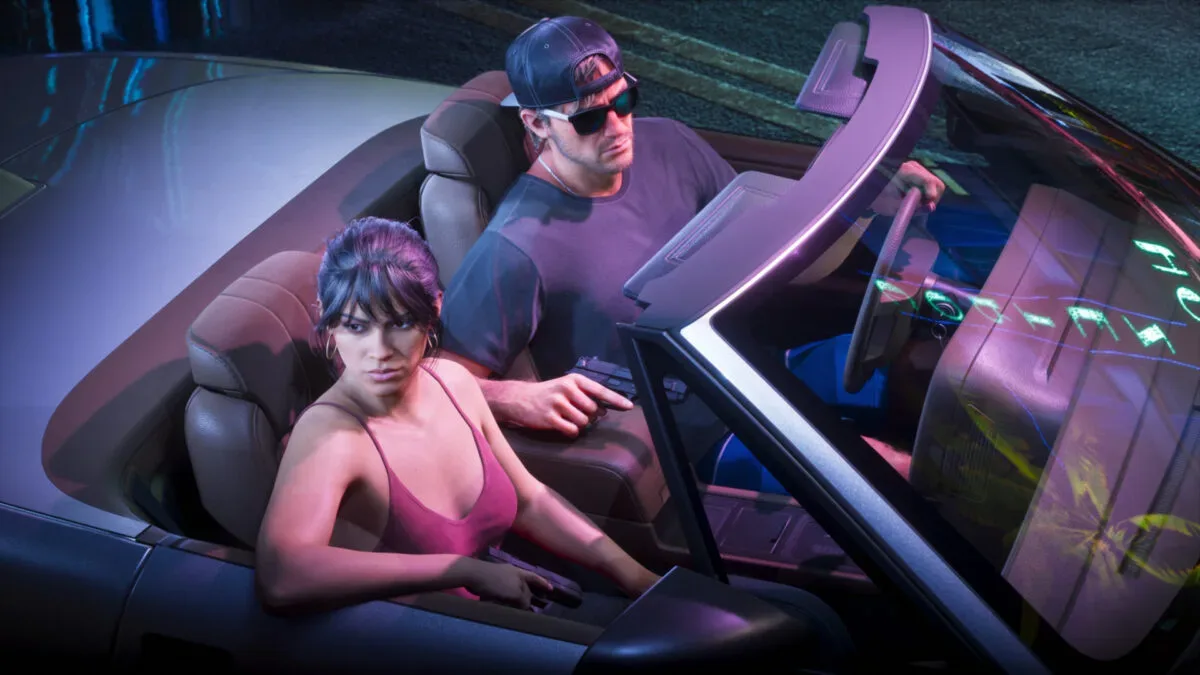
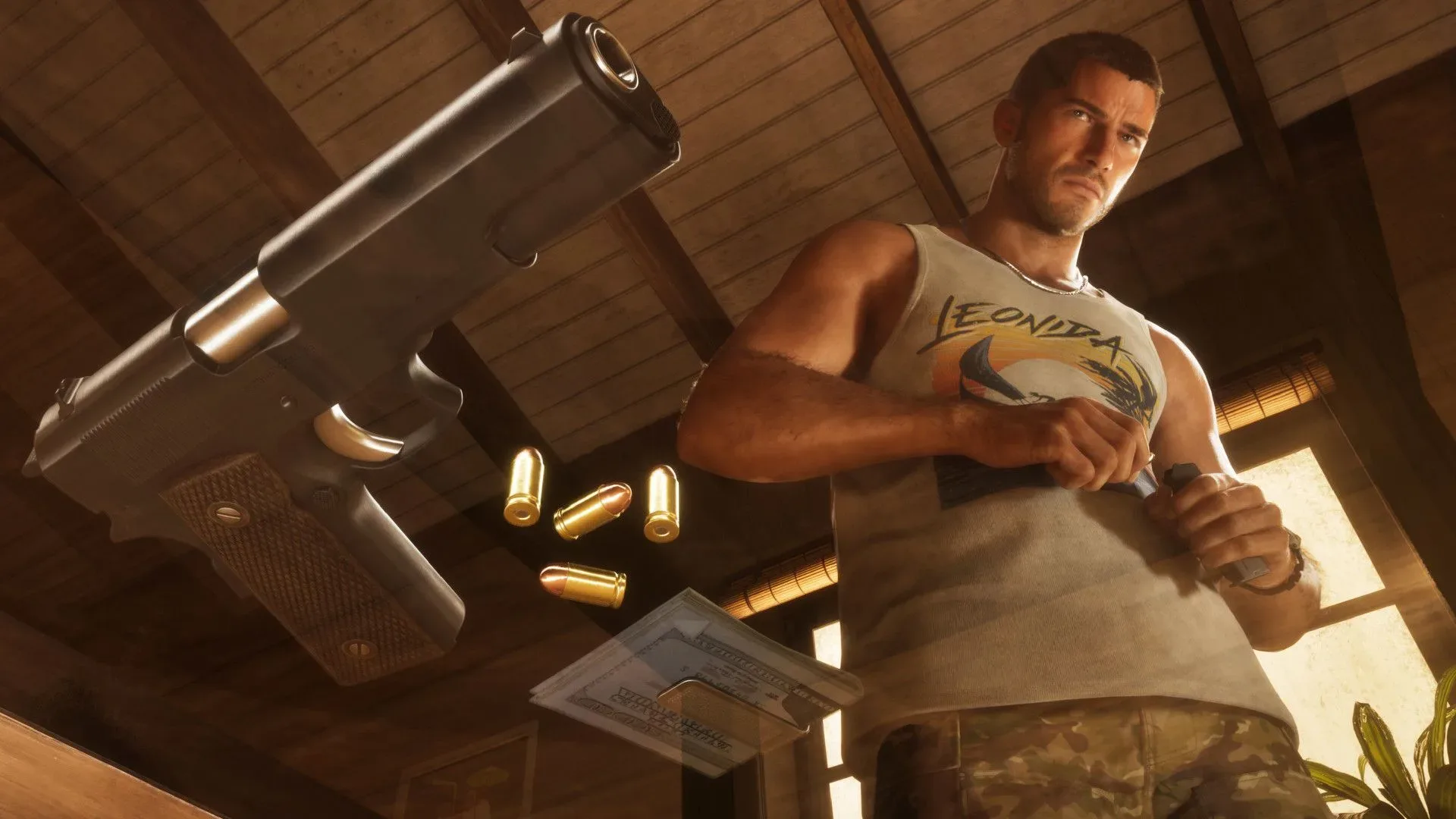
Take-Two chief executive Strauss Zelnick has addressed a growing concern around AI-assisted game recompilations and what they could mean for Grand Theft Auto VI. His position is measured rather than dismissive: piracy has long existed across entertainment, and games have historically been comparatively resilient, but rapidly emerging AI-led efforts could make the issue harder to manage.
Speaking during an investor call, Zelnick said the game business has been “largely immune to piracy concerns forever.” He argued that it would be difficult to reproduce the intended experience of a Take-Two game because of technical constraints. At the same time, he acknowledged that the current wave of AI-assisted recompilation projects means piracy concerns are “going to become more of a challenge.”
For the publisher, the response is two-pronged. Zelnick said the company is focused on improving its technical protections and pursuing legal action where appropriate. He also stressed that piracy is a reality for every entertainment business, but said Take-Two considers the risk manageable.
What an AI-assisted recompilation means
A recompilation is not simply a conventional game port. In broad terms, it involves converting or rebuilding a game’s software so it can run in a different environment, potentially including hardware or an operating system not supported by the original release. The phrase is being used here in connection with projects that use AI tools to accelerate parts of that work.
That distinction matters. A legitimate PC version is built, tested, supported and released by the game’s publisher. An unofficial recompilation is an attempt by others to make a game—or aspects of one—function outside the authorized release path. Even where an unofficial project becomes technically impressive, it is not automatically equivalent to the official product in reliability, features, security, compatibility, updates or legal standing.
The concern has gained attention as AI tools have been increasingly associated with projects attempting to recreate or adapt games. Examples cited in the discussion include work related to Crash Team Racing and The Legend of Zelda: Link’s Awakening. The core fear for major publishers is not that AI somehow removes every technical barrier overnight. It is that automation can reduce the time, specialist knowledge or manual effort previously required for some reverse-engineering and adaptation work.
That does not establish that an unofficial version can deliver the full experience of a giant modern release. Zelnick’s comments directly underline that point. A game’s intended experience is more than getting software to start: it can encompass performance, systems integration, ongoing patches, platform services and, in this case, the broader ecosystem associated with a blockbuster Rockstar release.
Why GTA 6 is a natural focus for the debate
The issue is particularly visible around GTA 6 because the game is expected to launch without a PC version. That leaves PC players unable to access the game at its initial console release, creating an obvious audience for speculation about unofficial alternatives.
Related coverage includes Take-Two Says AI Recompilations Are Making GTA 6 Piracy a Bigger Challenge.
It is important to separate that demand from confirmation of any particular project. The discussion concerns a perceived possibility and the industry implications of emerging tools; it does not confirm that a working GTA 6 PC recompilation exists, that one will arrive, or that it could reproduce the official game properly.
There is also a commercial wrinkle. Some players may choose to buy a console edition at launch and then purchase a PC edition if and when Rockstar releases one. A former Rockstar Games technical director, Obbe Vermeij, has suggested that Rockstar could shorten its usual wait of at least a year for a PC release in order to get ahead of AI-powered attempts. That is an informed view from a former technical leader, not a stated release plan from Rockstar or Take-Two.
For players, the practical takeaway is simple: until the publisher specifies a PC release, its timing and features remain unconfirmed. Rumors about unofficial solutions should not be confused with an official platform roadmap.
Technical defenses and legal action are different tools
Zelnick’s response refers to two separate forms of protection. Technical defenses are measures built into products, platforms and services to make unauthorized copying, modification, extraction or use more difficult. He did not identify specific systems or detail how Take-Two plans to change them, so there is no basis to assume a particular DRM method, account requirement or software feature.
Legal activities, meanwhile, refer to enforcement through applicable legal channels. Again, Zelnick did not specify what actions the company may take, against whom, or under what circumstances. His wording indicates readiness to act appropriately if the situation demands it, rather than an announcement of a particular lawsuit or takedown campaign.
That distinction is worth keeping in view because technical and legal approaches solve different problems. Technical measures can raise the difficulty of unauthorized access or distribution. Legal action can challenge projects, distribution channels or other activity once it crosses a line. Neither approach was presented as a guarantee that piracy disappears entirely. Zelnick instead framed piracy as an enduring part of the entertainment landscape that requires ongoing management.
“I think it will be manageable, and we are focused on it.”
Why an unofficial version would not necessarily replace the official release
The biggest question is whether an AI-assisted recompilation, if one ever emerged, would materially affect the commercial performance of GTA 6. The available comments do not offer a sales forecast, and no evidence has been presented that an unofficial PC effort would equal Rockstar’s version. Still, Zelnick’s emphasis on technical limitations points to a key practical issue: reproducing a sprawling game as intended is a much higher bar than demonstrating that some code can run.
An official release also has a clearer route for patches, support and access to the publisher’s intended features. The supplied information specifically raises GTA Online as a possible reason players would favor an official PC version when it becomes available. That is analysis rather than a confirmed feature plan for GTA 6’s PC release, but it captures why the value of an official version can extend beyond the single-player executable.
Unofficial projects can also carry basic uncertainty for users. Their long-term availability may be unstable, their technical condition may change quickly, and legal pressure can alter the situation without warning. None of that proves that every project will fail or disappear. It does explain why a publisher sees such work as a risk to address rather than as a substitute for a planned release.
The AI issue is about speed, not magic
AI has become a catch-all label in technology discussions, which can obscure the narrower point at stake. The concern described here is not that an AI system can instantly generate a faithful, complete GTA 6 PC edition from nothing. It is that AI-assisted workflows may help people move through certain complex tasks faster, potentially increasing the number and pace of unofficial recompilation attempts.
That is why Zelnick’s answer balances confidence with caution. Take-Two believes its games are difficult to replicate as intended, yet it is not treating the latest trend as irrelevant. The company is preparing stronger defenses and legal responses because the underlying tools and the people using them may change the scale of the challenge.
The result is an issue that will likely matter well beyond one release. Publishers must decide how to protect software as AI tools develop; players, especially those waiting on unsupported platforms, will encounter a growing amount of speculation, claims and unofficial work. The safest dividing line remains straightforward: an official port is the publisher-supported version, while an unofficial recompilation is not a confirmed replacement for it.
GTA 6 remains the immediate flashpoint because of its scale and the initial lack of PC access. For now, Take-Two’s message is that piracy is neither new nor ignored—and that AI-led recompilation efforts have moved it higher on the company’s list of challenges. For more on the game’s wider cultural orbit, see our coverage of a reported GTA VI festival appearance.