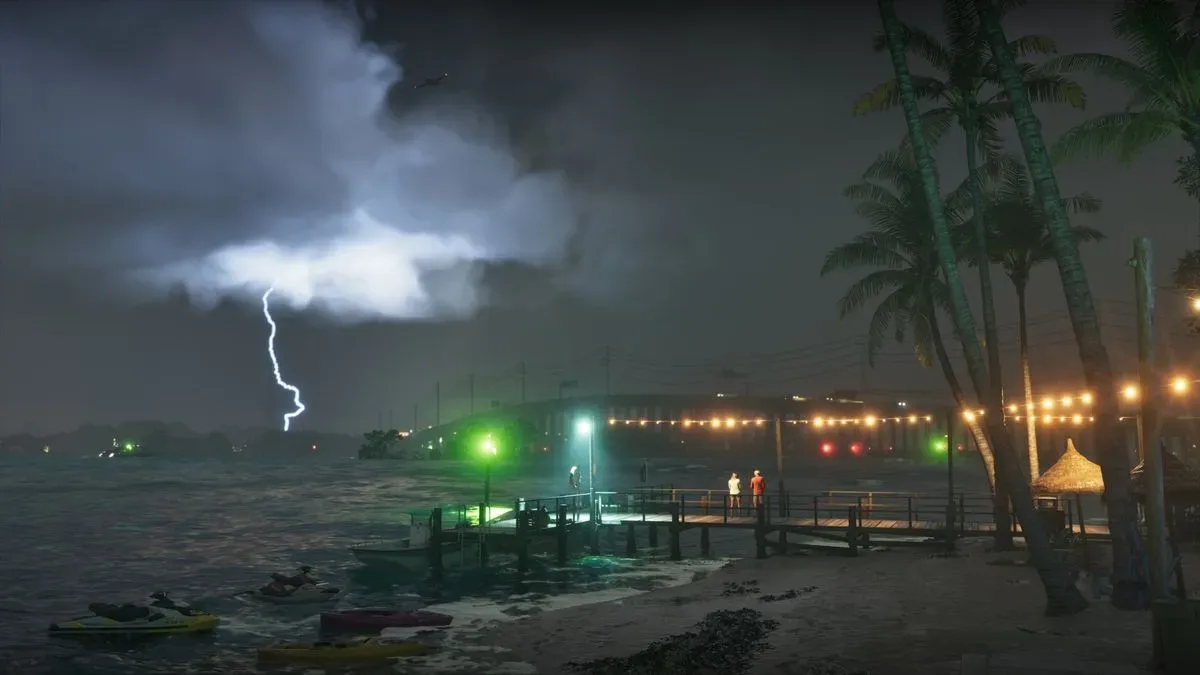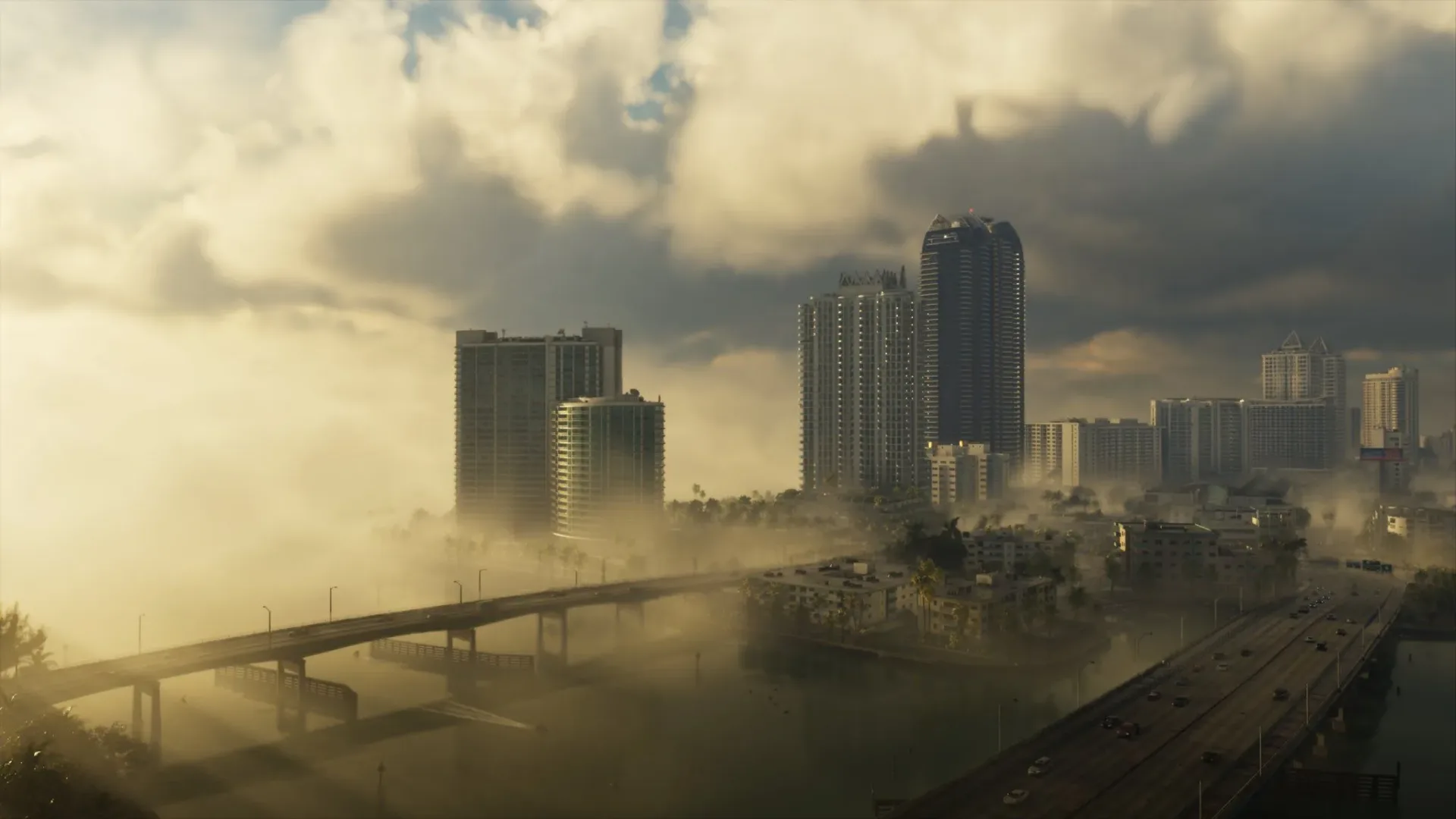
Grand Theft Auto VI’s latest screenshots are not selling a fast car, a neon-lit skyline, or somebody making an extremely questionable decision near a helicopter. Instead, they are selling the forecast—and Leonida looks like it may need an umbrella, a storm tracker, and perhaps a strongly worded note to whoever left the fog machine running.
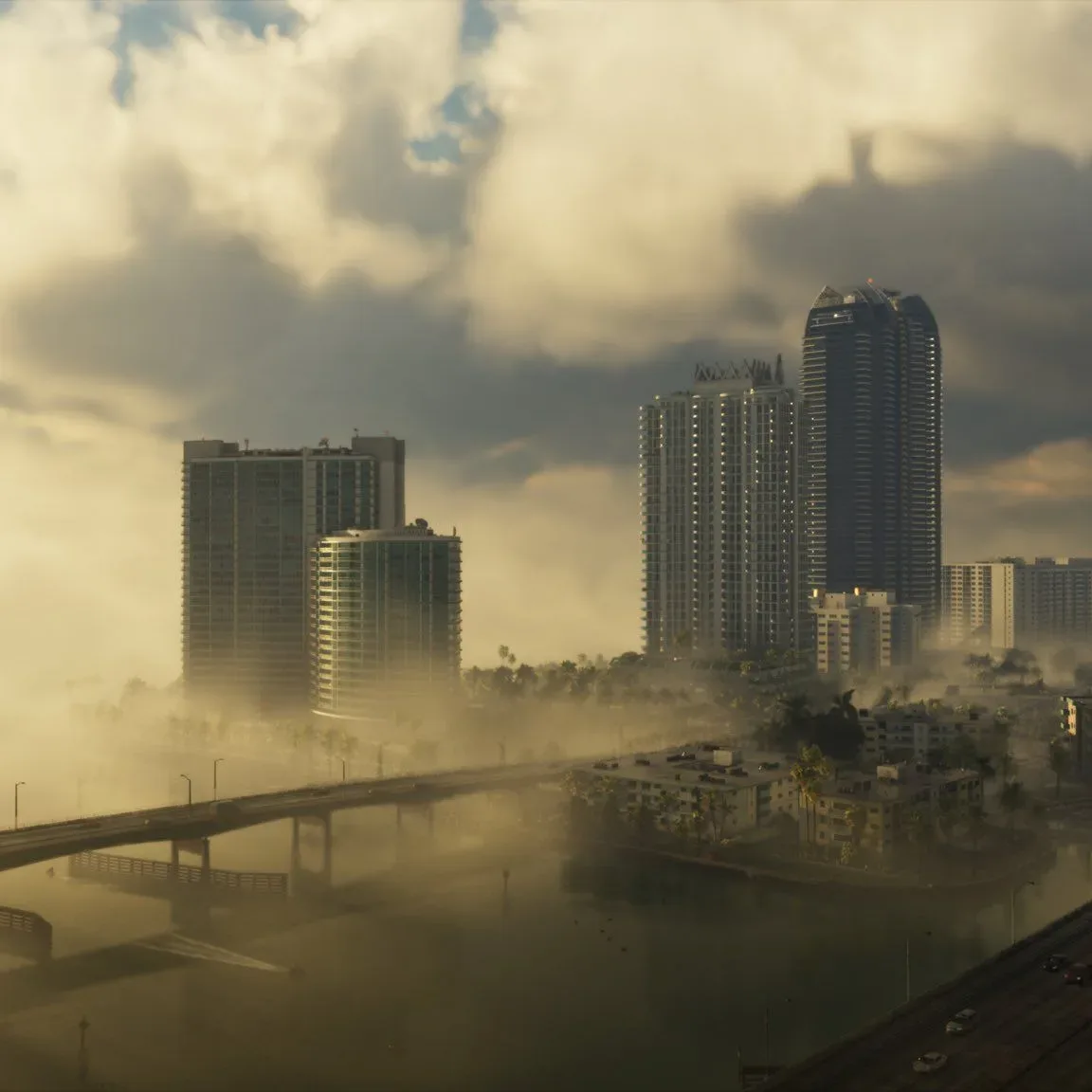
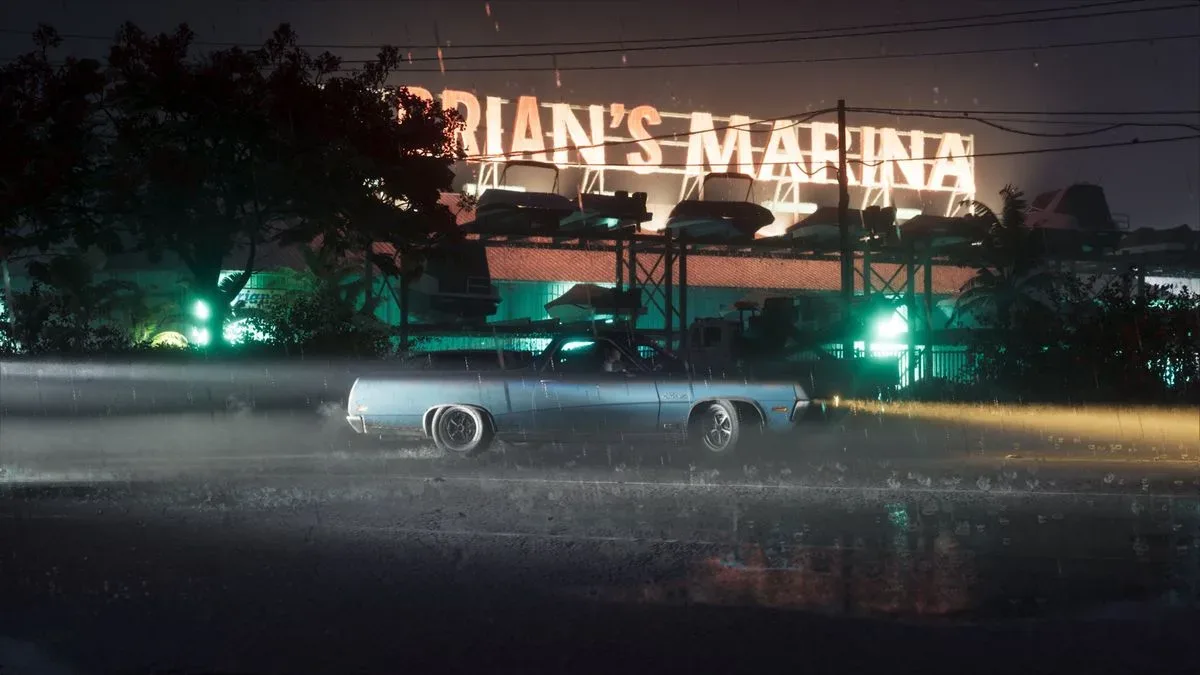
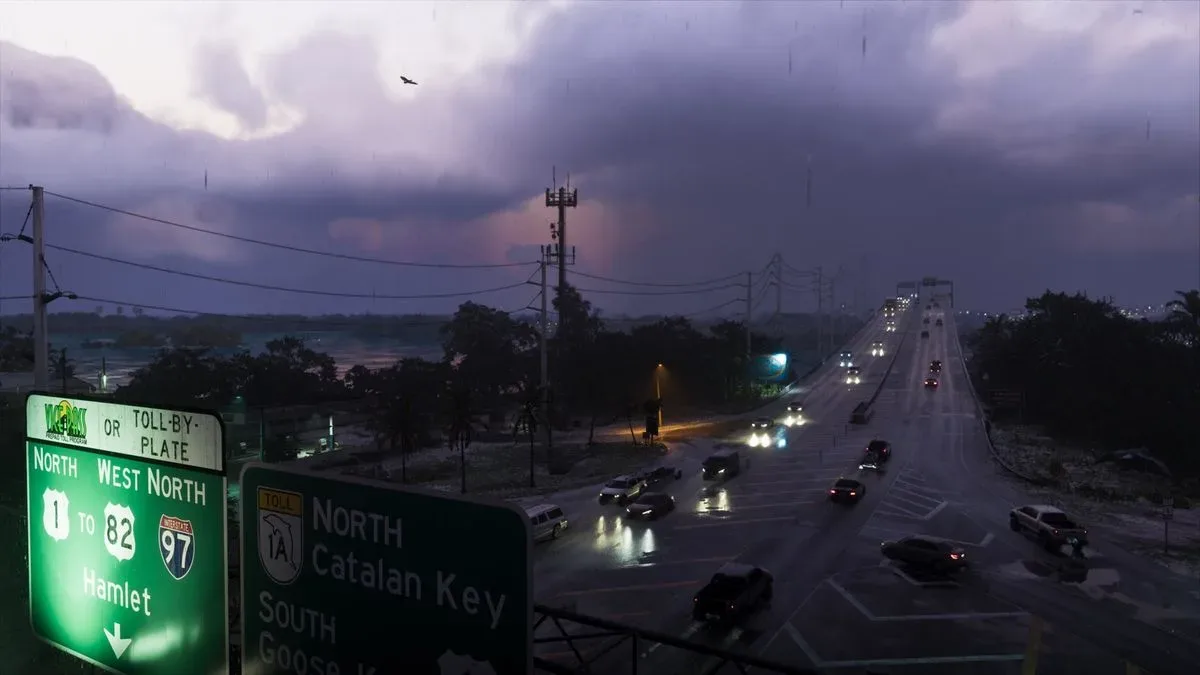
Six new GTA VI images shared through The Weather Channel show Rockstar Games’ fictional state under dramatically different conditions: heavy rain, storm clouds, lightning, and thick mist or fog. The unusual collaboration comes with a useful piece of technical context from Owen Shepherd, Rockstar’s art vice president of light and rendering. He says the team had to rethink the game’s weather systems to make them more localized, persistent, and dynamic while matching the fidelity sought across the rest of the game.
That is a much more meaningful claim than “there will be rain.” Rain has existed in open-world games for a very long time. The potential difference is whether weather behaves like a repeating visual filter or like a broader, evolving part of the place the player is inhabiting. The screenshots cannot answer every question about GTA VI’s simulation, of course, but they make a convincing case for weather as a major visual pillar of Leonida.
What Rockstar is promising for Leonida
Shepherd describes the goal as a weather system built to feel localized, persistent, and, above all, dynamic. Those terms are closely related, but they are not interchangeable.
- Localized generally means conditions can vary across different parts of the game world rather than applying one identical weather state everywhere. A downpour in one area need not mean every neighborhood is receiving the same rain at the same moment.
- Persistent suggests weather should have continuity. Conditions may develop, remain present for a meaningful period, and transition rather than appearing and disappearing as isolated visual events.
- Dynamic means the system can change over time, producing a less rigid sequence of preselected conditions.
Those descriptions establish an ambition, not a detailed checklist of confirmed mechanics. There is no supplied information, for example, establishing how large individual weather regions are, whether storms alter driving physics, whether NPC routines react in specific ways, or whether players can track a forecast inside the game. Those would be the practical details that determine how much weather changes play rather than simply changing scenery.
Still, the framing matters. Rockstar is explicitly connecting the system to Florida’s unpredictable climate and to its fictional counterpart, Leonida. Shepherd says the range runs from clear blue skies to towering cumulonimbus clouds. Cumulonimbus clouds are the tall, vertically developed storm clouds commonly associated with thunder, heavy rain, and lightning. The term may sound like the name of an unlockable supercar, but in this case it points to the kind of unstable, imposing storm formation the screenshots are meant to evoke.
Fog is the screenshot star
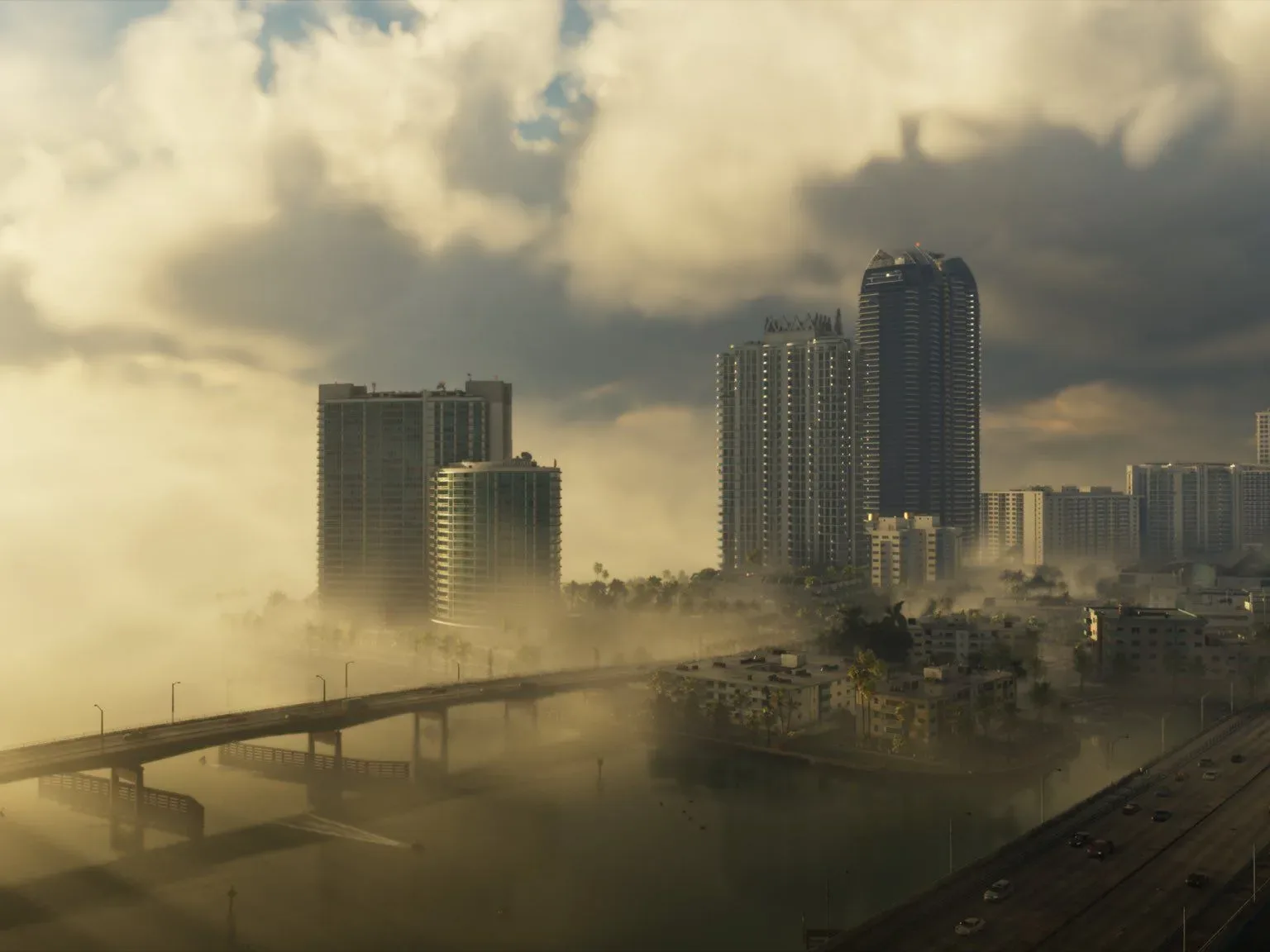
Rain and lightning naturally make for punchy promotional images, but the dense mist shown over Leonida may be the most revealing element of the set. Fog has a peculiar power in a game environment: it reduces visibility, softens distant detail, alters the color of light, and makes a familiar scene feel potentially unfamiliar. In other words, it is atmosphere in both senses—the scientific-ish one and the “why does this pier suddenly feel ominous?” one.
Shepherd’s role in light and rendering is especially relevant here. Rendering is the process through which a game turns scene data—objects, materials, lights, shadows, effects, and camera position—into the image displayed on screen. Weather influences nearly every piece of that picture. Rain needs to read against both bright and dark surfaces. Clouds change the quality and direction of daylight. Wet streets and vehicles can reflect surrounding light differently. Fog changes how distant objects, lights, and colors are perceived.
Related coverage includes GTA 6's Leonida Forecast Takes Center Stage in New Weather Screenshots.
The source material specifically highlights volumetric fog as difficult to optimize without harming performance. In plain language, volumetric effects attempt to give a medium such as fog, smoke, or haze a sense of volume in three-dimensional space. Light passing through or scattering in that medium can create the shafts, glows, soft falloff, and depth people associate with thick air rather than a flat translucent layer sitting in front of the camera.
That look can be expensive because the game has to calculate and display a complex effect while it is also handling a large open world. The challenge is not merely making a still image look moody. It is maintaining a convincing result while the player moves, the camera turns, lights change, vehicles travel through the scene, and the game continues rendering everything else. The new screenshots emphasize the artistic reward: amber light diffused through coastal haze, distant structures diminished by mist, and storms that give the world a more changeable identity.
Weather is also a lighting system
One of the strongest implications of the images is that GTA VI’s weather work is inseparable from its lighting work. A clear sky, a thunderstorm, and a foggy coastal morning can place the same location in entirely different visual moods without moving a single building.
In clear conditions, sunlight can sharply define roads, water, architecture, vegetation, and vehicles. Clouds can flatten or soften that contrast. Rain introduces movement and surface sheen. Fog limits sightlines and filters colors. Lightning creates momentary bright flashes against darker storm conditions. Taken together, those shifts give a world variation that comes from the environment instead of from scripted set dressing.
That is why a focus on weather can be more important than it first sounds. Open-world games ask players to revisit spaces repeatedly—traveling through districts, returning to businesses, pursuing missions, or simply causing the sort of civic disruption that makes fictional insurance premiums cry. A place that looks materially different across conditions can feel less static over time. Rockstar’s stated aim is to make Leonida’s weather part of the grounding of the world for both Florida locals and visitors to the setting.
It is sensible, however, to separate demonstrated visual atmosphere from unconfirmed gameplay consequence. The screenshots demonstrate rain, brewing storms, lightning, and fog. The developer comments establish a redesigned weather philosophy. They do not yet establish whether severe conditions will make chases harder, change pedestrian behavior, affect water, or influence missions. Those possibilities are reasonable topics for curiosity, not facts to attach to the forecast.
The performance question remains unavoidable
The impressive fog imagery arrives alongside an important performance point: GTA VI is described as targeting 30 frames per second on PlayStation 5, Xbox Series X, and PlayStation 5 Pro. Frames per second, usually shortened to FPS, measures how many individual images a game displays each second. A 30 FPS target means the game is aiming to present 30 new frames each second.
Frame rate is not a simple quality scoreboard. Higher frame rates can make camera movement and controls feel more immediate, while a lower target can leave more rendering resources for other visual ambitions. In a game attempting detailed environments, changing skies, rain, lighting, reflections, and volumetric effects, that tradeoff is central. The screenshots are still images, so they cannot show motion clarity, controller response, consistency during demanding scenes, or how the weather effects perform when the world is busy.
They do show where Rockstar appears to be placing some of its visual bets. Dense sea fog, dramatic cloud formations, and rain-heavy scenes all benefit from substantial lighting and atmosphere work. The 30 FPS target is therefore not a footnote detached from the weather conversation; it is part of the same balancing act. The ultimate question will be how consistently GTA VI delivers these scenes during real play, rather than how strikingly they pose for a forecast-themed image release.
A familiar foundation, a new setting
The new material also invites comparison with Red Dead Redemption 2, another Rockstar game noted in the supplied information as a visible foundation for this kind of environmental work. That comparison should not be stretched into a claim that GTA VI simply reuses its predecessor’s systems. The evidence does not establish the exact relationship between the games’ technology. What it does support is a clear continuity of visual priorities: changing skies, heavy weather, atmospheric distance, and light interacting with a large world.
GTA VI’s setting gives those priorities a different flavor. Leonida’s clear skies, towering storm clouds, rain, lightning, and coastal mist create a weather palette distinct from one sustained by dusty trails and frontier landscapes. The point is not that one is inherently more technically demanding than the other. It is that weather can do specific world-building work. A humid, hazy shoreline and an abrupt storm sell a different sense of place than bright, dry daylight, even before a player reaches a mission marker.
The choice to share the images with The Weather Channel makes the message unusually direct: Rockstar wants the audience to notice the climate, not treat it as background decoration. It is also a slyly suitable promotional route. Few things inspire passionate discussion quite like a looming storm, except perhaps the question of whether a game should run at 30 FPS. GTA VI has generously bundled both arguments into one cloudy package.
For now, the key takeaway is restrained but significant. Rockstar has publicly positioned GTA VI’s weather as a redesigned, dynamic system with localized and persistent behavior, and its latest screenshots show the visual purpose behind that effort. Leonida’s forecast is not merely sunny or rainy. It is being presented as a changing layer of light, visibility, mood, and place. For more GTA VI-related coverage on the site, see our GTA VI festival accessibility guide.